
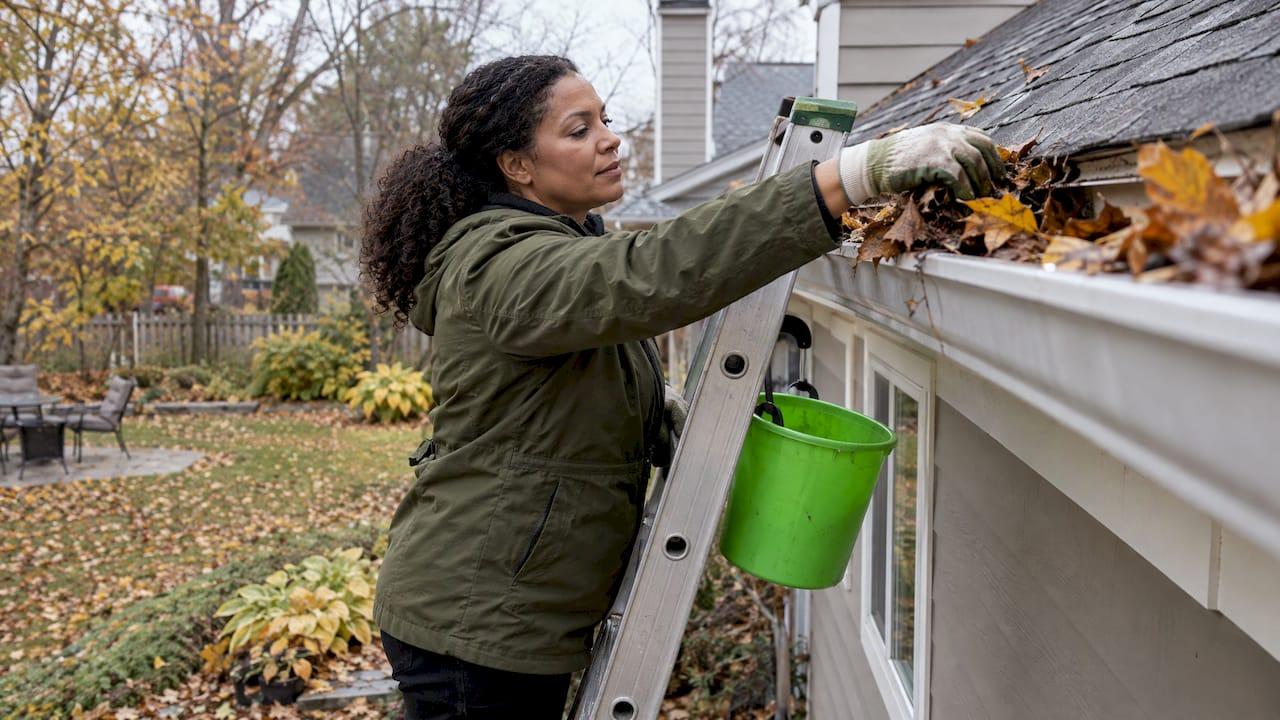
Clean your gutters after most leaves have dropped and before winter freezes in for good. Flush the downspouts, check the slope, and make sure water leaves the house at least four feet from the foundation. Do it on a dry day, from a stable ladder, with a helper. If the job needs a tall ladder, sits near power lines, or reveals sagging gutters, hire a pro. We install and repair gutters, soffit and fascia for homeowners in Southeast Wisconsin, and this is the routine we recommend.
TL;DR
- Clean gutters once most leaves are down and before a hard freeze. Oak-heavy yards may need a second pass.
- Clear the troughs, flush every downspout, and watch for leaks, standing water and loose hangers.
- Downspouts should send water 4 to 6 feet away from the foundation, per home inspector guidance.
- Clean gutters help with ice dams but do not stop them. Attic heat loss and roof protection matter more.
- Sagging, pulling away, or unsafe to reach? Stop and call a professional.
Table of Contents
- When to Clean Gutters in Wisconsin
- Why Fall Gutter Work Matters Here
- Stay Safe First
- Step-by-Step Fall Gutter Cleaning
- What to Check Before the Snow
- Send Water Away From the Foundation
- Gutters and Ice Dams
- Signs a Gutter Needs Repair or Replacement
- When to Hire a Pro
- Our Perspective
- Get Help With Gutters, Soffit and Fascia
- FAQ
- Sources
When to Clean Gutters in Wisconsin
Timing is simple. Wait until most of the leaves are off the trees. Finish before the ground freezes and snow stays on the roof. In much of Wisconsin, that window runs from mid-October into early November. It moves with the weather each year.
Two cases change the plan:
- Oaks and other late droppers. Oak leaves hang on late. Clean once after the main drop, then check again after the last leaves come down.
- Pines and heavy shade. Needles and seed debris pile up in valleys and at downspout openings. Check these spots more often.
If the window has passed, do not skip the job. Pick a dry, above-freezing day. Do it before snow covers the roof edge. Gutters packed with wet leaves freeze into a solid block. That block is heavy and hard to clear.
How often should you look at them in fall? A good pattern is one full cleaning after the main leaf drop, plus a quick check after the first big wind or rain. A 10 minute look from the ground tells you if leaves are piling up again.
Why Fall Gutter Work Matters Here
Wisconsin winters are long. Gutters carry meltwater, rain and snow runoff away from the roof edge, the siding and the foundation. When they clog, water has nowhere to go. It spills over the front, runs behind the fascia, or freezes at the eave.
That is how small debris turns into bigger repairs:
- Rotted fascia and soffit boards.
- Stained or damaged siding below an overflow.
- Pooled water near the foundation.
- Ice that pulls gutters away from the house.
A fall cleaning is cheap compared to any of these.
Stay Safe First
Most gutter injuries come from ladders, not from the gutters. Follow these rules.
- Set the ladder on dry, flat, firm ground. This Old House advises having a spotter and never overreaching.
- Move the ladder instead of stretching. Keep your belt buckle between the rails.
- Do not lean the ladder against the gutter itself. It can bend or crush the trough. Use a stand-off or rest it against the wall.
- Never climb onto the roof to clean gutters.
- Stay away from power lines at the service drop and the roof edge.
- Wear gloves. Gutter edges, screws and old debris cut hands.
- Skip wet, icy or windy days.
If your house has a second story, a steep drop or a walkout lower level, the ladder is where things go wrong. This is the point to call a professional. We cover this in the section on when to hire help.
Step-by-Step Fall Gutter Cleaning
1. Look from the ground first
Walk the full perimeter. Look for:
- Gutters sagging or pulling away from the fascia.
- Seams dripping or stained.
- Plants or seedlings growing in the trough.
- Shingle granules collecting at downspouts.
- Water stains below the gutter line.
Write down what you see. You will check these again after cleaning.
2. Clear the roof edge and valleys
Leaves collect where two roof planes meet. These valleys feed a lot of debris into one section of gutter. Do not climb the roof. A ground-level look or a leaf blower with an extension from the ladder is enough for loose debris. If you see a valley that looks cracked, stained or leaking, read our guide to diagnosing a roof valley leak.
3. Scoop the troughs
Work from the downspout end outward, or from each corner toward the middle. This Old House suggests working toward the middle so debris is not pushed into the downspouts. Scoop leaves into a bucket with a gutter scoop or gloved hand. Hang the bucket on the ladder. Do not drop wet debris on shrubs or the lawn, where it makes more cleanup.
4. Flush with a hose
After the bulk is out, flush each run with a hose. Start at the end farthest from the downspout. Watch for:
- Leaks at seams and end caps. Mark them.
- Standing water. Water that stays in the trough away from the downspout points to a slope problem. InterNACHI, a home inspectors' association, uses this as the practical test, because slope is hard to measure by eye.
- Slow drainage. This usually means a clog at the downspout.
Do not blast high-pressure water into a blockage you cannot see. Use a normal hose flow.
5. Clear the downspouts
Aim the hose into the top of each downspout. Have a helper check that water exits freely at the bottom. For a stubborn clog, a plumber's snake works from the top or the elbow. Check elbows at the bottom and at roof corners. Wet leaves and shingle grit collect there. If water backs up and a snake does not fix it, that is a job for a pro.

6. Re-check the slope and hangers
Gutters should slope slightly toward the downspout. A common guideline is about a quarter inch per 10 feet. We explain how to set it in our guide to gutter slope requirements. Press gently on the gutter at each hanger. If it moves or pulls away from the fascia, the hanger or the fascia behind it needs repair.
What to Check Before the Snow
Use this checklist after cleaning. It covers the problems that turn into winter damage.
| Check | What you want to see | If not |
|---|---|---|
| Gutter slope | Water flows to the downspout, no standing puddles | Re-hang or adjust hangers |
| Rust, cracks, holes | Per InterNACHI, gutters free of rust, cracks and holes | Patch small spots, replace bad sections |
| Seams and end caps | Dry after a hose test | Reseal or replace |
| Hangers and fasteners | Tight, solid wood behind | Fascia may be rotted; repair |
| Downspout outlets | Water discharges 4 to 6 feet from the foundation | Add or lengthen extensions |
| Fascia and soffit | Firm, painted, no soft spots | Repair before snow |
| Roof edge | No lifted or missing shingles near the eave | Roof repair |
Soft fascia is the one we see homeowners miss. If a screwdriver tip sinks into the board, the gutter is attached to rotting wood. Re-hanging it will not last. That repair comes first.
Send Water Away From the Foundation
A clean gutter still fails if it dumps water at the wall. InterNACHI's guidance says downspouts should divert water 4 to 6 feet from the foundation. Water that pools next to the basement wall can find its way in. It also freezes and thaws against the foundation all winter.
What to do:
- Add extensions or splash blocks at every outlet.
- Make sure the ground slopes away from the house, not toward it.
- Keep long downspout runs short. Our guide on downspout placement covers run length and discharge distance.
- See which extension lengths contractors use before you buy.
Watch where the water goes in the next rain. If it carves a channel, the same spot will erode every storm. Repeated washouts near a downspout outlet are a drainage problem. This guide to driveway washout repair explains when a fix is a weekend job and when it calls for a professional.
Gutters and Ice Dams
An ice dam forms when heat from the house melts snow on the upper roof. The meltwater runs down to the cold eave and refreezes. The ice ridge grows. Water then backs up under the shingles and into the attic and walls.
Clogged gutters make this worse. They hold water at the edge and give ice something to grow from. So cleaning matters. But cleaning does not fix the cause.
The real fixes are:
- Attic insulation and air sealing, so heat stays in the house.
- Ventilation from soffit to ridge, so the roof deck stays cold.
- A waterproof underlayment at the eaves.
Wisconsin's building code addresses the last one. Our guide to ice and water shield in Wisconsin explains the rule of thumb, and the coverage requirements explain what the code asks for. For prevention and what to do if a dam forms, read how to stop ice dams and roof care in winter.
Two winter rules:
- Rake the first few feet of snow from the eave from the ground, with a roof rake, after heavy storms.
- Do not chip ice with a hammer or climb a snowy roof. You can damage shingles or gutters, and a fall is serious.
If ice dams come back every winter on the same slope, the roof system needs attention, not just the gutters.
Signs a Gutter Needs Repair or Replacement
Not every problem is a cleaning problem. Call for an inspection when you see:
- A gutter that sags between hangers even after cleaning.
- Gutters pulling away from the house, or gaps at the fascia.
- Rust through the metal, or cracks along seams.
- Water running behind the gutter or down the siding.
- Peeling paint or dark stains on fascia and soffit.
- A section bent by fallen branches, hail or ice.
Small problems, such as a loose hanger or a leaking seam, are quick fixes. Rotted fascia, repeated sagging or damage across several runs usually means the system is at the end of its life.
Does insurance cover gutter damage?
It can. Mercury Insurance explains that homeowners policies may cover gutter repair or replacement after covered damage from high winds, hail or a fallen tree, when the event is sudden and accidental. Wear, neglect and slow deterioration are different. Mercury also puts new professionally installed gutters at roughly $600 to more than $4,000, depending on the home. Your own policy sets the terms, so read it or ask your agent. If a storm damaged the gutters, it likely damaged the roof too. We help homeowners with insurance claims after storm damage and document the work.
When to Hire a Pro
Do it yourself when the house is one story, the ladder sits flat, and the gutters are in good shape. Hire a pro when:
- The roof edge is higher than you can reach from a ladder at a safe angle.
- The ground is sloped, soft or icy.
- Power lines run near the eave.
- The gutters are sagging, rusted or pulling off.
- Water backs up in a downspout and will not clear.
- You see soft or stained fascia and soffit.
Safety is the main reason. A fall from a ladder is a serious injury. Paying for a cleaning costs much less than an emergency room visit.
We repair gutters, soffit and fascia, and we install gutters as part of exterior projects. If the gutter problem comes with a roof leak, the repair and the roof fix can be handled together.
Our Perspective
Most gutter trouble we see starts as a small thing that nobody looked at in fall. A clogged downspout. A loose hanger. A soft spot in the fascia. By January it is an overflow, a sheet of ice and a leak inside the wall.
We are an owner-supervised company with more than 25 years of experience in Wisconsin, and we think quality installation matters more than almost anything else. Gutters follow the same rule. A gutter hung on solid wood, with the right slope and downspouts that discharge away from the house, outlasts one that was rushed.
That is also why we give honest repair versus replacement advice. If a section needs a new hanger, we say so. If the fascia is rotted and the roof edge is failing, we say that too. We document the work, explain what we found, and help with insurance claims when storm damage is involved.
Clean gutters are step one. A roof with proper ice and water protection, good ventilation and sound edges is what keeps Wisconsin winters from becoming repair bills.
Heather
Get Help With Gutters, Soffit and Fascia
If your fall check turned up sagging gutters, soft fascia or a roof edge in poor shape, we can look at it. We repair soffit, fascia and gutters and serve Dodge, Washington, Fond du Lac and Ozaukee Counties. See our soffit, fascia and gutter repair service. If the damage reaches the roof, our roofing services include roof repair and storm damage roofing. Roof replacement is published at $7,500 to $18,000, and our roof replacement cost guide explains what drives the range.

For leaks and storm damage that cannot wait, use our emergency roof repair page.
FAQ
When should I clean gutters in fall in Wisconsin?
Clean them after most leaves have fallen and before the first hard freeze. In much of the state that means mid-October to early November. If you have oaks that drop late, plan a second pass.
How much should a gutter cleaning cost?
Prices depend on the home's height, length of gutters and how clogged they are. Get a written quote from a local company before you book. Ask what it includes: debris removal, downspout flushing and cleanup.
How do I know if my gutter is sloped right?
Run a hose into the high end and watch the water. It should move steadily to the downspout. Standing water away from the downspout points to a slope problem. A common target is about a quarter inch of drop per 10 feet.
Do clean gutters stop ice dams?
They help, because water drains instead of pooling at the edge. But ice dams start with heat escaping into the attic. Insulation, ventilation and eave protection are the lasting fix.
How far should downspouts discharge from the house?
Inspectors look for 4 to 6 feet from the foundation. Use extensions or splash blocks to get there, and make sure the ground slopes away from the wall.
Sources
- Inspecting Gutters and Downspouts, InterNACHI
- How To Clean Your Gutters Safely, This Old House
- Does Homeowners Insurance Cover Gutters?, Mercury Insurance
- Driveway washout repair guide