
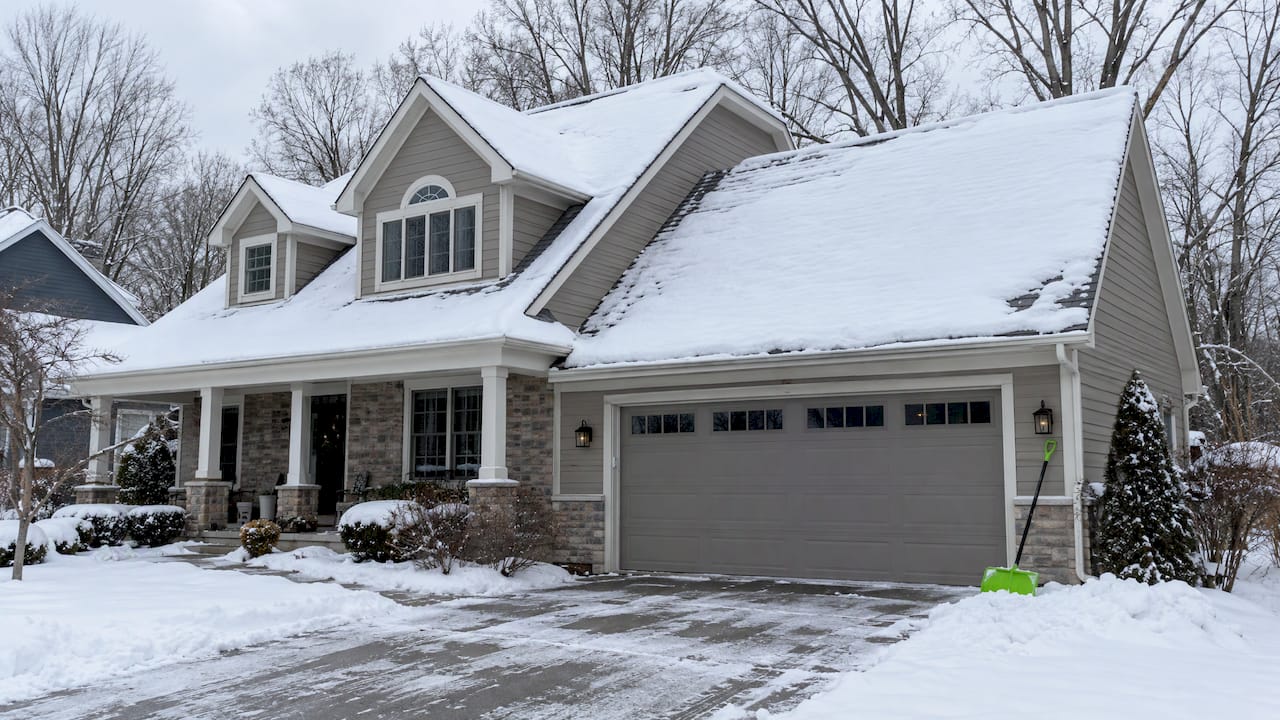
You can repair a roof in a Wisconsin winter, and in many cases you should not wait. Shingle manufacturers allow cold-weather work when the right precautions are followed. The roof surface must be free of ice and frost. Leaks, missing shingles and storm damage need a fast temporary fix and a proper repair plan. Full replacements are usually easier to schedule in milder weather. This guide covers what works in cold, what to check, and what to do when winter damages your roof.
TL;DR
- Shingles can be installed or repaired below 40°F if the crew follows the manufacturer's cold-weather steps, including hand-sealing.
- Do not climb onto a frosty or icy roof. Hidden ice makes sloped roofs hazardous.
- Ice dams come from heat escaping into the attic. Wisconsin code sets ice-dam protection rules for low-slope shingled roofs.
- Do not rake or chip snow off yourself. Injury and shingle damage are the bigger risks.
- After storm damage: photograph it, stop active leaks, and call a roofer and your insurer.
Table of Contents
- What winter does to a Wisconsin roof
- Can you install or repair a roof in cold weather?
- Snow load: what your roof must carry
- Ice dams: causes and prevention
- Snow removal: stay off the roof
- Roof materials and features that suit Wisconsin winters
- Winter inspection checklist
- After a winter storm damages your roof
- Perspective: our view on winter roofing
- Plan your roof work with AM Exteriors
- FAQ
- Sources
What winter does to a Wisconsin roof
Winter stresses a roof in four ways:
- Snow weight. Wet snow adds load to the structure.
- Freeze and thaw cycles. Water gets into small gaps, freezes and widens them.
- Ice dams. Ice builds at the eaves and backs water under shingles.
- Wind. Winter storms lift shingles that are worn or poorly sealed.
Most winter leaks start with a small weakness that was already there: a lifted shingle, dried-out flashing, a thin spot in the underlayment. Snow and ice find it.
In our experience, most roof failures come from poor workmanship, not from the material. That matters more in winter, when every weak detail gets tested.
Can you install or repair a roof in cold weather?
Yes. The 40°F number is a preference, not a hard stop.
GAF's technical bulletin says there is no practical lower temperature limit for applying fiberglass asphalt shingles when appropriate precautions are used. Temperatures above 40°F are preferred for easiest handling. Below that, shingles can become brittle, crack or distort. They may also need hand-sealing.
GAF's 2025 guidance repeats 40°F as its official recommendation. It allows work below that only when the required cold-weather procedures are followed.
What a cold-weather crew does
- Keeps bundles warm. GAF recommends storing shingles in a heated area above 70°F for at least 24 hours when possible.
- Handles bundles with care. The Asphalt Roofing Manufacturers Association (ARMA) says bundles should not be bent, thrown or dropped.
- Waits for a clear surface. ARMA says work should wait until the roof is free of ice and frost.
- Hand-seals shingles. Factory sealant is heat-activated and can take longer to bond in the cold. Approved asphalt roofing cement can be used to hand-seal and improve wind protection. The manufacturer's instructions set the temperature and procedure.
Sealing depends on slope, roof direction and sun exposure. A south-facing slope in sun bonds sooner than a shaded north slope.
Repair or replace in winter?
| Job | Winter work | Notes |
|---|---|---|
| Leak repair | Yes | Temporary fix first if needed, then a full repair |
| Missing or blown-off shingles | Yes | Repaired shingles need sealing per the manufacturer |
| Storm damage repair | Yes | Document before any work |
| Full replacement | Possible | Needs a dry, clear surface and a crew with a cold-weather process |
| Flat or low-slope (TPO) work | Depends | Needs dry, suitable conditions |
For repairs, GAF identifies cold-weather hand-sealing as a common practice. It also warns that too little heat can leave the sealant inactive. That is why a repaired section can look fine in January and still lift in the first spring wind.
Need a repair now? See our roof repair page. Active leak? Go to emergency roof and leak repair.
Snow load: what your roof must carry
Wisconsin sets minimum roof snow loads for dwellings. Homes must support the loads shown on the zone map in SPS 321.02 of the Wisconsin Administrative Code.
What to do with that:
- Look up your zone on the map. It varies across the state.
- Ask your roofer or local building inspector which load applies to your address.
- For a new roof or an addition, confirm the design meets the zone load.
Before snow season, inspect the structure for weakness. That means decay, weak connection points and broken structural members. Sagging, new ceiling cracks, or doors that suddenly stick are reasons to call a professional. Do not wait for a thaw.
Ice dams: causes and prevention

An ice dam is a ridge of ice at the roof edge. It blocks meltwater, and the water backs up under shingles and into the home.
How they form
- Warm air leaks from the living space into the attic.
- The roof deck warms and melts the snow above it.
- Water runs down to the cold eave and refreezes.
- The ice ridge grows and traps more water behind it.
The cause is heat loss, not the roof covering. That is why a new roof can still get ice dams if the attic is not sealed, insulated and ventilated. Our guide on attic ventilation and roof lifespan in Wisconsin explains the link.
What the code requires
Wisconsin code requires ice-dam protection on shingled or shake roofs over heated dwelling or garage areas with slopes of 4:12 or less. The protection is sheet metal or an ASTM D1970-labeled product, such as ice and water shield. See our breakdown of ice and water shield coverage in Wisconsin.
How to lower the risk
- Air-seal the attic floor: light fixtures, plumbing and wiring penetrations, attic hatch.
- Add insulation where it is thin or patchy.
- Keep soffit and ridge vents open and clear.
- Keep gutters clear in fall.
- Have the eaves checked when the roof is replaced.
If you already have an ice dam and a leak, call a roofer. Do not chip at the ice.
Snow removal: stay off the roof
Building safety and energy experts consistently advise against amateur snow removal from roofs. The risk of injury and shingle damage is often greater than the structural risk of the snow itself.
Safe habits:
- Do not climb a snowy or icy roof.
- Do not use shovels, picks or hammers on shingles.
- Watch for sagging, new interior cracks and leaks. Call a roofer if you see them.
- Keep people and cars away from eaves where snow and ice can slide.
Roof materials and features that suit Wisconsin winters
No single roof fits every house. Pick by pitch, budget, look and how the roof sheds snow.
| Roof type | Winter fit | Where it works |
|---|---|---|
| Architectural shingles | Common, cost-effective, sealed to resist wind | Most homes |
| Standing seam metal | Smooth panels that shed snow | Steeper pitches, cabins, long-term plans |
| Synthetic slate | Slate look, built for weather | Homes where appearance matters |
| Cedar shake | Natural look | Homes where appearance matters |
| TPO | Membrane for flat and low-slope roofs | Porches, additions, flat sections |
Steel panels shed snow quickly, so plan where it lands. Over a walkway or entry, snow guards or a different layout may matter. Ask about it during the quote.
We install architectural shingles, standing seam metal roofing, DaVinci and CeDUR synthetic systems, authentic cedar shake and TPO flat roofing. Our shingle line includes Malarkey, backed by extensive warranties.
Details that matter in winter, whatever the material:
- Ice and water shield at eaves and valleys.
- Sound flashing at chimneys, walls and penetrations.
- Balanced intake and exhaust ventilation.
- Properly sealed shingles. Fasteners and sealing are workmanship, not product.
Winter inspection checklist
Do this from the ground, on a dry day:
- Look for missing, curled or lifted shingles.
- Check the ridge line for waves or sags.
- Look at the eaves for icicles and ice build-up. Heavy icicles in one spot point to heat loss.
- Check gutters and downspouts for ice, sagging or pulled-away sections.
- Look at flashing around chimneys and vents.
- Inside, check the attic and top-floor ceilings for stains, damp insulation and frost on the roof deck.
Use binoculars or a phone zoom. Photograph anything odd with the date. Those photos help with a repair estimate and with insurance.
After hail or wind, use our hail storm roof inspection checklist. We also offer a free hail damage roof inspection.
After a winter storm damages your roof
Follow these steps in order.
- Stay safe. Do not go on the roof. Keep away from sagging ceilings and downed lines.
- Photograph and video. Capture the damage from the ground, the attic and inside rooms. Record the date.
- Limit further damage. Move belongings, put out buckets, and cover items. A roofer can tarp or patch the roof.
- Keep records. Save receipts for emergency work.
- Call your insurer. Read your policy for deductibles and how storm damage is covered. Ask the company how to file and what it needs.
- Get a roof inspection. A roofer can write up the damage in detail.
For blown-off shingles, this shingle blow-off repair guide covers what to do first.
Coverage depends on your policy and on the cause of the damage. Sudden storm damage is treated differently from gradual wear. Your insurer and agent decide coverage, so ask them directly. Our guide to storm damage roof repair in Wisconsin walks through the process.
Perspective: our view on winter roofing
We have been owner-operated for over 25 years. We have seen the same pattern every winter: roofs rarely fail because of the shingle. They fail at the detail. A lifted tab that was never sealed. Flashing that was rushed. An attic that leaks heat.
That is why we supervise installations ourselves and document the work. You get photos of what was done, not just a promise. If the work is a repair, we tell you if a repair is enough. If the roof is at the end of its life, we say that too.
Winter is when a bad detail shows up. Cold-weather work is fine when the crew follows the manufacturer's steps, keeps materials warm, waits for a clear surface and hand-seals where needed. We also help with insurance claims, so storm damage does not turn into paperwork you handle alone.
Heather
Plan your roof work with AM Exteriors
We are a Wisconsin exterior contractor serving Dodge, Washington, Fond du Lac and Ozaukee counties and Southeast Wisconsin. We handle roof repair, storm damage, emergency leaks and full replacement, and we help with insurance claims.
Our published price range for roof replacement is $7,500 to $18,000. See roofing services for options, or start at AM Exteriors to request an inspection.
FAQ
Can you put on a roof in cold weather?
Yes, with precautions. GAF says there is no practical lower limit for fiberglass asphalt shingles when precautions are used, though above 40°F is preferred. Below that, crews keep shingles warm, handle them carefully and hand-seal them.
Is it better to replace a roof in winter or wait for spring?
It depends on the roof. If it is leaking or storm-damaged, repair now and plan replacement for the right window. If it is aging but sound, scheduling in milder weather makes sealing easier. A roofer can assess which applies.
Should I remove snow from my roof?
Not yourself. Experts advise against amateur snow removal because injury and shingle damage are often a bigger risk than the snow. If you see sagging, ceiling cracks or leaks, call a roofer or structural professional.
What roof slope needs ice-dam protection in Wisconsin?
Wisconsin code requires it on shingled or shake roofs over heated dwelling or garage areas with slopes of 4:12 or less. It can be sheet metal or an ASTM D1970-labeled product. Ask your roofer to confirm what applies to your roof.
Sources
- GAF: Temperature Extremes & Fiberglass Asphalt Shingles
- GAF: Cool Weather Roofing Tips for Installing Shingles
- GAF: Installing Timberline HDZ Shingles in Different Seasons
- ARMA: Recommendations for Installation of Asphalt Roofing Shingles in Cold Weather
- Wisconsin Administrative Code SPS 321.02
- Wisconsin Legislature: SPS 321.29
- WXPR: How Is This Snow Impacting My Home?