
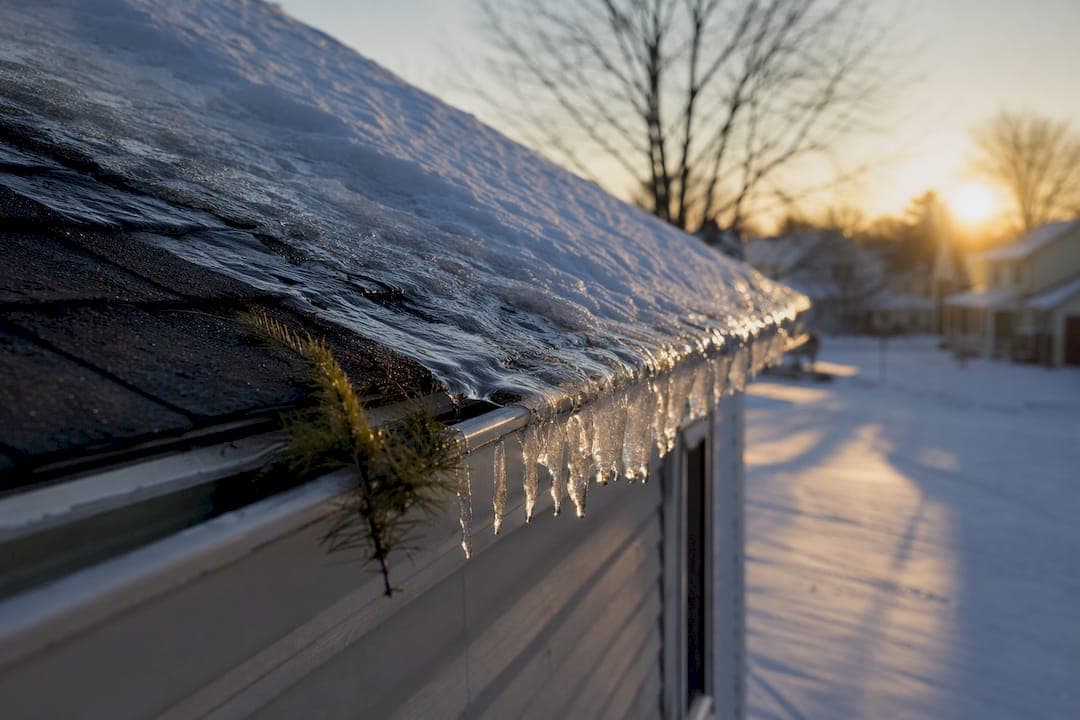
Prevent ice dams by keeping your roof deck cold with a continuous, airtight ceiling, correctly sized attic insulation, and balanced soffit-to-ridge ventilation. That's the fix. Ice dam prevention that actually holds up season after season starts in your attic, not on your roof edge.
- Roof rakes, ice-melt socks, and heat cables buy you time. They don't solve the problem.
- Contractors confirm the diagnosis with a blower door test and infrared camera scan before touching insulation.
- Baseline attic insulation should hit R-30 to R-38, with R-60 or higher recommended in colder climate zones.
Key Takeaways
Lasting ice dam prevention comes from air-sealing the attic ceiling, insulating it to at least R-30 to R-38, and ventilating the roof deck continuously from soffit to ridge.
| Point | Details |
|---|---|
| Air seal before insulating | Warm air bypasses insulation that isn't backed by an airtight ceiling plane, so sealing comes first. |
| Hit the right R-value | Target R-30 to R-38 as a baseline, with R-60 or higher in colder climate zones. |
| Ventilate soffit to ridge | Balanced, continuous airflow keeps the roof deck uniformly cold and reduces melt-refreeze cycles. |
| Treat cables and raking as temporary | Heat cables and roof rakes manage symptoms now but don't stop dams from returning. |
| Diagnose before you spend | Blower door tests and infrared scans locate air leaks so repairs target the actual cause. |
| Call Am-exteriors for a lasting fix | Am-exteriors offers attic air sealing, insulation upgrades, and emergency roof repair backed by documented diagnostics. |
Table of Contents
- What Causes Ice Dams and How Much Damage They Do
- What Should You Do About an Ice Dam Right Now?
- How Much Insulation and Ventilation Do You Actually Need?
- Do Attic Fans and Heat Cables Really Stop Ice Dams?
- When Do You Need to Call a Roofing Contractor?
- Seasonal Checklist: When Should You Do What?
- Why a Professional Diagnosis Beats Guesswork
- Get a Professional Ice Dam Inspection Before Next Snowfall
- Frequently Asked Questions
- Sources
What Causes Ice Dams and How Much Damage They Do
An ice dam forms when heat escaping from your living space warms the roof deck, melts the snow sitting on it, and sends that water sliding down to the cold eaves, where it refreezes into a ridge of ice. Water backs up behind that ridge, works under your shingles, and finds its way into your ceiling and walls.
Three things drive the heat loss that causes this. Air leakage matters most: warm, moist air escaping through can lights, bathroom fans, and attic hatches carries far more heat than most homeowners assume. Conduction through thin or compressed insulation adds to it. And thermal plumes rising off sun-warmed siding or dark cladding can heat the eaves directly, even when the attic insulation above them looks fine.
The damage shows up as stained ceilings, peeling paint, soaked insulation, and, if it sits wet long enough, mold behind drywall. The first move after any leak is drying out the affected area completely. Skip interior cosmetic repairs until the actual heat-loss problem gets fixed, or you'll be repainting the same ceiling next winter.
What Should You Do About an Ice Dam Right Now?
If ice is already piling up on your eaves, you have options that reduce the immediate risk without making things worse.
- Rake the snow off, from the ground. Use a wheel-headed roof rake and pull snow straight down in the direction of the slope. Never climb onto the roof to do this, and never scrape or chip at the ice itself. You'll tear shingles doing more damage than the ice ever would.
- Cut a channel through the dam if water is actively backing up. Running warm water through a channel, or using a calcium chloride ice-melt sock laid perpendicular to the gutter line, gives trapped water a path to drain. This is a stopgap. Channels through an existing ice dam typically stop working within days, so don't count on repeating this trick all winter.
- Consider heated cables only for chronic trouble spots, like a valley or a dormer that dams up every year. They melt a path for water but do nothing for the heat loss causing the problem, and they need a properly grounded outdoor circuit.
- Dry any interior water damage immediately and hold off on drywall or paint repairs until the attic issue is corrected.
Pro Tip: Keep the roof rake blade a few inches above the shingle surface as you pull. Scraping down to bare shingle strips the granules that protect them from UV damage.
How Much Insulation and Ventilation Do You Actually Need?
This is where lasting ice dam prevention gets decided, and the order you tackle it in matters as much as the materials you use.
Step one: air-seal the ceiling plane. Every gap around can lights, plumbing stacks, attic hatches, and the top plates of interior walls is a chimney pumping heat into your attic. Contractors and building scientists agree that air sealing has to happen before insulation goes in, because warm air will simply bypass insulation that isn't backed by an airtight layer underneath it.
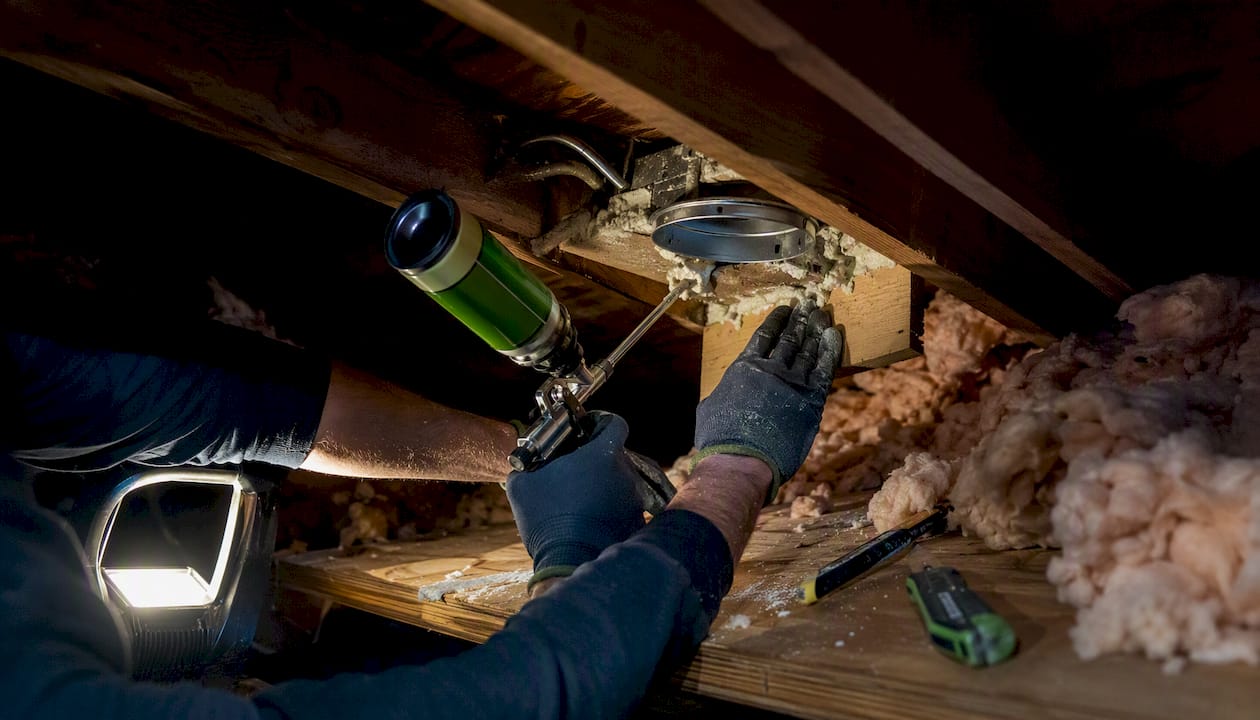
Step two: bring insulation up to target. Most cold-climate homes should sit at R-30 to R-38 as a floor, with R-60 or higher recommended in the coldest zones. Building scientist Joseph Lstiburek describes the winning formula plainly: build an airtight "lid," insulate it heavily, and ventilate the underside of the roof deck so it stays close to outdoor temperature no matter what's happening below.
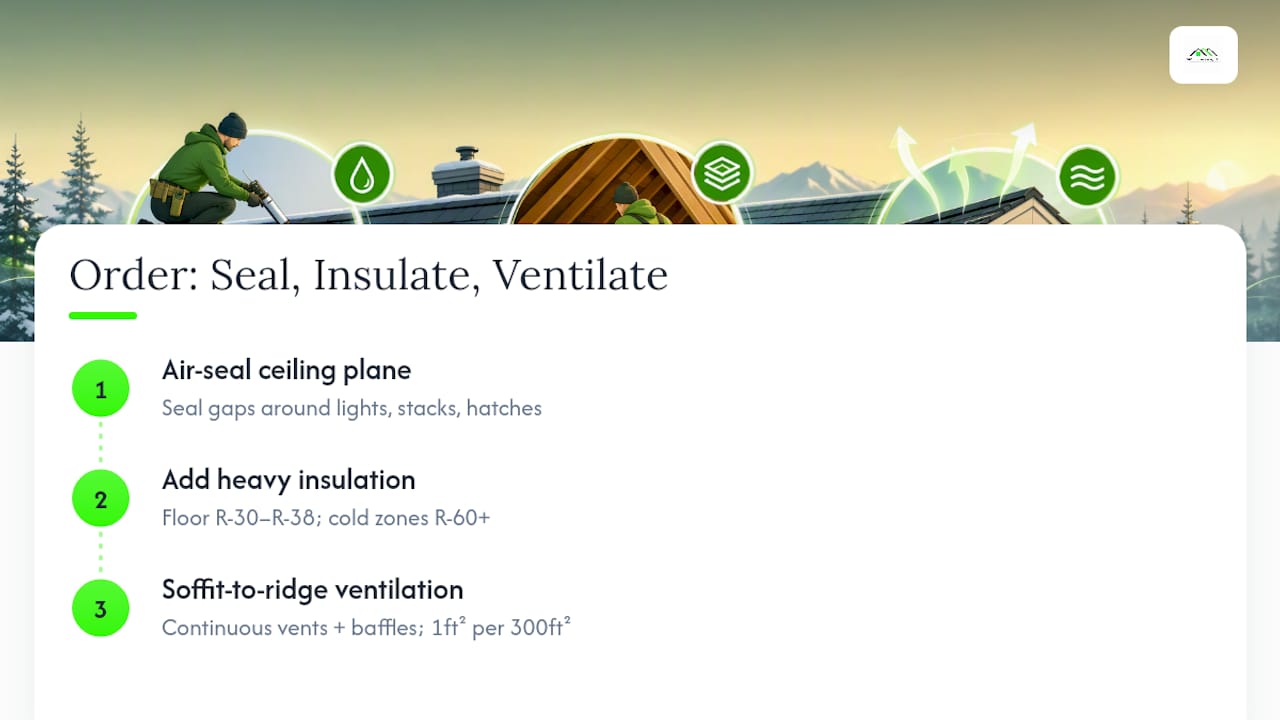
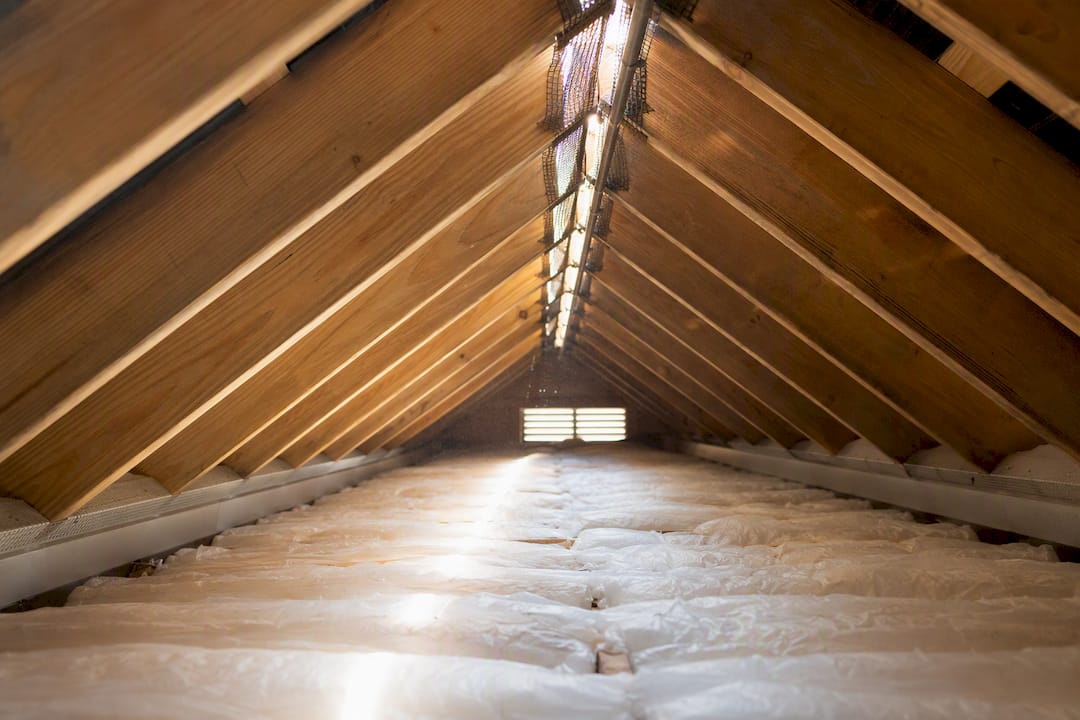
Step three: ventilate soffit to ridge, continuously. The Building America Solution Center's general guideline is roughly 1 square foot of vent area per 300 square feet of attic floor, split evenly between soffit and ridge, with baffles keeping insulation from blocking the soffit intake. In heavy snow-load regions, a 2 inch air gap under the sheathing instead of the standard 1 inch, with every rafter bay vented, keeps the whole roof deck uniformly cold.
Diagnostics come before any of this work, not after. A blower door test pressurizes the house and reveals exactly where air is escaping into the attic, and an infrared scan shows the heat loss pattern on the roof itself. Skipping this step means you're insulating blind.
Special situations need extra attention: insulating overhangs to block thermal plumes from warm siding, vented over-roof assemblies for complex rooflines, and unvented compact roofs with rigid insulation above the deck for homes where soffit-to-ridge venting isn't practical. Attic ductwork is another common culprit. Moving HVAC lines inside the conditioned envelope during a retrofit removes a major heat source that's easy to miss.
Do Attic Fans and Heat Cables Really Stop Ice Dams?
A few persistent myths waste homeowner money every winter.
- "More ventilation alone will fix it." Vents help move cold air across the roof deck, but if warm air keeps leaking into the attic from below, no amount of ventilation offsets that heat load. Air sealing has to happen first.
- "Heat cables are a permanent fix." This Old House contractor Tom Silva and his team are clear that heat cables control the symptom, not the cause, and belong on chronic trouble spots, not as a substitute for insulation.
- "A powered attic fan will clear out the heat." Mechanical fans can actually pull conditioned air up from the living space through leaks, worsening the exact problem they're meant to solve. Passive, balanced ventilation works better and costs nothing to run.
When Do You Need to Call a Roofing Contractor?
Some situations call for a professional rather than another bag of ice-melt.
- Watch for these red flags: ice dams that return every year despite raking, active leaks reaching drywall or insulation, visible mold, a roof with multiple valleys or dormers, or attic ductwork and recessed lighting you can see daylight around.
- A competent contractor starts with diagnostics, not a sales pitch. Expect a blower door test, an infrared scan, and a written air-sealing and insulation plan that references local code minimums before any work begins.
- Cost drivers vary by scope. Air sealing and insulation top-ups run less than a full re-roof, while structural water damage or a roof replacement to fix a design flaw pushes costs higher. Emergency temporary repairs address the leak now; permanent air-sealing and insulation work is best scheduled in the off-season, when contractors aren't backlogged.
- Get multiple quotes and insist on a written scope. A quote that skips the diagnostic step is a quote you should question.
If you've got water actively coming through right now, emergency roof repair stops the immediate damage while you plan the permanent fix.
Seasonal Checklist: When Should You Do What?
Ice dam prevention is a year-round habit, not a January scramble.
Before winter: clear gutters and downspouts completely, inspect attic penetrations around lights and vents for gaps, and schedule a diagnostic audit if you had trouble last year. Check that soffit vents aren't blocked by insulation or debris, since clogged gutters and downspouts trap the meltwater that feeds ice dams.
During snow season: rake accessible roof edges after heavy snowfall, keep an eye on icicle growth and any new ceiling stains, and never send anyone onto a snow-covered roof without professional equipment.
After winter: inspect the attic and ceilings for signs of moisture, dry out anything damp right away, and book long-term air-sealing or insulation work if dams formed this year.
Pro Tip: Sealing gaps around exterior doors and windows helps the whole envelope, not just the roof. Weatherizing doors properly cuts drafts that otherwise force your furnace to work harder, indirectly reducing the heat load reaching your attic.
Why a Professional Diagnosis Beats Guesswork
Most homeowners we talk to have already tried the DIY fixes: a rake, some ice-melt, maybe a string of heat cables clipped to the eaves last minute. Those aren't wrong moves. They're just incomplete ones, because they treat the roof edge as the problem when the attic is where it actually starts.
A proper fix starts with an inspection, moves to blower door and infrared diagnostics to map exactly where air is escaping, and only then gets into prioritized air sealing and an insulation specification matched to the home's climate zone. Every step gets documented, which matters enormously if water damage triggers an insurance claim. And no interior repair happens until the heat-loss problem is actually corrected. [author_bio]
Get a Professional Ice Dam Inspection Before Next Snowfall
Raking and ice-melt socks handle this week's emergency. They won't stop the same ice dam from forming again next month, because the fix that actually lasts happens in your attic, not on your roof edge. Am-exteriors handles both ends of that problem: attic air sealing and insulation upgrades to stop heat loss at the source, plus roof repair, replacement, and emergency leak response when a dam has already caused damage.

An inspection starts with a real diagnosis, not a guess. Am-exteriors' crews document attic conditions, identify air-leakage paths, and specify insulation upgrades sized to your home, and they handle the insurance paperwork if storm or ice damage is part of the claim. If you're dealing with an active leak, emergency roof repair gets someone out fast. If you're planning ahead for next winter, get a full roof inspection and replacement quote before the snow flies, not after.
Frequently Asked Questions
What is the single most effective way to prevent ice dams? Air-sealing the attic ceiling plane is the highest-leverage step, since it stops the warm air leakage that drives roof-deck heating in the first place. Insulation and ventilation reinforce that fix but don't replace it.
Do heat cables actually stop ice dams? No. Heat cables melt a path through existing ice in problem spots, but they don't address the heat loss causing the dam, so most contractors recommend them only as a supplement to air sealing and insulation.
How much insulation do I need in my attic to prevent ice dams? Most cold-climate homes need R-30 to R-38 as a baseline, with R-60 or higher recommended in the coldest zones, paired with proper air sealing underneath.
Can I remove an ice dam myself? You can safely reduce risk from the ground with a roof rake and by cutting a temporary channel with calcium chloride, but never climb onto an icy roof, and treat any channel as a short-term measure that stops working within days.
When should I call a roofing contractor about ice dams? Call a professional if dams return every year, you see mold or repeated interior leaks, or your roof has a complex layout with valleys, dormers, or attic ductwork that makes diagnosis difficult on your own.
Sources
- Dealing with and preventing ice dams | UMN Extension
- How To Get Rid Of Ice Dams: Prevention & fast fixes | This Old House
- Attic air sealing, insulating, and ventilating for ice dam prevention | Building America Solution Center
- BSI-046: Dam (Ice dam) | BuildingScience
- Preventing roof ice dams | National Weather Service