
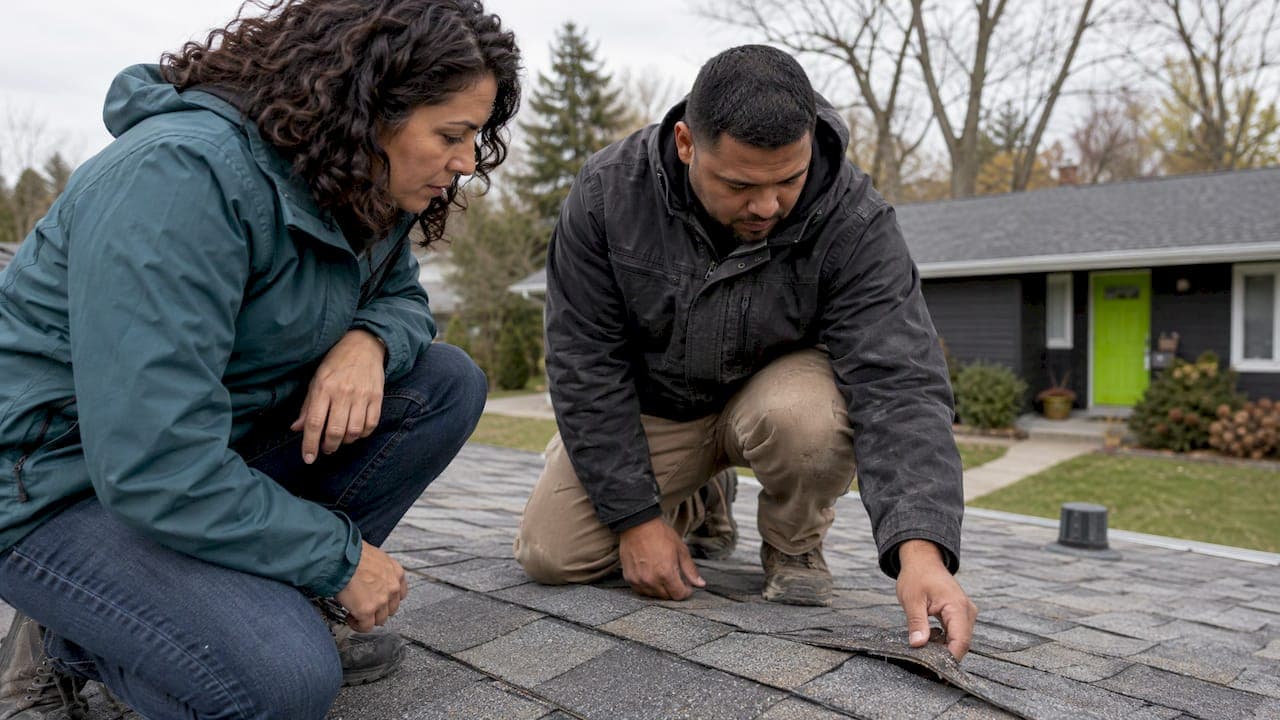
The adjuster meeting is the visit where your insurer inspects your roof and records the damage. Be there. Bring your photos and records. You may also have your roofing contractor attend to discuss repair scope and estimates. Below, you get the steps before, during and after the meeting.
TL;DR
- The adjuster inspects, photographs and measures the damage, then reviews your policy. The insurer decides coverage from the report.
- Be present. Bring pre-damage photos, receipts and any contractor bids.
- Your contractor's attendance is optional. It can help with estimates and technical details.
- Contractors without a public adjuster license should not negotiate your settlement or advise on policy coverage.
- If damage is missed, contact the insurer or adjuster and send supporting estimates. Do not make permanent repairs first.
Table of Contents
- What happens at an adjuster meeting
- Before the meeting: preparation steps
- Should your roofer be at the meeting?
- What a contractor can and cannot do at the inspection
- During the meeting: a simple script
- Questions to ask the adjuster
- Perspective: why we attend
- After the meeting: if damage was missed
- Common mistakes to avoid
- Get help with your roof claim
- FAQ
- Sources
What happens at an adjuster meeting
The adjuster visits to inspect and estimate the damage. According to the NAIC Post-Disaster Claims Guide, the adjuster takes photographs and measurements and may calculate repair costs. The adjuster also works out what can be repaired or replaced, and at what cost. The adjuster reviews your policy for coverage, limits and deductibles, and should explain the coverage to you.
On a roof, expect this:
- The adjuster looks at the roof surface from the ground, a ladder or on the roof.
- The adjuster photographs shingles, flashing, vents and any visible impact marks or lifted material.
- The adjuster measures slopes and notes the count of damaged areas.
- The adjuster may check gutters, siding and windows for matching storm damage.
- The adjuster writes up findings and an estimate.
The visit is not the final decision. The Texas Windstorm Insurance Association explains in its claims webinar that the adjuster documents the damage and submits an inspection report. The insurer's claims examiner then determines whether the damage is covered. Your insurer's process may differ in detail, so ask yours how it works.
Before the meeting: preparation steps
Good records make the visit shorter and the estimate clearer. Do these in order.
- Call your insurer early. Contact your insurance company as soon as possible to arrange the visit. The North Carolina Department of Insurance advises asking for the name and phone number of everyone you speak to.
- Protect the home. Make temporary repairs to stop further damage and save the receipts. See our guide to what to do in the first hour with an emergency roof tarp.
- Photograph the damage. Shoot the roof, ceilings, attic and any water stains. Our roof damage photo checklist lists the shots to take.
- Gather records. The NAIC guide suggests pre-damage photos or videos, receipts for damaged items and contractor bids if you have them.
- List the damage. Write down damaged property and damage to the home and other structures.
- Know your roof's age. Roof age can affect coverage. Use our roof age checklist for insurance coverage to gather proof.
- Read your policy. Find your deductible and any limits on roof coverage.
Do not make permanent repairs yet. The North Carolina Department of Insurance says to wait until the insurer has inspected the property and you have agreed on the repair cost.
What to bring to the meeting
- Your claim number and the adjuster's contact details
- Printed or on-phone photos from before and after the storm
- Your damage list
- Receipts for temporary repairs
- Any written contractor estimate
- A notebook and pen
Should your roofer be at the meeting?
Attendance is optional. The Texas Department of Insurance says a homeowner might have a contractor present to discuss estimates or technical specifications with the adjuster or insurer.
Here is why many homeowners choose to have one there:
- A trained eye on the roof. A roofer can point out lifted shingles, creased flashing and damaged vents that are easy to miss.
- Time on the roof. Adjusters often have several inspections in a day. A contractor can help make sure each slope gets looked at.
- Technical answers. If the adjuster asks about materials, layers, pitch or code requirements, the contractor can answer on the spot.
- A shared scope. The contractor's repair scope and the adjuster's estimate can be compared line by line, right there.
- Clear notes. A second person helps record what was said.
You still lead the meeting. It is your claim and your policy. The contractor supports you.
Hail and wind: what a roofer can point out
Hail and wind leave different marks. Hail can leave bruises, granule loss and dents in soft metals. Wind can lift, crease or tear shingles and break seals. Our guides cover both: the hail storm roof inspection checklist and what to do after wind damage. If the adjuster calls hail marks cosmetic, our piece on cosmetic versus functional hail damage explains the difference.

What a contractor can and cannot do at the inspection
States regulate who may act for you in a claim. The NAIC consumer outreach notice draws the line. Rules differ by state, so check with the Wisconsin Office of the Commissioner of Insurance or your own state's insurance department for local rules.
| Activity | Without a public adjuster license (per NAIC guidance) |
|---|---|
| Give a storm damage opinion | Allowed |
| Prepare a repair estimate and scope | Allowed |
| Discuss the scope with you or the adjuster | Allowed |
| Recommend that you file a claim | Allowed |
| Attend the insurer's inspection | Allowed |
| Answer questions about the estimate | Allowed |
| Investigate or evaluate the insurance claim | May require a state license |
| Advise on policy coverage | May require a state license |
| Advocate for you in the claim | May require a state license |
| Prepare the insurance claim | May require a state license |
| Negotiate the settlement | May require a state license |
In plain terms: your contractor can talk about the roof. Coverage and settlement talks stay between you and your insurer, or you and a licensed public adjuster if you hire one.
During the meeting: a simple script
Keep it short and factual.
- Meet at the door. Confirm the adjuster's name, company and phone number. Write them down.
- Walk the property together. Start with the roof, then gutters, siding, windows and the interior.
- Point out every area. Show the damage you found, not only the worst slope.
- Show your records. Hand over your photos, damage list and any contractor estimate.
- Ask for the next steps. Per the NAIC guide, take notes, get contact information and ask what other information is needed.
- Ask when to expect the estimate. Write the answer down.
Ladder safety
Do not climb a damaged roof yourself. Wet, icy or storm-damaged surfaces are dangerous. Let the adjuster and your contractor handle the roof. Stay on the ground and take notes.
Questions to ask the adjuster
- What did you find on each slope?
- Which items are included in the estimate?
- How is my deductible applied?
- Does the estimate include repair or full replacement?
- What other information do you need from me?
- When will I get the written estimate and the coverage decision?
- Who do I call with questions?
Write each answer down with the date and time. Keep every note with your claim file.
Perspective: why we attend
We have worked on Wisconsin roofs for over 25 years, and the owner supervises our installations. We see the same pattern on storm claims. The roof tells a story, and it helps when someone who knows roofs is there to read it with you.
At the meeting, we do what a roofer should do. We look at every slope, document what we find and give you an honest repair or replacement recommendation. We answer the adjuster's technical questions about materials and workmanship. We do not push a bigger job than the roof needs.
We also keep our role clear. You hold the policy and make the decisions. We explain the roof. We put our findings in writing, with photos, so the scope is easy to compare with the insurer's estimate.
Storms in our area bring hail, high winds and heavy snow. Our work is designed for those conditions, and we pair quality installation with products like Malarkey shingles and LP SmartSide, backed by extensive warranties. A claim is stressful. Clear communication and detailed documentation take much of that weight off.
Heather
After the meeting: if damage was missed
Adjusters can miss damage, or the estimate may not match the repairs your roofer documented. Follow the steps in the NAIC guide:
- Report new damage. If you find damage that was not reported or inspected, contact the insurer or adjuster.
- Explain any disagreement. Say why you disagree with the estimate. Send information such as contractor estimates.
- Protect the home. Make essential temporary repairs and keep receipts.
- Hold off on permanent repairs. Speak with the insurer first.
- Keep a log. Record every call, name, date and what was agreed.
For a full walk-through of the claim from first call to payment, read our Wisconsin guide to filing a storm damage insurance claim.
Repair or replace?
The estimate may show a repair, a partial replacement or a full replacement. A written inspection from your roofer helps you see whether the scope fits the condition of the roof. Our team gives an honest repair versus replacement recommendation. For budgeting, our published range for roof replacement is $7,500 to $18,000, and our roof replacement cost guide for Wisconsin explains what moves the price.
Common mistakes to avoid
- Skipping the meeting. Be present, as the NAIC guide advises.
- Waiting to document. Take photos before cleanup or temporary repairs.
- Starting permanent repairs early. Wait until the insurer has inspected and you agree on cost.
- Not taking notes. Names, dates and promises matter later.
- Letting one slope stand for the whole roof. Ask that every slope be inspected.
- Handing over coverage decisions. Keep policy and settlement discussions with you and your insurer, or a licensed public adjuster.
Get help with your roof claim
We work with homeowners across Southeast Wisconsin, including Dodge, Washington, Fond du Lac and Ozaukee counties. We offer storm damage roofing, roof repair, roof replacement and insurance claim assistance. We attend adjuster inspections, document the roof and give you a clear written scope.
See our insurance claim services or our roofing services. For storm-specific work, visit our hail and wind storm damage page. Need a leak stopped now? Our emergency roof repair team responds to leak emergencies.
Call or book an inspection before your adjuster visit. We will review the roof with you and be ready to meet the adjuster.
FAQ
Do I have to be home for the adjuster meeting?
Yes, plan to be there. The NAIC guide advises being present so you can show the adjuster the damage and your records. You can also ask your contractor to attend. If you cannot be there, tell your insurer in advance and ask how they handle it.
How long does the roof inspection take?
It varies with roof size, complexity and the damage found. Ask the adjuster for a time window when you book. Allow time to walk the whole property, not just the roof.
Can my roofer talk to the adjuster for me?
Your roofer can attend and discuss the repair estimate and scope, according to NAIC guidance. Advising on coverage, advocating for you or negotiating the settlement are public adjusting activities that may require a state license. Check your state's rules.
What if I disagree with the adjuster's estimate?
Tell the insurer why you disagree and send supporting information, such as a contractor estimate and photos. Keep receipts for any temporary repairs. Do not start permanent repairs until you have spoken with the insurer.
Should I tarp the roof before the adjuster comes?
Make temporary repairs that keep the home from more damage, and save the receipts. Photograph the damage first. Leave permanent repairs until the insurer has inspected and you have agreed on cost.
Sources
- NAIC Post-Disaster Claims Guide (2019)
- Texas Windstorm Insurance Association claims webinar (2021)
- Texas Department of Insurance: How do I file a homeowners insurance claim?
- NAIC public adjuster consumer outreach notice (2018)
- North Carolina Department of Insurance: Claims and Adjuster Information
- North Carolina Department of Insurance: After a Disaster brochure