
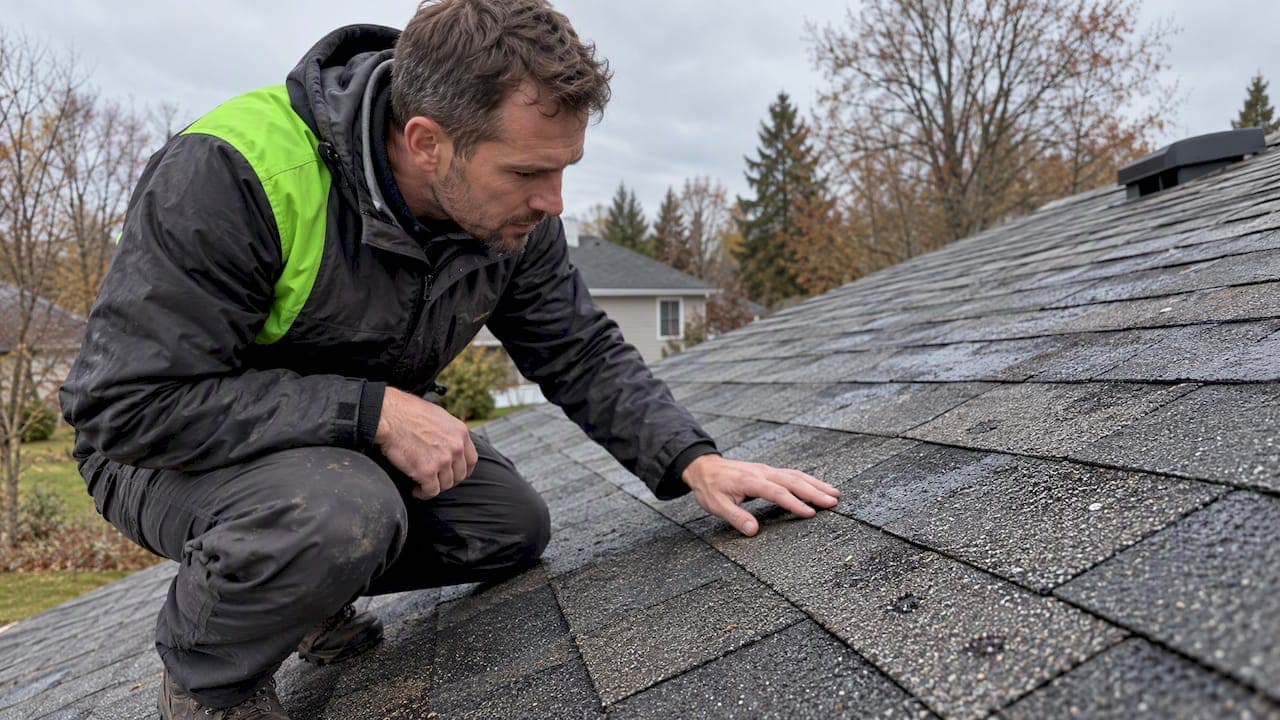
Cosmetic damage changes how a roof looks. Functional damage reduces its ability to shed water or shortens its expected service life. Whether cosmetic-only loss gets paid depends on your policy language and endorsements, not the label an inspector uses. Photograph everything now, then pull your declarations page and read any wind/hail or cosmetic endorsements.
TL;DR:
- Older roofs may be settled at actual cash value, which subtracts depreciation; check for separate wind or hail deductibles before estimating your recovery.
- Ask the inspector to document whether strikes exposed the shingle mat, fractured material, or impaired water shedding, while leaving coverage interpretation to the adjuster.
- Photograph every roof slope and house elevation, capture individual strikes beside a scale reference, and save maintenance records that may distinguish storm damage from wear.
- Stay off the roof if safety is uncertain; arrange a licensed local inspection and compare the estimate with your deductible before filing a claim.
Table of Contents
- What counts as functional damage and what counts as cosmetic?
- How does the label change what your insurer pays?
- What should an inspection report say?
- What should you do after a hailstorm?
- Why we document every roof before we talk claims
- FAQ
- Sources
What counts as functional damage and what counts as cosmetic?
The National Association of Certified Home Inspectors defines functional damage as damage that diminishes a roof's ability to shed water or reduces its expected service life. Anything that does not meet that definition is cosmetic. Engineers at Haag add a caution: the split can be a false dichotomy, because uniformity, coating integrity and an intact mat can be part of how a roof system is meant to perform.

The same hail can affect different roofing materials in different ways. Have a qualified inspector assess the material and document any visible damage.
Here is how we sort what we see on roofs:
- Potentially functional: hail strikes that expose the shingle mat, remove the protective coating or fracture the material.
- Functional: cracks, splits or punctures that let water reach the deck.
- Cosmetic: minor, localized granule loss that leaves the shingle intact.
- Cosmetic: shallow dents in vents, gutters or downspouts.
- Cosmetic: discoloration or spatter marks that do not affect performance.
Pro Tip: Run a gloved fingertip across a strike. A bruise you can feel or a spot where the mat shows through deserves a closer look.
Hail size matters too. Our guide on hail size and roof damage covers when an inspection is worth scheduling.
How does the label change what your insurer pays?
Policies differ in covered perils, exclusions and deductibles. The NAIC says the most reliable question is what your own wind/hail coverage and cosmetic-damage endorsement say. A standard homeowners policy commonly covers sudden wind and hail damage, but exclusions vary. Endorsements may address cosmetic damage differently, so check your policy wording to see how it treats granule loss and roof performance.
Settlement method shifts the payout as well:
- Replacement cost value (RCV): pays to replace the roof without deducting depreciation, sometimes in stages.
- Actual cash value (ACV): pays the depreciated cost, so an older roof recovers less.
- Roof age: the NAIC notes roof age, condition, material and shape can affect underwriting and settlement, and some insurers treat older roofs on an ACV basis.
- Deductibles: check for a separate wind/hail or roof deductible, which can change what you recover.
The Insurance Information Institute explains that ACV pays depreciated cost, and insurers often calculate depreciation from roof condition and expected lifetime.
A visible change can still be "damage" in the everyday sense, but your recovery depends on your policy wording and applicable rules. Before you file, weigh your deductible against the likely repair cost. If you are unsure whether the roof is near the end of its life, our post on repair or replace for Wisconsin roofs explains how age and condition factor in.
What should an inspection report say?
Haag engineers advise that reports state clearly what hail did and did not do. Using "cosmetic" as a stand-in for applying the policy blurs two separate jobs: gathering evidence and interpreting coverage. A good report describes the strikes and the material's condition, then leaves the coverage call to the adjuster.
Build your evidence in this order:
- Take wide shots of each roof slope and every elevation of the house.
- Take close-ups of individual strikes with a scale reference, such as a coin or tape measure.
- Photograph related components: flashing, valleys, vents and gutters.
- Note the roof's age, material and visible condition.
- Keep maintenance records and past contractor invoices.
Those last records matter if your insurer points to pre-existing wear. Our checklist of hail damage roof signs to photograph and our guide to hail damage on shingles show what each sign looks like.
Pro Tip: Ask your inspector one question in writing: did hail reduce the roof's water-shedding ability or expected service life, as your carrier defines it? Then let the adjuster apply the policy.
What should you do after a hailstorm?
Start with safety. Stay off the roof if there is any doubt. Use binoculars from the ground or hire a professional to go up.
- Record the storm date, local weather conditions and a video walkthrough of your property.
- Photograph the damage using the checklist above. A storm damage inspection checklist from a roofing contractor in Florida offers a second set of prompts, though your policy terms are Wisconsin's to follow.
- Read your declarations page for cosmetic or wind/hail endorsements, separate roof deductibles and RCV or ACV terms.
- Schedule a licensed, in-market inspection and get a written estimate before or alongside filing.
- Compare the deductible with the expected settlement before you decide to file.
- If you do file, keep every photo, record and contractor bid to hand to the adjuster.
Why we document every roof before we talk claims
Heather here. In our owner-operated roofing work, we have found that thorough records can help clarify disputes about damage. Owner-supervised installation can also help address workmanship concerns. If you want a second set of eyes, you can request a free hail inspection and we will document what the storm did and did not do.
— Heather
FAQ
What is considered functional damage?
Functional damage reduces a roof's ability to shed water or shortens its expected service life. Exposed shingle mat, fractured material and punctures are typical examples. The NACHI definition uses exactly this two-part test.
What is considered cosmetic damage to a roof?
Cosmetic damage affects appearance without hurting performance. Examples include minor, localized granule loss and dents in vents and gutters. Whether it is paid depends on your policy's cosmetic-damage wording.
Can cosmetic damage still be covered?
Sometimes. Coverage depends on your policy language and endorsements, and some endorsements exclude cosmetic-only loss. Read your declarations page and ask your insurer how it defines the term.
Does roof age change my payout?
It can. The NAIC notes that some insurers treat older roofs on an ACV basis, which subtracts depreciation from the payment. Check whether your policy pays RCV or ACV.
Sources
- Content
- Mastering Roof Inspections: Hail Damage, Part 2
- How Your Roof Influences Your Home and Business Insurance