
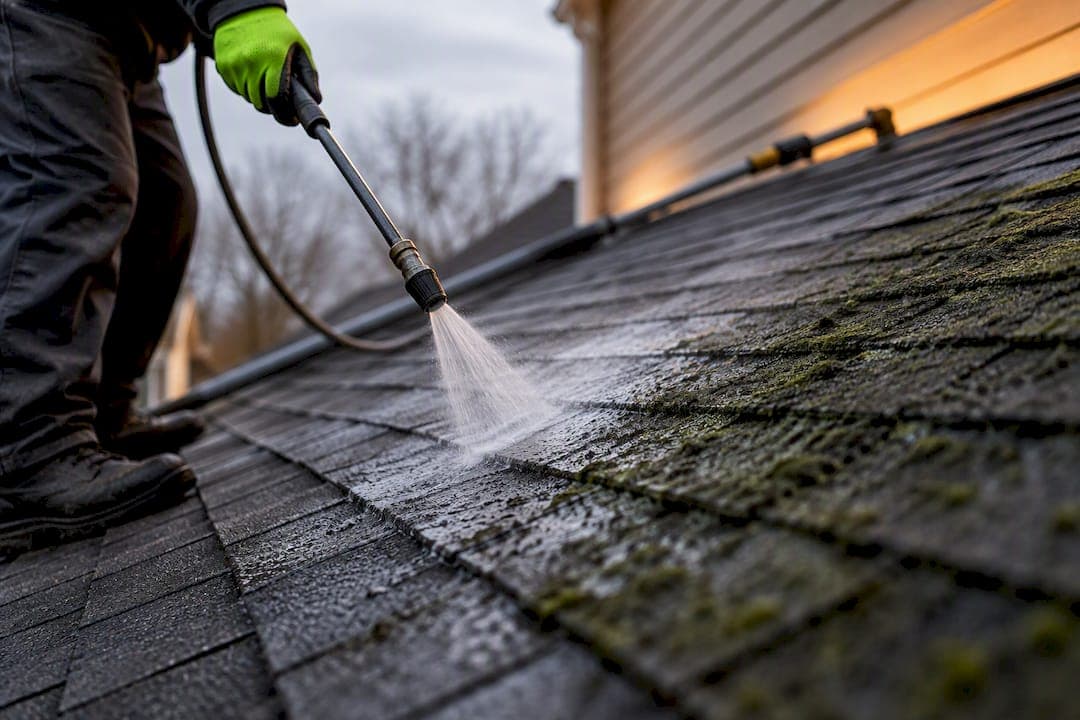
Regular debris control, trimmed shade, and an occasional soft-wash treatment prevent most roof algae without harming your shingles. This approach follows the guidance from the Asphalt Roofing Manufacturers Association and GAF, both of which warn against pressure washing. Whether to do this yourself or hire a professional depends on your roof's slope, height, and how safely you can access it.
TL;DR:
- Regular maintenance such as trimming trees, cleaning gutters, and removing debris can greatly reduce moisture buildup that promotes algae growth.
- Soft washing with a diluted sodium hypochlorite solution is the industry-recommended method for algae removal, avoiding pressure washing to prevent shingle damage.
- Treatments are temporary; routine upkeep and addressing underlying roof issues like drainage and ventilation are essential for long-term prevention.
- Algae-resistant shingles and metal roofing materials offer more durable protection against future growth during reroofing projects.
- Hiring a professional is advisable for steep, high, or hard-to-access roofs, and they should clearly disclose their chemical use and safety precautions.
Table of Contents
- What roof algae is and how to spot it
- Main causes and contributing factors
- Actionable prevention checklist
- Safe cleaning methods: what works and what to avoid
- Prevention options at reroof or retrofit
- How long treatments last and what to expect
- When to hire a professional and how to vet them
- When algae signals a bigger problem than dirt
- How AM Exteriors approaches roof cleaning and long-term prevention
- Sources
- FAQ
What roof algae is and how to spot it
Those dark streaks on your roof are usually not dirt or mold. They are Gloeocapsa magma, a blue-green algae that feeds on the limestone filler in asphalt shingles and leaves behind dark, streaky stains as it spreads. By the time you see streaks, the algae has typically been growing for months.
Algae is often confused with other roof residue. A few quick checks help you tell them apart:
- Algae appears as dark, often black or greenish streaks, usually running down from the ridge.
- Moss grows as raised, fuzzy patches, often in shaded valleys or under overhanging branches.
- Tobacco-juicing shows up as brown, blotchy residue and comes from environmental pollutants and dew exposure rather than biological growth.
Main causes and contributing factors
Algae needs moisture, organic material, and shade to spread. Roofs that stay damp longer after rain give it the conditions it needs.
- Shade and moisture from overhanging trees keep roof surfaces wet for longer stretches.
- North-facing slopes dry more slowly than sun-exposed sides, giving algae a foothold.
- Debris buildup, like leaves and pine needles, traps moisture against the shingle surface.
- Shingle composition matters too: the crushed limestone filler in standard asphalt shingles serves as a food source for the algae.
- Airborne spores travel between neighboring roofs, so algae often shows up on multiple homes in the same area around the same time.
Actionable prevention checklist
Prevention is mostly maintenance, done on a schedule, with a few safety rules attached.
- Trim or thin tree branches once a year, focusing on limbs that shade north-facing roof planes, as explained in this guide to spring lawn preparation in Minnetonka.
- Clean gutters and valleys at least twice a year and again after any major storm.
- Clear roof debris like needles and leaves with a leaf blower or by hand. Never scrape shingles with abrasive tools.
- Schedule soft-wash treatments as needed rather than waiting for heavy staining to set in.
- Protect nearby plants before any chemical treatment by soaking them with water and covering sensitive landscaping.
- Adjust landscaping where persistent shade or poor drainage keeps the roof damp longer than it should.
Pro Tip: Walk your roofline from the ground each spring and fall. Catching early streaking before it spreads saves you a full cleaning later.
Safe cleaning methods: what works and what to avoid
The industry standard for removing algae is soft washing: a low-pressure application of a diluted sodium hypochlorite (bleach) and water solution, left to sit briefly, then rinsed gently. ARMA's technical guidance recommends this method specifically because it removes algae without disturbing the granules that protect your shingles.

Pressure washing strips granules from asphalt shingles and can shorten roof life. Once granules wash away in the gutter, the shingle underneath loses UV protection and wears faster. You can see this effect described in our guide to granules in gutters, which explains what excessive granule loss signals about roof condition.
A few precautions matter regardless of who does the work:
- Wet and cover plants near the roofline before treatment.
- Avoid applying cleaner right before expected rain, since runoff can carry chemicals into storm drains.
- Wear gloves, eye protection, and non-slip footwear since wet roofs become dangerously slippery.
- Confirm any product's exact concentration before use rather than guessing at a mix ratio.
If your roof is steep, high, or hard to access safely, hiring a professional is the safer route. Our guidance on ice and water shield and roof access covers similar safety considerations for homeowners weighing DIY roof work.
Prevention options at reroof or retrofit
If you are replacing your roof anyway, a few material choices reduce future algae problems.
- Algae-resistant shingles use copper-containing granules that make the surface inhospitable to algae growth; check the manufacturer's warranty language, since coverage varies by product line.
- Metal roofing is less hospitable to algae growth than asphalt, though it comes with different cost, lifespan, and appearance trade-offs worth weighing against your current roof.
- Zinc or copper strips installed near the ridge can slow algae growth on the section directly below them, but Oregon State University's extension guidance notes that installation risks leaks if strips are nailed incorrectly under shingles, and metal runoff can affect nearby plants and waterways.
How long treatments last and what to expect
Soft-wash cleaning removes existing algae, but it does not stop new growth from starting. Oregon State's guidance is direct on this point: chemical treatments wash off over time and do not provide lasting control on their own.
- Routine maintenance (debris removal, trimming, gutter cleaning) reduces how often you need a full cleaning.
- Inspect your roof at least once a year, with a follow-up check after major storms or in early spring.
- Costs vary based on roof area, accessibility, roof material, and whether you choose reroofing with algae-resistant shingles instead of repeated cleanings.
When to hire a professional and how to vet them
Some situations call for a professional rather than a DIY approach.
- Hire a pro when your roof is steep, more than one story, or has areas you cannot safely reach with a ladder.
- Ask exactly what chemicals they use and at what concentration, since vague answers suggest inexperienced handling.
- Confirm runoff protection for your landscaping and ask how they contain chemical drift near plants.
- Check insurance coverage and ask for references from similar asphalt shingle cleaning jobs.
- Watch for red flags: any offer to pressure wash your roof, refusal to protect your landscaping, or unclear answers about chemical concentration.
When algae signals a bigger problem than dirt
Algae that keeps returning to the same section of roof often points to something beyond surface dirt. Poor drainage, damaged flashing, or blocked ventilation can keep one area wetter than the rest of the roof, and no amount of cleaning fixes that on its own. Owner-supervised installation work matters here because a properly flashed, properly ventilated roof dries faster and resists algae longer than one with hidden workmanship shortcuts. When cleaning stops working, it is worth checking whether the real issue is the roof itself, not the algae.
— Heather
How AM Exteriors approaches roof cleaning and long-term prevention
Getting rid of algae once is one thing. Keeping it from coming back is a different job, and it starts with how your roof was built and maintained in the first place. AM Exteriors handles both sides of that.
- Roof repair and replacement for homes where recurring algae points to drainage, flashing, or ventilation issues rather than surface staining.
- Algae-resistant shingle options at reroof time, including standing seam metal roofing for homeowners who want a surface less prone to algae.
- Storm damage assessment for roofs where algae has masked deeper wear from hail or wind.
- Soffit, fascia, and gutter repair to fix the drainage problems that keep certain roof sections damp.
Every job involves supervision, with clear documentation and methods designed to protect your roof's coverage rather than voiding it. If your roof shows recurring streaking or you are weighing a full reroof, you can start with a roofing services consultation to get a straight answer on repair versus replacement.
Sources
- Algae & Moss Prevention and Cleaning for Asphalt Roofing Systems – Asphalt Roofing Manufacturers Association (ARMA)
- Moss prevention guidance — Oregon State University
FAQ
What is the white powder people put on roofs?
Some homeowners apply powdered zinc sulfate or similar compounds near the roof ridge as a slow-release algae deterrent. Effectiveness is limited to the area directly below the application point, and Oregon State's guidance notes these treatments wash off over time rather than offering permanent control.
What is the best algae killer for roofs?
Industry guidance points to a diluted sodium hypochlorite (bleach) and water solution applied at low pressure, following ARMA's technical recommendations. Pressure washing is not recommended because it strips protective granules from asphalt shingles.
What can I spray on my roof to prevent moss?
A properly diluted bleach and water soft-wash solution, applied carefully and rinsed thoroughly, removes existing moss and algae, though prevention depends more on removing shade and debris than on any spray. Oregon State University recommends addressing the underlying moisture and shade conditions for lasting results.
What can I put on my roof to prevent moss?
Zinc or copper strips installed near the roof ridge offer some localized prevention as rainwater carries trace metals down the roof surface. Oregon State's extension guidance notes this method has limited reach and carries installation and runoff considerations worth weighing before you add strips to an existing roof.