
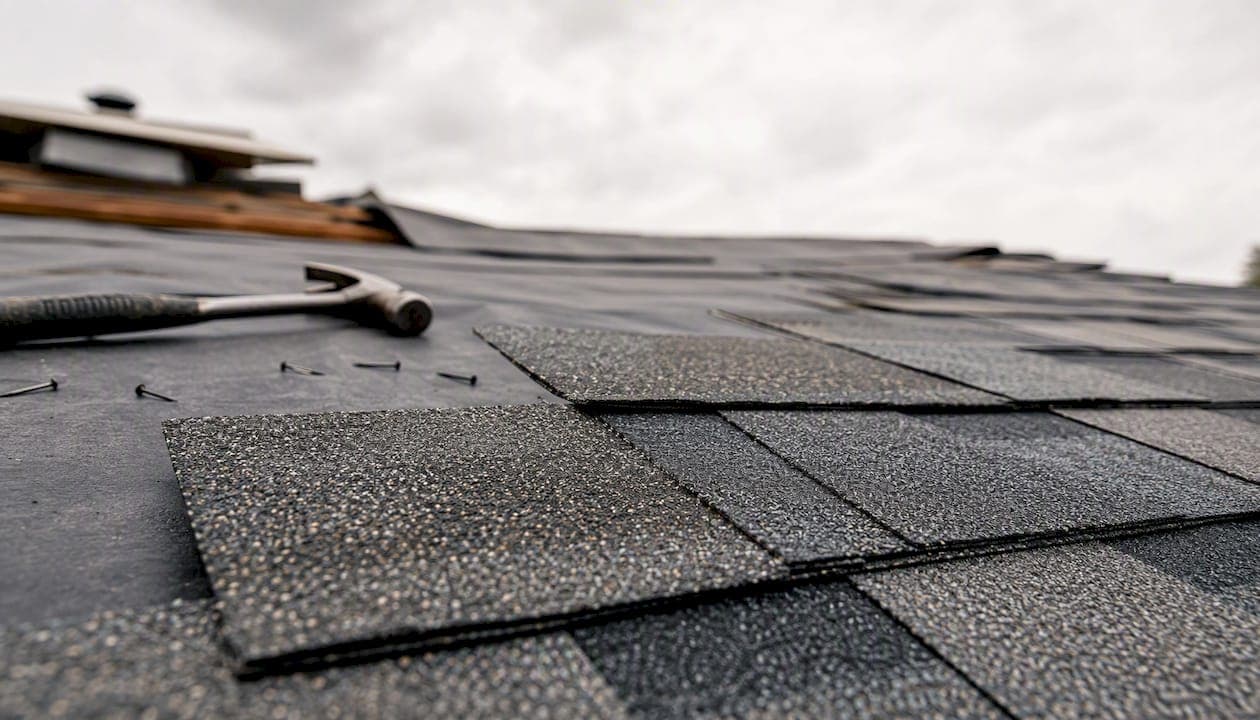
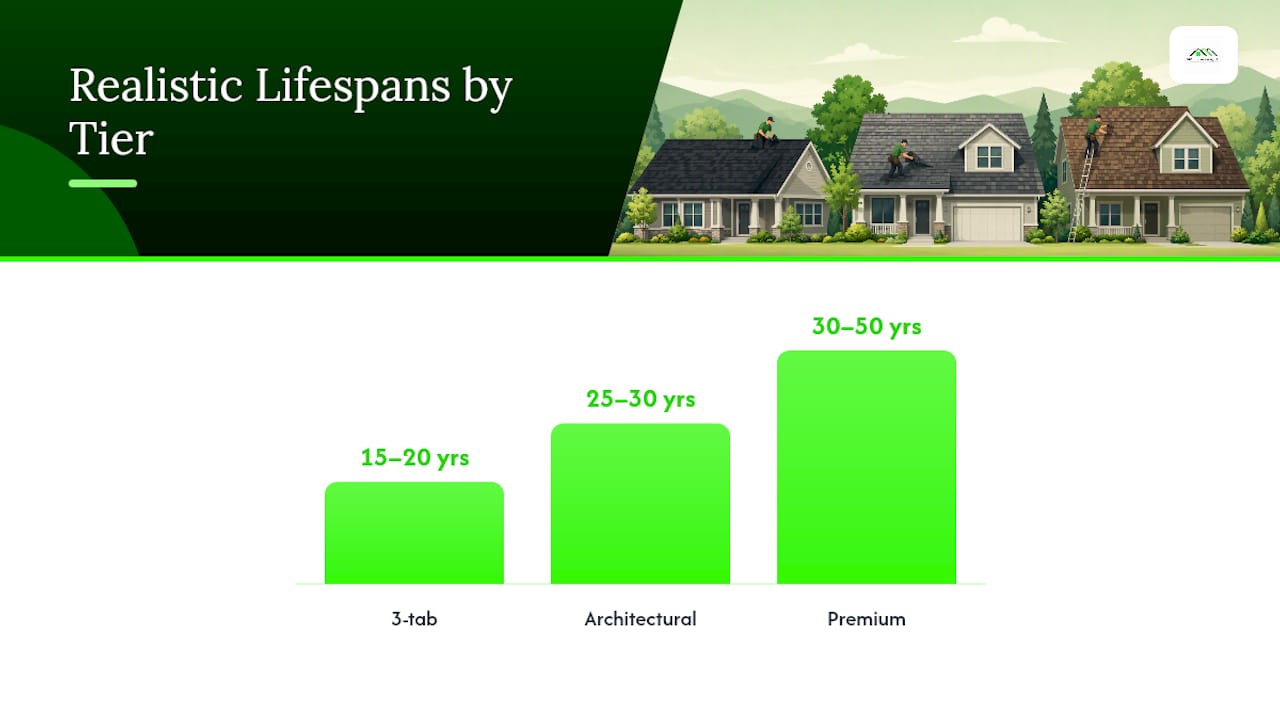
Most asphalt shingle roofs last 15 to 50 years, and the spread mostly comes down to one thing: installation quality and attic ventilation. A 3-tab shingle installed on a poorly ventilated attic might struggle to hit 15 years. A properly installed architectural or premium shingle, on a roof that vents correctly, can push past 30.
- 3-tab shingles: 15 to 20 years
- Architectural/dimensional: 25 to 30 years
- Premium/designer shingles: 30 to 50 years
Statistic to remember: balanced attic ventilation extends shingle life by roughly 20% to 30%, while poor ventilation cuts it by about the same margin. That single variable often matters more than which shingle brand you pick.
Key Takeaways
Asphalt shingle roofs realistically last 15 to 50 years, and installation quality combined with attic ventilation determines where a given roof falls in that range.
| Point | Details |
|---|---|
| Realistic lifespan varies by tier | 3-tab lasts 15 to 20 years, architectural 25 to 30, premium 30 to 50 years with correct installation. |
| Ventilation swings lifespan 20 to 30% | Balanced attic ventilation extends life; poor ventilation shortens it by a similar margin. |
| Warranties fade over time | Most warranties shift from 5 to 10 years non-prorated into a prorated tail paying a fraction of replacement cost. |
| Installation defects cause most early failures | Roughly 30 to 50% of premature roof failures trace to installation, not shingle quality. |
| Am-exteriors prioritizes certified installation | Am-exteriors pairs certified-installer programs with ventilation checks and workmanship coverage on every roof replacement. |
Table of Contents
- How Long Do Asphalt Shingles Last By Tier?
- What Determines How Long Your Roof Actually Lasts?
- Why Warranty Length Isn't the Same as Real Lifespan
- Signs It's Time to Replace Your Shingle Roof
- What Maintenance Actually Adds Years to Your Roof?
- How Much Should You Budget for Roof Replacement?
- Why Installer Quality Matters More Than the Shingle Brand
- Sources
How Long Do Asphalt Shingles Last By Tier?
Shingle marketing loves round numbers. A bundle labeled "30 year" or "lifetime" tells you what the manufacturer will theoretically warranty, not what the shingle will actually deliver on your roof. Realistic field lifespan almost always lands below the printed claim once you factor in weather, sun exposure, and how the crew installed it.
Industry lifespan charts from groups like InterNACHI put standard 3-tab asphalt at roughly 20 years of service, with architectural shingles commonly reaching 25 to 30 years under normal conditions. Here's how the marketing label compares to what homeowners should actually plan for:
| Shingle Tier | Marketing Claim | Realistic Field Lifespan | Installed Cost (per sq. ft.) |
|---|---|---|---|
| 3-tab | 20 to 25 years | 15 to 20 years | $3.50 to $5.50 |
| Architectural/dimensional | 30 years to "lifetime" | 25 to 30 years | $4.50 to $7.50 |
| Premium/designer | "Lifetime," 50 years | 30 to 50 years | $7.00 or more |
That premium-tier ceiling only holds up under specific conditions:
- Correct installation with proper nailing and flashing
- A balanced intake/exhaust ventilation system
- Reasonable climate exposure (not constant hail or extreme UV)
- Routine maintenance, including gutter clearing and debris removal
A heavyweight premium shingle installed badly won't outlast a mid-tier shingle installed well. That's the part the bundle wrapper never mentions.
What Determines How Long Your Roof Actually Lasts?
Five factors compound to decide where your roof lands in that 15 to 50 year window. They stack, so a roof with two or three problems can fail decades earlier than the label suggests.
- Installation quality. Nailing pattern, starter strip placement, and flashing details drive most early failures. NRCA and ARMA practitioner estimates attribute roughly 30% to 50% of premature roof failures to installation defects, not bad shingles.
- Attic ventilation. Balanced intake and exhaust venting shifts lifespan by 20% to 30% in either direction, trapping heat and moisture that bake shingles from underneath when it's missing.
- Climate and UV exposure. Hot, humid, or high-UV regions wear shingles faster than cooler, drier ones.
- Maintenance habits. Clogged gutters, overhanging branches, and trapped moisture accelerate granule loss and mat exposure.
- Storm events. A single major hail or wind event can knock 10 to 20 years off a roof's remaining service life, regardless of how well it was installed.
Pro Tip: Before you sign a contract, ask the installer three things: what nailing pattern they use, whether they install a proper starter strip along the eaves, and if they're part of a certified program like GAF Master Elite or Owens Corning Preferred. A contractor who hesitates on any of those answers is a red flag.
Why Warranty Length Isn't the Same as Real Lifespan
That "50-year" or "lifetime" label on your shingle bundle describes a warranty period, not a promise about how long your roof will actually perform. Most manufacturer warranties start with a 5 to 10 year non-prorated window, then shift into a long prorated tail where payouts shrink every year.
- Years 1 to 10 (non-prorated): full replacement value if a manufacturing defect appears
- Years 10 to 30+ (prorated): payout drops steadily, often down to around 20% of replacement cost by year 20
- Insurance caps: many insurers cap roof coverage eligibility at 20 to 25 years of age, regardless of what the shingle warranty says
A 30-year shingle that fails at year 22 due to installation error usually won't get you a free new roof; see this detailed guide on roof replacement for planning steps and expectations. It gets you a small prorated check and a much larger bill for the difference.
Signs It's Time to Replace Your Shingle Roof
Watch for these signs during a walk-around or from the ground with binoculars:
- Granules collecting in gutters or visible bald patches on shingles
- Curling, cupping, or cracked shingles, especially on south-facing slopes
- Blistering across large sections of the roof
- Exposed black mat where granules have worn away completely
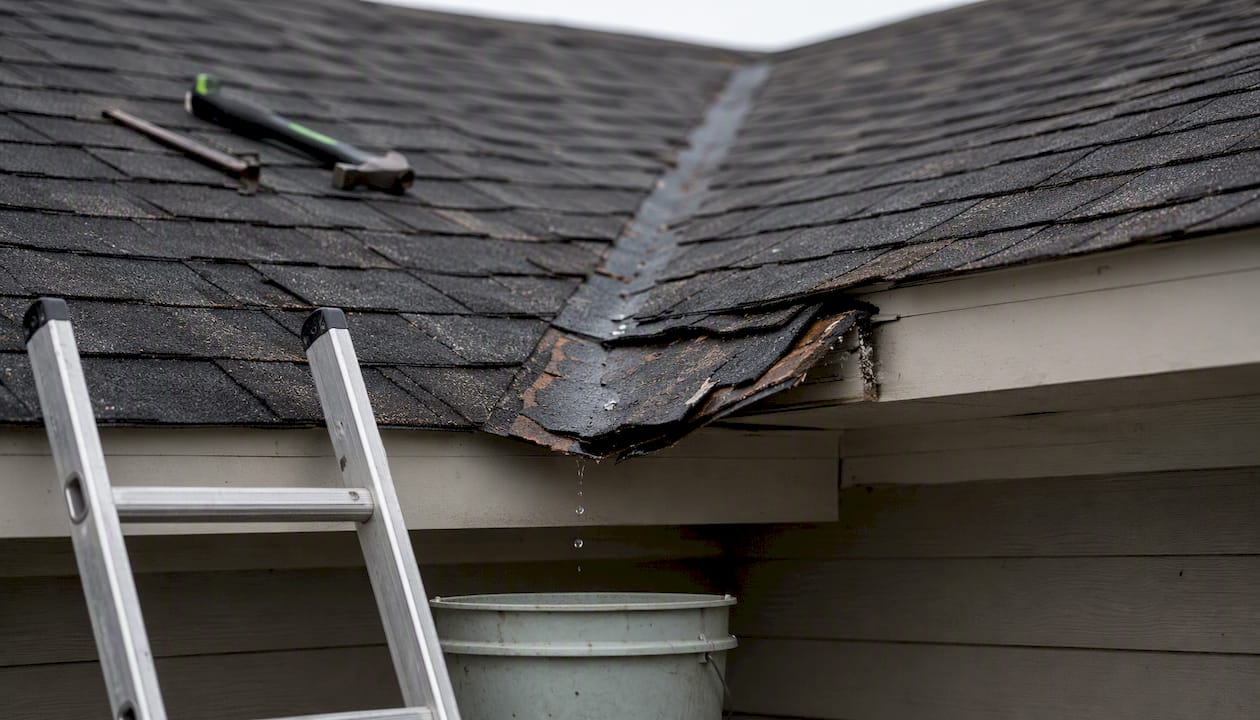
- Leaks that recur after patching, or staining on interior ceilings
- Sagging in the roof deck, visible from the street
Owens Corning's own inspection guidance points homeowners toward valleys, eaves, ridges, and flashing points first, since those areas fail before open field shingles do. A professional inspection checks the same spots plus the attic side, where a trained eye spots underlayment failure before it shows up as a ceiling stain.
Pro Tip: If your roof is within 5 years of its expected end of life, treat any active leak as urgent rather than routine. Waiting on a roof that's already near the end of its service window tends to turn a repair into a full replacement.
What Maintenance Actually Adds Years to Your Roof?
Routine maintenance is the cheapest lifespan extension available, often adding 5 to 10 years to a roof that would otherwise age out early. Here's a simple annual rhythm:
- Every year: clean gutters, trim overhanging branches, and check for granule buildup in downspouts.
- Every 1 to 2 years: inspect flashing around chimneys, vents, and skylights for gaps or rust.
- Every 3 to 5 years: treat visible moss or algae growth, and have a professional check attic ventilation balance.
A quick seasonal checklist to keep on hand:
- Clear debris from valleys before winter
- Check for black streaks or dark staining, a sign of algae growth rather than dirt
- Look for daylight or moisture in the attic during a sunny afternoon
- Confirm soffit vents aren't blocked by insulation
Pro Tip: Climb into the attic on a bright day. If you see daylight through the roof deck, feel excessive heat buildup, or spot dark water stains on the underlayment, your ventilation or underlayment may already be failing, even if the shingles look fine from the ground.
How Much Should You Budget for Roof Replacement?
Cost tracks fairly closely with the tiers above: roughly $3.50 to $5.50 per square foot for 3-tab, $4.50 to $7.50 for architectural, and $7.00 or more for premium products. Divide the total installed cost by expected lifespan years and you get a rough annualized cost, which is often the more useful number when comparing tiers.
- Storm-damaged or actively leaking roofs shouldn't wait for a "better" season; delaying risks interior damage that costs far more than the roof itself
- Roofs near end of life but not leaking can often be scheduled for late fall or winter, when contractors have more flexible pricing
- If a storm caused the damage, insurance may cover most of the replacement, making workmanship warranty coverage the main thing left to negotiate
A detailed cost breakdown for Wisconsin homeowners is worth reviewing before you get quotes, so you know whether a bid is in a reasonable range.
Why Installer Quality Matters More Than the Shingle Brand
A shingle can only perform as well as the roof it's installed on. Installation defects, not product defects, account for a large share of the early failures homeowners blame on the shingle itself.
That framing changes what you should actually shop for. Practitioner estimates place installation-caused failures at roughly 30% to 50% of all premature roof problems, which means the contractor's crew matters as much as the shingle line on the invoice.
Ask any contractor whether they carry:
- A certified-installer credential (GAF Master Elite or Owens Corning Preferred are the two most recognized)
- A dedicated workmanship warranty separate from the manufacturer's product warranty
- A track record of ventilation assessments as part of every roofing estimate
Workmanship coverage tends to protect you longer, in practical terms, than a prorated product warranty ever will.
A publisher's take on shingle lifespan planning
Before comparing shingle brands, verify the installer's certification and confirm the attic ventilation plan. Architectural shingles remain a solid, dependable choice for most homes when the crew gets the install right.
How AM Exteriors Helps You Get the Full Lifespan From Your Roof
If you've read this far, you already know the shingle brand matters less than who installs it. Am-exteriors is built around that same principle: certified installation crews, correct ventilation assessments on every estimate, and workmanship coverage that backs up the installation itself, not just the product.
Am-exteriors provides roof replacement throughout Dodge, Washington, Fond du Lac, and Ozaukee Counties, along with attic ventilation upgrades and insurance-claim assistance when storm damage is involved. If your roof is showing granule loss, curling, or recurring leaks, a free inspection will tell you whether you're looking at a targeted repair or a full replacement. Reach out to schedule a roof inspection and get a straight answer on where your roof stands in its lifespan.
Sources
- Asphalt Shingle Roof Lifespan: Real 2026 Numbers | The Roofing Brief
- Lifespan of Materials 2026 | FindRoofingPros
- Are Algae-Resistant Shingles Worth It? | Angi
- 3 Signs That It's Time to Replace Your Roof - Owens Corning
Recommended
- Repair or Replace? How to Know When Your Wisconsin Roof Is Done | AM Exteriors Blog
- Dodge County WI Roof & Siding Replacement: Homeowner's Guide | AM Exteriors Blog
- Roof Replacement in Dodge County, WI | AM Exteriors LLC
- Storm Damage Roof Repair Near Me: Wisconsin Homeowner's Guide | AM Exteriors Blog