
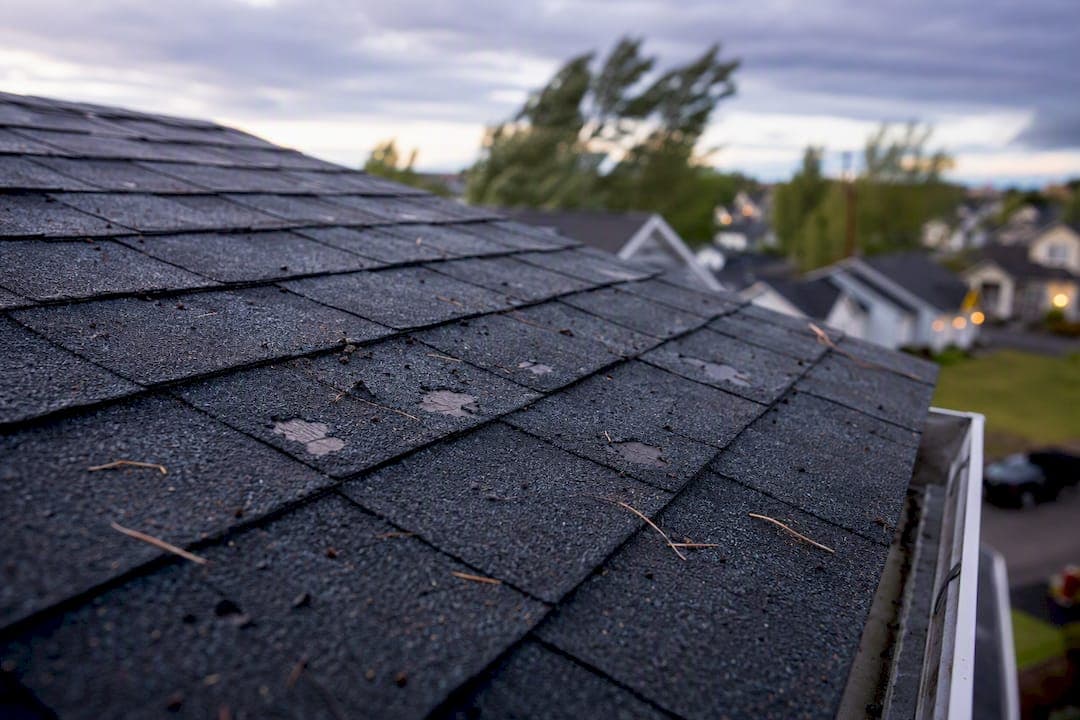
Yes, hail can damage asphalt shingles, and whether yours took a hit depends on what you find in a close inspection, not just what the roof looks like from the driveway. If a storm just rolled through, the fastest way to know is to check three things: granule loss in your gutters, dents on soft metal (vents, gutters, AC covers), and bruised or cracked spots on the shingles themselves.
Start collecting evidence before you do anything else. Photos with a timestamp, taken right after the storm, carry more weight with an adjuster than a description written a week later.
- Photograph gutters and downspouts for pooled granules
- Check metal roof vents, flashing, and gutter edges for dents
- Look at the attic for daylight, water stains, or damp insulation
- Note the storm's date and approximate hail size if you saw it
- Call a licensed roofer or your insurer within a few days, not weeks
Most homeowner policies cover hail damage, but coverage often narrows with roof age, and a delayed or undocumented claim is one of the most common reasons adjusters push back. NOAA's Storm Prediction Center tracks hail events across the country, and its regional data is one reason inspectors recommend checking your roof within days of any storm large enough to make local news. A shingle can be functionally compromised by an indentation as shallow as 1.5 to 2 millimeters, according to roofing industry guidance, which means damage severe enough to shorten a roof's life can be nearly invisible from the ground.
Key Takeaways
Hail damage is confirmed through granule loss, metal dents, and mat fractures, and claims succeed or fail based on documentation collected in the first 72 hours.
| Point | Details |
|---|---|
| Check gutters and metal first | Granules in downspouts and dents on vents or AC fins are the clearest ground-level evidence of hail. |
| Photograph everything immediately | Dated, sequential photos taken within 72 hours carry more weight with adjusters than delayed evidence. |
| Know the repair versus replace threshold | Roofs sampled below roughly 10% functional damage usually qualify for repair; near 20% often points to replacement. |
| Distinguish hail from blistering | Hail leaves a depression with collateral metal dents; blistering shows a raised rim and no metal damage nearby. |
| Get a professional inspection early | AM Exteriors documents damage in adjuster-ready format and coordinates the insurance claim directly. |
Table of Contents
- How to Spot Hail Damage on Shingles Yourself
- What Hail Actually Does to a Shingle's Layers
- Repair or Replace: How Bad Is the Damage?
- How Do You Document a Hail Damage Insurance Claim?
- Staying Safe While You Wait for Repairs
- Which Shingles and Upgrades Actually Reduce Hail Risk?
- Why AM Exteriors' Inspection Process Holds Up With Adjusters
- What Homeowners Get Wrong About Hail Claims
- Get a Professional Hail Damage Inspection Before You File a Claim
- Where to Find More on Hail Damage Standards
- Sources
How to Spot Hail Damage on Shingles Yourself
You don't need to climb on the roof to get a decent read on hail damage. Most of the evidence that matters is visible from the ground or through a pair of binoculars, and the ground-level clues are often the ones adjusters trust most anyway.
Here's a sequence that works, in the order most inspectors actually use it:
- Scan the yard and gutters first. Look for granules, the sandy coating that protects shingles from UV rays, collected at downspout outlets or in gutter troughs. A handful of loose granules after a storm is normal wear. A steady stream or visible bald patches on the shingles above is a signal.
- Check every soft metal surface. Roof vents, gutter aprons, window screens, and AC unit fins dent more easily than shingles do. Random, scattered dings in a circular pattern across these surfaces are one of the strongest indicators that hail, not something else, caused the marks you're worried about on the roof.
- Use binoculars for a ground-based roof scan. Look for dark, irregular blotches on the shingle surface. Hail bruises tend to look randomly scattered rather than following a wind-driven pattern, which usually runs in lines toward one edge of the roof.
- Only go up if it's safe. A roof with a pitch under about 6/12, dry conditions, and a stable ladder setup is manageable for a careful homeowner. Wet shingles, steep pitch, or a roof over two stories is not a DIY situation. That's when you call a professional instead.
- Try the chalk rub test, carefully. Rubbing chalk lightly across a suspected bruise can highlight a shallow depression that's hard to see in direct light. This works best on granule-intact shingles and should never involve pressing hard enough to worsen existing damage.
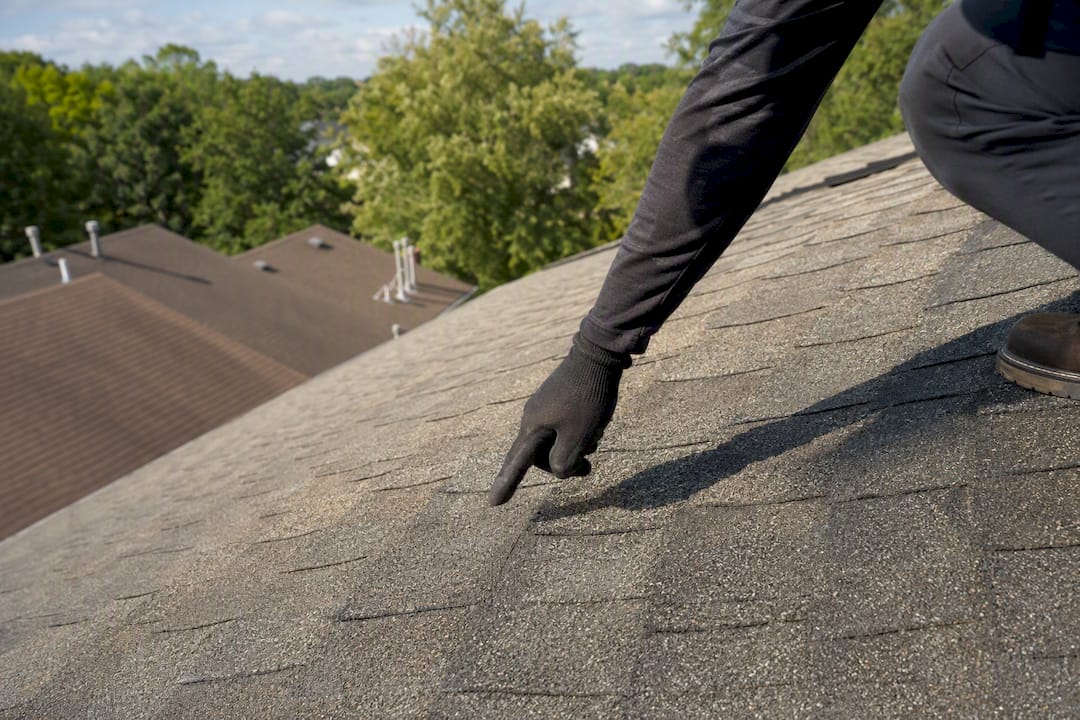
- Do a gentle thumb press on any suspicious spot. A section that feels soft, spongy, or gives more than the surrounding shingle often has a fractured fiberglass mat underneath, even if the surface still looks intact.
The gutter and metal checks matter because insurance adjusters photograph these components before they even climb the roof. Collateral damage on metal is objective, easy to measure, and hard to dispute, which makes it some of the best evidence you can gather on your own.
Pro Tip: Take your gutter and metal-dent photos before you clean anything out. Adjusters want to see the debris in place, not a tidy roofline, so resist the urge to clear granules or leaves until the inspection is done.
If you're not confident distinguishing a genuine impact bruise from ordinary wear, a professional hail damage roof inspection settles the question fast and gives you documentation you can hand directly to your insurer.
What Hail Actually Does to a Shingle's Layers
An asphalt shingle is built in layers, and hail damage rarely announces itself the same way twice because it affects those layers differently depending on impact force and shingle age.
The granule layer is your first line of defense against UV degradation. It's also the layer most visibly affected by hail, and its loss is usually your clearest ground-level warning sign. Underneath the granules sits the asphalt coating, which softens in heat and stiffens in cold, meaning identical hail can leave a mild bruise on a warm July roof and a sharp fracture on a cold October one. Below that is the fiberglass reinforcing mat, the structural core of the shingle, and if hail impact cracks this mat, the shingle has lost its structural integrity even if it still looks fine from fifteen feet away. The bottom layer is the sealant strip that bonds shingles together against wind uplift; hail impact near shingle edges can weaken this bond well before any leak develops.
- Granule loss exposes asphalt to accelerated UV breakdown and shortens shingle lifespan
- Bruising (a soft, circular depression) usually means the mat underneath has started to fracture
- Cracks or punctures mean a full breach, often visible as a lighter, ringed impact mark
- Lifted or dislodged tabs point to sealant failure, frequently from a glancing hail hit near an edge
A 20 year old roof with sun-brittled asphalt fails differently than a 3 year old roof under the same hailstorm. Older shingles crack instead of bruise because they've already lost the flexibility that lets younger asphalt absorb impact energy. That's one reason two houses on the same block, hit by the identical storm, can end up with completely different adjuster findings. Granule loss matters more than it looks, too: even where hail hasn't punctured a shingle, exposed asphalt ages faster under UV exposure, which is why adjusters and roofers alike treat heavy granule loss as a legitimate basis for claims, not just cosmetic complaint. Distinguishing this from ordinary wear also means ruling out blistering, a manufacturing or ventilation defect that can mimic hail damage but shows a raised blister rim rather than the depression hail leaves behind.
Repair or Replace: How Bad Is the Damage?
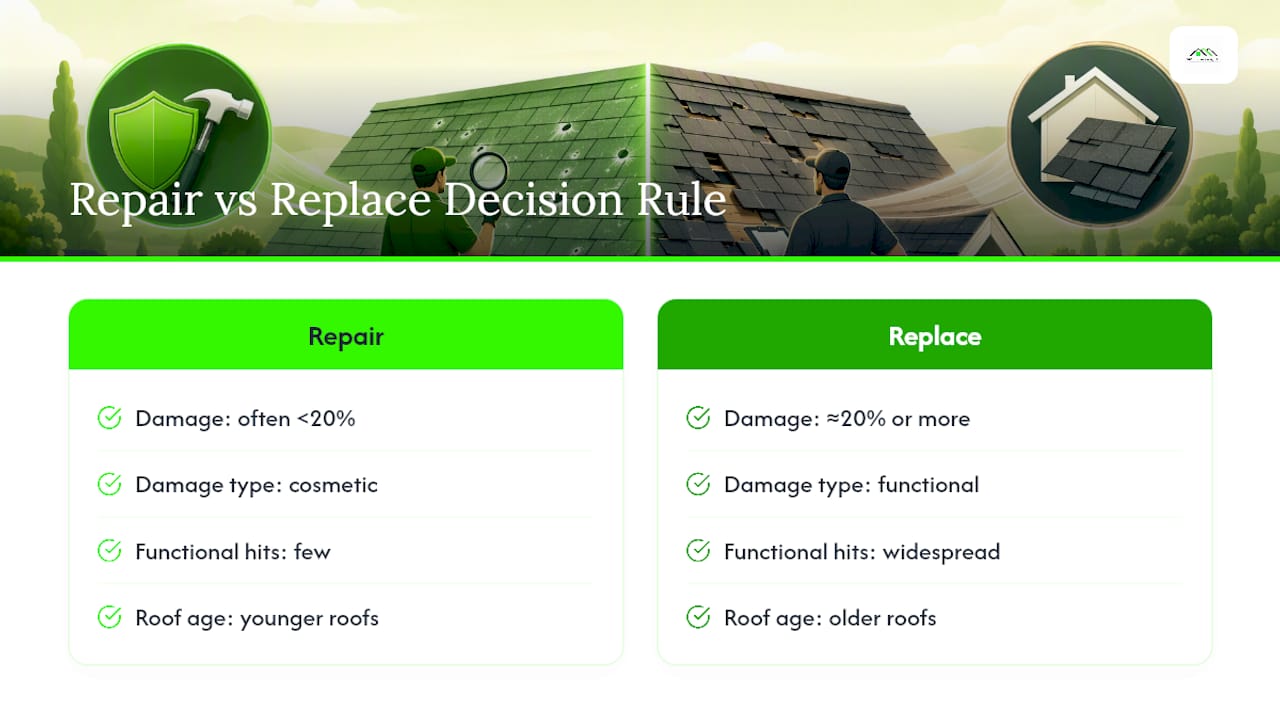
The line between a shingle repair and a full roof replacement comes down to one number inspectors actually calculate: the percentage of damaged shingles in a sampled roof area, not a gut feeling about how bad the roof "looks."
Adjusters and forensic roof consultants distinguish cosmetic damage, which affects appearance but not function, from functional damage, which compromises the shingle's ability to shed water. A few scattered granule scuffs with no mat fracture is cosmetic. A cracked mat or exposed fiberglass, even on a handful of shingles, is functional, and functional damage is what insurance is built to cover.
The most widely referenced framework for making this call comes from Nelson Forensics, which recommends sampling defined test squares across different roof slopes and counting functional hits per square. As damage approaches or exceeds roughly 20%, full replacement usually becomes the more defensible recommendation, both for water-tightness and for matching the roof's remaining useful life.
Roof age shifts this math. A 5 year old roof at 12% damage might still be a strong repair candidate. Color mismatch is the other wrinkle nobody mentions upfront: shingle lines get discontinued, and a patch job on a roof more than a few years old can leave a visibly different shade next to weathered originals.
These ranges vary by roof size, pitch, and material, so treat them as a planning baseline rather than a quote. If you're unsure which category your roof falls into, our repair versus replace guide walks through the same age and damage math in more detail.
How Do You Document a Hail Damage Insurance Claim?
Insurers pay hail claims every year without much fuss, and the ones that get denied almost always share the same problem: not enough documentation, filed too late.
Build your evidence file in this order:
- Take sequential, dated photos immediately after the storm. Cover gutters, all four roof slopes if visible, metal component dents, and any interior stains from the attic.
- Get a written contractor inspection report before the adjuster arrives. A roofer's report that itemizes damaged shingle counts by slope gives you a second, independent data point that supports or challenges the adjuster's findings.
- Schedule the adjuster visit promptly and be present if possible. Adjusters typically spend 20 to 40 minutes on a roof; having your contractor's report and photos ready speeds that process and reduces back and forth.
- Request a copy of the adjuster's own findings and damage estimate. Compare it line by line against your contractor's report before you sign anything.
- If denied, ask why in writing. The most common denial reasons are damage reclassified as wear-and-tear, damage attributed to blistering instead of hail, or insufficient photographic evidence.
- Use your options if you disagree. Most policies allow a reinspection request, and many include an appraisal clause that lets a neutral third party settle disputed estimates. A public adjuster is another option for larger, contested claims.
Insurance coverage for hail damage is generally solid, but it narrows fast when roof age or missing documentation gives the insurer an easy out. Blistering, a ventilation or manufacturing defect that can look superficially similar to hail bruising, is one of the most common grounds for a denial, which is exactly why the difference matters practically, not just technically.
Pro Tip: Keep every email with your insurer dated and saved in one folder, and note the exact time you noticed the storm damage. Adjusters sometimes push back on claims filed weeks after a storm, and a documented timeline closes that argument before it starts.
If the claims process feels like more than you want to manage alone, AM Exteriors handles insurance claim documentation and adjuster coordination directly, which keeps the paperwork moving while you focus on getting the roof fixed.
Staying Safe While You Wait for Repairs
Getting on a wet, steep, or unfamiliar roof to check for hail damage causes more injuries every year than the hail itself ever will. If your roof pitch is steeper than about 6/12, if it's still wet from the storm, or if you'd need more than a single-story ladder, stay on the ground and use binoculars instead.
- Skip the roof entirely if conditions are wet, windy, or the pitch feels steep underfoot
- A ground-level binocular scan plus gutter checks covers most of what you need to know
- Tarping a suspected leak should be handled by a professional with fall protection, not a homeowner on a ladder
- Photograph any active leak or interior damage before and after any temporary fix
- Avoid roof cement, tape, or spray sealants as a "fix." They rarely hold and can complicate an insurance inspection later
A typical timeline runs inspection within a few days of the storm, a written estimate shortly after, adjuster visit within one to two weeks depending on regional storm volume, then repair scheduling once the claim settles. In a widespread hail event, contractor and adjuster schedules both back up, so getting your inspection request in early matters more than it seems like it should. If you have active water intrusion, emergency tarping from a licensed crew is the right move, not a homeowner improvisation that might void part of your claim.
Which Shingles and Upgrades Actually Reduce Hail Risk?
Not all asphalt shingles handle hail the same way, and the difference is measurable, not marketing language. Underwriters Laboratories' UL 2218 standard rates shingle impact resistance from Class 1 to Class 4 by dropping steel balls of increasing size onto samples and checking for fractures. Class 4 shingles, the highest rating, resist a 2 inch steel ball impact without cracking the fiberglass mat, while standard three-tab shingles typically carry no impact rating at all.
Class 4 shingles usually cost more upfront, but many insurers offer premium discounts for installing them in hail-prone regions, and IBHS testing data supports the idea that impact-rated products meaningfully outperform standard shingles under real hail conditions.
- UL 2218 Class 3 shingles resist moderate hail; Class 4 resists the largest steel-ball test size
- Poor attic ventilation contributes to shingle blistering, which weakens material before hail ever hits it
- Metal roofing and synthetic slate offer alternative impact resistance for homeowners prioritizing longevity over shingle aesthetics
- Regular gutter cleaning and vent inspection catch small hail-related weak points before they become leaks
- Impact-rated shingles typically add a noticeable premium over standard architectural shingles, offset partly by insurance discounts in many markets
Ventilation matters more here than most homeowners expect. A poorly ventilated attic traps heat and moisture, which accelerates the blistering process that already muddies the line between hail damage and ordinary wear. A roof with solid airflow ages more evenly and holds up better when hail does arrive, regardless of shingle class.
Why AM Exteriors' Inspection Process Holds Up With Adjusters
AM Exteriors has spent more than 25 years working on roofs across Southeast Wisconsin, and hail season is where that experience shows up most directly. The company has built its storm-response process around what actually gets claims approved, not just what looks thorough on paper.
- Every inspection includes a full photo log of gutters, metal components, and shingle sample areas, organized by roof slope
- Damage counts follow the same sample-area logic adjusters use, so the written estimate lines up with what an insurer expects to see
- AM Exteriors holds exclusive partnerships with LP SmartSide and Malarkey shingles, giving homeowners access to premium, impact-resistant materials backed by extensive warranties
- The team coordinates directly with insurance adjusters, walking homeowners through the full storm damage and claims process from first inspection to final repair
That workflow exists because most roof failures come down to installation quality, not material choice, which is why the company prioritizes documentation and craftsmanship over cutting corners on either. If a recent storm has you wondering whether your roof needs a closer look, a free hail damage inspection is the fastest way to get a straight answer.
What Homeowners Get Wrong About Hail Claims
Most advice on hail damage treats the roof inspection and the insurance claim as two separate problems. They aren't. The photo you take of a dented gutter on day one is the same photo that determines whether your adjuster approves or questions your claim on day twenty, and homeowners who wait to "see how bad it is" before documenting anything routinely lose leverage they didn't know they had.
The conventional wisdom oversells the roof-climbing part of this process and undersells the paperwork. You genuinely do not need to identify every bruised shingle yourself. What you need is a dated, sequential photo record from the first 72 hours, because that timeline is exactly what separates a smooth claim from a disputed one. Prioritize documentation over diagnosis. Get eyes on the roof from someone who inspects hail damage professionally, but don't wait on that appointment to start collecting your own evidence. The homeowners who fare best after a hailstorm are the ones who treated the first three days like an insurance case, not a roofing mystery.
— Heather
Get a Professional Hail Damage Inspection Before You File a Claim
A DIY ladder inspection or a quick look with binoculars only gets you so far, and guessing wrong on severity can cost you a denied claim or an unnecessary full replacement. AM Exteriors gives Southeast Wisconsin homeowners something a solo inspection can't: a documented, sample-area assessment built to match what your adjuster is already trained to look for, backed by 25 years of storm-damage experience and direct insurance coordination.

That difference shows up fastest when a claim gets disputed. Instead of scrambling for a second opinion after a denial, homeowners who start with a professional inspection walk into the adjuster meeting with a photo log, shingle counts, and a written estimate already in hand. If your roof took a hit this season, schedule a roof replacement or repair assessment with AM Exteriors and get a documented answer before you file anything with your insurer.
Where to Find More on Hail Damage Standards
These sources cover the technical standards and assessment methods inspectors and adjusters rely on when evaluating hail-damaged roofs.
- NOAA's Storm Prediction Center tracks hail event frequency and regional storm patterns nationwide
- IBHS shingle performance ratings explain impact-resistant shingle testing and product recommendations
- Nelson Forensics' assessment guideline details the sample-area method for repair versus replacement decisions
- Fixr's hail damage guide explains how small an impact can be while still causing functional damage
Sources
- Guidelines to Assess Hail Damage to Shingle Roofs (Nelson Forensics)
- IBHS — shingle performance ratings
- How to Find Hail Damage on Roofs (Fixr)