
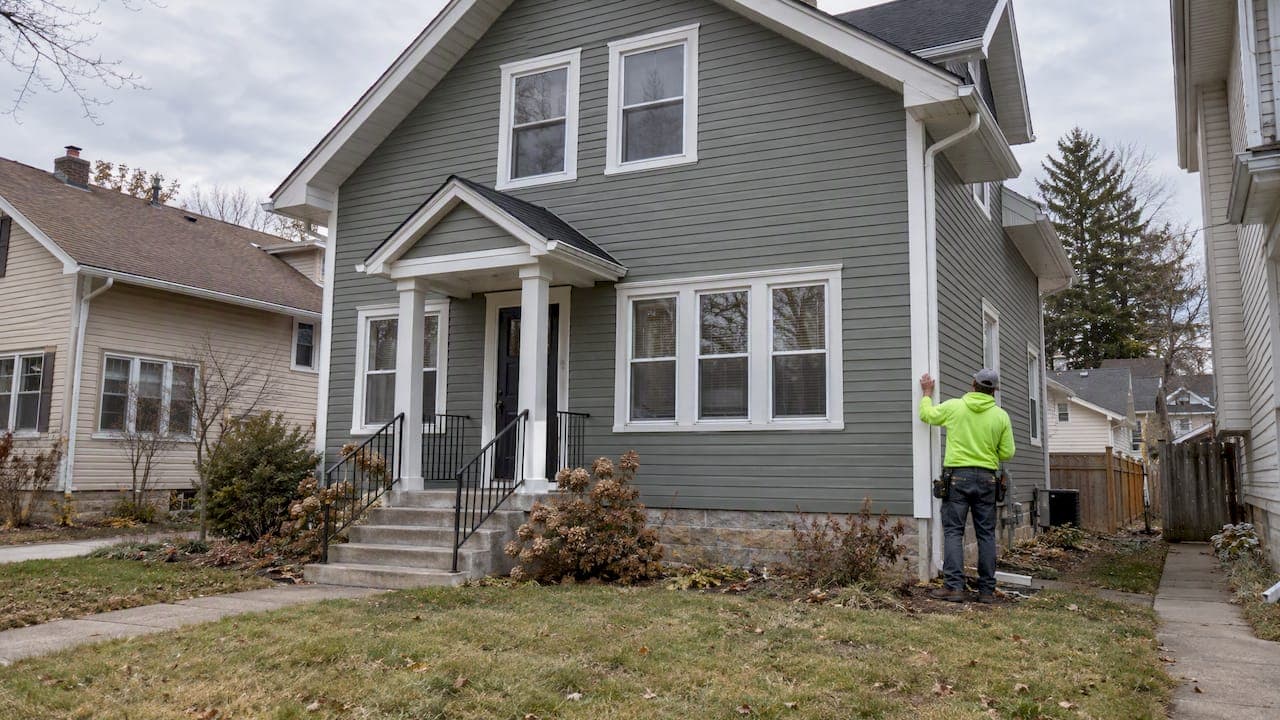
New siding usually pays back a large share of its cost when you sell. In the 2025 national data, fiber-cement siding recouped 113.7% of its job cost and vinyl recouped 96.5%. Other sources put vinyl closer to 80%. The gap comes from the report year, the method and the market. This guide shows the numbers, what moves them, and how to decide for your own house.
TL;DR
- The 2025 Zonda Cost vs. Value Report shows fiber-cement siding recouping 113.7% of cost at resale and vinyl 96.5%.
- Zillow puts a national vinyl replacement at about 80% ROI. Treat 80% to 97% as the vinyl range.
- Siding does not qualify for the federal energy efficiency credit. Insulation and air sealing may.
- Local comparable sales and the condition of the wall under the siding change your result more than the national average does.
Table of Contents
- What the national numbers say
- Why exterior projects return more than interior ones
- What changes your return
- Selling soon or staying: pick the goal
- Perspective: how we look at siding ROI
- Does siding qualify for a tax credit or write-off?
- Where energy savings fit in
- Is modern vinyl worth it?
- A simple way to estimate your own ROI
- When replacement is not the right call
- Siding replacement from AM Exteriors
- FAQ
- Sources
What the national numbers say
The Cost vs. Value Report compares what a project costs with the added value at sale. Here are the 2025 national figures for siding, from Zonda.
| Project | Average job cost | Value at sale | Cost recouped |
|---|---|---|---|
| Fiber-cement siding replacement | $21,485 | $24,420 | 113.7% |
| Vinyl siding replacement | $17,950 | $17,313 | 96.5% |
Two points to read correctly:
- Fiber-cement returned more than it cost on paper. Vinyl lost about $637 per job in the same data.
- These are national averages. They are not a promise for one house.
Zillow reports a lower figure. It lists a national vinyl replacement at an average cost of $17,400, with an 80% ROI, or $13,900 (Zillow, May 2025). Use the spread, not a single number. If a contractor quotes one precise ROI, ask for the source and the year.
Why exterior projects return more than interior ones
Buyers see the exterior first. Clay DeKorne, editor of Zonda's JLC Group, says exterior replacements consistently outperform interior remodels because curb appeal is immediate and objective. Interior taste is personal. A buyer may not share it.
Siding also removes a visible defect. Faded, warped or cracked cladding signals deferred maintenance. Buyers then wonder what else was deferred.
What changes your return
Material

The national data separates fiber-cement and vinyl. It does not give a figure for engineered wood such as LP SmartSide. Do not apply the fiber-cement number to it. Compare materials on lifespan, upkeep and what buyers in your area expect.
Our published Wisconsin price ranges for siding replacement are:
| Material | Typical project range |
|---|---|
| Vinyl siding | $12,000 to $20,000 |
| LP SmartSide | $18,000 to $32,000 |
| James Hardie | $25,000 to $45,000 |
These ranges come from our siding replacement cost page. Your price depends on house size, wall complexity, trim and the state of the wall underneath. For a side-by-side look, read LP SmartSide vs. premium vinyl vs. James Hardie.
Your local market
National benchmarks are a planning tool. Real value depends on neighborhood standards, how your home compares with nearby sales, and what buyers there expect. Zillow's guidance says the same. The result can differ widely from the national percentage.
Before you sign a contract:
- Look at recent sales of similar homes nearby.
- Note which have newer exteriors and what they sold for.
- Ask a local listing agent how much buyers in your price range care about siding.
Condition of the wall underneath
New cladding does not fix a bad wall. A pre-listing inspection can reveal water damage, structural issues or a failing substrate that must be fixed first. Buyers find those problems in their own inspections. Then the curb appeal gain disappears from the price.

If we find rot or moisture damage when old siding comes off, we document it and tell you before work continues.
Quality of installation
A premium product installed badly fails early. Most exterior failures trace to workmanship, not materials. Consumer Reports notes that vinyl performance still depends heavily on proper installation, including how the panels handle temperature swings.
Warranty claims follow the same logic. Manufacturers can deny coverage when installation does not follow their specifications. A guide on metal roofing specs and warranty denials shows how that plays out on another exterior material. For engineered wood, see how install errors can put warranty claims at risk.
Selling soon or staying: pick the goal
The goal changes the right choice. Angi's overview notes the difference:
- Selling soon: buyers want a move-in ready look. Choose a clean, durable product that suits the neighborhood. Do not overbuild for the street.
- Staying long term: durability, low maintenance and energy performance matter more than resale math.
The same source cautions that you will rarely recoup 100% of a project cost at sale. Count comfort, fewer repairs and lower upkeep as part of the return.
Perspective: how we look at siding ROI
We have owned and run this company for over 25 years. Here is how we advise homeowners.
First, we do not sell a percentage. The national numbers are useful, but your house is not an average house. We look at the wall, the age of the existing siding and what the neighbors have.
Second, installation decides the outcome. We have seen good materials fail because of poor workmanship. We supervise installations as owners and document the work, so you can see what went on your house.
Third, we give honest repair versus replacement advice. If a few damaged sections can be fixed, we say so. Our siding repair service covers vinyl, LP SmartSide and hail damage.
Fourth, in Wisconsin the weather is part of the return. Hail, high winds and heavy snow punish weak installs. A siding job that holds up through those winters protects the resale value you paid for.
— Heather
Does siding qualify for a tax credit or write-off?
Not for the siding itself. The IRS instructions for Form 5695 say siding does not qualify for the Energy Efficient Home Improvement Credit. Its main purpose is a finished surface or structural function, not reducing heat loss or gain.
The same instructions list items that can qualify, such as insulation material, air sealing material, exterior doors, windows and skylights, subject to technical criteria and annual limits. Those instructions cover the 2024 tax year. Rules change, so check the current year's form. Ask a tax professional about your own situation.
For windows, read our guide on the 2026 window tax credit and rebates.
Where energy savings fit in
Siding is a good time to improve the wall. The U.S. Department of Energy describes a single-component product that gives thermal resistance and a nailing base for new siding. That can replace several layers in a typical upgrade.
The practical point: the wall is open anyway. Labor for added insulation overlaps with labor for new siding. If energy bills matter to you, ask for insulated options in your quote. Savings vary by house and climate, so ask for the product's rated values, not a general promise.
Is modern vinyl worth it?
Vinyl has improved. Consumer Reports describes current premium vinyl with deeper profiles, better graining and fade-resistant color technology, and says high-end products can withstand winds up to 170 mph. Thin, older panels do not perform the same way.
Vinyl is also the lowest-cost route. In Zonda's data it returned 96.5% of cost. That makes it a strong value choice. Fiber-cement and engineered wood cost more up front and appeal to buyers who want a heavier, more textured look. Our fiber cement siding guide explains that material in detail.
A simple way to estimate your own ROI
- Get a written quote that lists material, trim, soffit, fascia and any wall repairs.
- Pick a benchmark range. Use 80% to 97% for vinyl and the Zonda figure for fiber-cement as upper and lower markers.
- Multiply. On a $17,950 vinyl job, 80% is $14,360 and 96.5% is $17,322. The unrecovered cost is roughly $630 to $3,590.
- Adjust for your market. Ask a local agent whether your street rewards newer exteriors.
- Add the other returns. Lower upkeep, fewer repairs and any energy savings.
This is arithmetic on national averages, not a forecast for your sale price.
When replacement is not the right call
- Only a few panels are damaged. Repair is cheaper.
- The siding is sound but dirty. Cleaning may be enough.
- You will sell in weeks and the wall is in fair shape. Fix visible defects and skip the full project.
- The sheathing is wet or rotted. Fix the cause first.
We give a repair or replace recommendation after inspecting the house. For a local overview, see our Dodge County roof and siding guide.
Siding replacement from AM Exteriors
We install vinyl, LP SmartSide and James Hardie siding for homeowners in Southeast Wisconsin. We also handle trim, soffit and fascia, and we help with insurance claims after storm damage. See our siding options and published price ranges or visit AM Exteriors to request an estimate.
FAQ
What is the ROI for replacing siding?
National figures range from about 80% to over 100%, depending on the source and material. Zonda's 2025 report shows 96.5% for vinyl and 113.7% for fiber-cement. Zillow shows about 80% for vinyl. Your local market and the home's condition change the result.
Does new siding increase home value?
Yes, usually. It improves curb appeal and removes a visible sign of neglect. Most projects do not return 100% of cost in direct resale value, so the gain is partly financial and partly comfort and upkeep.
Can you write off siding replacement on taxes?
Not as a specific write-off or energy credit. The IRS says siding does not qualify for the Energy Efficient Home Improvement Credit. Some insulation, air sealing, window and door upgrades may qualify. Check current rules with a tax professional.
Is vinyl siding better than it was 20 years ago?
Yes. Premium vinyl has better graining, deeper profiles and improved UV color protection. It still depends on correct installation to hold up through temperature swings.
Sources
- 2025 Cost vs. Value Report, Zonda
- Exterior Home Improvements to Help You Sell, Zillow
- Does New Siding Increase Home Value?, Angi
- 2024 Instructions for Form 5695, IRS
- Siding Buying Guide, Consumer Reports