
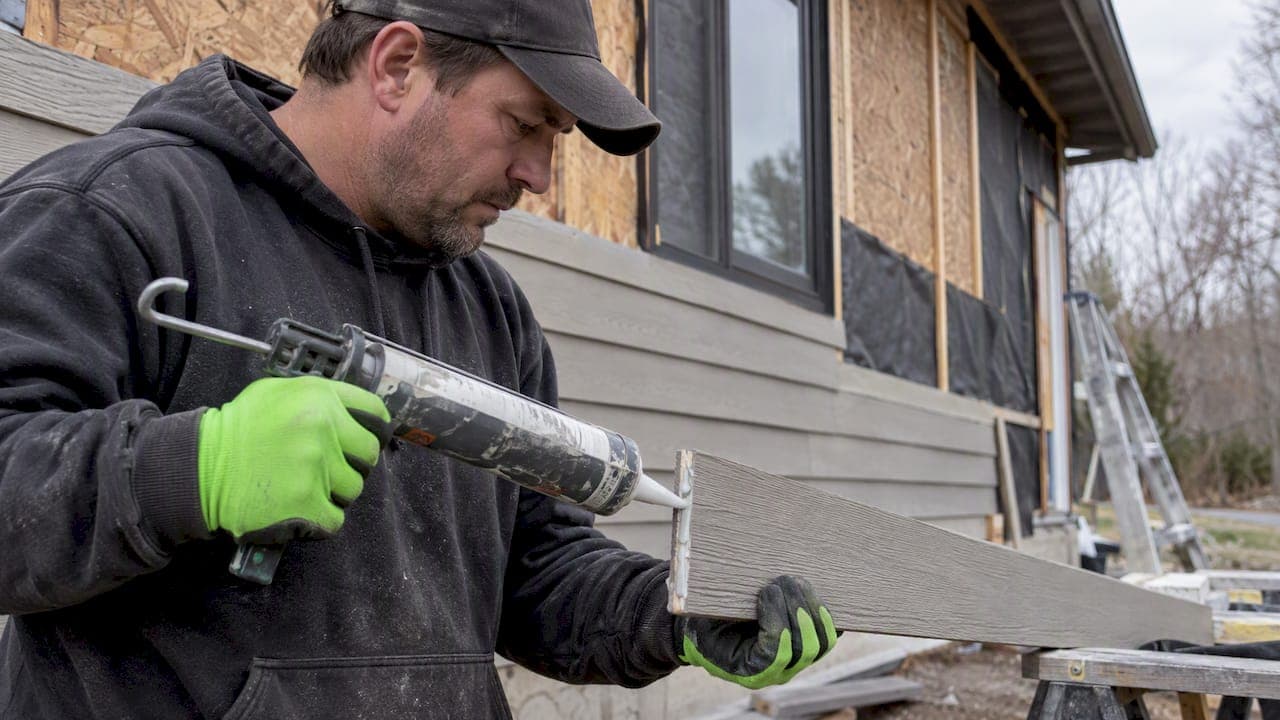
Engineered wood siding is a cost-effective, paintable alternative to fiber cement that rewards disciplined installation but requires periodic repainting and careful moisture management. The main tradeoff is upkeep: you get a lighter, faster-installed product that machines like real wood, but it needs sealed edges and a repaint schedule to last. Fiber cement and vinyl remain the two main alternatives worth comparing, and LP SmartSide is the product most homeowners encounter first.
TL;DR:
- Installed costs typically run $8 to $15.50 per square foot, with a 20 to 30 year service life when maintenance and repainting stay on schedule.
- Choose fiber cement for wildfire exposure or minimal upkeep; engineered wood better suits hail prone areas if you can repaint every 8 to 12 years.
- Unsealed cuts, missing clearances, uncaulked joints, failed paint, and overdriven nails drive common failures, so require written checks for sealing, clearances, and fastening.
- Prefinished boards cost more upfront but provide a consistent factory coating and lower on site error risk; document the finish tier and warranty painting requirements.
Table of Contents
- What engineered wood siding is made of
- Pros: what engineered wood does well for homeowners
- Cons: durability, moisture risk, and fire tradeoffs
- Engineered wood vs fiber cement: practical tradeoffs
- Engineered wood vs vinyl and metal siding
- Cost, lifespan, and repaint schedule
- Installation and maintenance checklist to avoid failure
- Where engineered wood fits best
- Warranties and what to document before you sign
- What installation crews see in the field
- A practical decision rule for choosing siding
- How AM Exteriors can help with your siding project
- FAQ
- Sources
What engineered wood siding is made of
Engineered wood siding starts as wood strands or fibers bonded with resin under heat and pressure, then treated with a preservative. Many boards use a zinc-borate treatment (branded by LP as SmartGuard) that resists fungal decay and insect damage at the core, though it does not replace paint as the primary moisture barrier.
Boards come in two finish tiers: primed, which needs full field painting after installation, and factory-prefinished, which arrives with color and a sealed finish already applied. Prefinished tiers remove a major on-site variable because the factory coating is more consistent than most field-applied paint jobs.
Compared to traditional lumber, engineered wood cuts and fastens the same way but comes in longer, more uniform lengths. Compared to fiber cement, it weighs less and generates no silica dust during cutting, according to SidingWise.

Pros: what engineered wood does well for homeowners
Homeowners choose engineered wood siding for a specific set of practical advantages that show up during both installation and ownership.
- Lightweight panels speed up labor and reduce installation cost compared to heavier claddings.
- Longer board lengths mean fewer seams and fewer points where water can intrude.
- Boards cut, nail, and paint like traditional wood, with no silica dust exposure during cutting.
- Better impact resistance than fiber cement when hail or equipment strikes the wall, per SidingWise.
- Factory-prefinished options hold color and cut down on immediate site painting needs.
Pro Tip: Ask your installer whether prefinished boards are available in your target color before committing to primed boards and a full repaint.
Cons: durability, moisture risk, and fire tradeoffs
Engineered wood's downsides center on two things: what happens when water gets in, and what happens when it burns. The product is combustible, and it tolerates chronic wetting far less gracefully than fiber cement.
Paint and sealed edges are the only real moisture defense. Unsealed field cuts, tight butt joints, and failed caulk let water into the wood core, which swells and eventually decays.
- Repainting is typically needed every 8 to 12 years, and delayed painting accelerates substrate damage, per SidingWise.
- Overdriven nails and missing flashing details are common precursors to warranty claims.
- Butt joints left uncaulked are a frequent failure point noted in field inspections.
- Combustibility rules out engineered wood in some wildfire-exposed settings.
The most common causes of engineered-wood siding failure are unsealed cut ends, missing clearances, uncaulked joints, failed paint, and overdriven nails, according to JLC Online's field guide, all of which trace back to workmanship rather than the material itself.
Engineered wood vs fiber cement: practical tradeoffs
Fiber cement and engineered wood solve different priorities, and the right choice depends on what you are protecting against.
- Fiber cement is noncombustible and more forgiving of installation mistakes; engineered wood is lighter and tolerates impact better, per Nichiha.
- Fiber cement generally outlasts engineered wood with less maintenance, but costs more in both material and labor.
- Installed costs often land closer together than raw material prices suggest, since engineered wood's lighter weight cuts labor hours.
- Fiber cement suits wildfire-prone areas and homeowners who want minimal upkeep; engineered wood suits hail-prone regions and anyone who wants a true painted-wood look at a lower labor cost.
For a deeper look at fiber cement's safety profile during installation, see our breakdown of fiber cement siding and silica dust.
Engineered wood vs vinyl and metal siding
Vinyl and metal sit at opposite ends of the maintenance spectrum from engineered wood, and the comparison usually comes down to appearance versus upkeep.
- Vinyl costs less upfront and needs almost no maintenance, but it can't replicate the look or paintability of real wood grain.
- Metal siding is durable and noncombustible, with a distinct, often more modern aesthetic and its own expansion and contraction behavior.
- Repaint cycles on engineered wood add cost over a 20 to 30 year span that vinyl and metal largely avoid, though prefinished engineered wood narrows that gap.
Cost, lifespan, and repaint schedule
Engineered wood siding typically installs for $8 to $15.50 per square foot, according to SidingWise, which also reports a service life of 20 to 30 or more years when properly maintained.
- Expect a repaint interval of roughly 8 to 12 years regardless of which finish tier you start with.
- Prefinished boards raise the upfront price but reduce early maintenance work and lower the risk of a warranty-voiding installation error.
- Primed boards cost less initially but shift painting labor and timing risk onto you or your contractor right after installation.
Installation and maintenance checklist to avoid failure
Most engineered wood problems trace back to a handful of preventable installation shortcuts, per JLC Online. Following a short checklist during installation and ownership avoids nearly all of them.
- Seal every field cut and protect exposed edges before the board goes up.
- Maintain manufacturer-specified clearance to grade and roofline flashing.
- Follow the fastening schedule exactly; never overdrive nails below the board surface.
- Install flashing and a continuous drainage plane in shingle fashion, lapped correctly at every course.
- Inspect after major storms and schedule repaint touch-ups before paint visibly fails.
Pro Tip: Walk your siding after every hailstorm and look for chipped paint at fastener heads. Touching those spots up early prevents moisture from reaching the core.
A ventilated drainage plane behind the siding also helps manage inward vapor drive, a detail covered in the Building America insulating sheathing guide.
Where engineered wood fits best
Engineered wood is a strong fit in hail-prone or freeze-thaw climates, where impact tolerance matters more than absolute moisture resistance, as long as you're prepared to keep up with the repaint schedule.
Reconsider it in wildfire-prone regions or in chronically wet, low-sun exposures where a noncombustible or lower-absorption cladding is the safer call, a point echoed in Nichiha's fire-resistant siding guidance. Insulating sheathing and a ventilated wall assembly can offset some moisture risk in borderline climates.
Warranties and what to document before you sign
LP SmartSide's warranty structure is typical of the category: a short full-coverage window followed by a long prorated term on the substrate, conditional on installation to spec and timely painting, according to coverage details reported by SidingQuotesNearMe.
- Ask your contractor to document sealed field cuts, clearance measurements, and finish tier in writing.
- Confirm the painting schedule required to keep the warranty active, especially on primed boards.
- Choose factory-prefinished boards if your budget allows, since it removes one of the biggest onsite risk variables.
For repaint maintenance comparisons once fiber cement or wood siding is up, see our notes on manufacturer-backed fiber cement habits and this painting guidance for Hardie board from a painting contractor partner.
What installation crews see in the field
Most warranty-threatening failures we encounter trace to three things: unsealed field cuts, missing clearance at grade or rooflines, and paint left too long after it starts to fail. None of these are material defects.

Owner-supervised installation matters because these details are easy to skip under schedule pressure. We document clearances, sealed cuts, and finish tier on every siding job so the paperwork matches the warranty terms. In Southeast Wisconsin, hail and freeze-thaw cycles make impact resistance and sealed joints the two details worth watching most closely.
A practical decision rule for choosing siding
Choose engineered wood if you want a painted-wood look and you're willing to repaint every 8 to 12 years. Choose fiber cement if you'd rather pay more upfront for less ongoing upkeep.
Request two quotes, one for factory-prefinished engineered wood and one for fiber cement, along with a written installer checklist covering sealed cuts, clearances, and fastening schedule.
— Heather
How AM Exteriors can help with your siding project
We install LP SmartSide, James Hardie fiber cement, and both insulated and premium vinyl siding, and we document clearances, sealed field cuts, and finish tier on every job to keep your warranty intact.
- LP SmartSide installation, including prefinished options that cut early maintenance risk.
- Fiber cement installation for homeowners prioritizing low maintenance over paintability.
- Insurance claim support when hail or storm damage affects your siding or roof.
See current siding installation options and pricing or explore our full siding services page to request a quote.
FAQ
Is engineered wood furniture good quality?
Engineered wood furniture quality depends on the specific product and finish; it is generally durable for everyday use but differs from solid wood in how it responds to moisture and repair. This article focuses on engineered wood siding, which uses a different construction and treatment process suited to exterior exposure.
What are the pros and cons of steel siding?
Steel siding is durable, noncombustible, and low maintenance, similar in those respects to other metal siding options. It carries a different aesthetic than painted wood siding and has its own thermal expansion behavior that installers need to plan for.
Which is better, wood or vinyl siding?
Engineered wood gives you a paintable, authentic wood look with better impact resistance but needs repainting roughly every 8 to 12 years, per SidingWise. Vinyl costs less to maintain but cannot replicate the painted-wood appearance or the same impact behavior.
What does engineered wood siding mean?
Engineered wood siding is made from resin-bonded wood strands or fibers, treated for decay and insect resistance, then finished as either primed boards or factory-prefinished panels. It installs and paints like traditional lumber but at a lighter weight.
Sources
- Engineered Wood Siding: Cost, Brands, Pros & Cons (2026) · SidingWise
- LP SmartSide: Trim & Siding, ExpertFinish — Good, Better, Best
- Engineered wood siding field guide · JLC Online
- Guide to Insulating Sheathing