
New replacement windows typically return about two-thirds of their installed cost at resale, plus energy savings of roughly $126 to $465 a year when you upgrade from single-pane to Low-E double-pane glass. Vinyl windows recover 67% to 72% of project cost, while wood lands closer to 60% to 63%. The outcome swings hard on one factor: condition. Failed seals, fogging, or rot push the payoff toward the high end because you're removing a buyer objection, not just upgrading aesthetics.
- Best case: failing single-pane windows replaced before listing, in a cold climate, with a documented installation.
- Worst case: cosmetic-only replacement on windows that already function fine, done just weeks before listing.
Run the local math against your actual comps before signing a contract, and check your timeline. If you're listing inside 30 days, this project rarely earns its keep.
Key Takeaways
Window replacement ROI depends less on the percentage recovery rate and more on whether the project fixes a real functional defect before you sell or move in.
| Point | Details |
|---|---|
| Vinyl leads resale recovery | Vinyl recovers about 67% to 72% of installed cost, the strongest figure among common materials. |
| Energy savings scale with climate | Upgrading to Low-E double-pane saves an estimated $126 to $465 a year depending on climate and home size. |
| Condition determines the payoff | Replacing failed or single-pane windows produces a stronger return than purely cosmetic upgrades. |
| Federal credits changed for 2026 | Verify current federal rules before counting on a tax credit, then check state and utility rebates by ZIP code. |
| Installation quality protects the investment | Am-exteriors documents every installation and backs projects with extensive warranties across Southeast Wisconsin. |
Table of Contents
- What Actually Drives Window Replacement ROI
- How Much Do Different Window Materials Actually Return?
- Should You Replace Windows Before Selling Your House?
- How to Get the Best Return on a Window Project
- Why Installation Quality Matters More Than the Brand Name
- Does Your Home's Style or Climate Change the Math?
- How Do Windows Compare to Other Energy-Efficiency Upgrades?
- How Long Does a Window Replacement Project Actually Take?
- What Long-Term Costs Should You Factor Into Net ROI?
- Does Added Comfort and Noise Reduction Count Toward ROI?
- The Real Question Isn't ROI Percentage, It's Timing
- Get a Window Replacement Quote Built Around Your ROI
- Sources
What Actually Drives Window Replacement ROI
Four separate ingredients combine to make up your real return, and most homeowners only think about one of them.
- Resale value recovery. Appraisers and buyers credit window upgrades as a percentage of installed cost, not dollar for dollar. That's where the 60% to 72% figures come from, and they assume a market-rate installation, not a premium one.
- Energy savings. The Department of Energy pegs annual savings at $126 to $465 depending on your climate zone, house size, and how many windows you replace. A Wisconsin home with 15 drafty single-pane windows sits at the higher end of that range.
- Maintenance avoided. Old wood windows need reglazing, weatherstripping, and repainting on a recurring cycle. New vinyl or fiberglass units cut that maintenance line to nearly zero for a decade or more.
- Sale speed and reduced objections. Updated windows tend to eliminate common inspection flags like fogged glass or broken hardware, which means fewer buyer credits demanded at closing.
None of these components pays back a full project on its own. Stack them together, especially for a home with genuinely failing windows, and the practical return gets a lot more convincing than the resale percentage alone suggests.
How Much Do Different Window Materials Actually Return?
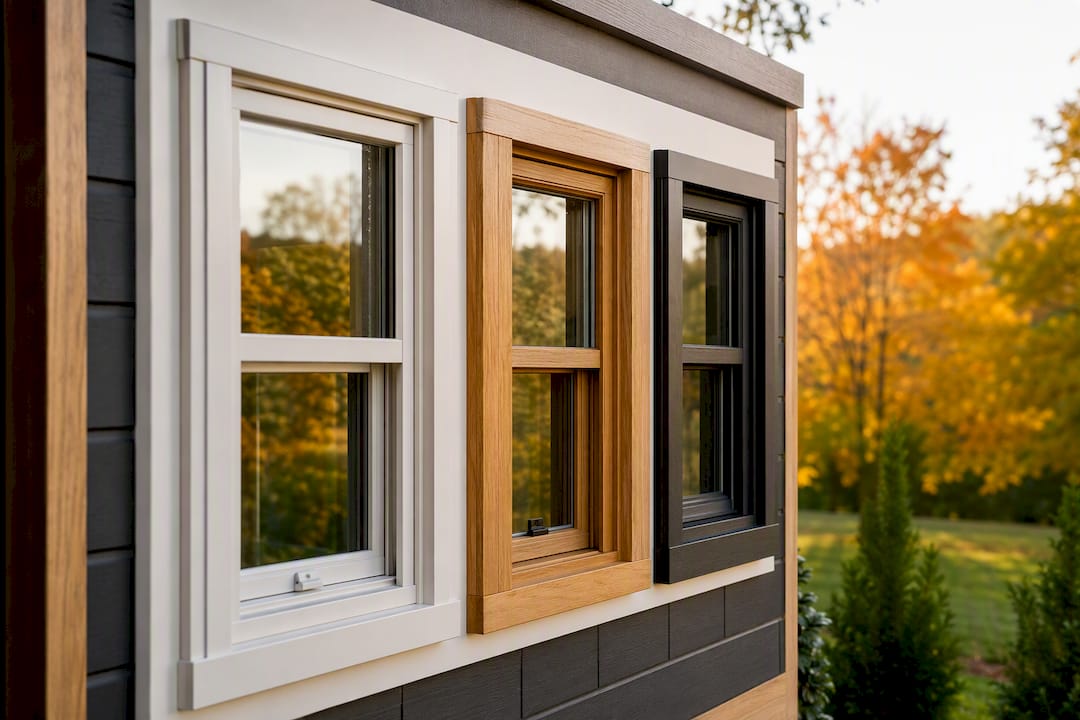
Material choice changes both your upfront cost and your percentage recovery, and the two don't always move together.
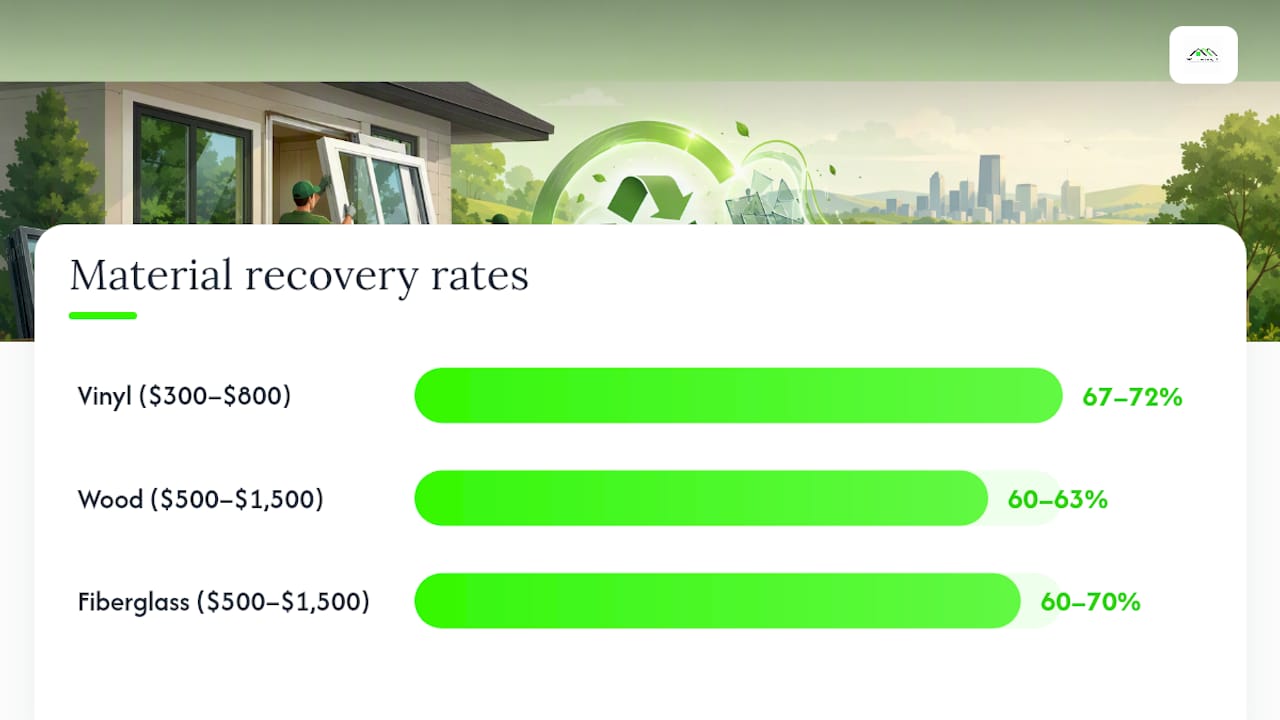
Vinyl windows deliver the strongest resale math for most homeowners. Installed cost typically runs $300 to $800 per window, and a 10-window job commonly lands between $15,000 and $30,000 depending on scope. Vinyl recovers an estimated 67% to 72% of that cost, largely because buyers expect it and it's cheap enough to install broadly.
Wood windows cost more upfront ($500 to $1,500 per window) and recover less, around 60% to 63%. That doesn't make wood a bad choice. It's usually the right call for historic homes, luxury listings, or neighborhoods where vinyl would look out of place and actually hurt your comps.
Fiberglass sits in a similar cost range as wood ($500 to $1,500 per window) but performs better structurally in extreme temperature swings. ROI estimates run 60% to 70%, varying by region and buyer expectations.
A few things shift these numbers fast:
- Partial projects (replacing only the failed or single-pane windows) often outperform full-house replacements on a percentage basis, because you're spending less to fix the specific problem buyers notice.
- Triple-pane glass adds 15% to 25% to your cost for 20% to 30% better insulation, a trade-off that makes sense in colder IECC zones 5 through 8 but rarely pays back through resale alone.
- Custom shapes, oversized units, and specialty grilles push per-window costs well past these ranges regardless of material.
Should You Replace Windows Before Selling Your House?
The decision comes down to condition, timeline, and budget, in that order.
Replace before selling when windows have failed seals (visible fogging between panes), wood rot, broken locks or balances, or when you're in a cold climate with single-pane glass that's driving up heating bills a buyer will notice during a walkthrough. These are the scenarios where the 67% to 72% vinyl recovery figure actually holds up, because you're removing a defect, not just refreshing a look.
Skip it, or scale it back, if you're purely after curb appeal and listing inside 30 days, or if a full project would run past $20,000 without comparable sales in your area to justify that spend. In a tight timeline, targeted repairs (resealing, replacing hardware, fixing a handful of the worst units) usually beat a full replacement on cost-to-benefit.
| Situation | Recommended action |
|---|---|
| Fogged glass, rot, or mechanical failure | Replace before listing |
| Single-pane in a cold climate, high heating bills | Replace, prioritize Low-E double-pane |
| Cosmetic only, listing in under 30 days | Skip or do minor repairs instead |
| Full project over $20,000, no supporting comps | Reconsider scope or timing |
Pro Tip: Ask your real estate agent to pull three recent comps with updated windows and three without. That comparison tells you more about your local market's appetite than any national percentage ever will.
How to Get the Best Return on a Window Project
A few decisions, made before you sign anything, separate a project that pays for itself from one that just feels good.
- Choose vinyl if resale is your primary goal. It delivers the strongest percentage recovery for the widest range of home styles. Save wood or fiberglass for homes where style expectations or extreme climate genuinely require it.
- Target the windows that are actually failing. A partial replacement focused on your worst-performing units often produces a better dollar-for-dollar outcome than replacing every window in the house.
- Vet your contractor like you're hiring for the long haul. Ask for documented past installations, written warranties, and references you can actually call. Installation quality determines whether your windows perform for 20 years or start failing in five, regardless of the brand on the label.
- Confirm ENERGY STAR certification on any window you're quoted, and check your state and utility rebate programs by ZIP code before assuming a discount applies.
- Don't count on a federal tax credit without checking first. Some federal credits for window replacement changed for property placed in service after December 31, 2025, so verify current rules directly rather than relying on last year's numbers.
- Get a fixed-price contract with a written allowance clause for unforeseen conditions like rot behind the trim. Change orders are where window projects quietly blow past budget.
Pro Tip: Request photo documentation of your installation, especially the flashing and sealing steps. Poor workmanship there is the single most common cause of long-term window failure, and photos protect your warranty claim if something goes wrong later.
Why Installation Quality Matters More Than the Brand Name
Heather has covered exterior remodeling ROI for years, and the pattern holds across every material category: the window brand rarely determines long-term performance. Installation does.
Am-exteriors brings over 25 years of owner-operated experience installing windows, roofing, and siding built to hold up against Wisconsin's hail, high winds, and heavy snow. That matters for ROI in a very specific way: a poorly flashed or improperly shimmed window fails early regardless of what glass is inside it, and a failed window erases whatever resale credit you were counting on.
- 25+ years of owner-operated, hands-on project experience
- Exclusive access to premium products including LP SmartSide and Malarkey
- Documented installation process with insurance-claim navigation for storm-damaged homes
- Extensive warranty backing on completed work
Homeowners exploring replacement windows in Dodge County can also review the Wisconsin cost guide for localized pricing before requesting a quote.
Does Your Home's Style or Climate Change the Math?
Yes, and it changes it more than most cost calculators account for. A colonial or ranch home in the Midwest with standard-sized double-hung windows fits neatly into national cost averages, because contractors stock those sizes and buyers expect vinyl or fiberglass without objection.
Historic homes, Victorians, and craftsman-style properties complicate the equation. Custom shapes, divided lites, and true wood construction cost more to replicate, and swapping them for standard vinyl can actually hurt resale value in neighborhoods where architectural authenticity drives price. In those cases, wood or wood-clad windows that match the home's original character often outperform cheaper vinyl on realized sale price, even if the percentage ROI looks lower on paper.
Climate matters just as much. Wisconsin winters put real pressure on window performance, and windows account for roughly 25% to 30% of a home's total heat loss in a poorly insulated structure. Homes in Dodge, Washington, Fond du Lac, and Ozaukee Counties see a bigger practical benefit from Low-E double-pane upgrades than a comparable home in a mild coastal climate, because the annual energy savings estimate sits closer to the top of the DOE's $126 to $465 range.
Coastal and high-wind regions add another variable: impact-rated glass costs more upfront but avoids storm damage that erodes any ROI gained from the initial upgrade.
How Do Windows Compare to Other Energy-Efficiency Upgrades?
Window replacement isn't the only lever homeowners pull for energy savings, and it isn't always the most cost-effective one — what kind of doors are best for interiors can also impact your home's comfort and energy efficiency. Attic insulation and air sealing frequently deliver a faster payback period per dollar spent, since sealing gaps and topping up insulation costs far less per square foot than glass and framing.
Where windows pull ahead is the combination of financial and non-financial return. Insulation upgrades save energy but do nothing for resale appeal, curb impact, or a buyer's first impression during a showing. Windows do both, which is why they show up consistently in Cost vs. Value-style reports while insulation projects rarely get the same spotlight despite strong efficiency numbers.
The practical approach for most homeowners: address air sealing and insulation first, since they're cheaper and often faster to complete, then evaluate windows based on condition rather than energy savings alone. If your windows are still sealing properly and holding up structurally, the insulation and air-sealing route usually returns more energy savings per dollar. If your windows are failing, no amount of insulation work fixes that specific problem, and window replacement becomes the higher-priority project regardless of its comparative energy ROI.
How Long Does a Window Replacement Project Actually Take?
Budget more calendar time than you'd expect, especially if you're planning around a home sale.
Most projects start with a measurement and quote phase that takes one to two weeks, followed by manufacturing lead time. Standard vinyl windows typically ship in three to six weeks, while custom sizes, wood, or specialty shapes can push manufacturing to eight weeks or longer. Installation itself moves fast once materials arrive. A typical 10 to 15 window job takes two to four days for an experienced crew, weather permitting.
Add it up, and a full-house project realistically runs six to ten weeks from initial quote to final walkthrough, longer if you're waiting on custom orders or dealing with rot repairs discovered mid-installation. That timeline matters directly for the resale decision covered earlier: if you're listing inside 30 days, a full window project simply won't finish in time to influence your sale.
What Long-Term Costs Should You Factor Into Net ROI?
The sticker price isn't the last dollar you'll spend. Vinyl and fiberglass windows carry the lowest ongoing maintenance burden, needing little beyond occasional cleaning and hardware checks for a decade or more. Wood windows require a different math entirely: expect repainting or refinishing every five to seven years, plus periodic reglazing, which adds real cost over a 15 to 20 year ownership window.
Warranty terms matter here more than most homeowners realize. A strong warranty on both materials and labor absorbs the cost of early failures, while a weak or manufacturer-only warranty leaves you covering labor costs out of pocket if an installation issue surfaces years later. That's a direct link back to installation quality: a properly flashed and sealed window rarely needs warranty service in the first place.
Factor these ongoing costs into your ROI calculation the same way you would a car's cost of ownership, not just its purchase price. A cheaper window with high maintenance needs can cost more over a decade than a slightly pricier option that needs almost nothing.
Does Added Comfort and Noise Reduction Count Toward ROI?
It's real, even though it doesn't show up on a resale appraisal. Homeowners consistently report the comfort difference, fewer drafts, more even room temperatures, and noticeably reduced outside noise, as one of the most immediately noticeable benefits of a window upgrade, often before the first utility bill even reflects the energy savings.
That comfort improvement translates into perceived value during a home showing in a way that's hard to quantify but easy to feel. A buyer standing near a drafty single-pane window in January notices the cold radiating off the glass, and that sensation works against you regardless of what your listing description says about efficiency upgrades. Replace that window, and the room simply feels better, which supports faster sales and fewer buyer objections even when it doesn't add a specific dollar figure to the appraisal.
Noise reduction matters especially for homes near busy roads or in denser neighborhoods, where double or triple-pane glass measurably cuts interior sound levels. It's a benefit you live with daily whether you sell next year or stay for two decades, and it's worth weighing alongside the financial numbers rather than treating it as a footnote.
The Real Question Isn't ROI Percentage, It's Timing
Most window replacement advice treats the resale recovery percentage as the whole story, and that's where the conventional wisdom falls short. A 67% to 72% recovery rate on vinyl sounds like a clean number until you realize it's an average across every condition scenario, from genuinely failing windows to purely cosmetic upgrades that never needed to happen.
The research actually supports a narrower, more useful takeaway: window replacement earns its cost back reliably when it fixes a real problem, and it's a coin flip at best when it doesn't. That's not a hedge, it's the pattern across every data point here, from the DOE's energy savings ranges to the resale figures themselves.
What gets underestimated is timeline pressure. Homeowners planning a sale in 60 days often can't complete a full window project in time anyway, custom orders alone can eat six to eight weeks. Prioritize a condition assessment first, then decide whether replacement, targeted repair, or leaving well enough alone makes the most sense for your actual timeline and budget.
*— Heather
Get a Window Replacement Quote Built Around Your ROI
Am-exteriors approaches window replacement the way this whole article has argued you should: condition first, installation quality second, and marketing claims a distant third. For homeowners in Dodge, Washington, Fond du Lac, and Ozaukee Counties, that means a fixed-price contract, documented installation photos protecting your warranty, and honest guidance on whether your windows need full replacement or targeted repair.
When you're vetting any contractor for a window project, ask three questions: Do they document the installation? Do they offer a written warranty covering both materials and labor? Can they provide references from projects completed years ago, not just last month? Am-exteriors answers yes to all three, backed by more than 25 years of owner-operated experience and exclusive access to trusted product lines like Malarkey and LP SmartSide.
Ready to see what a properly scoped project costs for your home? Visit the replacement windows page to request a quote, or review the Wisconsin window cost guide for localized pricing before you commit to a scope.