
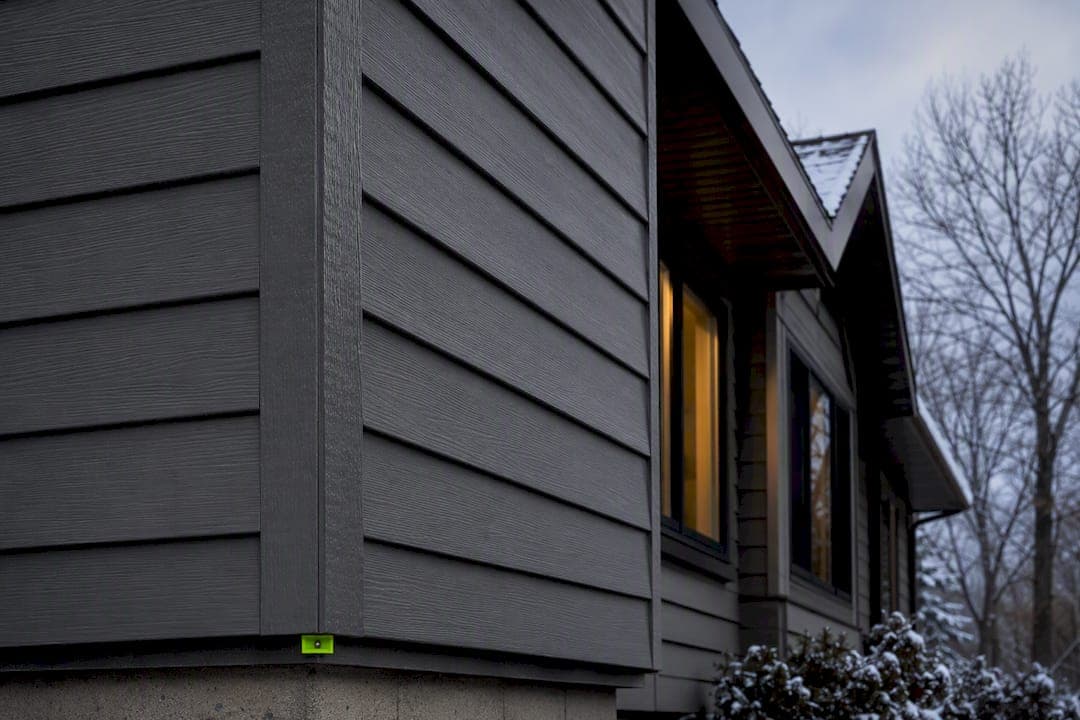
Fiber cement siding is the right call for homeowners staying put long term or living in a high-risk fire, hail, or humid climate, because it outlasts vinyl by decades and won't burn. The trade-off is real: expect a higher upfront bill, a heavier installation job, and repainting every 10 to 15 years unless you choose a factory finish. Cutting it also throws respirable silica dust, so professional installation with proper dust controls matters.
TL;DR:
- Fiber cement siding costs between $5 and $15 per square foot installed, with higher labor costs due to its weight and complexity.
- It is fire-resistant, termite-proof, and lasts over 30 years with proper maintenance, outperforming vinyl in durability and safety.
- Repainting is required every 10 to 15 years unless factory-finished, and cutting must follow strict dust-control protocols to limit silica exposure.
- Professional installation is essential to prevent failures caused by improper fastening, flashing, or unsealed edges, as workmanship is a critical factor.
- It offers a strong ROI and resale value, especially in fire-prone or hail-prone areas, but requires an initial investment and qualified local installers.
Table of Contents
- What Is Fiber Cement Siding Made Of?
- How Does Fiber Cement Siding Perform Over Time?
- What Does Fiber Cement Siding Cost, and Is the ROI Worth It?
- Which Siding Styles and Finishes Are Available?
- Who Should Install Fiber Cement Siding, and How Do You Manage Job-Site Safety?
- How Much Maintenance Does Fiber Cement Siding Need?
- Fiber Cement vs. Vinyl vs. Engineered Wood: Which Wins?
- Is Fiber Cement Siding Right for Your Home?
- Why Installation Quality Matters More Than the Material You Choose
- How AM Exteriors Helps With Fiber Cement Siding Projects
- Sources
What Is Fiber Cement Siding Made Of?
Fiber cement siding is a manufactured composite built from Portland cement, sand, and cellulose fibers, pressed and cured into rigid boards. Manufacturers add proprietary fillers and pigments during production, then finish the surface with factory paint, primer, or a textured woodgrain stamp. That mix of cement, sand, and cellulose is what gives the material its weight and rigidity, unlike vinyl or engineered wood.
You'll typically choose between a few formats:
- Lap planks — the classic horizontal board look, usually 5/16 to 7/16 inch thick
- Panels — large-format sheets for a modern, seamless facade
- Shingles — individual or staggered-shake profiles for cottage or coastal styles
- Trim boards — used around windows, corners, and fascia to match the field
That density is exactly why fiber cement needs carbide-tipped blades or shears instead of standard wood-cutting tools, and why finish options run from smooth paintable faces to deep woodgrain textures.
How Does Fiber Cement Siding Perform Over Time?
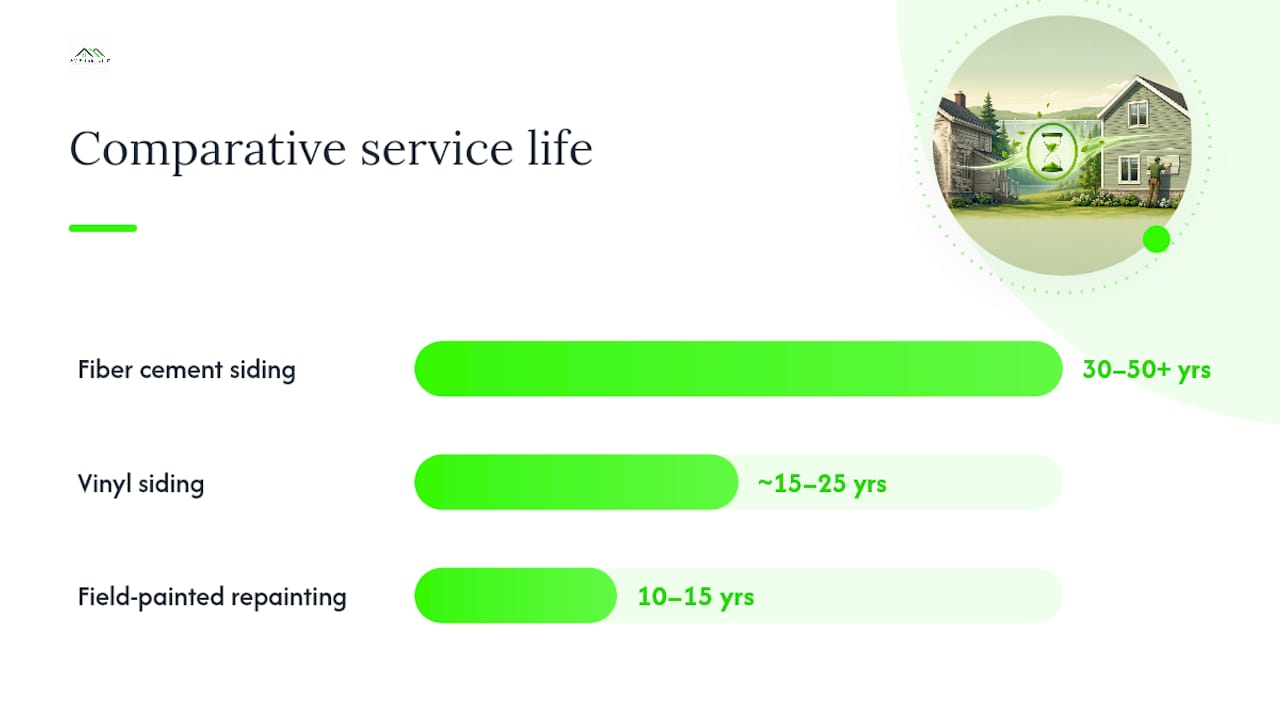
Fiber cement is noncombustible and frequently earns a Class A fire rating, a real advantage in wildfire-prone regions where embers land on exterior walls. It also shrugs off termites, carpenter ants, and rot in ways wood-based products simply can't. Properly installed and maintained, it commonly lasts 30 to 50-plus years, which is roughly double the practical service life most vinyl siding delivers before it cracks or fades beyond repair.
Statistic Callout: NIOSH field testing found that a shop vacuum attached to a cutting saw can cut respirable silica exposure by 80 to 90 percent, bringing dust levels near the recommended exposure limit during installation.
The downsides are just as real:
- Heavy boards (roughly 2 to 3 times the weight of vinyl per square foot) that demand two installers and careful lifting
- Brittle edges that can chip or crack under impact if mishandled
- Field-painted boards need repainting every 10 to 15 years
- Cutting generates silica dust, which requires NIOSH/OSHA-recommended controls like vacuum-equipped saws and respirators
What Does Fiber Cement Siding Cost, and Is the ROI Worth It?
Installed fiber cement siding typically runs $5 to $15 per square foot, compared to roughly $3 to $12 per square foot for vinyl. On an 1,800 to 2,000 square foot home, that puts a full fiber cement job somewhere between $9,000 and $30,000 depending on trim complexity, board profile, and local labor rates. Labor drives more of that spread than material does, since fiber cement takes longer to cut, fasten, and finish correctly.
Where fiber cement earns its premium is at resale. Remodel cost studies consistently show it delivering some of the highest recoupment rates among common siding materials, often outperforming vinyl in Cost vs. Value-style comparisons. A few things to keep in mind when budgeting:
- Prefinished or factory-coated boards add cost but reduce long-term repainting labor
- Coastal and wildfire-prone markets often see higher demand-driven pricing
- Complex trim, multiple stories, and steep rooflines all add labor hours
- Get at least three local quotes since regional labor costs vary more than material costs do
Which Siding Styles and Finishes Are Available?
Lap siding remains the most requested profile and suits nearly any architectural style, from a Wisconsin ranch to a Craftsman bungalow. Board-and-batten works well for modern farmhouse exteriors and gable accents, while shingle-style panels suit coastal or cottage designs. Large-format panels give commercial and contemporary residential projects a clean, minimal look with fewer seams.
Finish choice matters as much as profile:
- Factory-applied finishes (like James Hardie's ColorPlus-style coatings) resist fading and chalking, and carry longer finish warranties than field paint
- Field-painted boards cost less upfront but need repainting on a shorter cycle
- Wider boards create bolder shadow lines; narrower boards read more traditional
- Coordinate trim color and window casing width before ordering to avoid a mismatched facade
Who Should Install Fiber Cement Siding, and How Do You Manage Job-Site Safety?
Professional installation is strongly recommended, not just preferred. Boards are heavy, joints and flashing details have to be exact, and nailing patterns that are too tight or too loose both cause long-term failures. The JLC field guide on fiber cement installation documents the fastening, clearance, and flashing standards contractors rely on to keep water out.
- Confirm the installer uses vacuum-equipped saws or wet-cutting methods to control silica dust.
- Check that fasteners are driven flush, not overdriven, which crushes the board and voids warranties.
- Verify flashing and kick-out details at windows, doors, and roof lines before siding goes up.
- Ask whether cut edges get sealed, since raw edges absorb moisture faster than factory faces.
- Request documentation or photos of the job at each stage, not just the finished exterior.
Pro Tip: Ask any installer point blank how they control silica dust on site. A contractor who can't answer specifically hasn't read the NIOSH guidance that governs safe cutting practices, and that's a red flag worth walking away from.
For a deeper look at how installers manage safety protocols on remodeling jobs generally, Blackbriar Development's approach to job-site safety offers a useful outside reference point.
How Much Maintenance Does Fiber Cement Siding Need?
Fiber cement asks for less than wood but more than vinyl. Rinse it annually to clear dirt and mildew, and check caulk joints around windows and trim every year or two for cracking or separation.
- Repaint field-finished boards roughly every 10 to 15 years
- Factory-finished boards can often go longer before needing attention
- Watch for hairline cracks at butt joints, which signal moisture getting behind the board
- Address chipped corners or edges promptly to prevent water intrusion
Skipping maintenance doesn't just shorten lifespan. It can also void manufacturer warranties and hurt resale value if a future buyer's inspector flags neglected caulking or peeling paint.
Fiber Cement vs. Vinyl vs. Engineered Wood: Which Wins?
The fiber cement vs vinyl siding debate usually comes down to budget versus longevity. Vinyl costs less, installs faster, and never needs paint, but it cracks in extreme cold and fades under UV exposure. Fiber cement costs more and requires professional installation, but it resists fire, pests, and impact far better over a multi-decade span. Engineered wood products like LP SmartSide fall in the middle: lighter and easier to install than fiber cement, with better flex in hail-prone and extreme-cold climates, though it needs more diligent moisture management than cement-based board.
- Cost: Vinyl is cheapest, fiber cement is highest, engineered wood sits in between
- DIY-ability: Vinyl is the easiest for a confident DIYer; fiber cement almost always needs a pro
- Fire resistance: Fiber cement leads clearly, vinyl performs the worst
- Cold/hail performance: Engineered wood flexes better in freeze-thaw and hail impact zones
- Resale/ROI: Fiber cement consistently shows the strongest recoupment numbers
If you're weighing LP SmartSide vs Hardie for a Wisconsin home dealing with hail and freeze-thaw cycles, comparing all three materials side by side for your specific region matters more than any general ranking.
Is Fiber Cement Siding Right for Your Home?
Run through these five questions before committing:
- Are you staying in this home 10-plus years, making long-term durability worth the upfront cost?
- Is resale value a priority when you eventually sell?
- Does your area carry meaningful fire, hail, or humidity risk?
- Can your budget absorb a higher installed cost than vinyl?
- Are qualified fiber cement installers actually available in your area?
If you answered yes to most of these, request three quotes, ask each installer about warranty terms and dust-control practices, and get physical samples before ordering. Document every quote for resale purposes.
Why Installation Quality Matters More Than the Material You Choose
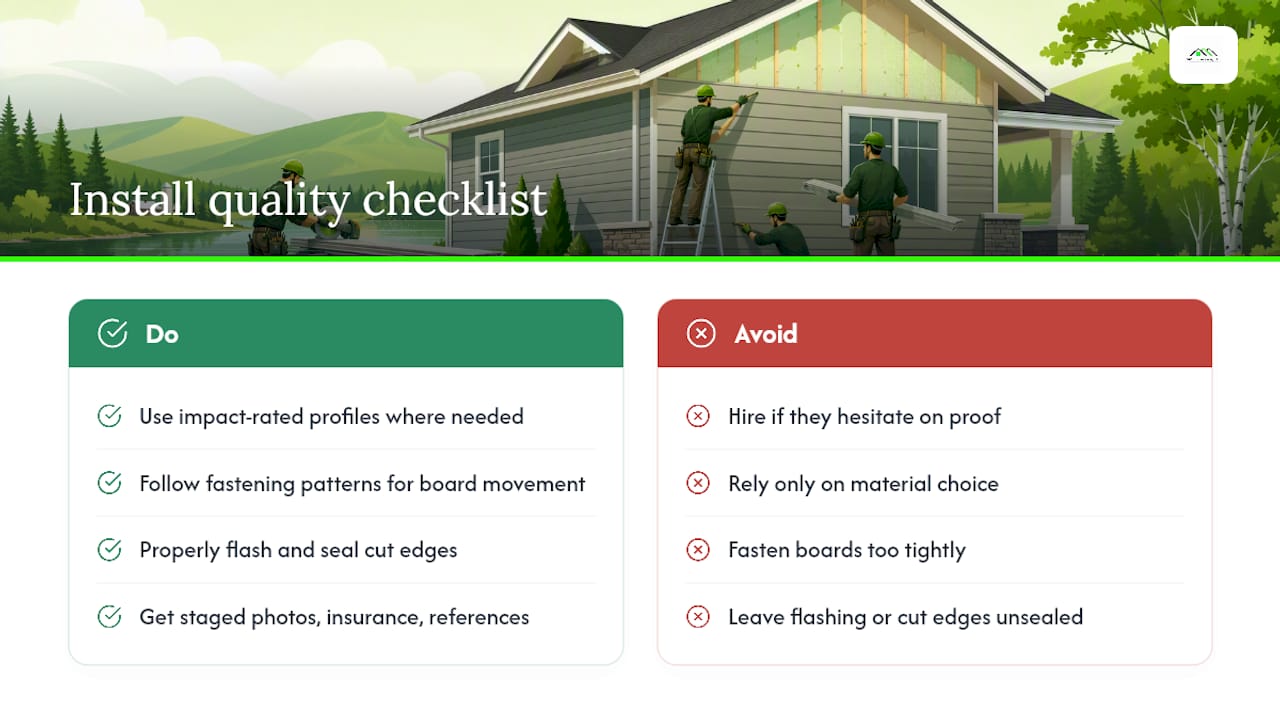
Most siding failures we see in the field trace back to workmanship, not the product itself. A board that's fastened too tight, flashed incorrectly at a window head, or left with an unsealed cut edge will fail regardless of brand or material. That lines up with what JLC's field data on cladding failures consistently shows: poor flashing and unsealed edges cause more callbacks than material defects ever do.
In Wisconsin, hail impact and freeze-thaw cycling are the two failure modes we plan around most. That means choosing impact-rated profiles where it counts and following fastening patterns that account for seasonal board movement, not just following a generic install sheet. When you vet a contractor, ask for documented photos at each installation stage, proof of insurance, and references you can actually call. A contractor who hesitates on any of those three is telling you something.
— Heather
How AM Exteriors Helps With Fiber Cement Siding Projects
If you've decided fiber cement is the right fit, the next question is who installs it correctly. Am-exteriors installs LP SmartSide, James Hardie fiber cement, and premium vinyl siding across Southeast Wisconsin, backed by manufacturer warranties and documented work at every stage of the job.
Beyond new installation, Am-exteriors handles targeted siding repairs for hail damage and storm-related claims, including direct navigation through the insurance process so you're not stuck deciphering adjuster paperwork alone. If you're still working out numbers, the local siding cost guide breaks down what Wisconsin homeowners typically pay before you request a quote. Reach out for an inspection and a written estimate, and get a clear answer on which siding material actually fits your home and your budget.
Sources
- How much does it cost to replace vinyl or fiber cement siding? — Angi
- Fiber Cement Siding vs. Vinyl Siding: What's the Difference? — BobVila
- JLC Field Guide: Fiber-Cement Siding — Journal of Light Construction
- Vinyl vs Fiber Cement Siding: Cost, ROI & Which Wins — Remodel Calculators