
LP SmartSide is a sound siding choice for most homeowners, but the material only performs as advertised when the installer follows the manufacturer's rules to the letter. It suits people who want a wood look without wood's rot bill, live in a moderate to dry climate, and are working with a realistic budget below fiber cement. The catch is moisture: cut edges, butt joints, and flashing details are where nearly every documented failure starts. Before you sign a contract, verify two things:
- Ask for the installer's cut-edge sealing and gap-spacing plan in writing.
- Confirm whether the contractor is a certified LP installer or has documented SmartSide project history.
Key Takeaways
LP SmartSide performs reliably for 20 to 50 years when installers follow manufacturer gap, fastener, and sealing specifications, but most failures trace to installation shortcuts rather than the material itself.
| Point | Details |
|---|---|
| Verdict | LP SmartSide suits moderate climates and budget-conscious homeowners who accept periodic repainting. |
| Biggest risk | Unsealed cut edges and tight butt joints cause the majority of documented failures. |
| Warranty reality | The 50-year warranty is prorated, with full coverage only in the first five years. |
| Maintenance rule | Repaint with two coats of 100% acrylic paint and never pressure wash the panels. |
| Installer choice | AM Exteriors documents cut-edge sealing, fastener spacing, and flashing with photos for warranty protection. |
Table of Contents
- LP SmartSide Review: What the Material Actually Is
- LP SmartSide Pros and Cons Homeowners Should Weigh
- LP SmartSide Problems: Installation Mistakes That Void Warranties
- LP SmartSide Maintenance: What Keeps It Lasting Decades
- LP SmartSide Cost: Installed Price and Where It Sits on Value
- Where LP SmartSide Performs Best (and Where to Avoid It)
- Choosing a Contractor Who Installs LP SmartSide Correctly
- Availability: What Affects LP SmartSide Delivery Timelines
- A Contractor's View on LP SmartSide in Wisconsin Climates
- Get an LP SmartSide Estimate Backed by Documentation
- Frequently Asked Questions About LP SmartSide
- Sources
LP SmartSide Review: What the Material Actually Is
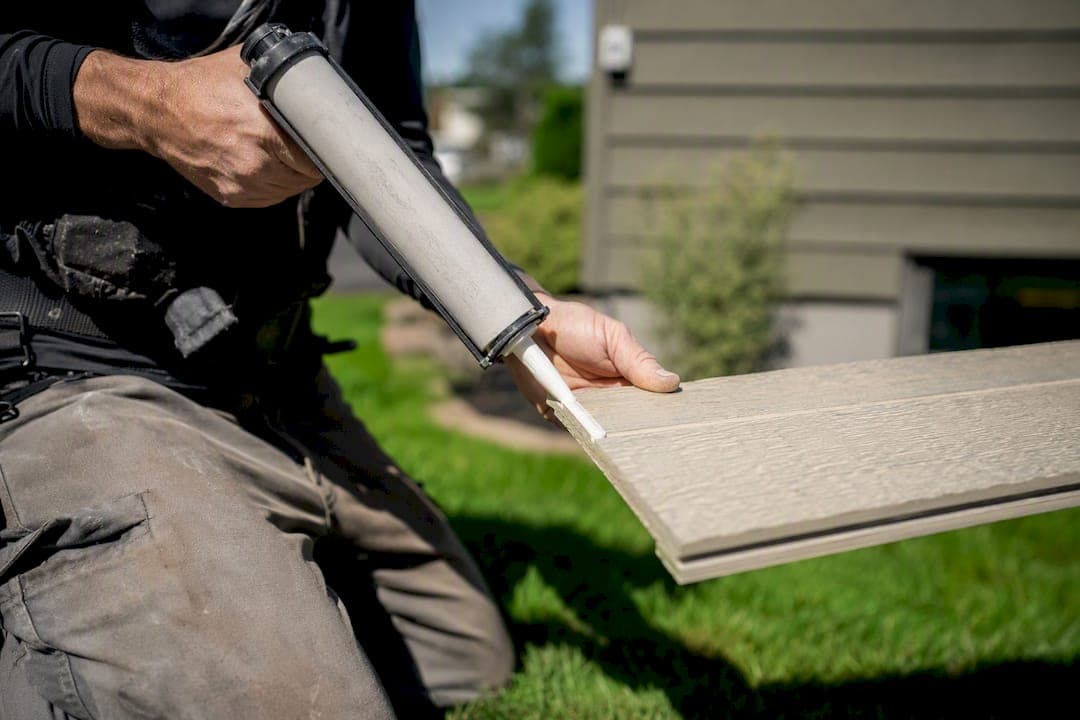
LP SmartSide is engineered wood siding, built from wood strands bonded with resin and treated with LP's SmartGuard process, which adds zinc borate for pest and fungal resistance along with wax for moisture repellency. That combination is the reason it behaves differently on the wall than either solid wood or vinyl. It resists termites and fungal decay better than untreated lumber, but it is not waterproof, and it depends on an intact paint film to keep water out over the long run.
Homeowners typically encounter two finish options. Primed panels arrive ready for field painting, giving you color flexibility but adding a labor step. ExpertFinish, LP's factory-applied coating, ships with the topcoat already cured under controlled conditions, which tends to hold up better than a rushed field paint job in variable weather.
A few physical traits matter more than most buyers expect:
- It weighs noticeably less than fiber cement, which speeds installation and reduces the crew size needed.
- It cuts and nails like traditional lumber, so most experienced carpentry crews adapt to it quickly.
- It accepts paint well, but every cut edge exposes raw wood strands that must be sealed before installation, not after.
That last point drives most of the product's real-world reputation, good and bad. When installers respect it, SmartSide performs close to fiber cement at a lower installed cost. When they skip it, the siding fails in the exact spots you'd expect: seams, corners, and anywhere a saw touched the board.
LP SmartSide Pros and Cons Homeowners Should Weigh
The clearest way to judge LP SmartSide is against what it does well and where it demands more attention than vinyl or fiber cement.
- Aesthetic and handling. It mimics cedar lap or shake convincingly, and its lighter weight makes it easier to install on multistory homes without extra structural bracing.
- Cost position. It typically installs for less than James Hardie fiber cement while beating vinyl on impact resistance, splitting the difference between the two categories on price and performance.
- Hail and impact resistance. Because it's a solid wood composite rather than a hollow vinyl profile, it holds up reasonably well against hail and flying debris, a real consideration in the Midwest.
- Moisture sensitivity. This is the trade-off. Balanced buyer guides note that LP SmartSide's convincing wood look and cost advantage come with a real vulnerability to moisture-related failure when installation or maintenance falls short.
- Repainting cadence. Unlike fiber cement, which can go 10 to 15 years between coats, SmartSide generally needs repainting sooner if the original finish starts chalking or thinning.
- Combustibility and pests. It's still a wood-based product, so it doesn't carry the noncombustible rating of fiber cement, and while SmartGuard treatment deters insects, it isn't a permanent pest barrier the way cement board is.
Field reports back this up. Homes where installers primed every cut edge and kept butt joints properly spaced show minimal issues after a decade. Homes where crews treated it like vinyl, cutting and nailing without sealing, tend to show swelling and paint failure at the seams within just a few years.
Pro Tip: Walk your finished siding job before the crew leaves and look specifically at cut ends near windows, corners, and outlets. If you see raw, unpainted wood grain, that's an open door for water.
LP SmartSide Problems: Installation Mistakes That Void Warranties
Most LP SmartSide problems trace back to a short list of installation shortcuts, and contractor inspection reports consistently document the same handful of errors: unsealed cut edges, tight butt joints, wrong fasteners, and missing flashing.
- Unsealed cut edges. Every field cut exposes raw wood strands. LP requires primer or sealant on those edges before installation; skip it, and water wicks straight into the panel.
- Tight butt joints. Panels need roughly a 3/16 inch gap at joints and terminations to allow for expansion. Installers who butt them tight, as they might with vinyl, cause buckling once the wood swells.
- Wrong or overdriven fasteners. LP specifies hot dipped galvanized nails with specific penetration depth. Overdriven nails crush the panel face and create a moisture entry point.
- Missing kickout flashing. Where a roofline meets a wall, kickout flashing directs water away from the siding. Skip it, and water channels directly behind the panel.
- Insufficient clearance. LP requires roughly 6 inches of clearance to grade and about 1 inch of clearance to roof shingles, gaps installers sometimes shrink to make a cleaner-looking transition.
Structural inspectors who evaluate failed installations report that the majority of documented SmartSide failures point back to installer shortcuts rather than defects in the product itself. Get the installation right, and the material generally performs as designed.
The 50-year limited warranty sounds reassuring, but it's prorated. Full coverage applies for the first five years, and the manufacturer's payout shrinks steadily after that. More importantly, most denied claims aren't denied because the siding failed. They're denied because the installation didn't match LP's published specifications, and there was no documentation proving otherwise. Ask any contractor bidding your project for their written gap spacing, fastener schedule, and edge-sealing plan before you sign anything. If they can't produce it, that's your answer.
LP SmartSide Maintenance: What Keeps It Lasting Decades
Correctly installed and maintained, LP SmartSide commonly reaches a 20 to 50 year service life, though where you land on that range depends heavily on climate exposure and how consistently you keep up with the finish.
LP's own maintenance guidance is specific, not generic. The manufacturer recommends periodic cleaning, two coats of 100% acrylic exterior paint when repainting, and sealing any exposed edge before it goes back up. It also warns against high-pressure washing, which can force water past the paint film and into the substrate.
A practical annual routine:
- Walk the exterior every spring and look for paint chalking, peeling, or thinning.
- Check cut edges near trim, corners, and penetrations for swelling or discoloration.
- Inspect fasteners for rust streaking, a sign they're starting to fail.
- Confirm flashing above windows and at roof intersections is still tight and unobstructed.
- Repaint proactively once the finish starts to dull rather than waiting for visible damage.
Homeowners in harsher climates should inspect twice a year rather than once, particularly after heavy snow load or a hail event.
LP SmartSide Cost: Installed Price and Where It Sits on Value
Installed pricing for LP SmartSide typically lands between vinyl and full fiber cement, which is exactly where most homeowners want it to sit. Buyer guides comparing engineered wood to fiber cement consistently place SmartSide below Hardie board on installed cost while noting it clears premium vinyl on impact resistance and appearance.
What actually moves your price up or down:
- Substrate condition. Rot repair or sheathing replacement before installation adds cost fast.
- Finish choice. Factory-applied ExpertFinish costs more upfront than primed panels but reduces near-term repainting labor.
- Access difficulty. Steep rooflines, multiple stories, and tight lot lines increase labor time.
- Trim and flashing scope. Homes needing extensive corner trim, window trim, or kickout flashing work cost more than a simple rectangular ranch.
The real value calculation isn't just the install invoice. Factor in the repainting cycle over 20 years, and moisture-sensitive installations that need early repair work erase any upfront savings quickly. If your budget sits below fiber cement pricing and you're comfortable with a repaint every decade or so, SmartSide's lifecycle value holds up. If you want to set it and forget it for 15 years, that math shifts.
Where LP SmartSide Performs Best (and Where to Avoid It)
Climate does more to determine SmartSide's success than almost any other single factor. It performs best in dry to moderate continental climates, the kind of weather pattern common across much of the Midwest and northern Plains, where humidity swings are less extreme and standing moisture is less common.
Approach it with more caution in a few specific regions:
- High-humidity coastal zones, where sustained moisture in the air stresses any wood-based product.
- The Pacific Northwest west of the Cascades, where near-constant rain and limited drying time between storms raise the stakes on every sealing detail.
- The Gulf Coast, where humidity and storm frequency combine to punish any gap in installation quality.
On fire risk, SmartSide is a combustible wood product, unlike fiber cement, so homeowners in designated wildfire-risk zones should factor that into both material choice and homeowners insurance conversations.
Before deciding, run through this: What's your regional humidity pattern? How much repainting are you genuinely willing to do? Does your insurer have opinions on combustible siding in your zip code? Those three answers tell you more than any spec sheet.
Choosing a Contractor Who Installs LP SmartSide Correctly
The single biggest predictor of how your siding performs in ten years is who installs it, not which brand you picked. Vet contractors with the same scrutiny you'd apply to a roofer.
- Ask for documented SmartSide experience, not just general siding work. Request photos or addresses of past installs if they'll share them.
- Request a written installation plan covering fastener type and spacing, butt joint gap dimensions, and cut-edge sealing procedure before work starts.
- Confirm finish handling. If you're going with primed panels, ask exactly what paint product and coat count they plan to use.
- Walk the job before final payment and check for sealed edges, correct joint gaps, proper flashing, and grade clearance yourself.
Red flags include contractors who can't explain gap spacing, who don't mention cut-edge sealing unprompted, or who rush through flashing details around windows and rooflines.
AM Exteriors documents every SmartSide install with photos at each phase, from prep through final trim, specifically so homeowners have a paper trail if a warranty question ever comes up. That documentation habit is what separates a warranty claim that gets approved from one that gets denied for lack of proof.
Pro Tip: Take your own photos of the cut edges before the crew installs each panel. If a dispute ever arises, dated photos are worth more than memory.
Availability: What Affects LP SmartSide Delivery Timelines
Availability varies more than most first-time buyers expect. LP SmartSide is manufactured regionally and distributed through building supply networks, which means lead times can shift based on your area's proximity to a distribution hub and how much demand local contractors are seeing that season.
Spring and early summer, when most siding projects get scheduled, tend to compress availability the most. If you're planning a project for peak season, ordering specialty trim pieces, corner boards, or a less common lap profile can add weeks to your timeline compared to standard vinyl, which most suppliers stock in bulk.
Working with a contractor who has an established relationship with a regional LP distributor generally shortens this window. Established installers often have standing orders or priority access that a smaller crew placing a one-off order doesn't. If your project has a hard deadline, tied to selling a home or finishing before winter, ask your contractor directly how long material lead time will run before you commit to a start date. A vague answer here is worth pushing back on, since material delays are one of the most common reasons siding projects slip past their original schedule.
A Contractor's View on LP SmartSide in Wisconsin Climates
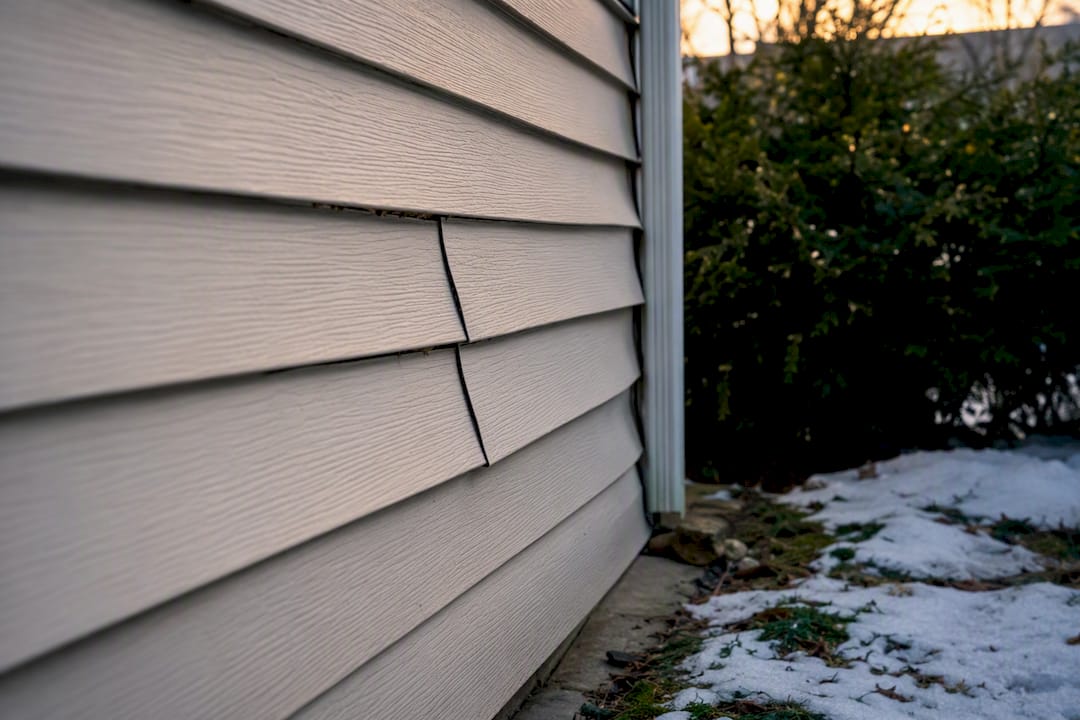
Wisconsin siding takes a beating that a lot of national reviews never account for: freeze thaw cycles, heavy snow load, and hail in the same calendar year. We see the same failure pattern repeatedly on inspections. Someone else's crew skipped cut-edge sealing or tightened up butt joints to make the reveal look cleaner, and within a few winters the panel swells at the seam.
AM Exteriors seals every cut edge before it goes on the wall, holds to LP's gap specifications even when it means a slightly less "perfect" looking seam, and photographs each stage for the homeowner's records. In this climate, that documentation matters as much as the install itself if a warranty question ever comes up.
Get an LP SmartSide Estimate Backed by Documentation
If you've read this far, you already know the material isn't the risk. The installer is. That's the gap AM Exteriors fills for homeowners across Dodge, Washington, Fond du Lac, and Ozaukee counties who want LP SmartSide done to manufacturer spec, not shortcut for speed.
An AM Exteriors estimate includes a full exterior inspection, a written installation plan covering fastener schedule and gap spacing, and dated photo documentation at each project phase, which is exactly the paper trail that protects you if a warranty question comes up years down the road. Services relevant to this project include:
- LP SmartSide installation with certified crews familiar with SmartGuard and ExpertFinish handling
- Warranty-aware sealing and flashing detail work
- Paint and finish guidance for primed panels
- Insurance claim assistance if storm damage is part of your project
Ready to see what correct installation looks like on your home? Request an estimate through the AM Exteriors siding services page and get a documented plan before any crew touches your walls.
Frequently Asked Questions About LP SmartSide
Is LP SmartSide a good siding choice overall? Yes, for most U.S. homeowners in moderate climates, provided the installer follows LP's edge-sealing, gap-spacing, and fastener requirements exactly.
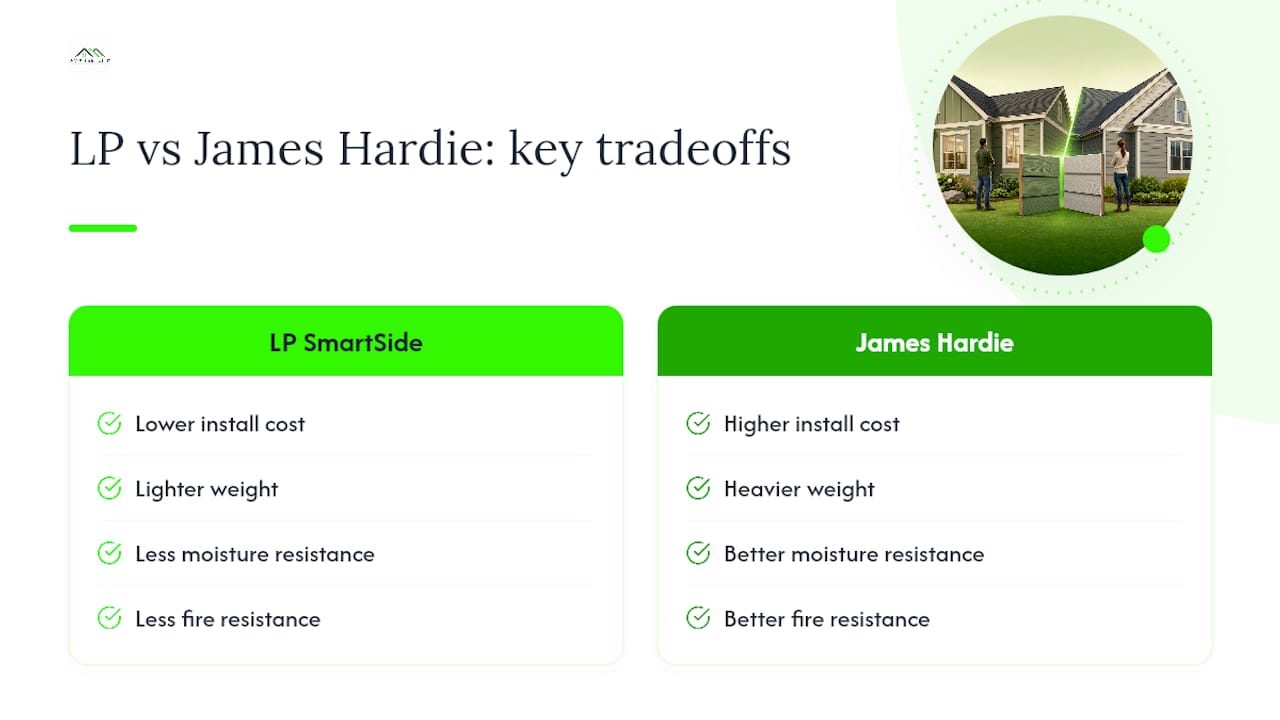
How does LP SmartSide compare to James Hardie fiber cement? LP SmartSide costs less to install and weighs less, while Hardie fiber cement resists moisture and fire better and needs repainting less often.
What are the most common LP SmartSide problems? Unsealed cut edges, tight butt joints, overdriven fasteners, and missing kickout flashing account for the large majority of reported failures.
How often does LP SmartSide need repainting? Expect a repaint cycle sooner than fiber cement, generally once the acrylic finish starts chalking or thinning, which varies by climate exposure.
Does LP SmartSide work in humid or coastal climates? Approach it cautiously in high-humidity coastal areas, the Pacific Northwest west of the Cascades, and the Gulf Coast, where sustained moisture raises the installation stakes.
Sources
- Problems with LP SmartSide® installations
- 7 Tips for Care & Maintenance of LP® SmartSide® Siding (LP Corporation blog)
- LP SmartSide Siding Problems: Everything You Need To Know | Today's Homeowner