
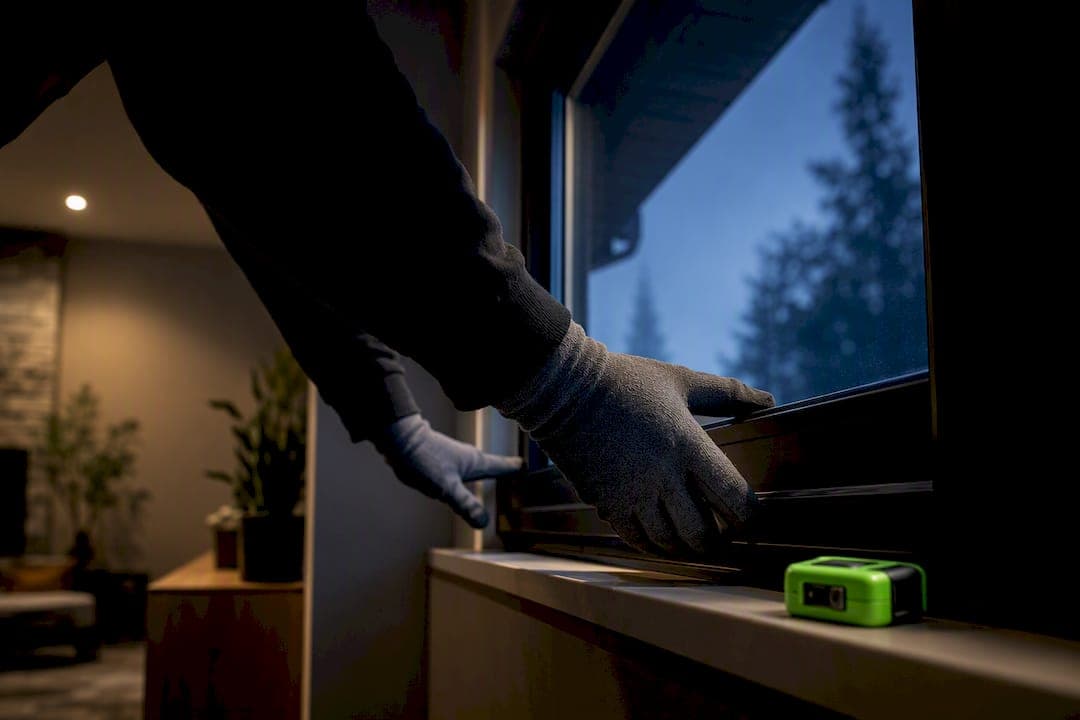
The federal window tax credit does not apply to windows placed in service after December 31, 2025. For anyone installing in 2026, the next move is checking state and utility rebates through DSIRE instead.
TL;DR:
- The federal window tax credit ended on December 31, 2025, so any windows installed afterward do not qualify for the federal rebate.
- To qualify before the cutoff, windows must be installed and ready for use in 2025, not just purchased or contracted in 2025.
- The maximum federal credit for qualifying windows was 30% of the product cost, capped at $600 per year within a $1,200 building envelope limit.
- Windows must meet ENERGY STAR Most Efficient standards, NFRC certifications, and have manufacturer QMID documentation to qualify.
- After 2025, homeowners should focus on state and utility rebates found through DSIRE, which often require pre-approval and have specific eligibility criteria.
Table of Contents
- Does a Window Tax Credit Apply in 2026?
- How Much Was the Window Tax Credit Worth?
- What Standards Did Qualifying Windows Need to Meet?
- How Do You Claim the Window Tax Credit for 2025 Installs?
- Where Are the Real Savings for 2026 Window Projects?
- What Documents Should You Keep, and For How Long?
- Can You Claim Both a Window Credit and a Solar or Insulation Credit?
- Does This Affect New Construction Differently Than Existing Homes?
- Will Congress Bring Back a Window Tax Credit After 2026?
- What Does the Math Actually Look Like?
- What Installers See That Homeowners Often Miss
- Get Documentation Done Right the First Time
- Sources
- FAQ
Does a Window Tax Credit Apply in 2026?
The answer depends entirely on one date: December 31, 2025. That's the cutoff the IRS set for the Energy Efficient Home Improvement Credit, known as Section 25C, and it governs every window purchase going forward.
"Placed in service" means the window is installed and ready for use in your home, not just purchased or delivered. A window sitting in your garage waiting for a contractor doesn't count. One installed and functional by December 31, 2025 counts; one finished on January 2, 2026 does not, even if you signed the contract and paid a deposit back in November.
That distinction trips up a lot of homeowners who assume the purchase date is what matters. It isn't.
Here's who qualified before the sunset, and who never did:
- Eligible: Homeowners installing ENERGY STAR certified windows in their existing primary residence in the United States.
- Not eligible: Landlords installing windows in rental properties they don't live in.
- Not eligible: Builders or buyers of new construction, since the credit applied only to existing homes.
- Borderline case: A contract signed in 2025 with installation completed in January 2026 falls on the wrong side of the line. The placed-in-service date wins every time.
If your windows went in anytime during 2025, gather your paperwork now. You'll claim that credit on the 2025 return you file in 2026, and the IRS won't extend flexibility on documentation just because the program has ended.
How Much Was the Window Tax Credit Worth?
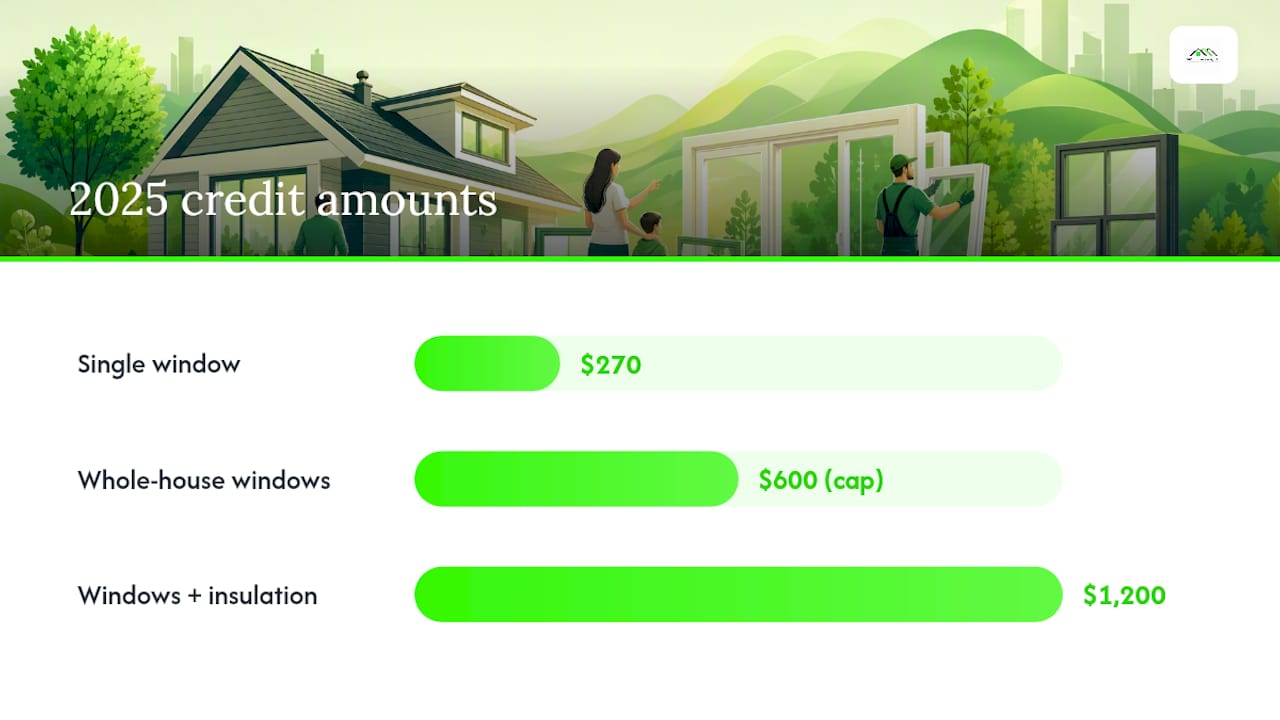
For windows installed by the December 31, 2025 deadline, the credit equaled 30% of the product cost, capped at $600 total for windows and skylights combined in a single tax year, according to IRS guidance on the Energy Efficient Home Improvement Credit.
That $600 window cap didn't stand alone. It sat inside a larger $1,200 annual limit covering the whole building envelope category, which also included insulation, doors, and home energy audits. Windows and skylights could use up to half of that envelope cap, but not more.
Quick math: Spend $4,000 on qualifying windows, and 30% comes to $1,200. But the window-specific cap stops you at $600. Spend $2,000, and 30% is $600, which maxes out the credit exactly.
Beyond the envelope limit, a separate $3,200 overall annual ceiling covered the full Energy Efficient Home Improvement Credit, split between the $1,200 envelope/equipment tier and a $2,000 tier for heat pumps and biomass systems. The credit was nonrefundable, meaning it could reduce your tax bill to zero but never generate a refund beyond what you owed. It also applied strictly to the tax year the windows were placed in service, not the year you paid for them if those years differed.
What Standards Did Qualifying Windows Need to Meet?
Not every energy-efficient window qualified, and the standards mattered as much as the installation date. Confirming a specific model required checking three separate credentials before you could count on the credit.
- ENERGY STAR Most Efficient designation. This is a tighter standard than basic ENERGY STAR certification. Manufacturers publish which models carry it each year, and it's worth confirming directly rather than trusting a sales brochure.
- NFRC Certified Product Directory listing. The NFRC's CPD assigns every certified window a CPD number tied to its U-factor and performance by climate zone. Your specific climate zone in Wisconsin determines which U-factor threshold applies.
- Manufacturer QMID. Starting with 2025 installs, manufacturers had to register a Qualified Manufacturer Identification Number, and that PIN had to appear on your invoice or product documentation to support a claim.
- Product-only costs. The IRS and ENERGY STAR both excluded labor from the calculation. Only the window unit itself counted toward that 30% figure, so an itemized invoice separating materials from installation labor was essential.
Skipping any one of these four checks was the fastest way to have a credit claim challenged later.
How Do You Claim the Window Tax Credit for 2025 Installs?
You claim windows in the tax year they were placed in service, which for most homeowners now means the 2025 return filed sometime in 2026. Waiting a year to claim it isn't an option since the credit doesn't carry forward past the program's expiration.
The filing process itself follows a fairly linear path:
- Pull your itemized invoice showing product cost separate from labor.
- Confirm the manufacturer's QMID is documented, either on the invoice or a supplemental certificate.
- Record the ENERGY STAR Most Efficient status and NFRC CPD number for each window.
- Complete IRS Form 5695, entering qualified costs and the manufacturer identification where the instructions specify.
- Attach Form 5695 to your Form 1040 when you file.
Pro Tip: Keep a single folder, digital or physical, with every invoice, label photo, and CPD printout before you file. Reconstructing this paperwork after a rejected claim is far harder than gathering it once, up front.
The most common pitfall isn't fraud. It's incomplete documentation, usually a missing QMID or a contractor invoice that lumps materials and labor into one number, leaving no way to isolate the product-only cost the IRS requires. If the IRS denies a claim over documentation gaps, an amended return with corrected paperwork is usually the fix, but that adds months to any refund timeline.
Where Are the Real Savings for 2026 Window Projects?
With the federal credit gone for new installs, state and utility programs have become the primary place homeowners find savings, and DSIRE is the best starting point to search them. It's a free, government-backed database covering incentive programs across every state, updated as programs launch or expire.
Search DSIRE before signing any contract, not after. Rebate programs typically work differently than the old federal credit did:
- Many require pre-approval before installation begins, not just a receipt afterward.
- Some limit eligibility to participating contractors enrolled with the utility or program administrator.
- Reimbursement is usually tied to specific U-factor thresholds, similar to the old NFRC checks, and often covers material cost only.
- Application windows can close seasonally or once a program's funding runs out for the year.
Wisconsin homeowners should also look at Focus on Energy, the state's ratepayer-funded efficiency program, which has required pre-approval or participating-contractor enrollment for past window rebates. Federal HOMES and HEAR rebate programs, funded through state energy offices, offer a separate whole-home path that differs from a utility's per-window rebate, often covering broader efficiency upgrades rather than a single product category.
Before you sign anything, ask your contractor to write the specific program requirements, U-factor targets, and pre-approval steps directly into your quote. A verbal promise that "this qualifies" isn't documentation.
What Documents Should You Keep, and For How Long?
A federal claim or a rebate application lives or dies on paperwork you likely won't think about again until you need it. Build this file the same week your windows go in, not months later when memories and receipts have scattered.
- Itemized invoice listing product and labor separately, plus the installation date and your contractor's business information.
- NFRC CPD numbers for each window model, along with a written ENERGY STAR Most Efficient statement and the manufacturer's QMID.
- Photographs of the NFRC label still attached to the window frame, taken before removal, plus finished installation photos.
- Digital backups of every document above, stored somewhere separate from paper originals.
Keep everything for at least three years after filing, which matches the IRS's typical audit window. If your return involves other complexities, six years is the safer target.
Can You Claim Both a Window Credit and a Solar or Insulation Credit?
Yes, but the caps interact in ways that catch people off guard. Windows shared that $1,200 building-envelope sublimit with insulation, exterior doors, and home energy audits, all within the same tax year, inside the broader $3,200 annual ceiling for the Energy Efficient Home Improvement Credit overall.
Solar panels fall under a completely different program: the Residential Clean Energy Credit, governed by its own section of the tax code and calculated separately from 25C. That means a homeowner who installed solar panels and new windows in the same year could claim both, since they draw from different credit categories with different caps.
The mistake to avoid is assuming all your energy upgrades feed into one shared pool. They don't, but they also don't stack without limit. If you added windows, insulation, and a new exterior door in the same tax year, all three competed for that same $1,200 envelope allowance. Spend enough across all three categories, and you'll hit the ceiling well before you've claimed 30% of each individual project.
Filing Form 5695 correctly means separating these categories on the form itself, not lumping every energy upgrade into a single line. A tax preparer familiar with residential energy credits can catch this before it becomes a filing error, but plenty of DIY filers miss it because the form's structure isn't intuitive on a first read.
Does This Affect New Construction Differently Than Existing Homes?
New construction never qualified for the window tax credit in the first place, and that distinction matters more now that the program has ended entirely. Section 25C was built around retrofitting existing homes, not equipping new builds with efficient products from the start.
That's a meaningful gap for anyone building a new home in 2026 expecting some federal offset for high-performance windows. There isn't one, and there wasn't one even before the December 2025 sunset. Builders sometimes advertise energy-efficient features as tax-advantaged, and buyers should ask specifically which program a builder means, since it's rarely 25C.
Existing homeowners face a different reality now. Anyone who owned a home with older, drafty windows and was counting on the credit to offset a 2026 replacement is working without that federal support. The economics still often favor replacement, particularly for windows that are failing, fogging between panes, or driving up heating costs through a harsh Wisconsin winter, but the calculation now rests on energy savings and resale value rather than a tax credit.
New construction and major renovations may still find value in state or utility rebate programs tracked through DSIRE, since many of those aren't restricted to existing homes the way the federal credit was. That's worth checking project by project, since rules vary by state and even by utility territory.
Will Congress Bring Back a Window Tax Credit After 2026?
Nobody can predict legislation, but the pattern with residential energy credits offers a rough guide. Section 25C itself was extended and modified multiple times before this sunset, and energy tax policy tends to shift with broader budget and legislative priorities rather than moving on a fixed schedule.
Homeowners hoping for a revival should treat any headline about a "new 2026 window credit" with skepticism until it appears in actual IRS guidance or statutory text. Advocacy groups and industry associations have pushed for reinstating window and building-envelope credits before, and they're likely to keep doing so, but a proposal circulating in Congress is not the same as a credit you can claim.
The more durable trend is the shift toward state and utility-level programs, which don't depend on federal budget cycles in the same way. Some industry voices now recommend homeowners plan around stacking these state and utility incentives rather than waiting on federal action, since several programs already offer savings that rival or exceed what the expired 25C credit provided. That's a more reliable planning assumption for 2026 than betting on a legislative reversal.
If a new federal credit does pass, it will show up first on the IRS's credits and deductions page, which is the most reliable place to check periodically rather than relying on secondhand news coverage.
What Does the Math Actually Look Like?
Numbers make this concrete faster than rules alone. Here's how the expired credit played out in three realistic 2025 scenarios.
Scenario one: A single replacement window. A homeowner replaces one failing window for $900 in product cost, installed in October 2025. Thirty percent comes to $270, well under the $600 cap, so the full $270 was claimable on the 2025 return.
Scenario two: A whole-house window project. A Wisconsin homeowner replaces twelve windows for $9,000 in product cost alone, with labor billed separately at $4,000. Thirty percent of $9,000 is $2,700, but the window-specific cap stopped the credit at $600, regardless of how much more the homeowner spent.
Scenario three: Windows plus insulation in the same year. A homeowner spends $2,000 on window products and $3,000 on attic insulation in 2025. Thirty percent of windows is $600, hitting the window cap exactly. Thirty percent of insulation is $900. Combined, that's $1,500, but the shared envelope sublimit stopped total envelope claims at $1,200, meaning the homeowner lost $300 of otherwise-qualifying credit simply because both projects landed in the same tax year.
That third scenario is the one homeowners most often miss, and it's exactly why spreading large multi-category energy projects across different tax years used to make a real financial difference when the credit was still active.
What Installers See That Homeowners Often Miss
Twenty-five years of installing windows across southeastern Wisconsin has shown a consistent pattern: claims get denied over paperwork, not eligibility. A window that qualifies on paper still fails a homeowner if the invoice never separates product cost from labor, or if nobody photographed the NFRC label before it got covered by trim.
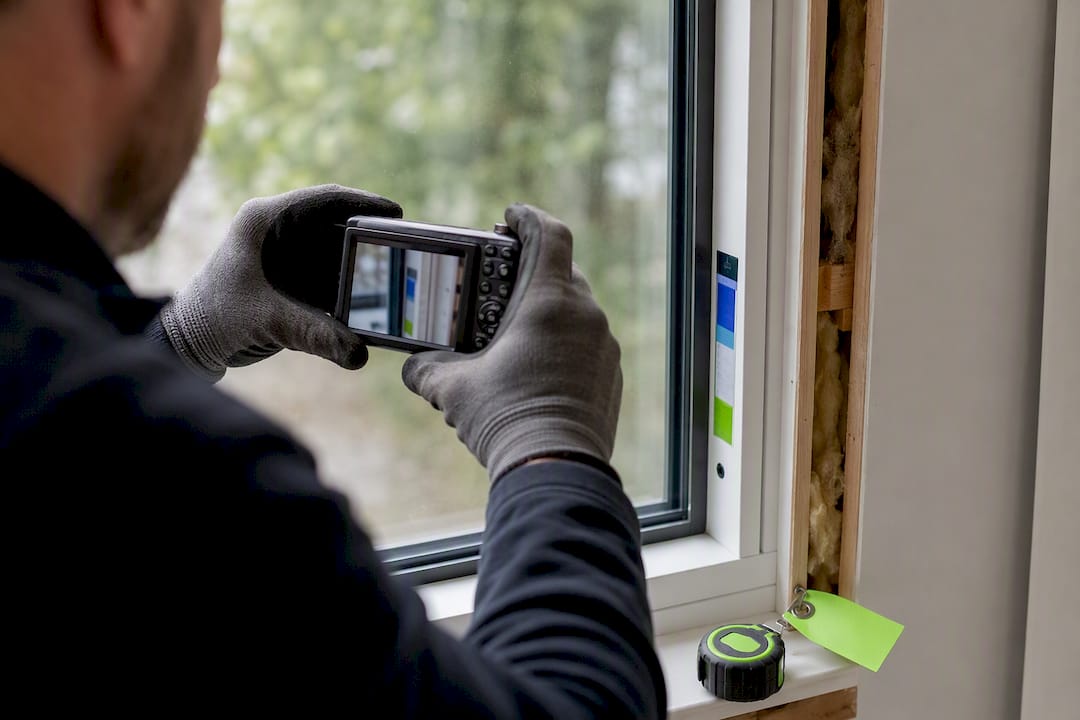
Every invoice should show the CPD number, the QMID, and a clean split between materials and installation. That's not optional detail. It's the difference between a smooth claim and a rejected one. Hiring a contractor who documents this correctly from day one matters more than almost any other factor in whether a rebate or credit application succeeds.
Get Documentation Done Right the First Time
A local contractor installs energy-efficient replacement windows and provides itemized invoices separating product cost from labor while recording necessary product identification numbers for each window. That's the exact paperwork state and utility rebate programs ask for, and it's the same documentation the IRS wanted for federal claims before the 25C sunset.
Owner-supervised installation means the work is carefully checked to meet rebate and documentation requirements. The contractor tracks relevant utility and state program requirements so that quotes reflect specific rebate criteria, aiming to avoid surprises after installation. If you're weighing window replacement costs in Wisconsin against what rebates might offset, that's exactly the conversation worth having before you sign a contract. Request a quote and we'll walk through documentation requirements alongside your project scope.
This article is general information, not a substitute for advice from a qualified financial advisor. Consult a qualified financial professional about your own circumstances before acting on anything here.
Sources
FAQ
Can I Claim a Tax Credit for New Windows in 2026?
Not if the windows were placed in service in 2026. The federal 25C credit ended for any windows installed after December 31, 2025, so 2026 installations don't qualify regardless of when you signed the contract or paid the deposit.
Can You Still Get a Tax Credit for New Windows?
Only if the windows were installed by December 31, 2025, in which case you claim 30% of the product cost, up to $600, on the 2025 return you file in 2026. For 2026 installs, state and utility rebates through DSIRE are the realistic savings path.
Who Gets the New $6,000 Tax Break?
There's no verified federal window tax credit amount as high as some figures circulating online, and homeowners should be skeptical of inflated claims. The confirmed window credit topped out at $600 within a $1,200 envelope cap and a $3,200 overall annual ceiling before its 2025 sunset.
What Tax Credits Will Be Available in 2026?
The federal window credit itself is not available for 2026 installations. Homeowners should check the IRS credits and deductions page for other programs like solar's Residential Clean Energy Credit, and search DSIRE for state and utility window rebates that remain active this year.
How Do I Know If My Windows Qualify for a Rebate Instead?
Search the DSIRE database by your ZIP code to find active state and utility programs, since eligibility rules and U-factor requirements vary by location. Am-exteriors can help document the NFRC CPD number and product specifications your rebate application will likely require.