
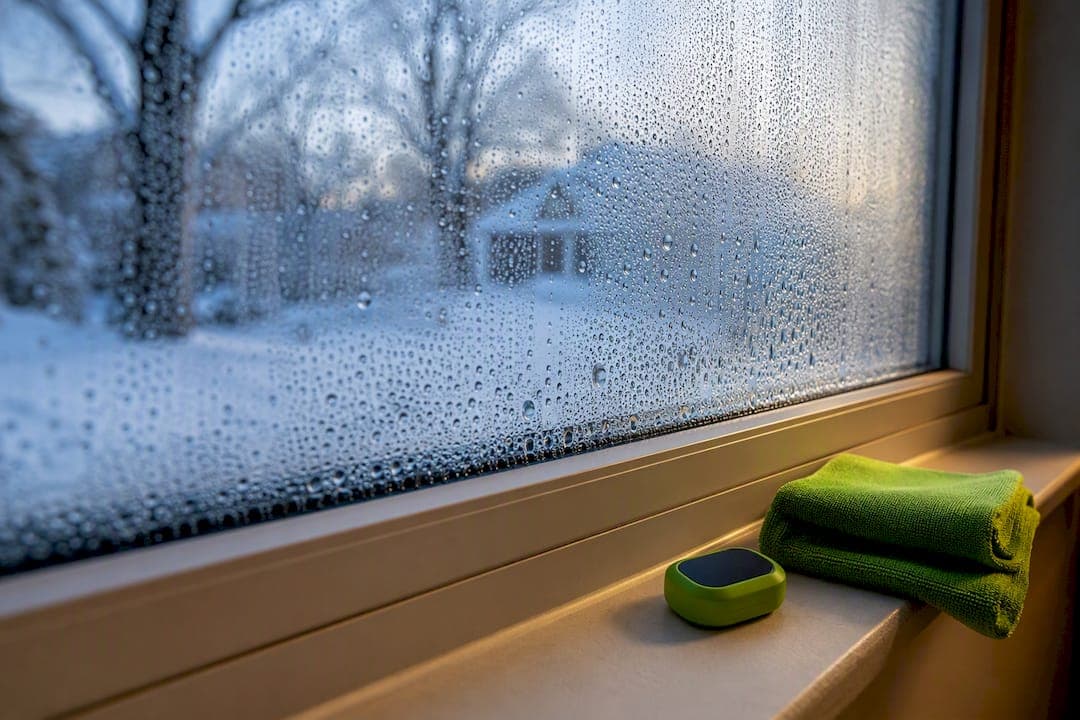
Window condensation in winter happens when warm, moist indoor air hits cold glass and hits its dew point. The two fastest fixes are cutting indoor humidity with exhaust fans or a dehumidifier and moving air across the glass so moisture never gets the chance to settle. If you see fogging trapped between the panes or water pooling on the sill day after day, that is no longer a humidity problem. It is a sign to call a professional.
TL;DR:
- Keep indoor humidity levels between 30% and 35% using vents, exhaust fans, and a dehumidifier to prevent condensation on the inside of windows.
- Seal any failed window insulation units and consider upgrades like low-E coatings or gas fills if moisture persists despite humidity control efforts.
- Address installation issues such as missing flashing or improper sealing, which can cause persistent condensation and potential window damage.
- Call a professional if condensation remains after two weeks of humidity management or if signs of damage, such as staining or fog between panes, occur.
- Focus on controlling moisture and improving airflow first, as most condensation issues stem from humidity and ventilation rather than defective windows.
Table of Contents
- What Causes Window Condensation in Winter?
- Where Is the Condensation Forming, and What Does It Mean?
- What Can You Do Tonight to Stop Window Fog?
- Long-Term Fixes: Ventilation, Sealing, and Window Upgrades
- When Does Window Condensation Mean You Need a Pro?
- AM Exteriors' Take on Installation and Cold-Climate Windows
- Why Most Condensation Advice Skips a Step
- Sources
What Causes Window Condensation in Winter?
Cold glass acts like the outside of a glass of iced tea. Air can only hold so much moisture at a given temperature, and that ceiling is the dew point. When warm indoor air touches a cold windowpane, it cools instantly at the surface, and any moisture the air was holding condenses into the droplets you see fogging up your glass.
Your house generates a lot of that moisture without you noticing. Common sources include:
- Cooking and boiling water
- Showers and baths without ventilation
- Drying laundry on an indoor rack
- Houseplants, aquariums, and other standing water
- Simply breathing, if you've got a full house
Colder outdoor temperatures make this worse because they lower the indoor relative humidity level that triggers condensation. A living room that stays fog-free at 45% humidity in October might sweat at 35% once the outside temperature drops into the teens, because the glass itself runs colder.
Target range: The EPA recommends keeping indoor relative humidity between roughly 30% and 35% in winter, a range that limits condensation without leaving the air uncomfortably dry. A $15 hygrometer from any hardware store tells you exactly where you stand. Guessing doesn't.
One exception worth knowing: if you just moved into new construction, expect condensation the first heating season. Building materials like lumber, drywall, and concrete release moisture as they cure, and that extra humidity usually settles down within a year.
Where Is the Condensation Forming, and What Does It Mean?
Not all window fog is the same problem. Where the moisture sits tells you what's actually wrong.
- On the inside face of the glass. This is almost always a humidity or ventilation issue inside your home, not a window defect. Reduce moisture at the source and increase airflow, and it typically clears up within days.
- On the outside face of the glass. This is just dew, the same thing that forms on your car windshield or the grass overnight. It's cosmetic and needs no action unless it never dries off even on sunny afternoons.
- Between the panes. This means the insulated glass unit's seal has failed, letting moist air into the sealed gap where it can't escape. No amount of ventilating your house will fix this.
A little edge fogging on the coldest nights of the year can be completely normal. It becomes a real problem when it shows up daily across multiple windows, leaves standing water on the sill, or comes with staining, soft wood, or a white haze between the panes. That haze is dried desiccant, and it's a clear signal the seal is gone for good.
What Can You Do Tonight to Stop Window Fog?
Start with the free stuff. You can knock down most winter condensation without spending a dollar on equipment.
- Run your kitchen and bathroom exhaust fans during cooking or showering, and leave them on for another 15 to 20 minutes after you're done to catch the moisture spike before it spreads.
- Crack a window for 5 to 15 minutes after a shower or a big cooking session. It sounds counterintuitive to open a window to warm up a cold room, but a short purge of humid indoor air makes a bigger dent than you'd expect.
- Keep your furnace fan set to "on" instead of "auto" so air keeps moving across the glass instead of sitting still against it.
- Open interior doors and pull curtains or furniture back from vents and windows so warm air can actually reach the cold surfaces.
- Move houseplants off the windowsill, vent your clothes dryer outdoors, and skip the portable humidifier until the fog clears.
If those steps aren't enough, a portable dehumidifier rated for roughly 30 to 50 pints a day handles most single rooms with a persistent moisture problem.
Pro Tip: Wiping the glass every morning treats the symptom, not the cause. If you're drying the same window every day for a week straight, that's your cue to fix the humidity source instead of your towel routine.
Long-Term Fixes: Ventilation, Sealing, and Window Upgrades
Once you've got the quick fixes running, the next question is whether your house needs a structural assist. Work through these in order, cheapest first.
Ventilation upgrades. A bathroom or kitchen exhaust fan handles moisture bursts, but a whole-home heat-recovery ventilator (HRV) or energy-recovery ventilator (ERV) makes sense if you're seeing condensation in multiple rooms at once, not just after a shower. One caution: fans vented into an attic or soffit instead of straight outside can push moisture into your building assembly, which trades a fog problem for a rot problem. Confirm your fans exhaust to the outdoors.
Dehumidifier placement. Set it near the problem room, not tucked in a basement corner, and run it on a humidistat set to the 30 to 45% range depending on outdoor temperature. Continuous operation through the coldest months is often necessary, not optional.
Weatherproofing. Check weatherstripping around sashes, caulk gaps at the frame, and clear any weep holes or exterior drains that let condensation escape instead of pooling. Our door winterization guide covers matching techniques for entry doors, since drafts and moisture rarely stop at the window frame.
Window upgrades. Interior storm panels or low-E film raise the room-side glass temperature for a fraction of replacement cost, and they're a smart stopgap while you decide on anything bigger.
| Feature | What it does | Why it matters for condensation |
|---|---|---|
| Low-E coating | Reflects heat back into the room | Keeps interior glass surface warmer |
| Warm-edge spacer | Separates panes with a low-conductivity material | Reduces cold spots at the edge of glass |
| Gas fill (argon/krypton) | Insulates between panes | Raises overall glass temperature |
| U-factor | Measures heat transfer rate | Lower U-factor means warmer interior glass |
The NFRC's condensation resistance (CR) rating gives you a number to compare windows directly. Before spending on a full window replacement, give your fixes two weeks to work. If condensation is still showing up daily after that, the glass itself is telling you something the fans and dehumidifier can't fix.
When Does Window Condensation Mean You Need a Pro?
Some symptoms are beyond a hygrometer and a dehumidifier. Call a professional if you notice any of the following:
- Condensation that persists despite two full weeks of active humidity control.
- Staining, bubbling paint, or soft wood around the frame or sill.
- Fog trapped between the panes that never clears.
- The same pattern repeating on multiple windows at once, suggesting a house-wide issue rather than one bad unit.
A contractor checking these signs will inspect the IGU seals, exterior flashing, sill pan, and surrounding insulation for trapped moisture. Once condensation has soaked into the frame or wall cavity, no amount of running fans reverses that damage; it has to be dried out and often rebuilt.
Photograph the fogging, note the time of day and outdoor temperature, and track how many days in a row it's happened. That record helps a pro diagnose the issue faster than a vague description on the phone.
Pro Tip: Ask directly whether a quoted fix is a reseal or a full IGU replacement. "Defogging" services that drill a hole and vacuum out moisture often look great for a season, then fog right back up because the seal was never actually restored.
AM Exteriors' Take on Installation and Cold-Climate Windows
We see a lot of condensation calls that trace back to installation, not the window itself. A properly installed U-factor 0.22 window holds its interior glass temperature well above units that were rushed in without correct flashing or sealing at the rough opening.
The most common installation gaps we find: missing sill pans, inconsistent shimming that lets cold air track behind the frame, and caulk applied over dirty or wet surfaces where it never bonds. When you're comparing quotes, ask specifically how the installer handles flashing and air sealing at the frame, not just which brand of glass they're selling. A cheap defogging offer on a 15-year-old unit rarely beats a properly sealed new install for cold-climate performance.
Why Most Condensation Advice Skips a Step
Most winter guides jump straight to buying a dehumidifier or replacing windows, and that order gets it backward. The research here is consistent: the vast majority of condensation is a humidity and airflow problem you can fix in a weekend for free, rather than a window defect that demands a check written to a contractor.

Where conventional advice falls short is treating every foggy window as a sales opportunity. A homeowner running exhaust fans and a hygrometer for two weeks will solve most cases outright. What gets underestimated is installation quality on the windows you already own or plan to buy. A great low-E, argon-filled unit installed with a sloppy flashing job will condensate and eventually rot just like a cheap one. Fix the humidity first, diagnose the location of the fog second, and only then start pricing glass.
If you've done the free fixes and you're still drying your sills every morning, that persistence is the real signal, not the fog itself. At that point, a full inspection or a look at replacement costs makes more sense than another bottle of glass cleaner.
— Heather
Sources
- EPA — What are the main ways to control moisture in your home?
- InspectAPedia — Window condensation problems: causes, cures
- Advanced Window & Glass Repair — Reduce window moisture during winter months