
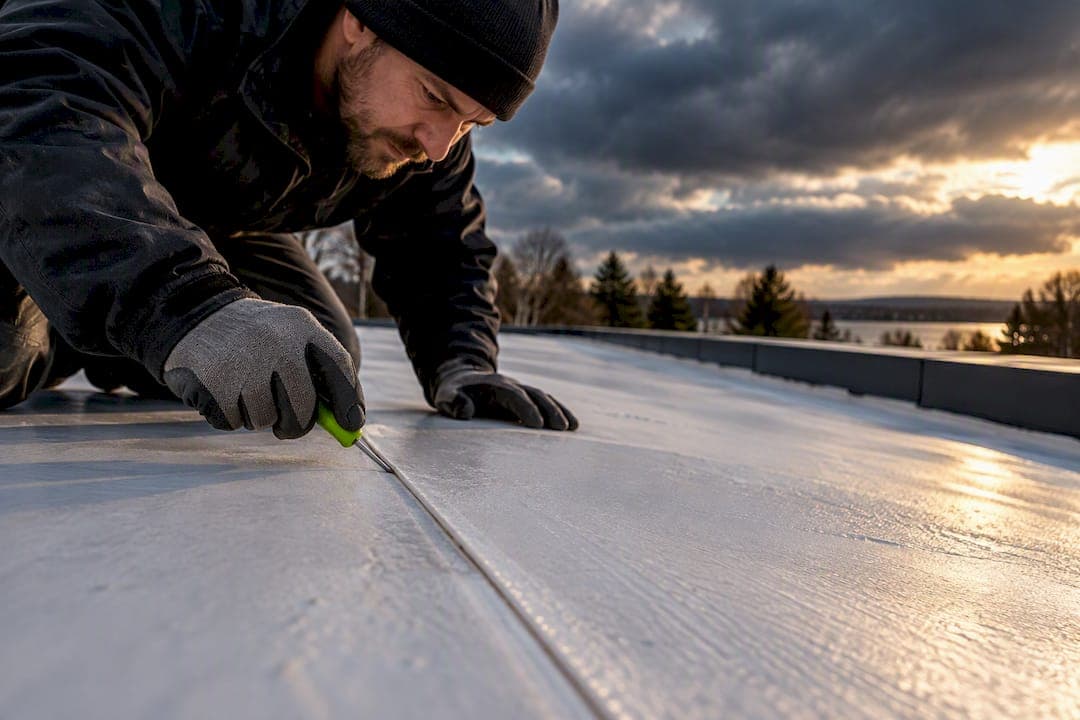
A properly installed TPO roof typically lasts 15 to 30 years, with 60-mil fully adhered systems on the higher end and thin, poorly welded 45-mil jobs on the lower end. Thickness and workmanship matter more than brand or age alone. Field testing on membranes over a decade old still meets current material standards, which means a 15-year-old roof is not automatically due for replacement. Before you plan a budget around age, get an inspection that checks seams, flashing, and moisture, not just a calendar.
TL;DR:
- The longevity of a TPO roof depends more on installation quality and membrane thickness than on age or brand, with thicker systems lasting longer in harsh climates.
- Poor workmanship, especially weld seam quality, is the primary cause of early TPO roof failure, making documentation of seam testing during installation crucial.
- A 60-mil fully adhered TPO roof can last about 20 years, with proper maintenance and inspection, especially in cold climates where membrane flexibility is critical.
- Widespread seam failure often indicates systemic installation issues rather than membrane material defects, requiring structural assessments for repair decisions.
- Inspection and maintenance routines twice a year, plus after major storms, can extend roof life and help identify problems before costly replacements become necessary.
Table of Contents
- TPO Roof Lifespan by Membrane Thickness and System Type
- What Actually Determines How Long Your TPO Roof Lasts
- Repair or Replace? How to Read the Signs
- Building a Maintenance Schedule That Extends Service Life
- What Am-exteriors Watches for on Every TPO Installation
- Reading Warranties Against Real-World Field Data
- Get a Straight Answer on Your TPO Roof's Condition
- Sources
- FAQ
TPO Roof Lifespan by Membrane Thickness and System Type
The number you find in most product brochures, "20 to 30 years," is a starting point, not a guarantee. Real-world lifespan depends heavily on membrane thickness and how the sheet gets attached to the roof deck.
Here's how the common configurations typically stack up:
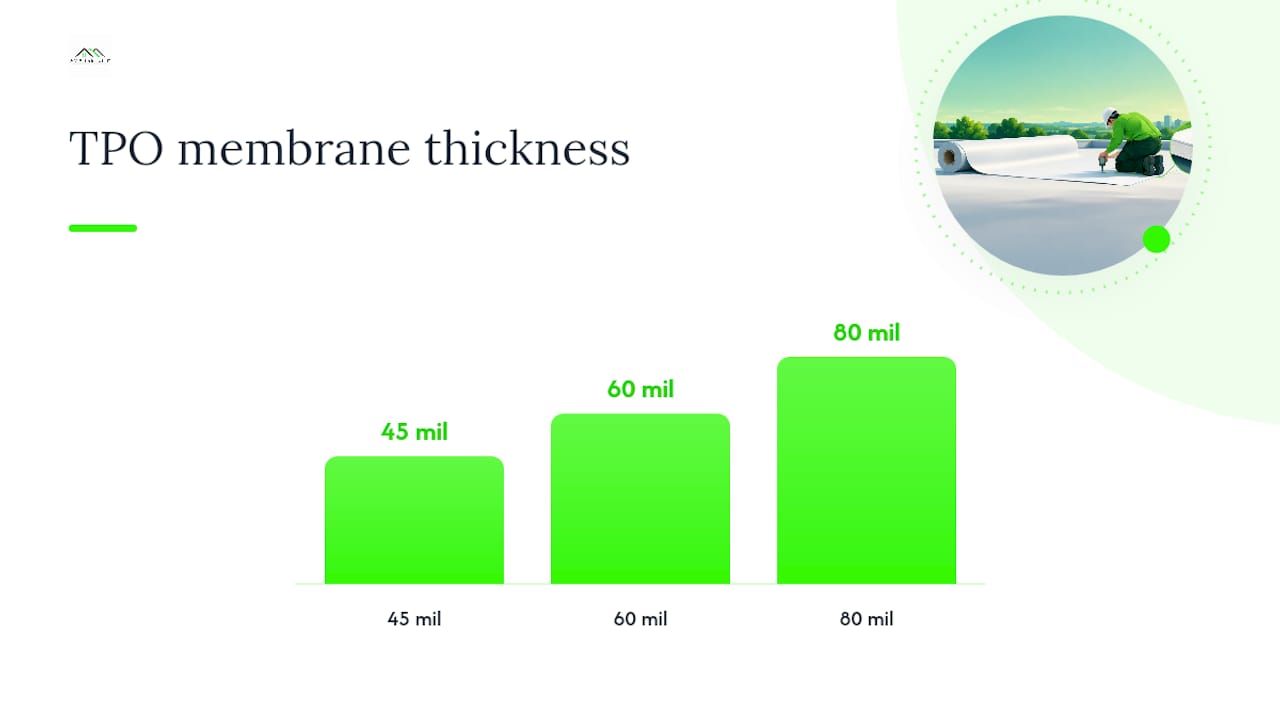
- 45-mil, mechanically attached: typically lasts around two decades under normal conditions, possibly less in high-wind zones where fastener stress accelerates seam fatigue.
- 60-mil, mechanically attached: generally endures close to two decades, offering better puncture resistance than 45-mil.
- 60-mil, fully adhered: often performs better due to adhesion reducing membrane movement and wind uplift stress on seams.
- 80-mil, fully adhered: typically the thickest common option favored for buildings with heavy rooftop traffic or equipment, offering the longest service life among standard thicknesses.
A field study on aged TPO membranes found that 45- and 60-mil samples still met current ASTM D6878-19 requirements after more than 12 years in service, and 60-mil samples kept their cold-temperature flexibility down to negative 40 degrees Fahrenheit. That's a meaningful data point: membranes that were installed correctly and maintained can outperform the conservative estimates baked into most warranty paperwork.
Speaking of warranties, don't confuse the number printed on that document with a realistic service-life forecast. A manufacturer warranty of 20 years covers material defects under specific installation conditions. It does not promise the roof will fail on year 21, and it doesn't mean the roof was doomed to fail on year 19 either. Warranty term and predicted lifespan are two different numbers answering two different questions, and mixing them up leads to either premature replacement or a nasty surprise.
If you're comparing thickness options for a new install, residential TPO roofing that specifies 60 mil and seam testing tends to hold up noticeably better than budget-grade 45-mil jobs cut to save money upfront.
What Actually Determines How Long Your TPO Roof Lasts
Membrane thickness sets the ceiling on lifespan. Installation quality determines whether you ever get close to it. Roofing consultants who inspect failed TPO systems consistently point to workmanship issues, not material defects, as the leading cause of early failure, specifically weak or contaminated heat welds, poor flashing details around penetrations, and inadequate drainage.
Seams and flashings. A TPO roof is only as strong as its weakest weld. Hot-air welded seams that weren't cleaned or heated properly can separate years before the membrane field itself shows any wear. Ask your contractor whether seams are probe-tested or destructive-tested during installation, not just visually inspected.
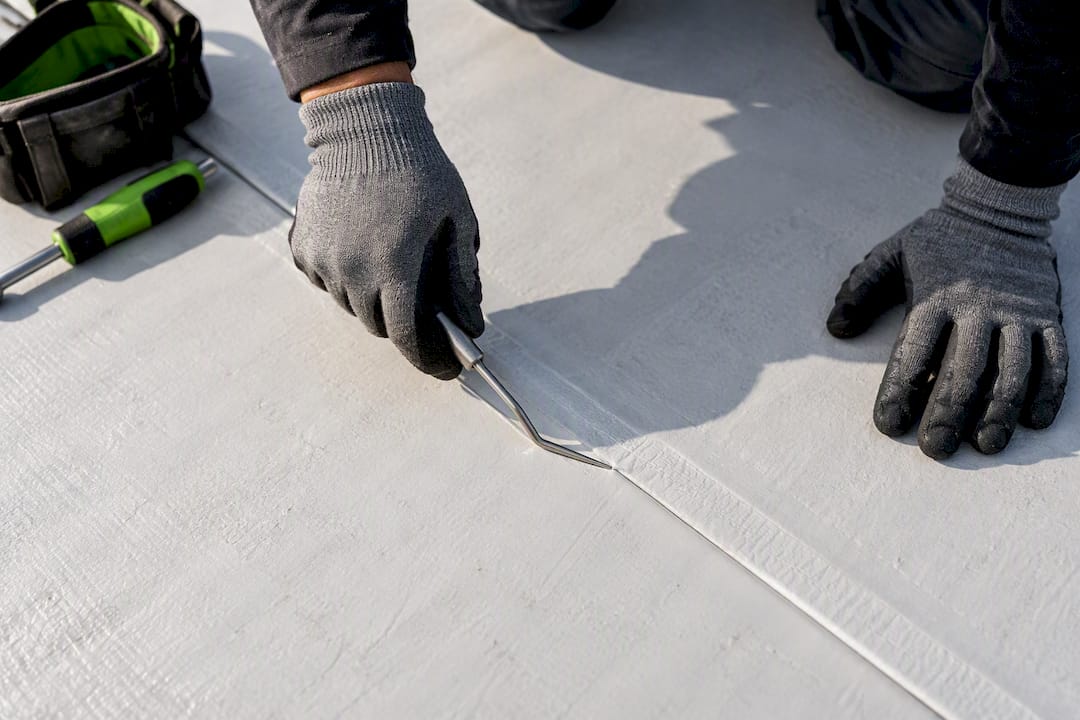
Membrane thickness and cold flexibility. Thicker membranes resist punctures and retain flexibility longer in freeze-thaw climates. A 45-mil sheet in a Wisconsin winter works harder than the same sheet in a mild climate, which is one reason thickness selection should match your regional exposure, not just your budget.
Attachment method. Fully adhered systems distribute wind stress more evenly across the membrane, while mechanically attached systems concentrate stress at fastener points. Mechanically attached roofs cost less upfront but tend to show seam fatigue sooner in high-wind areas.
Substrate moisture and drainage. Wet insulation underneath a membrane accelerates deterioration from below, invisible until a core sample or moisture scan reveals it. Ponding water, meanwhile, stresses seams and accelerates membrane aging at low points on the roof.
Rooftop traffic and UV exposure. Foot traffic near HVAC units without designated walk pads causes punctures and abrasion over time. Reflective white TPO can reduce surface temperature and slow heat-related aging, but that benefit fades as the membrane collects dirt, and reflectivity does nothing to stop a mechanical puncture.
Pro Tip: Ask any contractor bidding on your TPO roof whether they document weld temperatures and seam probe results with photos. If they can't show you documentation from past jobs, that's a red flag worth more than any brochure claim about membrane thickness.
Repair or Replace? How to Read the Signs
Not every problem on an aging TPO roof means it's time for a full tear-off. Some issues are isolated and fixable. Others signal that the whole system is compromised.
- Isolated seam separation or small punctures are almost always repairable, especially since field testing shows repairs on aged TPO can achieve strong adhesion even on membranes over a decade old.
- Surface cracking or cap erosion in a single area usually calls for a patch, not a replacement, provided the rest of the membrane tests sound.
- Wet insulation spanning multiple areas tips the decision toward replacement, since drying out a soaked substrate under an intact membrane rarely works.
- Widespread seam failure across the roof, rather than one or two isolated spots, usually means the original installation had systemic weld problems that will keep resurfacing.
Before committing either way, ask for a core moisture probe and a membrane sample test. Those two checks tell you whether you're dealing with a surface issue or a structural one underneath.
Building a Maintenance Schedule That Extends Service Life
TPO roofs don't fail suddenly. They fail from small problems nobody caught early. A maintenance routine catches those problems while they're still cheap to fix.
Plan for two inspections a year, spring and fall, plus an additional check after any major wind or hail event. Background inspection guidance consistently recommends this cadence because seasonal temperature swings and storm stress are when small defects turn into leaks.
On each visit, check for:
- Debris buildup and clogged drains or scuppers
- Seam and flashing condition around every penetration and curb
- Ponding water that hasn't drained within 48 hours
- Punctures, cap erosion, or surface cracking
- Rooftop equipment access paths without walk pads
Routine cleaning also restores reflectivity on white TPO membranes, since accumulated dirt reduces the cool-roof benefit over time. A maintenance guide with a practical inspection checklist covers similar ground if you want a second reference point for building out your own schedule.
Documented maintenance, meaning dated inspection reports, photos, and drain-cleaning logs, does more than keep your roof in good shape. It directly affects your ability to make a clear repair-versus-replace call later, and in many cases it factors into warranty and extended-warranty eligibility.
What Am-exteriors Watches for on Every TPO Installation
Most TPO failures we see trace back to the installation day, not the membrane itself. That's why owner-supervised installation and documented seam testing aren't optional extras. They're the difference between a roof that hits 25 years and one that starts leaking at year eight.
If you're evaluating a contractor's past work, or trying to understand your own roof's history, ask for:
- The original specification and membrane thickness (45, 60, or 80 mil)
- Attachment method and insulation/cover-board assembly details
- Warranty documents and any exclusions listed
- Prior inspection reports and repair invoices
A contractor who supervises installations directly, photographs seam welds as they're completed, and responds quickly after storm events is doing the quiet work that prevents early failure. That's the standard Am-exteriors holds every TPO project to.
Reading Warranties Against Real-World Field Data
Homeowners tend to treat a warranty's end date as the roof's expiration date. That's a mistake. A warranty term reflects manufacturer risk tolerance and installation conditions, not a scientific prediction of when the membrane will fail, and most warranties exclude damage from poor drainage, unapproved repairs, or rooftop traffic.
Lab-based accelerated weathering tests, the kind that generate those 20 to 30 year projections, are qualification tools. Industry technical advisories caution that these results need to be read alongside field exposure and installation quality, not treated as a standalone forecast.
Before assuming your roof needs replacement because it's hit a certain age, get a condition-based assessment. Age is one data point. Seam integrity, moisture readings, and membrane flexibility tell the real story.
— Heather
Get a Straight Answer on Your TPO Roof's Condition
Property owners can expect an honest assessment on whether a TPO roof needs a patch, maintenance, or full replacement, backed by owner-supervised inspections instead of a sales pitch dressed up as an estimate.

Our team handles TPO flat and low-slope roofing from the first inspection through final documentation, including seam testing, storm-damage evaluation, and photo records of every weld and flashing detail. If a storm has you wondering whether your roof took damage, our free hail damage inspection covers that specific concern at no cost. Installations typically come with paperwork trails, specs, thickness verification, and inspection photos to assist in future repair-or-replace decisions.
Request an inspection through our roofing services page and get a straight answer on where your roof actually stands.
Sources
- D6878/D6878M Standard Specification for Thermoplastic Polyolefin-Based Sheet Roofing
- TPO Roofing • What It Is, Pros, Cons, FAQs, and More | Jack Gray's Roof Observations
- IIBEC Technical Advisory No. 012-2016: TPO Single-Ply Roof System: Performance and Service Life
- Cool roof guide (DOE)
FAQ
How often should I replace my TPO roof?
There's no fixed replacement schedule based on age alone. Replacement decisions should follow a condition-based inspection covering seam integrity, insulation moisture, and membrane flexibility, since field-tested membranes over 12 years old have still met current ASTM standards.
Can TPO last 30 years?
Yes, thicker fully adhered systems, particularly 80-mil membranes installed with proper seam welding and drainage, can reach 25 to 30 years. Reaching that upper range depends heavily on installation quality and consistent maintenance, not just the membrane spec sheet.
What are the downsides of TPO roofing?
TPO's biggest vulnerabilities are seam failures from poor welding, punctures from unmanaged rooftop traffic, and reduced reflectivity as membranes collect dirt. Practitioner inspections consistently identify workmanship problems, not material defects, as the leading cause of early failure.
How long will a 60-mil TPO roof last?
A 60-mil TPO roof typically lasts close to two decades depending on whether it's mechanically attached or fully adhered, with fully adhered systems performing better. Field testing found 60-mil samples retained cold-temperature flexibility to negative 40 degrees Fahrenheit even after more than a decade in service.