
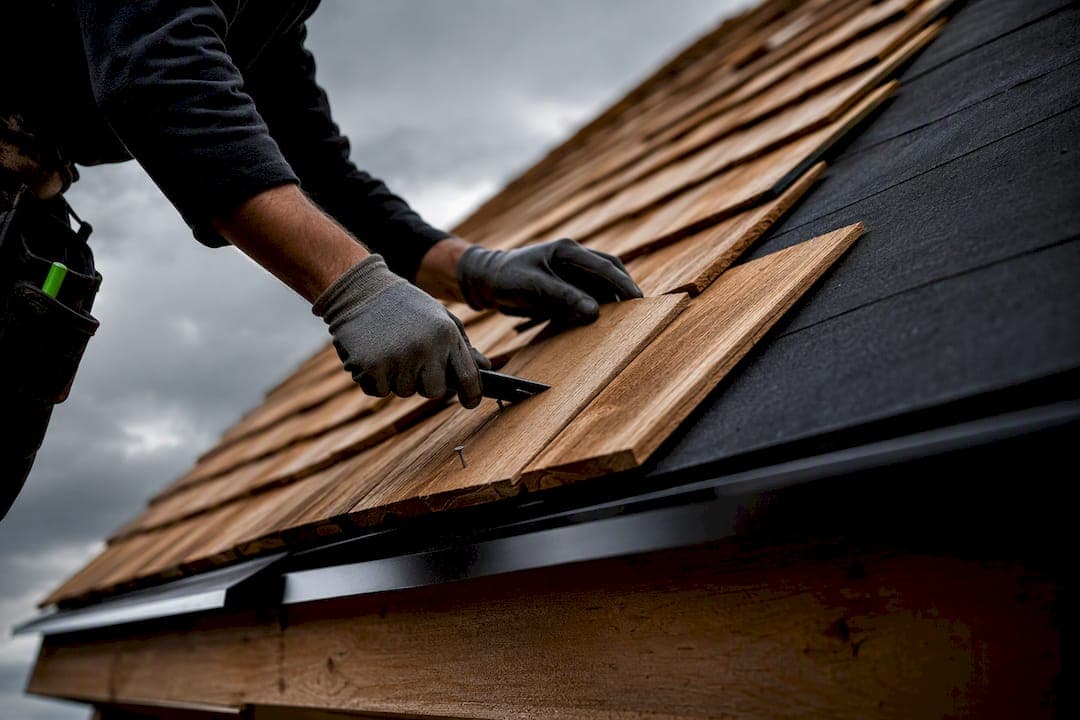
Cedar shake roofing delivers a distinctive, long-lasting natural roof, but only when it's made from Certi-label material and installed by a crew that respects the details. Expect a working lifespan between 25 and 50 years, a higher upfront price than asphalt, and a maintenance routine that isn't optional. Ventilation, pitch, and workmanship decide which end of that range you land on.
TL;DR:
- Cedar shake roofs last between 25 and 50 years, depending on ventilation, pitch, grade, and installation quality, with proper upkeep extending lifespan.
- Only Certi-label graded cedar, especially Certi-Split, Certigrade, or Certi-Last, guarantees material quality and compliance with industry standards.
- Weather regions with good airflow and moderate humidity to maximize performance, avoiding constant shade and poor ventilation areas that trap moisture.
- Installation requires a minimum 4:12 pitch, stainless steel fasteners, proper underlayment, and correct ventilation, with contractor adherence crucial to longevity.
- Routine maintenance includes debris removal, gutter clearing, and gentle cleaning, while surface treatments like copper compounds can help reduce moss and lichen growth.
Table of Contents
- Types of Cedar Roofing: Shakes vs. Shingles
- Grades and Certi-label Standards: How to Read the Bundle Label
- Pros and Cons: Performance, Risk, and Climate Fit
- Cost and Lifespan: What to Budget and Why It Varies
- Installation Essentials Homeowners Should Verify in a Bid
- Maintenance and Treatments That Actually Extend Service Life
- When to Hire a Pro and What to Ask a Contractor
- Installer Perspective: Real-World Pitfalls We See on Cedar Jobs
- The One Thing Worth Getting Right
- Ready to Talk Cedar? Here's How Am-exteriors Can Help
- Where This Guide Comes From
- Sources
Types of Cedar Roofing: Shakes vs. Shingles
The words get used interchangeably, but they describe two different products with different looks and different jobs on a house.
Shingles are sawn on both sides, giving them a smooth, uniform face and a tapered profile. Shakes are split (by hand or machine) on at least one face, which produces a thicker, rougher, more textured look. Taper-sawn shakes split one side and machine-saw the other, landing somewhere in between.
- Sawn shingles: uniform thickness, cleaner lines, common on both roofs and sidewalls
- Hand-split shakes: rustic, heavy-textured, best suited to steep roof pitches
- Taper-sawn shakes: a machine-cut compromise between rustic texture and easier installation
Species matters as much as the cut. Western red cedar remains the industry standard because its heartwood contains natural extractives that resist decay and hold dimensional stability better than most alternatives, according to Oregon State Extension. Alaskan yellow cedar is denser and slightly harder, which some installers favor for high-traffic sidewalls, though it costs more and is less common on roofs.
Grades and Certi-label Standards: How to Read the Bundle Label
Every bundle of quality cedar carries a grade, and that grade tells you what you're actually paying for. Number 1 allows limited flat grain and minor character marks. Select or "Number 2" grades cost less but include more sapwood and knots, which shortens service life.
Certi-label, issued by the Cedar Shake & Shingle Bureau, isn't a marketing sticker. It represents third-party factory inspection tied to specific manufacturing and grading rules.
- Certi-Split: hand-split shakes inspected for grain and thickness accuracy
- Certigrade: the standard for sawn shingles
- Certi-Last: factory pressure-treated shakes with a fire retardant or preservative built in, not sprayed on afterward
Insist on a Certi-label on your bid. It's the fastest way to confirm you're getting graded material instead of an unlabeled mixed bundle at a discount price.
Pros and Cons: Performance, Risk, and Climate Fit
Cedar earns its reputation, but it comes with real trade-offs a homeowner should weigh honestly before signing a contract.
- Advantages: rich color and texture that ages into a silver-gray patina, a renewable material, and the potential for multi-decade service when installed and maintained correctly.
- Disadvantages: a materially higher price tag than asphalt, a recurring maintenance commitment, and vulnerability to fire and wood-boring insects unless you choose treated (Certi-Last) product.
- Climate fit: cedar performs best in regions with good airflow and moderate humidity. It struggles in constant shade, heavy leaf litter, or areas with no roof ventilation, where moisture gets trapped against the wood.
If your roof sits under mature trees with little sun exposure, cedar demands more upkeep than it does on an open, well-ventilated roof plane.
Cost and Lifespan: What to Budget and Why It Varies
By the numbers: Installed cedar shake roofs commonly run $5.50 to $13.50 per square foot for materials and labor combined, well above standard asphalt shingles. On a typical 2,000 square foot roof, the total replacement cost can reach into the tens of thousands of dollars depending on grade, pitch complexity, and local labor rates.
Lifespan tracks with quality of build more than quality of material. Properly installed wood shake roofs typically run 25 to 40 years and can exceed 50 years under ideal conditions, according to InspectApedia. The gap between a 25-year roof and a 50-year roof usually comes down to a short list of factors:
- Roof pitch (steeper sheds water faster and dries quicker)
- Ventilation underneath the shakes
- Grade of cedar specified
- Local climate and sun exposure
- Quality of the installation crew's workmanship
Homeowners comparing quotes should also check current Wisconsin roof replacement costs for context on regional labor pricing before assuming a bid is out of line.
Installation Essentials Homeowners Should Verify in a Bid
This is where most cedar roofs succeed or fail, and it's the part homeowners are least equipped to evaluate on their own.
Minimum slope matters more than most bids mention: shakes need at least a 4:12 pitch, shingles can go as low as 3:12, per CSSB specifications. Anything flatter traps water and shortens life dramatically.
- Spaced sheathing was traditional, but modern solid decks paired with a ventilation matrix (products like CedAir-Mat) now handle airflow underneath the shakes just as well
- Underlayment should meet ASTM D4869 Type IV or ASTM D226 Type II felt, with a 36-inch felt interlay woven between courses per Fine Homebuilding's installation guide
- Fasteners must be stainless steel or Type 304/316, driven flush rather than overdriven, with longer fasteners required at hips and ridges
- Flashing at valleys and penetrations should be corrosion-resistant metal, installed before the shakes go down, not tucked in afterward
Pro Tip: Ask your contractor by name whether they're using a ventilation matrix and felt interlay. If they hesitate or don't know what you mean, that's a red flag worth walking away from.
Maintenance and Treatments That Actually Extend Service Life
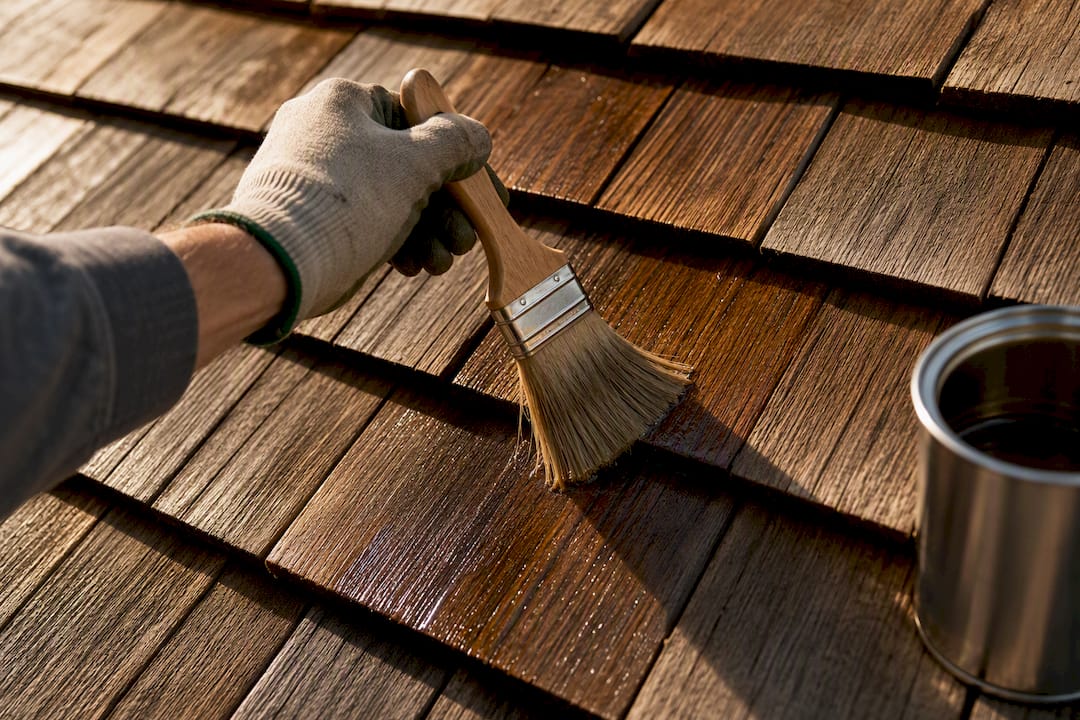
Cedar isn't maintenance-free, and pretending otherwise is how a 40-year roof becomes a 20-year roof.
Routine care is simple but non-negotiable: clear debris off the roof surface each fall, keep gutters flowing, and inspect twice a year. Skip the high-pressure washer. According to Oregon State Extension, power washing is largely cosmetic and can fracture or lift shingles if done improperly.
- Clear leaves, needles, and branches every fall and spring
- Check gutters and down spouts for blockages that trap moisture against the eaves
- Use gentle, low-pressure cleaning methods only
- Remove moss and lichen mechanically rather than scrubbing hard
Surface preservatives like copper naphthenate offer real but limited protection, typically needing reapplication every one to three years. Factory-applied Certi-Last treatment holds up far longer than anything brushed on after installation.
Installing copper, zinc, or galvanized flashing also helps: these metals release ions that suppress moss growth for several feet down slope, according to Cabot's technical guide.
When to Hire a Pro and What to Ask a Contractor
Cedar is not a confident DIYer's weekend project. Warranty coverage on cedar roofing typically requires professional installation, and the details that determine longevity, fastener choice, exposure spacing, ventilation, aren't things most homeowners can verify without experience.
Before signing anything, ask a prospective contractor:
- How many CSSB-compliant cedar roofs have you installed in the last five years?
- What's in writing for the warranty, and does it cover labor as well as material?
- What underlayment and ventilation matrix will you use?
- What fastener type and length are specified for the field versus the hips and ridges?
Watch for red flags: bids that undercut everyone else by a wide margin, vague answers about installation specifics, or a contractor who can't produce proof of insurance and recent references. If you're still narrowing down who to call, our guide to vetting Wisconsin roofing contractors covers the questions worth pushing on.
Installer Perspective: Real-World Pitfalls We See on Cedar Jobs
After 25-plus years installing exterior systems across Southeast Wisconsin, the failure pattern is consistent: it's rarely the cedar itself that fails first, it's the fasteners, spacing, or missing ventilation underneath it.
Wisconsin's climate adds its own stress test. Heavy snow load demands correct exposure and fastening to avoid cupping under weight. High wind events punish any shake that wasn't properly nailed at the hip and ridge. Hail bruises cedar differently than asphalt, and documenting pre-storm condition matters if you ever file an insurance claim.
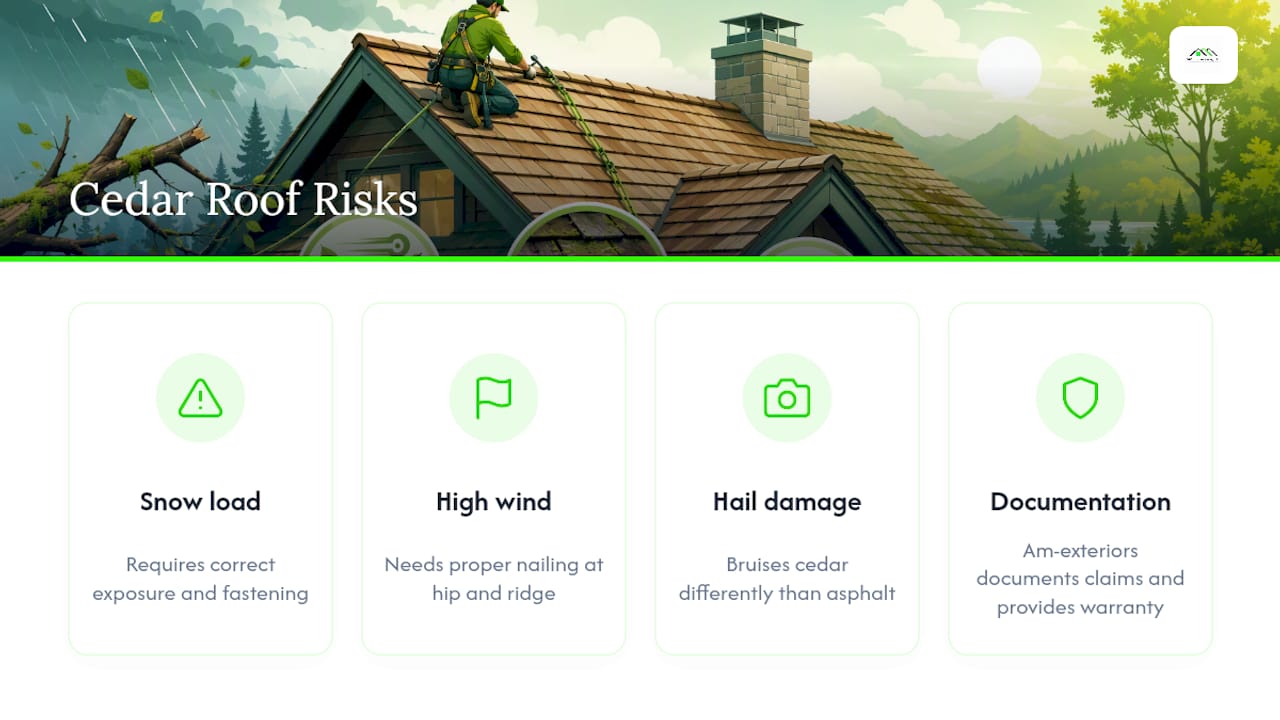
Am-exteriors handles that documentation and insurance-claim navigation as part of the job, alongside a written workmanship warranty, because most premature cedar failures trace back to installation shortcuts, not the wood.
The One Thing Worth Getting Right
If you take one thing from this guide, make it this: the cedar itself is rarely the problem. Grade matters, species matters, but installation quality decides whether you get 25 years or 50. Homeowners who shop purely on price per square foot tend to end up with the crew most likely to skip the felt interlay or use the wrong fasteners, and they don't find out until year twelve when the leaks start.
Get Certi-label material specified in writing on your bid. Ask directly about the ventilation matrix and fastener type before you sign anything. If a contractor can't answer those questions confidently, keep looking. Am-exteriors installs cedar shake roofing across Southeast Wisconsin with those specifics built into every bid, not treated as an upsell.
— Heather
Ready to Talk Cedar? Here's How Am-exteriors Can Help
Am-exteriors has spent over 25 years installing roofing systems built to survive Wisconsin hail, wind, and snow load, cedar shake included, with the fastener specs, ventilation matrix, and felt interlay built into the bid instead of buried in fine print.
When you request an estimate, expect a straightforward walk-through of your roof's pitch, ventilation needs, and grade options, plus honest cost comparisons against asphalt or synthetic slate if cedar isn't the right fit for your exposure. If your roof damage ties back to a storm, Am-exteriors also handles insurance-claim documentation from the first inspection through settlement, so you're not negotiating with an adjuster alone. Ready to see what a properly specified cedar roof costs on your house? Visit the roofing services page to request a quote, and bring your questions about grade, fasteners, and ventilation. We'll answer every one of them before you sign anything.
Where This Guide Comes From
The installation specifics in this guide, slope minimums, fastener types, felt interlay, come from the Cedar Shake & Shingle Bureau's own manual, the industry's grading authority. Maintenance and preservative guidance draws on Oregon State Extension's technical bulletin, and cost and lifespan figures come from This Old House and field-tested installation practice detailed by Fine Homebuilding.
Sources
- Cedar Shake & Shingle Bureau Roof Manual (Certi-label®)
- Care & Maintenance of Wood Shingle and Shake Roofs — Oregon State Extension (PNW 733)
- Installing cedar shakes — Fine Homebuilding
- How much does a cedar shake roof cost? — This Old House