
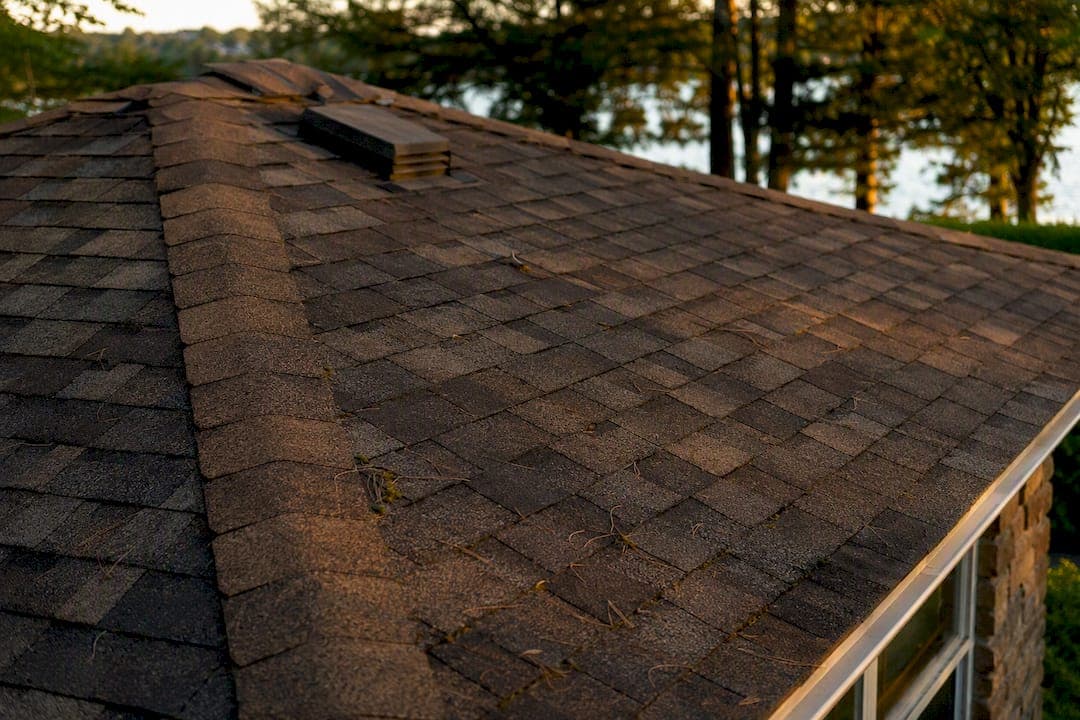
Architectural shingles typically last 25 to 30 years in real-world conditions, with premium dimensional lines stretching to 30 to 40 years under close-to-ideal circumstances. That time span, not the manufacturer's "30-year" or "lifetime" label printed on the shingle wrapper, is what should guide your budget and your repair-or-replace decision.
Three factors move that number more than anything else:
- Installation quality — nailing pattern, flashing, and underlayment choices
- Attic ventilation — balanced intake and exhaust airflow
- Climate exposure — UV intensity, heat, and freeze-thaw cycling in your region
Warranty terms describe a manufacturing guarantee, not a forecast of how long your roof will actually perform.
Key Takeaways
Architectural shingles reliably deliver 25 to 30 years of real-world service, but installation quality and attic ventilation determine whether your roof hits that number or falls well short of it.
| Point | Details |
|---|---|
| Realistic lifespan range | Expect 25 to 30 years for standard architectural shingles, 20 to 28 years per NRCA/IBHS field data depending on region. |
| Warranty years mislead | Manufacturer terms describe defect coverage, not guaranteed service life, and payouts shrink after the non-prorated period. |
| Ventilation is controllable | Balanced attic airflow can add an estimated 20 to 30% to shingle life and is worth requesting explicitly. |
| Watch for granule loss and curling | System-wide wear across multiple roof planes signals replacement planning, not another patch job. |
| Am-exteriors focuses on installation | Am-exteriors's 25-plus years of owner-operated roofing work targets the workmanship issues that most often cut shingle life short. |
Table of Contents
- Architectural Shingles Lifespan: The Real Numbers
- What Actually Determines How Long Your Roof Lasts
- Signs Your Shingle Roof Is Nearing the End
- How to Extend the Life of Your Shingle Roof
- When to Plan Replacement and What It Costs
- Why Installation Experience Changes the Lifespan Equation
- Does Roof Color Affect Shingle Lifespan?
- What the Data Actually Tells Homeowners
- Get a Straight Answer on Your Roof's Remaining Lifespan
- Frequently Asked Questions
- Sources
Architectural Shingles Lifespan: The Real Numbers
Field data tells a more useful story than the marketing sticker. Industry field reports summarized by NRCA and IBHS show that architectural asphalt shingles rated as 30- or 50-year products commonly deliver about 20 to 28 years of actual service, with the range shifting based on region and climate severity.
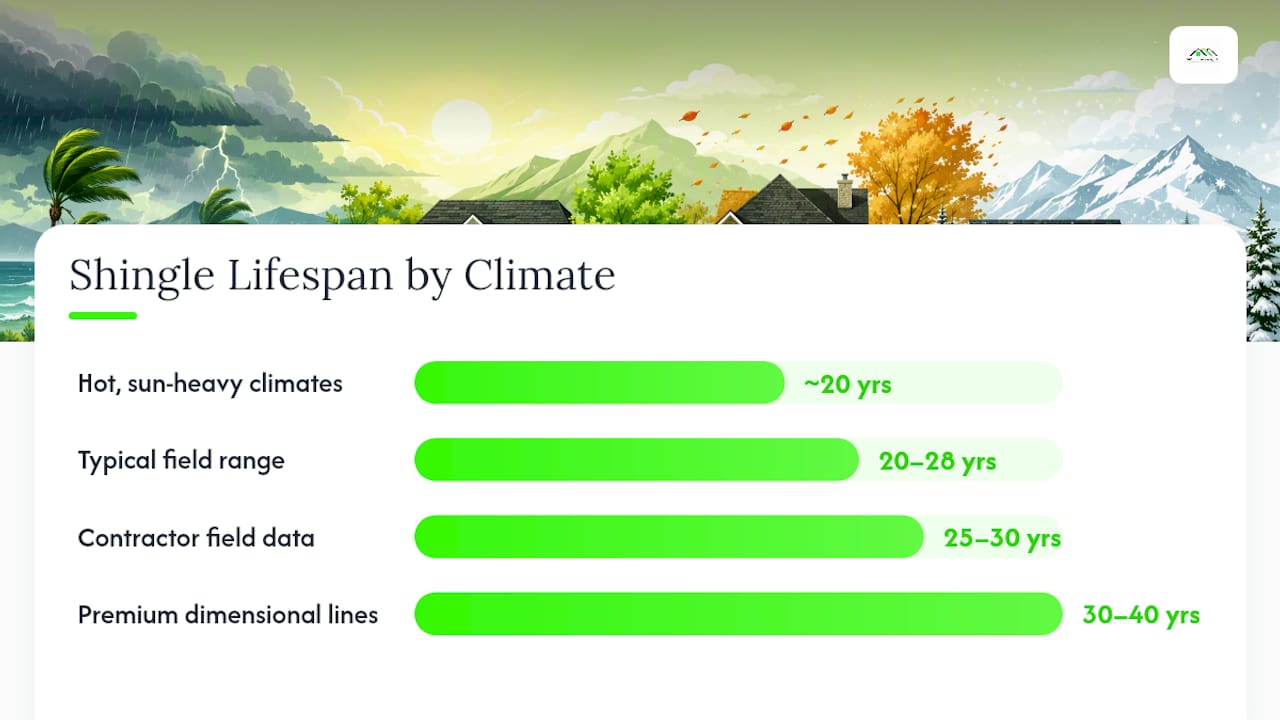
Statistic Callout: Contractor field data puts standard architectural shingles at 25 to 30 years of realistic service life, with premium dimensional lines reaching 30 to 40 years when installation and climate line up favorably.
A few planning notes worth knowing before you commit to a re-roof timeline:
- Hot, sun-heavy climates can shorten lifespan compared to milder regions, according to field summaries from roofing contractors.
- Cooler, cloudier climates tend to push actual performance toward the upper end of the range.
- Warranty language almost always includes a short non-prorated period followed by a long prorated tail, meaning the payout shrinks steadily as the roof ages — a distinction most homeowners never read closely.
That gap between "30-year shingle" and "22 years of real service" isn't a defect. It's math. Warranty math assumes a controlled installation and ventilation setup that a meaningful share of real roofs never get.
What Actually Determines How Long Your Roof Lasts
Two roofs on the same street, installed the same year with shingles from the same pallet, can age a decade apart. The difference almost never comes down to the shingle itself.
- Installation quality. Improper nail placement, skipped or thin underlayment, and rushed flashing work around chimneys and valleys are the most common causes of early failure. Contractor case studies document swings of 5 to 10-plus years between a careful install and a sloppy one, using identical shingles.
- Attic ventilation. This is the single largest controllable factor after installation itself. Poor airflow traps heat under the deck, and that trapped heat can raise attic temperatures by 20 to 30°F compared to a balanced system, which accelerates asphalt oxidation and granule loss. Balanced ventilation, following code guidance under IRC R806, can extend shingle life by an estimated 20 to 30%.
- Shingle grade and wind rating. Architectural shingles outperform 3-tab shingles by a wide margin, often lasting 30 to 50% longer in real installations thanks to heavier weight and better wind resistance. Premium designer lines add further durability but only if the ventilation and installation underneath them are solid.
- Climate and exposure. UV intensity, sustained heat, freeze-thaw cycling, hail frequency, and coastal salt air all wear differently on the same shingle. A roof in a hot sunbelt climate ages faster than the identical product installed in a temperate zone.
- Roof geometry and trees. Steep slopes shed water and debris faster than low-slope sections. Valleys, pipe boots, and skylight penetrations are where failures start first. Overhanging trees trap moisture and shed debris onto the surface year-round.
- Maintenance frequency. Skipped gutter cleaning, ignored granule loss, and delayed flashing repairs turn small problems into deck-level damage.
Pro Tip: Ask any roofing contractor bidding your job how they calculate ventilation, not just how many shingles they'll use. Balanced intake and exhaust airflow protects your investment more than almost any other single decision on the job.
Signs Your Shingle Roof Is Nearing the End
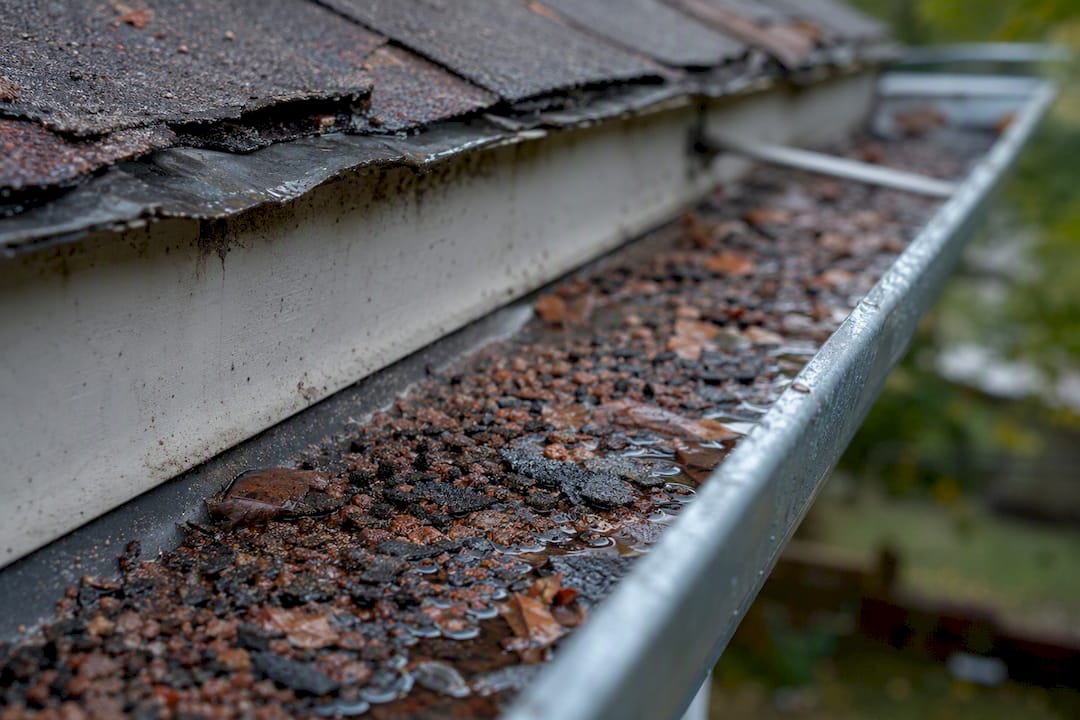
Granule loss is the earliest warning sign, and it shows up gradually. Check your gutters after a hard rain. A light dusting of granules is normal; handfuls collecting in the downspout screen signal the protective coating is wearing thin.
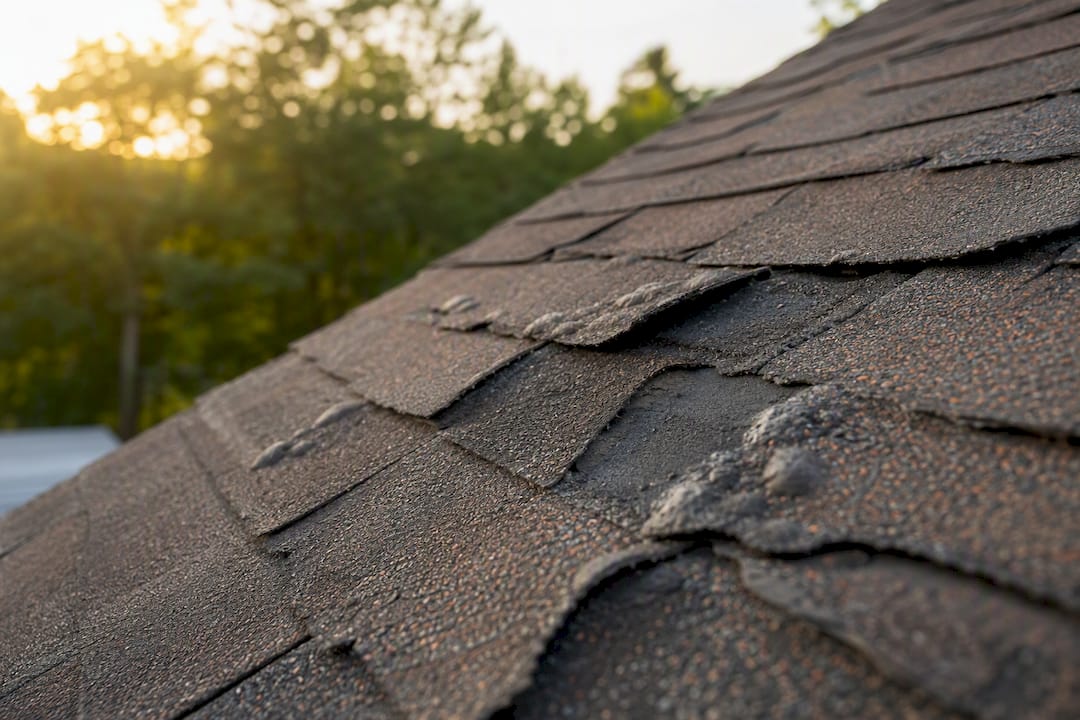
Curling and cupping at shingle edges usually means the asphalt has dried out and lost flexibility. Blistering, those small raised bubbles on the shingle surface, points to trapped moisture or heat working from underneath. Exposed fiberglass matting, visible as a shiny gray patch where granules have worn completely away, means that shingle has lost its UV protection entirely.
Inside the house, watch for daylight through the attic roof deck, dark staining on rafters, or ceiling spots that appear after storms. NACHI's life-expectancy tables put architectural asphalt at roughly 30 years against three-tab's 20, which is useful context, but a roof showing several of these signs at year 18 is aging faster than the average regardless of the label on the bundle.
One more distinction matters: a single missing shingle after a windstorm is isolated damage, not system failure. Granule loss across the entire south-facing slope, paired with curling on the ridge line, is system-wide aging.
How to Extend the Life of Your Shingle Roof
Most homeowners can add meaningful years to a shingle roof without a major renovation. The work splits cleanly into what you can do yourself and what belongs to a licensed contractor.
- Clean gutters twice a year. Clogged gutters back water up under the shingle edge, which is one of the most preventable causes of edge rot and premature curling.
- Walk the roofline visually each spring and fall. Look for lifted shingles, dark streaking, and debris buildup in valleys. Binoculars from the ground work fine; you don't need to climb up there.
- Trim overhanging branches. Reducing shade and debris on the roof surface cuts down on trapped moisture and scuffing from wind-driven limbs.
- Know when a spot repair stops making sense. If more than 20 to 30% of the roof shows granule loss or curling, patching individual areas is a short-term fix delaying an inevitable full replacement.
Pro Tip: A gutter and soffit tune-up costs a fraction of a re-roof and directly protects the shingle edges most prone to early failure. It's the cheapest insurance your roof will ever get.
When to Plan Replacement and What It Costs
Replacement becomes the right call once granule loss, curling, or leak evidence spreads across multiple roof planes rather than staying isolated to one spot. A roof past 20 years with no ventilation upgrades and visible wear across more than a quarter of its surface is a strong candidate for full replacement rather than continued patching.
A few things worth knowing before you request quotes:
- Budget conversations should start with a realistic cost range for your region rather than a national average, since labor and material costs vary meaningfully by market.
- Warranty payouts for material defects shrink the further you are past the non-prorated period, so a 15-year-old roof with a manufacturing flaw won't see anywhere near full replacement cost covered.
- Insurance typically covers storm-related damage (hail, wind uplift, falling debris) but not gradual wear from age or poor ventilation, so document any storm event with dated photos immediately.
- If you're unsure which category your roof falls into, a repair-versus-replace evaluation from a contractor who documents findings in writing protects you during any insurance conversation that follows.
Why Installation Experience Changes the Lifespan Equation
Most shingle failures trace back to workmanship, not the shingle itself. Am-exteriors has spent more than 25 years as an owner-operated roofing contractor across Southeast Wisconsin, and the pattern holds true on nearly every inspection: two roofs with identical shingles age at very different rates depending on who installed them and how carefully attic ventilation was handled.
When you schedule an inspection, ask the contractor to walk you through specifics rather than a general once-over:
- Nailing pattern and placement against manufacturer specifications
- Intake and exhaust ventilation balance, not just vent count
- Flashing condition around every penetration, chimney, and valley
- Underlayment type and condition, especially on older roofs
A full roofing service evaluation should answer all four before any replacement recommendation gets made.
Does Roof Color Affect Shingle Lifespan?
Darker shingles absorb more solar heat than lighter ones, and that heat differential does influence aging speed, particularly in already-hot climates. A charcoal or black architectural shingle on a south-facing slope in a sunbelt region runs hotter than a tan or gray equivalent on the same roof, and sustained heat is one of the primary drivers of asphalt oxidation over time.
That doesn't mean dark roofs fail early as a rule. The effect is real but modest compared to installation quality and ventilation, and lighter shingle colors or cool-roof rated products can recover a few years of service life in especially hot regions. In milder or northern climates, including much of the Midwest, color has far less practical impact on lifespan than attic airflow or nailing quality.
Roof design plays a supporting role too. Steeper slopes shed heat and water faster than low-slope sections, and simpler rooflines with fewer valleys and penetrations give water fewer places to collect and fewer seams for flashing to fail. A complex roofline with multiple dormers and valleys isn't a lifespan death sentence, but it does demand more precise flashing work and more frequent inspection than a simple gable roof.
If you're choosing color primarily for aesthetics, that's a reasonable priority. Just don't expect a color change alone to meaningfully extend a roof already showing wear from ventilation or installation problems.
What the Data Actually Tells Homeowners
The conventional advice on shingle lifespan leans hard on brand comparisons: which manufacturer, which product line, which warranty number sounds most impressive on the sales sheet. That advice misses the point. The field data is consistent on one thing: installation and ventilation explain more of the variance in shingle lifespan than brand ever does.
I'd go further than most guides are willing to. If you're choosing between spending extra on a premium designer shingle versus spending that same money ensuring your contractor gets the ventilation and flashing right, put the money into workmanship every time. A mid-grade architectural shingle installed correctly with balanced attic airflow will outlast a premium shingle installed poorly, and the field data on install-quality deltas backs that up clearly.
What gets overlooked most is how much a homeowner can influence outcome after installation, too. Gutter maintenance and prompt flashing repair aren't glamorous, but they're the cheapest years you'll ever buy for your roof. Start there before you start pricing replacement.
Get a Straight Answer on Your Roof's Remaining Lifespan
Am-exteriors is the alternative to guesswork when you're staring at a 15-year-old roof and wondering if it needs replacing now or can wait. Where a quick online estimate leaves you comparing warranty numbers you can't verify, an in-person inspection from a contractor with 25-plus years of owner-operated experience in Southeast Wisconsin tells you exactly what's happening with your nailing pattern, your ventilation balance, and your flashing condition, the three factors that actually decide how many years you have left.
That matters most if you're weighing repair against replacement and don't want to guess wrong in either direction. Am-exteriors documents every finding in writing, which also makes insurance conversations far easier if storm damage is part of what you're dealing with. If your roof is showing granule loss, curling, or you simply haven't had an honest inspection in a few years, schedule a roof evaluation and get a documented answer instead of another warranty sales pitch.
Frequently Asked Questions
How long do architectural shingles actually last compared to the warranty? Most architectural shingles carry 30-year or lifetime warranty labels, but real-world field data shows 20 to 30 years of actual service depending on installation and climate. The warranty number is a manufacturing guarantee, not a service-life prediction.
What is the single biggest factor in architectural shingles durability? Installation quality comes first, followed closely by attic ventilation. Poor nailing and inadequate underlayment can cut a decade or more off an otherwise sound roof, even with premium materials.
Do architectural shingles last longer than 3-tab shingles? Yes. Architectural shingles typically outlast 3-tab shingles by 30 to 50% thanks to heavier weight, better wind resistance, and improved granule adhesion.
How much does attic ventilation really affect shingle lifespan? Balanced ventilation can extend shingle life by an estimated 20 to 30%, since poor airflow traps heat and accelerates asphalt oxidation from underneath the shingle.
What are the earliest signs a shingle roof needs replacement? Watch for accelerating granule loss in your gutters, curling or cupping at shingle edges, and any daylight or staining visible inside the attic. Isolated storm damage differs from system-wide wear spread across multiple roof planes.
Sources
- Asphalt Shingle Roof Lifespan & Life Expectancy 2026
- 2026 Roofing Material Lifespan Report (Field Data) | TRB
- Life Expectancy Chart (NACHI)