
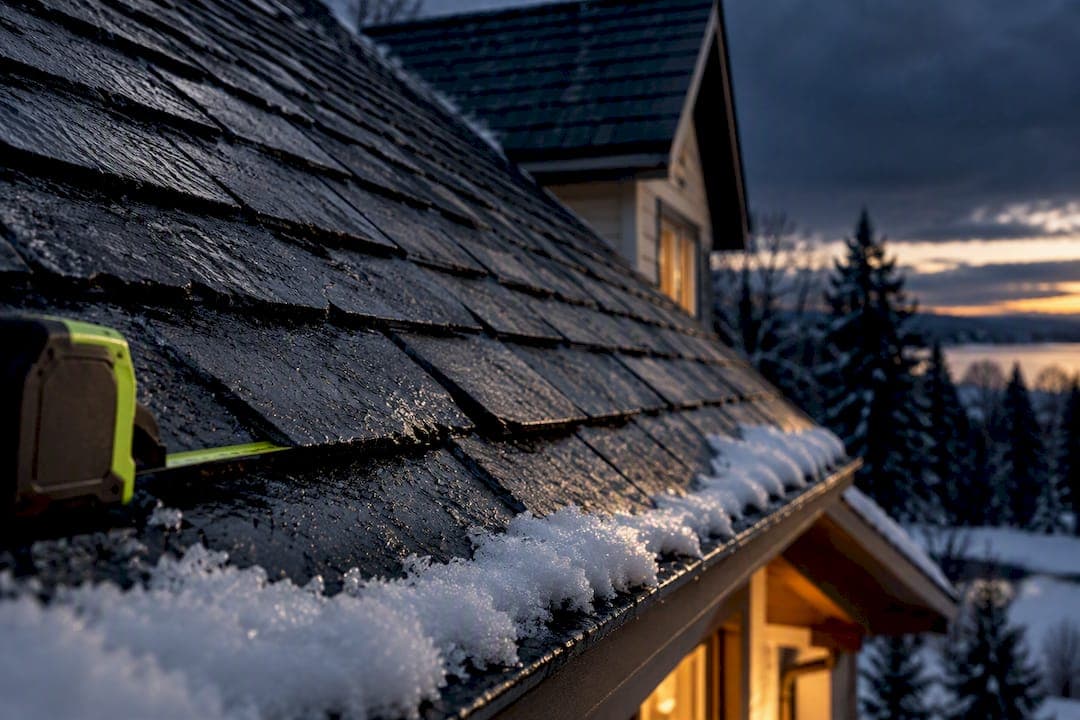
Expect to pay about $9 to $16 per square foot installed for a synthetic slate roof, or $16,000 to $32,000 for a typical American home. That's roughly 30 to 50 percent less than natural slate, and it usually skips the structural reinforcement natural slate often requires. Material grade, roof complexity, and labor rates in your area will move you up or down within that range.
TL;DR:
- Synthetic slate costs between $9 and $16 per square foot installed, with premium options reaching $1,600 per square for each 100-square-foot section.
- Regional labor rates and roof complexity significantly influence overall estimates, potentially adding hundreds to thousands of dollars.
- The total cost for a typical American home ranges from $16,000 to $32,000, depending on material grade and roof size.
- Synthetic slate can last 30 to 50 years, with warranties usually covering 30 to 50 years for materials and 5 to 10 years for workmanship.
- Accurate quotes require itemized estimates and verification of contractor experience, especially around tear-off, flashing, and ventilation details.
Table of Contents
- What Determines Synthetic Slate Roofing Prices by Grade?
- What Makes One Synthetic Slate Estimate Higher Than Another?
- How Much Does Synthetic Slate Cost for Common Roof Sizes?
- How Long Does Synthetic Slate Last and What Does the Warranty Cover?
- How Do You Get an Accurate Synthetic Slate Quote?
- When Synthetic Slate Actually Makes Sense
- Get a Local Synthetic Slate Estimate From AM Exteriors
- Where These Numbers Come From
- Sources
- FAQ
What Determines Synthetic Slate Roofing Prices by Grade?
Not all synthetic slate is priced the same, and the material grade you pick swings your total by thousands of dollars. Entry-level composite polymer and recycled rubber products run cheaper, while premium molded slate that mimics natural texture and shadow lines costs more to buy and more to install.
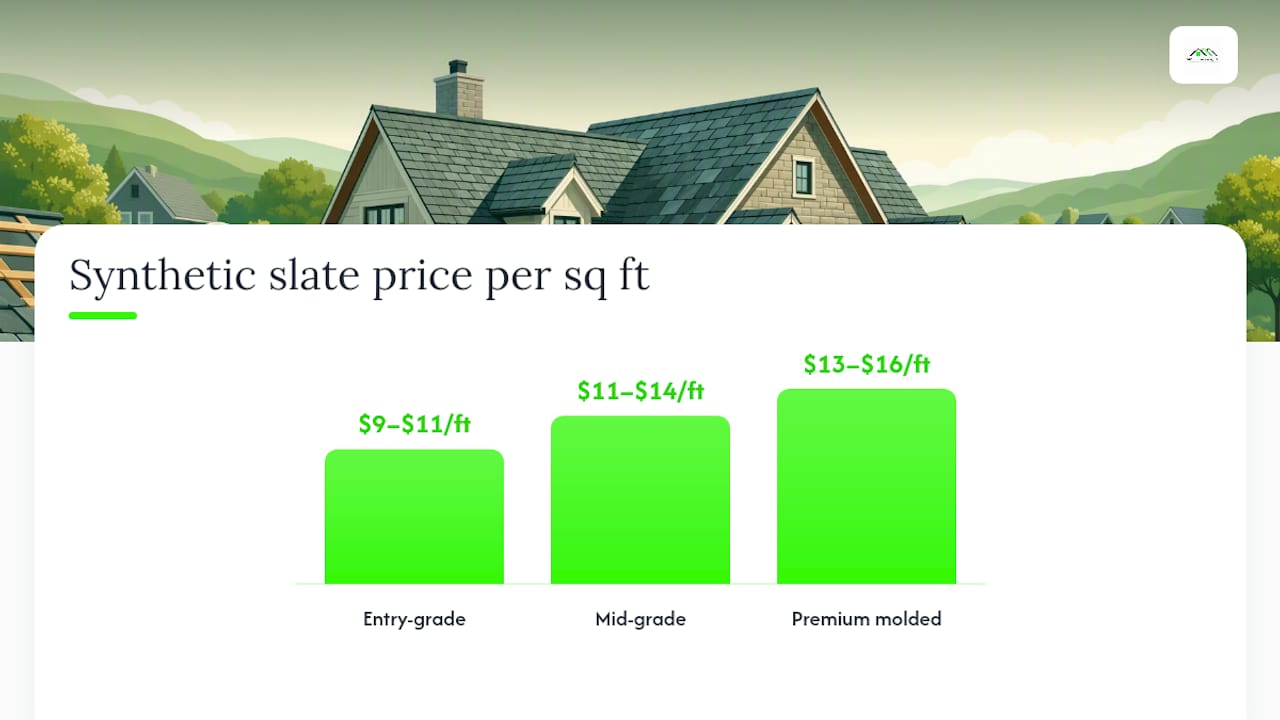
Here's how the tiers typically break down on a per-square-foot and per-square (100 sq ft) basis:
- Entry-grade synthetic slate: $9–$11 per sq ft installed, or roughly $900–$1,100 per roofing square
- Mid-grade composite or recycled rubber slate: $11–$14 per sq ft installed, or about $1,100–$1,400 per square
- Premium molded synthetic slate: $13–$16 per sq ft installed, or up to $1,600 per square
Those numbers align closely with current industry cost surveys, which peg most complete synthetic slate projects between $16,000 and $32,000 for an average U.S. home. On a 2,000 square foot roof, that means an entry-grade job might land around $18,000, while a premium install with steep pitches and lots of detail work could push past $30,000.
Regional labor rates matter more than most homeowners expect. A crew in a major metro area often charges more per hour than one in a smaller Midwest market, and pricing can shift seasonally too. Roofers in Wisconsin, for example, tend to book solid through late spring and summer, and rushed off-season work sometimes comes at a premium if a storm forces the issue. Composite polymer and slate-look asphalt shingles sit at the lower end of the faux slate cost spectrum, while recycled rubber and premium molded profiles climb toward the top.
What Makes One Synthetic Slate Estimate Higher Than Another?
Two houses with the same square footage can get wildly different quotes, and it's rarely random. A handful of factors drive most of that spread.
- Material and profile choice — composite polymer, recycled rubber, and asphalt-look shingles all price differently, with premium molded profiles costing the most per square.
- Labor and installation method — synthetic slate shingles usually get installed one at a time by hand, which takes longer than laying standard architectural shingles and raises labor cost accordingly.
- Roof complexity — steep pitches, multiple facets, dormers, skylights, chimneys, and valleys all add labor hours and material waste.
- Tear-off and deck condition — stripping multiple layers of old roofing, repairing rotted decking, pulling permits, and hauling away debris all show up as separate line items.
- Flashing and accessory upgrades — metal valley flashing, ice-and-water shield, ridge caps, and improved attic ventilation each add cost but reduce the odds of a leak down the road.
Labor alone often makes up 40 to 60 percent of your total bill, while material costs commonly range from $300 to over $1,000 per square depending on grade.
Pro Tip: Ask every contractor to itemize tear-off, decking repairs, and flashing separately. A bid that lumps everything into one number is much harder to compare against a competing quote.
How Much Does Synthetic Slate Cost for Common Roof Sizes?
Once you know your roof's square footage, you can translate the per-square-foot ranges above into a real number. The table below shows example installed totals across the three product tiers for common home sizes.
| Roof Size (sq ft) | Entry Grade (lower installed cost range) | Mid Grade (mid-range installed cost) | Premium Grade (higher installed cost range) |
|---|---|---|---|
| — | Lower to mid range for a roof of this size | Moderate to higher cost expected | Upper range cost for premium products |
| 2,000 | Mid-range cost | Moderate to high cost for mid-grade | Higher end cost for premium grade |
| — | Increasing cost with roof size and grade | Costs rise with complexity and grade | Highest costs for complex, premium-grade roofs |
Note that roof area typically exceeds floor plan square footage due to pitch and overhangs, and actual costs vary accordingly. A single-story ranch with a low-slope roof might have a roof area close to its floor area, but a steep-pitched two-story home can have a roof surface 20 to 40 percent larger once you factor in overhangs and pitch. Contractors calculate this with a pitch multiplier applied to your footprint, and pricing by roof area rather than floor area avoids surprises when the final bill arrives.
Structural reinforcement costs almost never appear on a synthetic slate quote, because most composite and rubber products weigh a fraction of natural slate. Natural slate frequently requires engineered rafter upgrades to support the added load, a detail confirmed in the National Park Service's technical guidance on historic slate roof systems. That's an extra line item synthetic slate buyers typically get to skip entirely.
How Long Does Synthetic Slate Last and What Does the Warranty Cover?
Most composite and recycled rubber synthetic slate products carry expected service lives of 30 to 50 years or more, with premium molded lines often rated at the higher end of that range. Manufacturer material warranties commonly run 30 to 50 years, while workmanship warranties from the installing contractor typically fall in the 5 to 10 year range, separate from the material coverage.
- Budget for periodic inspections, especially after major hailstorms or high winds
- Watch for flashing failures around valleys and penetrations, a leading cause of leaks that traces back to poor installation rather than the shingles themselves
- Improper attic ventilation can shorten shingle life by trapping heat and moisture
- Compared to architectural asphalt shingles, which typically last 20 to 30 years, synthetic slate offers a meaningfully longer service window for a moderate cost premium
Natural slate can outlast synthetic by decades under ideal conditions, but at a steep upfront and structural cost that most homeowners never recover in resale value.
How Do You Get an Accurate Synthetic Slate Quote?
A written estimate is only useful if it tells you exactly what you're paying for. Before you sign anything, run through this checklist:
- Confirm the contractor carries current liability insurance and a valid roofing license for your state.
- Ask specifically about synthetic slate installation experience, not just general roofing history, and request references from similar projects.
- Check for manufacturer certification status if the product line requires it, since certified installers often qualify for stronger warranty backing.
- Review the estimate for a per-square-foot material breakdown, tear-off scope, decking repair allowance, and disposal or permit fees listed separately.
- Read the flashing and ventilation details closely; vague language here is where leaks originate later.
- Get the workmanship warranty length in writing, along with what voids it.
Red flags include a bid that's dramatically lower than every other quote you received, a scope of work that fits on a single line, or a contractor who can't produce local references. Once you've picked a contractor, ask about scheduling around your local weather window, how they'll protect landscaping and gutters during tear-off, and a realistic timeline for the crew to complete the job.
Pro Tip: Line up two written estimates side by side and compare them item by item, not just by the bottom-line number. A DaVinci-certified installer will typically break out tear-off, flashing, and ventilation work as separate line items because those are the details that actually determine whether your roof leaks in year three.
When Synthetic Slate Actually Makes Sense
Workmanship separates a great synthetic slate roof from a mediocre one far more than which brand of composite you choose. Most of the callbacks we see trace back to flashing and ventilation mistakes, not the shingle itself.
Homeowners who lean toward synthetic slate tend to fall into a few groups: people chasing the slate look without the weight or structural cost, buyers thinking about resale value over a 20 to 30 year horizon, and anyone replacing a roof on a home that simply can't support natural slate's load. Natural slate still earns its place on historic restorations where authenticity matters more than budget, or for owners chasing the longest possible lifespan regardless of upfront cost. For most modern homes, synthetic slate delivers the look at a fraction of the weight and price.
— Heather
Get a Local Synthetic Slate Estimate From AM Exteriors
A certified installer offers manufacturer-backed detailing that keeps flashing, ventilation, and warranty terms in order from day one. Every job is supervised to ensure consistent standards, whether using composite polymer or premium molded profiles.
A written estimate from Am-exteriors breaks down material grade, tear-off, flashing, and disposal costs the same way this article just walked through, so you know exactly what you're paying for before work starts. If you're weighing synthetic slate against other roofing options for your home, the roofing services page covers the full range, including standing seam metal and cedar shake. Wisconsin homeowners planning a full replacement can also check local roof replacement cost benchmarks before requesting a quote. Reach out for a written estimate and get real numbers for your roof, not a generic range.
Where These Numbers Come From
The cost ranges in this article draw from HomeMatchup's synthetic slate cost guide, Current Cost's material and labor breakdown, and The Roofing Brief's composite and faux slate pricing data, alongside This Old House's homeowner cost examples and the National Park Service's technical brief on slate roof structural requirements. For longer-term maintenance context on preserving roof systems, Solshine's roof coating guidance offers useful background, though its examples reflect Australian building practices. Get a written, local quote before finalizing your budget.
Sources
- Synthetic Slate Roof Cost: 2026 Guide | HomeMatchup
- Composite Slate & Tile Roofing (2026): Cost & Brands
- Synthetic Slate Roof Cost – Current Cost
- Preservation Brief 29: Slate roofs (National Park Service)
FAQ
Are Synthetic Slate Roofs Good?
Yes, for most homes synthetic slate offers a strong balance of appearance, weight, and durability compared to natural slate. It typically costs 30 to 50 percent less than natural slate and avoids the structural reinforcement that heavy natural slate often demands.
What Is the Lifespan of Synthetic Slate?
Most synthetic slate products last 30 to 50 years or more, depending on the material grade and installation quality. Premium molded composite lines tend to sit at the higher end of that range, while proper flashing and ventilation work has more impact on actual longevity than the brand you choose.
How Much Does DaVinci Synthetic Slate Cost?
DaVinci and comparable premium synthetic slate products typically run $13 to $16 per square foot installed, landing toward the top of the industry cost range for synthetic slate. Am-exteriors provides written estimates as a DaVinci certified installer, with current project pricing available directly through a local estimate request.
How Much Is a Slate Roof on a 3,500 Square Foot House?
Synthetic slate roofing costs vary depending on many factors including roof size, material grade, and labor rates. It typically costs $9 to $16 per square foot installed, with total project costs for average homes often falling between $16,000 and $32,000. Natural slate roofing usually costs significantly more, especially when factoring in material weight and the need for structural reinforcement.