
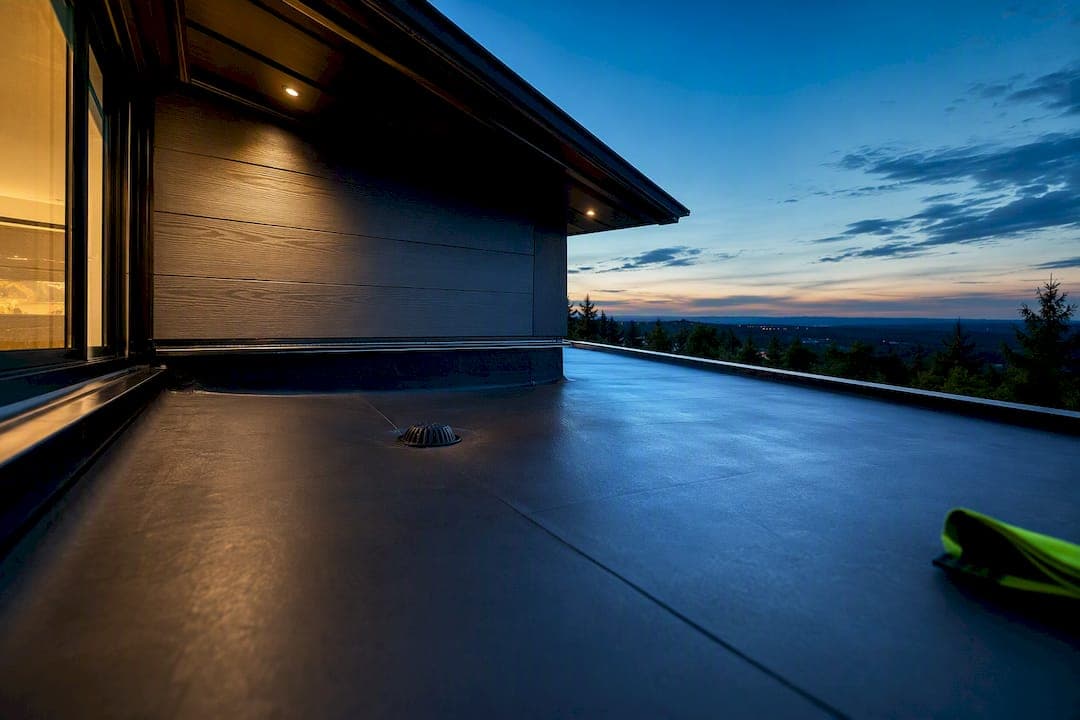
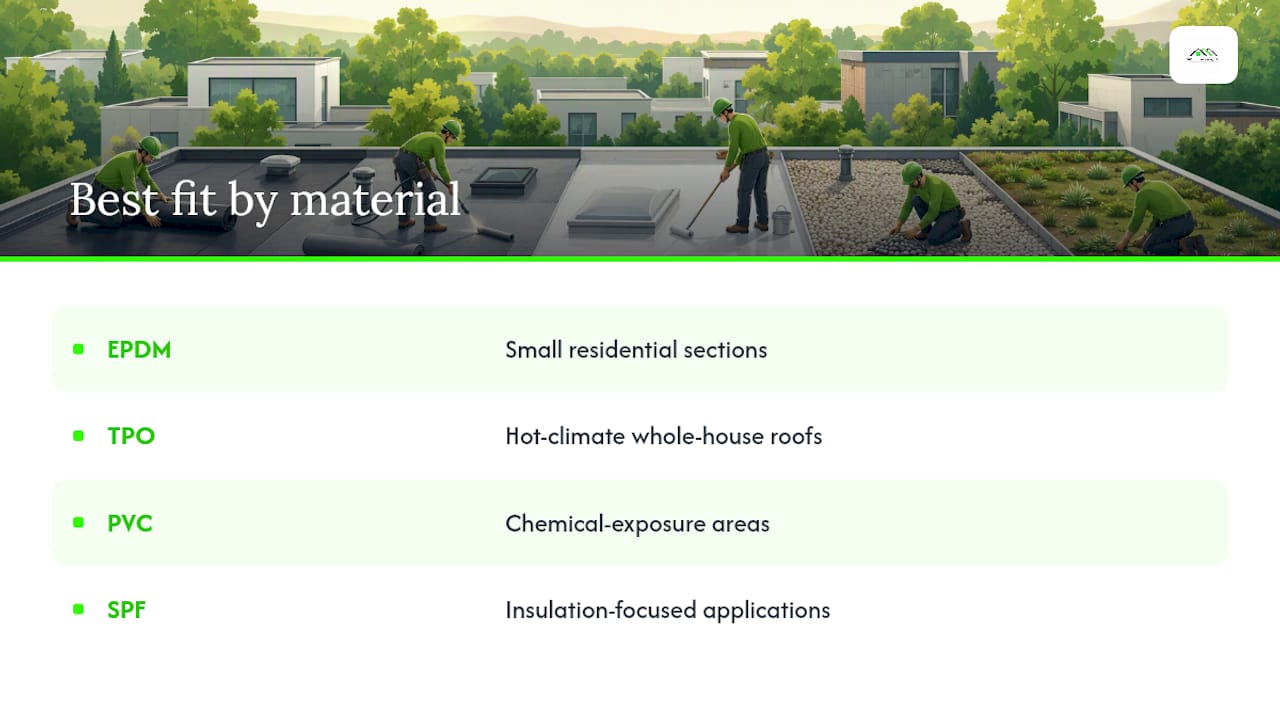
EPDM works for most residential flat sections because it installs without welding gear and ties cleanly into a sloped roof next door. TPO fits whole-house flat roofs in hot climates thanks to its reflectivity. PVC handles chemical or grease exposure near grills and vents. Modified bitumen suits small porches and dormers, BUR fits ultra-low budgets on large commercial-style decks, and SPF wins when insulation value matters most. Whichever material you pick, slope, flashing, and seam work decide whether it lasts.
TL;DR:
- EPDM is ideal for small residential sections due to its affordability, forgiving installation, and patchability with simple tools.
- TPO and PVC are better for large, whole-house flat roofs in hot climates, offering reflectivity and longer lifespans of around 20 years.
- Proper installation details like slope, flashing, and seam quality are more crucial to roof longevity than the material choice itself.
- Regular maintenance, including inspections and drain clearing, is essential to uphold warranties and extend roof lifespan.
- Repair should be limited to patches and coatings unless damage is widespread, requiring full replacement to avoid future leaks.
Table of Contents
- Flat Roof Replacement Options: Materials Compared
- How Much Does Flat Roof Replacement Cost, and How Long Does Each Material Last?
- How Do You Choose the Right Flat Roof Option?
- Should You Repair or Fully Replace Your Flat Roof?
- Why Installation Details Decide How Long a Flat Roof Lasts
- What Maintenance Keeps a Flat Roof Under Warranty?
- The Bottom Line on Flat Roof Replacement Options
- Why Installation Quality Beats Brand Name Every Time
- How Am Exteriors Handles Flat Roof Inspections and Replacement
- Sources
Flat Roof Replacement Options: Materials Compared
Six systems dominate residential and light-commercial flat roofing today, and each one solves a different problem. The main materials homeowners run into are TPO, EPDM, PVC, modified bitumen, built-up roofing (BUR), and spray polyurethane foam (SPF), and knowing how they're installed tells you almost as much as knowing what they're made of.
- EPDM (rubber membrane): Glued or mechanically fastened, no welding tools needed. Pros: affordable, forgiving to install, patches easily. Cons: black surface absorbs heat, seams rely on adhesive rather than heat welds. EPDM is the go-to residential value pick for small flat sections because crews without hot-air welders can still install it correctly.
- TPO (thermoplastic polyolefin): Heat-welded seams, white reflective surface. Pros: energy efficient, strong seam strength when welded right. Cons: quality varies a lot by manufacturer and welder skill.
- PVC: Also heat-welded, more resistant to chemicals, grease, and roof-top equipment traffic. Pros: excellent for restaurants or homes with pool chemical storage nearby. Cons: pricier than TPO, fewer residential installers stock it.
- Modified bitumen: Torch-applied or self-adhered sheets layered over a base. Self-adhered modified bitumen is common on small porches and dormers precisely because it skips torches and specialty tools.
- BUR (built-up roofing): Alternating layers of asphalt and reinforcing fabric, topped with gravel or a cap sheet. Pros: proven, multi-ply redundancy. Cons: heavy, labor-intensive, messier install.
- SPF (spray foam): Sprayed liquid that expands and cures into a seamless insulating layer, then coated. SPF delivers the highest R-value per inch of any of these systems, but it needs a trained crew and periodic recoating to stay watertight.
EPDM and modified bitumen dominate small residential sections. Whole-house flat roofs on modern builds lean toward TPO or PVC, where welded seams and reflectivity pay off over a bigger surface.
How Much Does Flat Roof Replacement Cost, and How Long Does Each Material Last?
Price and lifespan move together, but not in a straight line. A cheaper install today can mean a shorter service life and another project in a decade.
| Material | Installed cost per sq ft | Typical lifespan |
|---|---|---|
| EPDM | $5 | 15 years |
| BUR | $5–$10 | 15 years |
| Modified bitumen | $6 | 15 years |
| TPO | $7 | 20 years |
| SPF | $7 | roughly 7 to 15 years |
| PVC | $9 | 20 years |
These ranges reflect current material and labor pricing and vary based on roof complexity, deck condition, and how much tear-off is involved.
Reflective membranes earn their keep in warm climates. TPO and PVC can cut cooling loads by roughly 10% to 30% simply by bouncing solar heat instead of absorbing it.
Warranties split into three layers: material defects (covered by the manufacturer), labor (covered by the installer), and workmanship (also the installer, but often shorter and easy to overlook). Before signing a bid, confirm exactly which layer covers what, and for how long.
How Do You Choose the Right Flat Roof Option?
Start with your building's actual constraints, not the material you saw advertised. Weigh climate, roof size and complexity, foot traffic, chemical exposure near the roof, deck condition underneath, your budget, and how hard the roof is to access for future maintenance.
Once you've narrowed the field, run every bidding contractor through the same checklist:
- What seam method will they use, and does their crew carry the equipment to do it right?
- What are the exact flashing details at walls, curbs, and penetrations?
- Will they correct slope to the drains, or install over existing low spots?
- Will they run a moisture scan on the old roof before tearing it off?
- What specifically does the warranty cover, and for how long, in writing?
- Can they provide references from jobs at least three years old?
Walk away from any bid that skips a moisture scan, gives a vague answer on flashing, or won't put seam and slope details in writing. Those gaps almost always show up as leaks within a few years.
Pro Tip: Ask for photos of the old roof's flashing and drains before demolition. A contractor who documents the tear-off usually documents the install too.
Should You Repair or Fully Replace Your Flat Roof?
Not every leak means a full replacement. Repair triage follows a clear order: patch isolated defects, coat a field that's still watertight, section-replace where insulation has gotten wet, and go full replacement when damage is widespread or the membrane has hit the end of its service life.
- Patch: small punctures or splits, usually a same-day fix.
- Coat: extends a sound membrane's life, but only if there's no active leak.
- Section replace: any spot with wet insulation underneath, since trapped moisture keeps causing damage.
- Full replace: once roughly a quarter of the field has failed, or the material is simply worn out.
EPDM and modified bitumen are patchable by a determined homeowner. TPO and PVC seams need a heat welder, and torch-down modified bitumen carries real fire risk without proper training, so leave those repairs to a licensed crew.
Why Installation Details Decide How Long a Flat Roof Lasts
Material choice matters less than execution. Code and best practice call for positive slope to drains, and a roof installed dead flat will pond water no matter what membrane sits on top.
Flashing terminations, seam welds, and moisture scans are where most flat roof failures actually start. A contractor who documents slope, seam type, flashing, and moisture-scan results before replacement is giving you proof the work was done right, not just a promise. Am-exteriors builds that documentation into every flat roof job across Southeast Wisconsin, so homeowners have a paper trail if a warranty claim ever comes up.
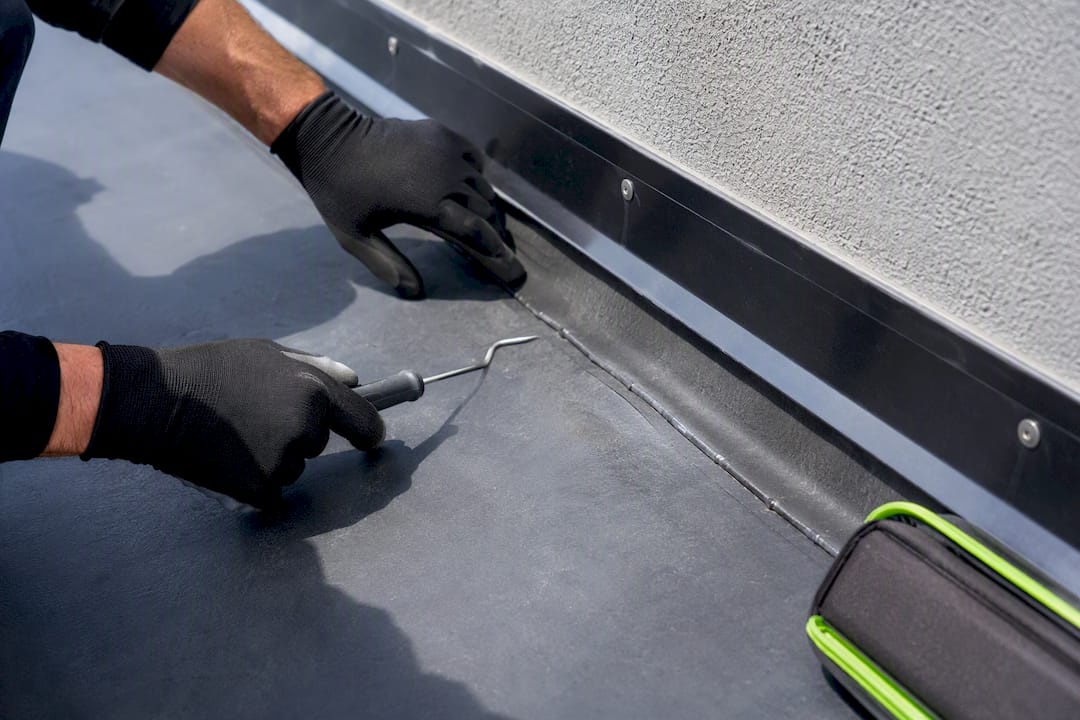
Pro Tip: Ask your contractor to show you the moisture-scan results in writing, not just tell you the roof "looked fine."
What Maintenance Keeps a Flat Roof Under Warranty?
Flat roofs punish neglect faster than sloped ones, since water has nowhere to run off.
- Inspect twice a year, plus after any major storm.
- Clear drains and scuppers every season so water never ponds.
- Recoat a watertight, UV-worn membrane roughly every 7 to 15 years to add life, but never treat a coating as a fix for active leaks or wet insulation.
- Keep every inspection report and repair receipt; most warranties require proof of regular maintenance to stay valid.
- Ask your installer, in writing, exactly what voids labor and material coverage.
The Bottom Line on Flat Roof Replacement Options
EPDM fits most small residential sections, TPO suits hot-climate whole-house roofs, PVC handles chemical exposure, and SPF wins on insulation. Inspect your roof, require a moisture scan, and collect two to three detailed, itemized bids before deciding.
Why Installation Quality Beats Brand Name Every Time
The flat roofing industry loves talking about membranes, but the material rarely causes the leak. Bad slope, sloppy flashing, and rushed seams do. Wisconsin's freeze-thaw cycles punish any shortcut on drainage almost immediately, which is exactly why slope correction gets so much attention in bids that actually hold up.
Homeowners fixate on TPO versus EPDM versus PVC because that's what's easy to compare online. The harder, more important question is whether the crew standing on your roof will weld a proper seam or just heat-tack it and move on. Documentation, not brand loyalty, is what protects you when something goes wrong three years later.
— Heather
How Am Exteriors Handles Flat Roof Inspections and Replacement
If you're not sure whether your flat roof needs a patch, a recoat, or a full tear-off, that's exactly the kind of call a proper inspection settles. Am-exteriors inspects flat roofs across Dodge, Washington, Fond du Lac, and Ozaukee counties, runs moisture scans before quoting anything, and handles the insurance paperwork when storm damage is involved.
Every flat roof replacement comes with documented flashing, seam, and slope details in writing, plus a warranty that spells out exactly what's covered. If your flat roof is past patching or you just want a second opinion before signing a bid, get a roof inspection and quote and see what a properly documented replacement actually looks like.