
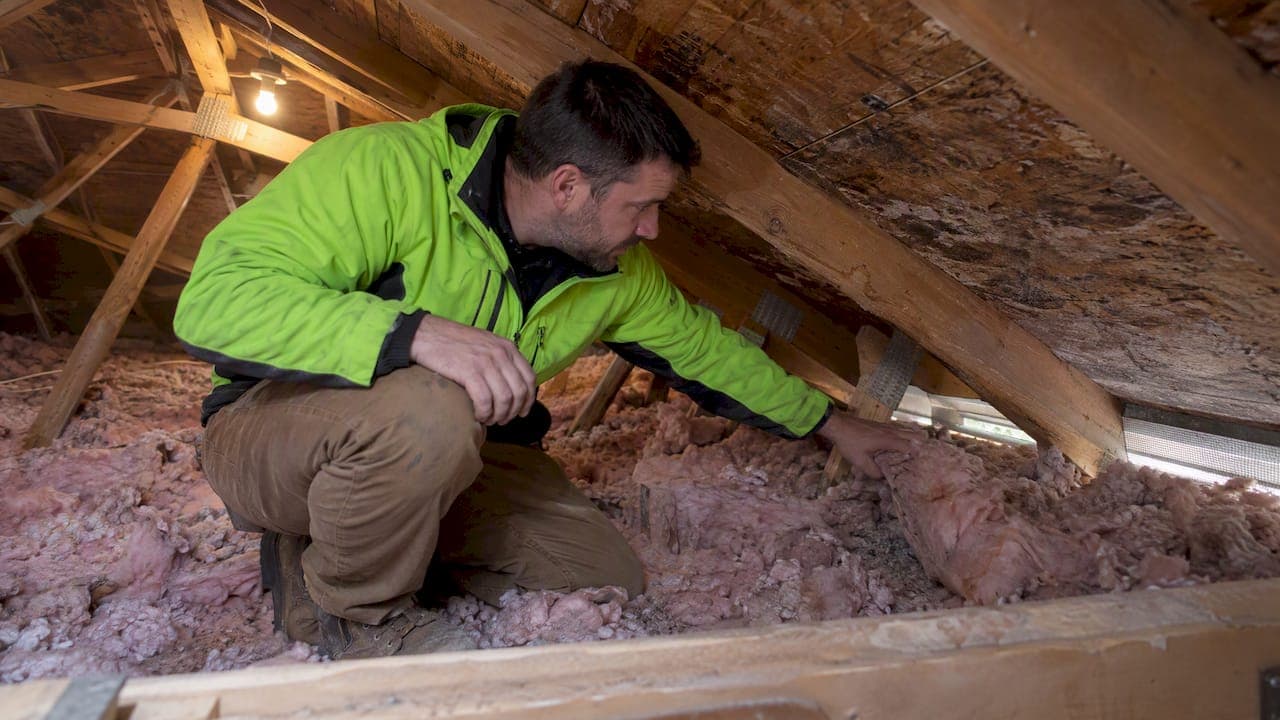
Most Wisconsin roofs last 20 to 30 years for architectural asphalt shingles, 20 to 25 years for older 3-tab shingles, 30 to 40 years for standing-seam metal, and 20 to 40 years for cedar shake. Snow load, ice dams, freeze-thaw cycles, hail, and attic ventilation shift those numbers more than the material label does. Check your roof after major storms and once it nears the top of its expected range.
TL;DR:
- Galvalume roofing often lasts 30 to 40 years, while unpainted galvanized steel can corrode in harsh conditions within five years; confirm the coating and substrate.
- Keep attic insulation at R-30 or higher, ideally R-38, and maintain balanced airflow from soffits to the ridge to limit ice dams.
- Localized damage can be repaired when the deck, flashing, and underlayment remain sound, but widespread damage, recurring leaks, or a compromised deck favor replacement.
- Homeowners should inspect from the ground and attic after hail or high winds, and never climb onto a wet, icy, steep, or damaged roof.
Table of Contents
- Lifespan to Expect From Common Wisconsin Roofing Materials
- How Wisconsin Weather Shortens Roof Life
- Safe Homeowner Checks and Attic Signs That Mean Call a Pro
- Deciding Whether to Repair or Replace Your Roof
- Maintenance That Extends Roof Life in Wisconsin
- Questions to Ask a Contractor and What to Bring
- What We See Most Often on Wisconsin Roofs
- Get a Local Inspection Before Small Damage Becomes a Big Repair
- FAQ
- Sources
Lifespan to Expect From Common Wisconsin Roofing Materials
The surface material sets a baseline, but installation quality and local exposure decide where in that range your roof actually lands. A premium shingle on a poorly ventilated attic can fail early, and a basic shingle on a well-built system can outlast its rating.
- Architectural (fiberglass) asphalt shingles typically run 20 to 30 years or more, with product grade and installation quality driving most of the spread.
- Older 3-tab or organic-mat shingles generally last 20 to 25 years and age faster in cold, wet climates like ours.
- Standing-seam metal roofing is commonly warranted for 20 or more years and often performs for 30 to 40 years, but coating type, substrate, and fastening detail change that outcome significantly.
- Cedar shake service life swings between roughly 20 and 40 years depending on sun exposure, attic ventilation, and how consistently the roof gets maintained.
- Synthetic slate and composite systems vary widely by manufacturer and can approach true slate-like lifespans when installed correctly.
- Low-slope membranes such as TPO and EPDM follow their own planning cycle and need different maintenance attention than steep-slope roofs.
Metal roofing deserves a closer look here. Galvanized and Galvalume products are not interchangeable: Galvalume often projects to 30 to 40 years under normal conditions, while unpainted galvanized steel can show visible corrosion in harsh conditions in as few as five years. Ask any contractor quoting metal roofing exactly which coating and substrate they are specifying.
How Wisconsin Weather Shortens Roof Life
Wisconsin's climate creates damage patterns that a roof's material rating does not fully capture. Ice dams form when snow melts on a warm roof deck and refreezes at the colder eaves, and the National Weather Service notes that this cycle can drive hidden damage into the interior and sheathing long before a homeowner notices anything from the ground.

Freeze-thaw cycling loosens shingles, flashing, and fasteners over repeated winters, slowly degrading seals that looked fine the season before. Hail and wind are event-driven risks that can force an inspection even on a roof that is only a few years old. The March 14-16, 2026 winter storm recorded in Wisconsin illustrates how a single severe event can push even younger roofs into needing repair.
Roof geometry matters too. Shaded north-facing slopes, valleys that collect snow, and attics that leak heat all create microclimates on the same roof, so one section can age faster than the rest.

Safe Homeowner Checks and Attic Signs That Mean Call a Pro
A ground-level walk around your home and a quick look in the attic can tell you most of what you need to know before deciding whether to call someone.
- Check gutters for granule buildup, a sign the shingle surface is wearing down.
- Look for curling, cracked, or blistered shingles and any missing pieces after wind events.
- Scan flashing around chimneys, vents, and valleys for gaps or rust.
- Sight along the roofline for sagging, which can indicate deck or structural issues.
- In the attic, look for wet or stained insulation, daylight through the deck, or damp sheathing.
- Note any musty smell or visible mold, both signs of trapped moisture.
Never climb onto a wet, icy, steep, or storm-damaged roof. Active leaks, visible structural sagging, or exposed wiring call for prompt professional attention rather than a DIY look. Schedule an inspection after any hail event, high wind event, or a winter with heavy ice-dam formation.
Pro Tip: Keep a phone photo folder of your attic and roofline from each season. Side-by-side comparisons make new damage much easier to spot.
Deciding Whether to Repair or Replace Your Roof
FEMA's roof-covering guidance frames this as a system question, not just a surface one. Repair tends to make sense when damage is localized and the rest of the system, deck, flashing, underlayment, is sound and not near the end of its planning range.
- Replacement is usually the better call when damage is widespread across multiple slopes.
- Multiple failed layers or a compromised deck push the math toward a full replacement.
- Leaks that recur in different locations point to a system problem, not a single bad spot.
- A manufacturer's "30-year" label describes product testing, not a guaranteed in-place service life for your specific roof and installation.
Document roof age, photos of damage, attic conditions, and prior repair invoices before you decide. That record supports both your decision and any insurance claim. Our repair-or-replace guide walks through this decision in more detail.
Maintenance That Extends Roof Life in Wisconsin
Ventilation and insulation do more for roof longevity here than almost any other single factor. The Department of Energy and NWS both point to keeping attic insulation at R-30 or higher, R-38 where possible in our climate, paired with balanced soffit-to-ridge airflow to keep the attic cold and limit ice-dam formation.
- Install ice-and-water shield at eaves and properly flash every roof penetration.
- Clear gutters each fall so meltwater has somewhere to go.
- Remove heavy snow buildup safely rather than letting it sit all winter.
- Fix small defects, a lifted shingle, a gap in flashing, as soon as you spot them.
Cool-roof coatings can cut summer energy costs, but DOE guidance notes winter trade-offs and recommends pairing reflectivity upgrades with a planned replacement rather than swapping out a sound roof for that reason alone.
Pro Tip: If gutters stay clogged through fall, water backs up under the roofline before winter even starts. A partner resource on diagnosing roof leaks from clogged gutters walks through the warning signs.
Questions to Ask a Contractor and What to Bring
A roofing proposal should spell out more than price. Before signing anything, ask about the ventilation plan, the scope of ice-and-water protection, flashing details at every penetration, the fastening pattern, who pulls permits, and the cleanup process.
- Ask for the specific ventilation and intake-exhaust plan for your attic.
- Confirm ice-and-water shield coverage, especially at eaves per Wisconsin's SPS 321.28 requirement.
- Request photo documentation of the installation and a written scope with warranty terms.
- Clarify who handles the building permit and code compliance.
Bring your own documentation to the appointment: roof age, prior repair invoices, attic photos, storm damage photos, and any insurance claim information. A free hail damage roof inspection can generate much of this documentation for you if a recent storm is the reason you're calling.
What We See Most Often on Wisconsin Roofs
Most premature roof failures we encounter trace back to poor ventilation and weak flashing detail, not the shingle or metal panel itself. Hail and ice dams are two local patterns that can trigger inspection calls.
Owner-supervised installation and documented photos at every stage cut down on disputes later, whether with an insurer or a future home buyer. We serve homeowners with that same approach on every job.
— Heather
Get a Local Inspection Before Small Damage Becomes a Big Repair
Wisconsin weather does not wait for a convenient time to find the weak spot in your roof, so we built our process around catching that weak spot early. Our inspections include photo documentation, a written scope, and an estimate, records that can help with an insurance claim.
- Request a free hail damage roof inspection after any significant storm.
- Explore standing-seam metal roofing if you're planning a long-term replacement.
- Review our roof replacement cost guide for Wisconsin-specific pricing direction.
FAQ
How long do residential roofs last?
Residential roofs typically last 20 to 30 years for architectural asphalt shingles, with metal, cedar shake, and synthetic systems often lasting longer depending on installation quality and local climate exposure. The surface material sets a baseline, but ventilation, flashing, and assembly details determine where a specific roof lands in that range.
How much does it cost to replace a garage roof?
Garage roof pricing depends on the size, slope, and material chosen, since smaller structures use the same materials and labor categories as a home roof. For a direct estimate, request a roof replacement quote based on your garage's specific dimensions and roofing material.
What is the 25% rule for roofing?
Roof-repair requirements vary by jurisdiction. Check with your local building department or a licensed contractor to find out whether a repair triggers additional code-compliance requirements. Rules vary by municipality, so check with your local building department or a licensed contractor for the specific requirements that apply to your property.
What is the average cost to replace a roof on a 2,000 square-foot home?
Roof replacement costs for a home of that size vary depending on material choice, roof complexity, and the scope of underlayment or ventilation work needed. Current prices are on our roofing services page. Final pricing depends on the specific material selected and any structural repairs identified during inspection.