
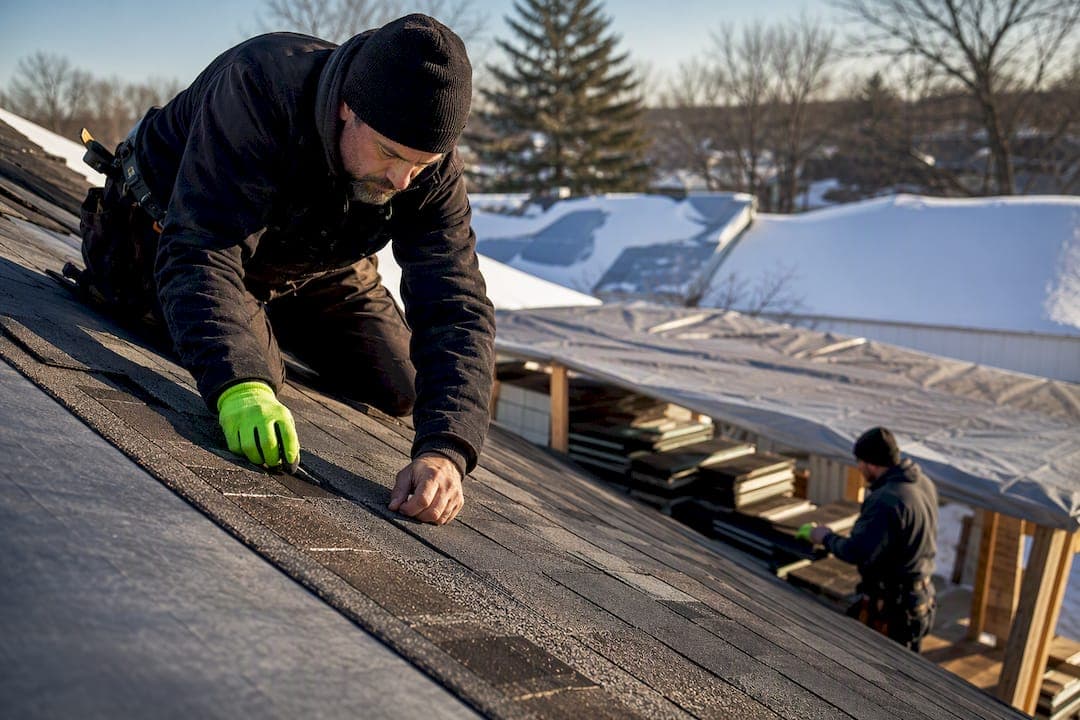
Yes, you can replace a roof in winter, provided you have a safe, dry work window and a contractor experienced with cold-weather techniques. Active leaks or storm damage make winter work necessary. A roof near the end of its life with no leak can often wait for milder weather. Manufacturer minimums and OSHA safety guidance set the boundaries either way, and a qualified provider like AM Exteriors LLC works within them.
TL;DR:
- Proper cold-weather roofing requires hand-sealing shingles below 40°F and careful storage of materials to prevent cracking and ensure quality.
- Immediate repairs are necessary for active leaks, storm damage, or structural issues, while dry, sound roofs can safely wait for milder weather.
- Contractors must follow specific safety protocols, including assessing snow loads, avoiding active storms, and providing documented safety plans to mitigate fall risks.
- Off-season winter roofing can reduce project costs by 10% to 20%, but proper process adherence is crucial for warranty coverage and durability.
- Homeowners should verify contractor experience with winter projects, request detailed cold-weather installation plans, and prepare the site to facilitate a smooth, safe replacement.
Table of Contents
- When winter replacement is the right choice
- Materials and temperature limits: what installs well in cold weather
- Cold-weather installation techniques contractors must use
- Safety, snow/ice hazards, and OSHA-backed precautions
- Timeline, costs, and realistic expectations for a winter project
- Questions to ask and red flags when hiring a contractor for winter roofing
- AM Exteriors' approach to winter roof replacement
- Warranty considerations and how winter installation affects coverage
- Post-installation inspection tips specific to winter conditions
- Signs of poor workmanship or winter damage to watch for after installation
- Preparation steps homeowners can take before winter roofing
- Why winter roofing works when the process is right
- How AM Exteriors can help with a winter roof replacement
- Sources
- FAQ
When winter replacement is the right choice
Some situations demand immediate action. Others allow you to wait.
- Active leaks, visible structural deck damage, or ice dams that threaten interior water intrusion call for immediate repair or replacement.
- A roof that is old but dry and structurally sound can usually wait for spring or fall without added risk.
- Storm damage from wind or hail should be documented with photos and reported to your insurer right away, with emergency tarping used as an interim measure.
The decision hinges on whether the roof is actively failing or simply aging. A roof past its expected lifespan with no leak history is a scheduling choice, not an emergency. If you are unsure which category your roof falls into, a repair-or-replace assessment can clarify the timeline before you commit to winter work.
Materials and temperature limits: what installs well in cold weather
Not every roofing material behaves the same way in freezing conditions. Asphalt shingles rely on a self-sealing adhesive strip that needs warmth to activate.
- Asphalt shingles typically need about 40°F to self-seal; below that threshold, installers hand-seal each tab.
- Metal roofing avoids much of this problem because it has no adhesive strip to activate, making it one of the more winter-friendly options for a full replacement.
- Single-ply and modified-bitumen membranes need special handling in cold weather, including heated storage and protected adhesives, per ARMA's cold-weather bulletin.
Manufacturer and contractor guidance commonly sets about 40°F (4°C) as a practical threshold for asphalt shingle self-sealing. Below that line, shingles also become more prone to cracking when flexed. Material choice affects more than performance: it shapes labor time, warranty handling, and overall project cost. Malarkey shingles and standing seam metal are both viable winter choices when installed with the right technique.
Cold-weather installation techniques contractors must use
A durable winter roof depends on process, not luck. Ask your contractor to walk through these steps before work begins.
- Hand-seal every shingle tab below the manufacturer's minimum temperature, since the factory adhesive strip will not bond on its own in the cold.
- Store shingles, membranes, and adhesives in a conditioned space, and pre-warm ridge caps so they bend without cracking.
- Calibrate nail guns for colder, denser shingles to avoid overdriving or underdriving fasteners.
- Tear off and dry in one roof section per day, closing it before the crew leaves, rather than exposing the whole deck overnight.
- Follow ARMA's recommendations for modified bitumen, including protecting primers and adhesives from freezing.
Pro Tip: Ask for a written cold-weather plan that names the hand-sealing process, storage method, and the temperature or weather triggers that would pause work.
Safety, snow/ice hazards, and OSHA-backed precautions
Winter roofing carries risks that summer work does not, and the biggest one is falls.
- OSHA reports that falls cause the majority of worker fatalities during rooftop snow and ice removal, and recommends avoiding rooftop access when ground-based methods will work instead.
- Uneven snow removal can shift weight distribution and stress a structure unevenly, so load should be assessed before any removal begins.
- Contractors should postpone work during active storms, when the deck is ice-covered, or during sustained sub-20°F conditions.
Falls are the leading cause of death during rooftop snow and ice removal, and rooftop access should be avoided whenever a ground-based alternative is available. OSHA, snow and ice removal safety guidance
Homeowners reduce their own liability by asking for a documented safety plan up front, including fall protection details and a rescue plan for any day a crew is on the roof.
Timeline, costs, and realistic expectations for a winter project
Winter jobs generally run longer than summer ones. Shorter daylight hours and hand-sealing labor both add time, and a full project timeline breakdown is worth reviewing before you schedule.
- Expect added days compared to a summer install, driven by shorter daylight and slower, more careful material handling.
- Off-season scheduling often brings faster contractor availability and, according to industry guidance, pricing that runs roughly 10% to 20% lower than peak season.
- Emergency replacements after storm damage move on a different timeline than planned projects, often tied to insurer inspection scheduling.
Off-season winter scheduling can lower project costs by roughly 10% to 20% compared to the busiest months, though savings depend on contractor availability in your area. Material staging and tarp contingencies also matter more in winter, since a mid-project weather pause needs a protected, dry deck underneath.
Questions to ask and red flags when hiring a contractor for winter roofing
A short interview separates a contractor ready for winter work from one who is not.
- Ask for examples of winter projects completed in the past, not just summer work.
- Ask them to describe the hand-sealing process and at what temperature it kicks in.
- Ask where materials are stored before installation and whether that space is heated.
- Ask what fall protection plan the crew follows and whether it is documented.
- Confirm licensing, insurance, and request proof in writing before signing anything.
Request a written cold-weather installation plan that spells out daily dried-in steps and the specific weather conditions that would trigger a pause. Red flags include cash-only payment demands, requests for a large upfront deposit, or a contractor who cannot clearly explain hand-sealing or storage practices. Collect license verification, insurance certificates, and the written plan before any work starts.
AM Exteriors' approach to winter roof replacement
AM Exteriors LLC has operated as an owner-supervised roofing and exterior contractor for over 25 years, working across Southeast Wisconsin conditions that include heavy snow and sustained cold. That experience shapes how winter jobs are run: conditioned material storage, hand-sealing when temperatures call for it, and daily documentation of each completed section. The company treats workmanship, not material choice alone, as the main defense against winter installation failures, and it navigates insurance claims directly with homeowners when storm damage is involved. Readers considering a winter project are welcome to ask for references from past winter installations before booking.
Warranty considerations and how winter installation affects coverage
A shingle installed correctly in cold weather carries the same manufacturer warranty as one installed in summer, but the word "correctly" is doing the work in that sentence. Manufacturer warranties typically require installation according to their published guidelines, which includes hand-sealing below the self-sealing temperature threshold. Skip that step and a future claim for a lifted or blown-off shingle can be denied, regardless of how strong the shingle itself is.
Ask your contractor whether they document hand-sealing and other cold-weather steps as they happen. Photos and written notes tied to specific roof sections give you something to point to if a warranty question comes up later. This documentation matters more in winter than in any other season, because it is the evidence that manufacturer guidelines were followed rather than skipped to save time.
Workmanship warranties, separate from manufacturer material warranties, are where winter installation quality shows up most directly. A contractor who rushes hand-sealing or skips conditioned storage to finish faster is more likely to generate warranty claims within the first year, regardless of what the paperwork says. Ask what workmanship warranty is offered and whether winter installations carry any different terms. A contractor confident in their cold-weather process will not hedge on this question.

Post-installation inspection tips specific to winter conditions
A winter roof deserves a closer first look than a summer one. Walk the perimeter from the ground after the first significant snowfall and check for uneven melting patterns, which can point to insulation gaps or heat escaping through the roof deck.
Check the attic on a cold day for frost or moisture on the underside of the sheathing, a sign that ventilation is not working as it should. Look at eaves and valleys for ice buildup that seems heavier or forms earlier than on neighboring homes, which can indicate a flashing or underlayment issue rather than normal winter weather.
Once temperatures climb above freezing for the first time after installation, check that shingle tabs have sealed down flat rather than staying lifted at the edges. A tab that stays raised after a proper warm spell suggests the hand-sealing step was missed or done incorrectly. Note the date of your first post-installation inspection and take photos, since this record is useful if you need to reference it in a future warranty conversation.
Signs of poor workmanship or winter damage to watch for after installation
Some problems show up fast. Others take a full season to surface.
Watch for shingles that appear cracked or curled shortly after installation, since cold-weather handling that skips warming the material before bending is a common cause. Check that valleys and flashing points look clean and continuous rather than patched, since rushed winter work sometimes cuts corners in these detail-heavy areas.
Inside the house, a new water stain on a ceiling or wall after the first winter storm following installation points to a sealing or flashing failure, not normal wear. Ice dams that form in the same spot repeatedly, even after a proper installation, often trace back to attic insulation or ventilation rather than the roofing material itself, based on university extension guidance on ice dam prevention.
A granular buildup in gutters beyond what is normal for a new roof, or shingles that seem to be lifting at the edges after the first thaw, both suggest hand-sealing was incomplete. Any of these signs are worth raising with your contractor immediately, ideally with photos and the date noted, while the issue is still fresh and easy to trace back to a specific step in the installation.

Preparation steps homeowners can take before winter roofing
A few steps before the crew arrives make the whole project smoother. Clear a path from the driveway to the work area and keep it shoveled throughout the project, since crews need safe, dry footing to move materials.
Move or cover landscaping near the house, including shrubs and delicate plants close to the foundation, since falling debris and foot traffic during tear-off can damage them. Clear vehicles from the driveway and any nearby street parking so delivery trucks and dumpsters have room to maneuver.
Inside the house, plan for noise and some temporary temperature shifts, especially during the hours the roof deck is open before a section is dried in. If you have a security system or cameras near the roofline, let the contractor know in advance to avoid false alerts. Confirm where the crew plans to store materials on-site, since a conditioned storage trailer or covered staging area protects shingles and membranes from the cold until they are installed. If your project involves siding or window work at the same time, similar cold-climate handling principles apply, and cold-climate window guidance covers what to expect there.
Why winter roofing works when the process is right
The biggest misconception about winter roofing is that the season itself is the risk. It is not. The risk is a contractor treating a cold-weather job the same way they treat a July job, skipping hand-sealing, skipping conditioned storage, rushing sections to beat the light.
Manufacturer guidelines and OSHA safety recommendations already spell out exactly what changes in the cold. The gap is not in what is known. It is in whether a given contractor follows it. Homeowners who focus their vetting on process questions, not just price, end up with a more durable roof regardless of the season.
Waiting for spring is not automatically the safer choice either. A roof with an active leak in January that sits until April is a roof doing months of additional water damage. The right question is never "is it winter," but "is this roof actively failing, and does this contractor have a real cold-weather process." Get those two answers right and the season stops mattering nearly as much as most advice suggests.
— Heather
How AM Exteriors can help with a winter roof replacement
A roof that cannot wait for spring needs a contractor ready to work now, not one who tells you to sit tight until the weather warms up. A qualified roofing contractor handles roof replacement, storm damage response, and insurance claim navigation, using owner-supervised crews and documented cold-weather practices for every winter job.
- Roof replacement using manufacturer cold-weather methods, including hand-sealing and conditioned storage.
- Storm damage response with direct insurance claim assistance from start to finish.
- The use of premium roofing and siding products backed by manufacturer warranties.
If your roof is leaking or storm-damaged right now, request an inspection through our roofing services page and we will walk you through next steps, including emergency tarping if you need it before permanent repairs begin.
Sources
- Preventing injuries and deaths from snow and ice removal operations — OSHA
- Can You Get a New Roof or a Roof Repair in the Winter? — Owens Corning
- Can You Replace a Roof in the Winter? An Expert Guide to Roofing in Cold Weather — GAF (2026)
- Dealing and preventing ice dams — University of Minnesota Extension
FAQ
Is it cheaper to replace a roof in winter?
Winter often brings faster scheduling and lower pricing, with industry guidance pointing to savings of roughly 10% to 20% compared to peak season. Savings depend on local contractor demand and are not guaranteed everywhere.
Does homeowners insurance cover roof leaks from snow?
Coverage depends on your policy, but sudden and accidental winter damage from wind, falling trees, or snow and ice is often covered, according to state insurance guidance. Document damage with photos and contact your insurer before making permanent repairs.
What temperature is too cold to replace a roof?
There is no single cutoff, but asphalt shingles need about 40°F to self-seal, and hand-sealing is required below that. Sustained sub-20°F conditions or ice-covered decks are typical reasons a contractor postpones work.
What is the cheapest time of year to get a new roof?
Late fall and winter tend to bring lower demand and faster contractor availability, which can translate into better pricing than the busy spring and summer months. Exact savings vary by region and contractor schedule.