
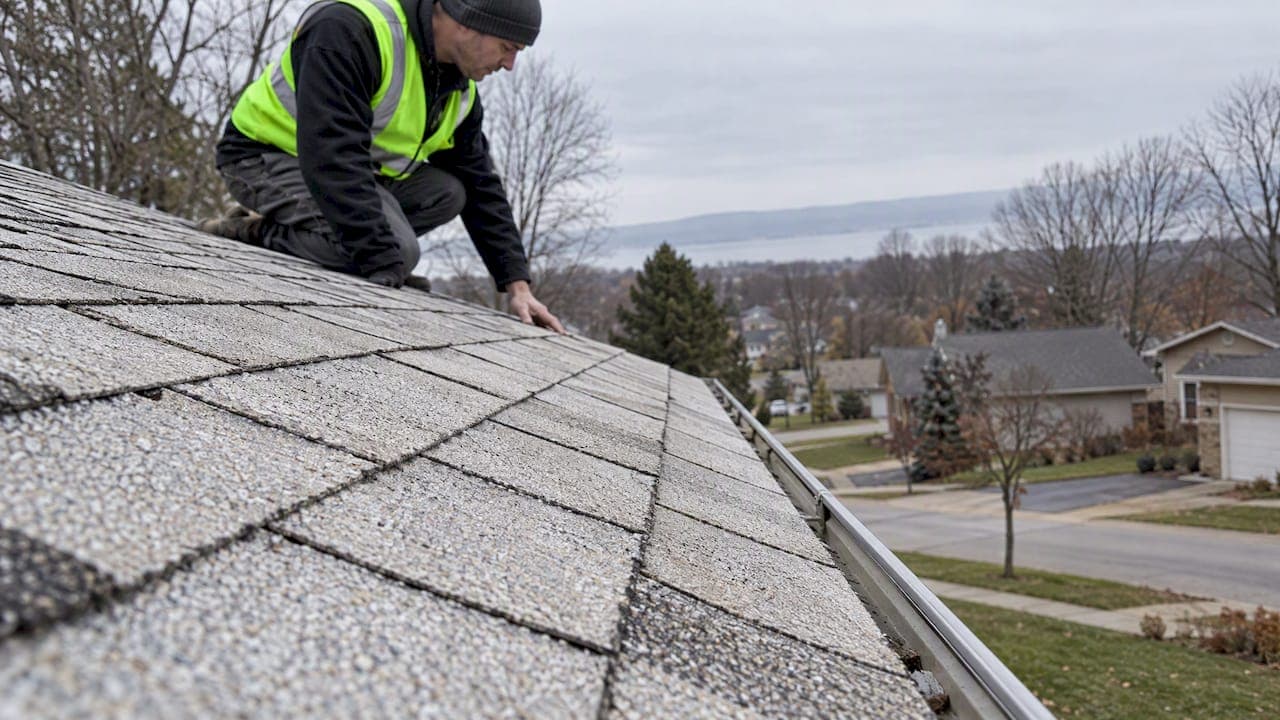
Smog-reducing shingles use photocatalytic granules that break down nitrogen oxides in sunlight, and the effect is real but modest: a typical roof removes about as much NOx as 2 to 3 trees each year. We see them as a smart add-on to a durable, recyclable roofing plan, not a standalone fix for air quality.
TL;DR:
- Smog-reducing shingles offset the NOx emissions equivalent to about two to three trees annually per roof, but the effect remains modest at the neighborhood level.
- Effectiveness varies with sunlight, dirt buildup, and weather conditions, and the reduction in pollutants is steady but incremental over time.
- Granule shedding occurs naturally and does not typically void warranties or qualify for insurance claims unless linked to physical damage like hail.
- Proper installation, adhesion, and regular cleaning can help maintain photocatalytic performance and longevity.
- Ask about granule retention data, warranty coverage, and site-specific factors like sun exposure before choosing these shingles.
Table of Contents
- How photocatalytic granules turn sunlight into cleaner air
- What the research actually shows about effectiveness
- Granule loss, durability, and what insurers actually cover
- Questions to ask before you buy smog-reducing shingles
- Where smog-reducing shingles fit in a sustainable roofing plan
- What about runoff and other potential risks
- Why we recommend sustainable roofing as part of a bigger plan
- How AM Exteriors supports a sustainable roofing project
- FAQ
- Sources
How photocatalytic granules turn sunlight into cleaner air
The chemistry is straightforward. Sunlight hits a titanium dioxide coating on the granules, which triggers a reaction that breaks nitrogen oxides (NOx) down into nitrate salts. Rain then washes those salts off the roof and into the gutter system.
A few mechanical details matter for how well this works over time:
- Granules are bonded with adhesion promoters and embedded deeper into the shingle mat to resist shedding.
- The photocatalytic coating stays active only on exposed granule surfaces, so even distribution across the shingle matters.
- A roof's large, unobstructed surface area makes it a practical, passive air-treatment tool. No one has to flip a switch or run a filter.
That passivity is the real appeal. A shingle roof just sits there doing its normal job, and the smog-fighting happens as a byproduct of sun and rain it would get anyway.
What the research actually shows about effectiveness
Independent testing backs up the basic claim, with real-world caveats. Pilot-scale outdoor testing from Lawrence Berkeley National Laboratory measured NOx deposition velocities under natural sunlight and found the reaction works, though the rate shifts with irradiance, airflow, and how dirty the granules get over time.
A typical residential roof fitted with these granules offsets roughly the same NOx as 2 to 3 mature trees. That is not a dramatic number for one house, but it adds up at neighborhood scale given how much of the country's roofing is asphalt shingle.
A few things shape how much benefit a given roof delivers:
- Testing methods adapted from bench-scale ISO 22197-1 protocols give researchers a consistent way to translate lab results into field conditions.
- Performance dips in low-sunlight seasons and recovers somewhat after rain washes soiling off the granules.
- Homes in drier climates or heavy pollution zones may see different results than the pilot conditions.
- Aging and dust buildup gradually reduce the photocatalytic reaction unless rainfall or cleaning restores exposed granule surface.
None of this undercuts the basic finding. It just means the benefit is steady and incremental, not dramatic and immediate.
Granule loss, durability, and what insurers actually cover
Granules shed over time on any asphalt shingle, smog-reducing or not. That is normal wear, not a defect, and it does not usually mean your roof's photocatalytic properties have failed.
- Light, even granule loss across a roof's service life is expected and does not typically indicate structural failure.
- Physical damage such as punctures, cracking, or bruising from hail is a different story and is the kind of damage insurance guidance treats as claim-worthy.
- Manufacturers improve retention with adhesion promoters and deeper granule embedment, so it is fair to ask about retention testing before you buy.
- Keeping gutters and valleys clear of heavy debris helps prevent prolonged soiling that can dull the photocatalytic reaction.
Granule loss alone is often treated as normal wear rather than a covered claim unless there is accompanying physical damage, according to insurance adjuster guidance. If you spot granules collecting in your gutters after a storm, it is worth learning the difference between shedding and damage before assuming you have a claim.
Pro Tip: Photograph your roof after any major storm, close up and from a distance, so you have a dated record if you ever need to show an adjuster what changed.

Questions to ask before you buy smog-reducing shingles
Choosing a shingle line with photocatalytic granules means asking a few pointed questions up front.
- Confirm the granule supplier. 3M is the name most commonly behind commercial smog-reducing granule technology.
- Ask for granule retention data or test results rather than relying on marketing language alone.
- Read the warranty scope closely: does it cover granule loss, color fade, or only manufacturing defects?
- Request examples of homes where the product line has already been installed and how they have held up.
- Check recycled content, expected service life, and whether the shingle is recyclable at the end of its life.
- Ask how the roof's pitch, orientation, and shading will affect sun exposure, since photocatalytic activity depends on direct UV.
- Treat vague answers about retention or warranty terms as a red flag. A contractor who knows the product should know the specifics.
Shading from trees or neighboring structures reduces the UV exposure the granules need, so a heavily shaded roof will see a smaller benefit than a south-facing roof in full sun.
Where smog-reducing shingles fit in a sustainable roofing plan
Smog-reducing granules are one feature, not a complete sustainability strategy. We think about roofing sustainability across four factors: recycled content, service life, recyclability, and in-use energy performance.
- Pairing photocatalytic granules with a durable, long-life shingle extends the years that benefit accrues.
- Cool-roof coatings and reflective granules can work alongside smog-reducing technology, though reflectivity research notes a tradeoff: lighter granules can mean a modest cost premium.
- Longer-life materials like metal or tile carry a different sustainability case built on decades of service rather than active pollutant removal.
An asphalt shingle upgraded with smog-reducing granules will not outlast a well-installed metal roof, but it adds an active-use benefit that metal and tile do not offer.
What about runoff and other potential risks
The photocatalytic reaction converts NOx into nitrate salts, and those salts wash off with rainwater. This is the same basic mechanism cited in the Lawrence Berkeley National Laboratory research, and it is designed to be a one-way breakdown rather than a buildup on the roof surface.
Nitrate is already a common compound in rainwater runoff from many sources, including fertilizer and vehicle exhaust settling on surfaces, so the incremental contribution from a treated roof is small relative to everyday urban runoff. We are not aware of published evidence tying residential photocatalytic roofing to meaningful water quality harm, and the available research focuses on the gas-phase pollutant reduction rather than runoff toxicity.
Titanium dioxide, the compound doing the chemical work, is widely used in paints, sunscreens, and food coatings, and it is considered chemically stable once bonded into a shingle granule. The practical takeaway for a homeowner is that the tradeoff sits mostly in effectiveness and cost, not in a documented health or environmental hazard from the reaction itself. If you are weighing options, ask your contractor whether independent testing data exists for the specific product line you are considering, since manufacturer claims vary in how much they are backed by third-party research.

Why we recommend sustainable roofing as part of a bigger plan
We look at smog-reducing shingles the way we look at any upgrade: workmanship decides whether the material performs, and how new interior doors improve energy efficiency in older Portland homes offers a parallel example of making smart home improvements to boost overall efficiency. Proper installation, ventilation, and flashing work matter as much as the granule technology itself. We recommend smog-reducing shingle lines when a homeowner already wants a durable asphalt roof and values an added environmental benefit, folded into a plan that also considers service life and recyclability.
— Heather
How AM Exteriors supports a sustainable roofing project
We install roofing, siding, and window systems, and we document every step so you know exactly what went into your roof. For homeowners interested in smog-reducing shingle lines or other sustainable upgrades, the process includes:

- A hands-on inspection to assess pitch, sun exposure, and existing roof condition before recommending a product.
- Installation supervised closely to ensure quality, since most roofing failures trace back to workmanship rather than materials.
- Full documentation and support navigating insurance claims when storm damage is involved.
If you want a straightforward assessment of your roof and options, request a roofing inspection or quote and we will walk you through what fits your home.
FAQ
What roof shingles should homeowners avoid?
Shingles with a history of poor granule retention or premature cracking are worth avoiding, along with any product line a contractor cannot provide documentation or warranty details for. Ask specifically about retention testing and real installation examples before committing to a brand.
Is granular loss on a roof covered by insurance?
Granule loss alone is usually treated as normal wear rather than a covered claim unless it comes with physical damage like punctures or bruising from hail. If you suspect storm damage caused the loss, a documented inspection helps establish whether a claim is warranted.
What color roof increases home value?
Color choice affects curb appeal more than any single resale metric, and neutral tones that match a home's exterior palette tend to appeal to the widest range of buyers. Reflective or lighter colors can also support cool-roof energy performance, which some buyers value separately from aesthetics.
Why are three-tab shingles being discontinued?
Many manufacturers have shifted production toward architectural and laminate shingles because they offer better durability and wind resistance than older three-tab designs. As demand and manufacturing capacity move toward these upgraded products, three-tab availability has shrunk accordingly.
How do smog-reducing shingles work?
They use granules coated with a photocatalytic compound that reacts with sunlight to break down nitrogen oxides into water-soluble nitrate salts, which rinse away with rain. A typical roof with this technology offsets roughly the NOx equivalent of 2 to 3 trees.
Sources
- Innovative Testing for “Smog‑Eating” Roof Shingles | Energy Technologies Area (Lawrence Berkeley National Laboratory)
- Pilot-scale NOx removal efficacy of photocatalytic roofing granules under urban environmental conditions
- 3M™ Smog Reducing Granules - 3M
- Insurance guidance on roof claims and granule loss (IIAT)