
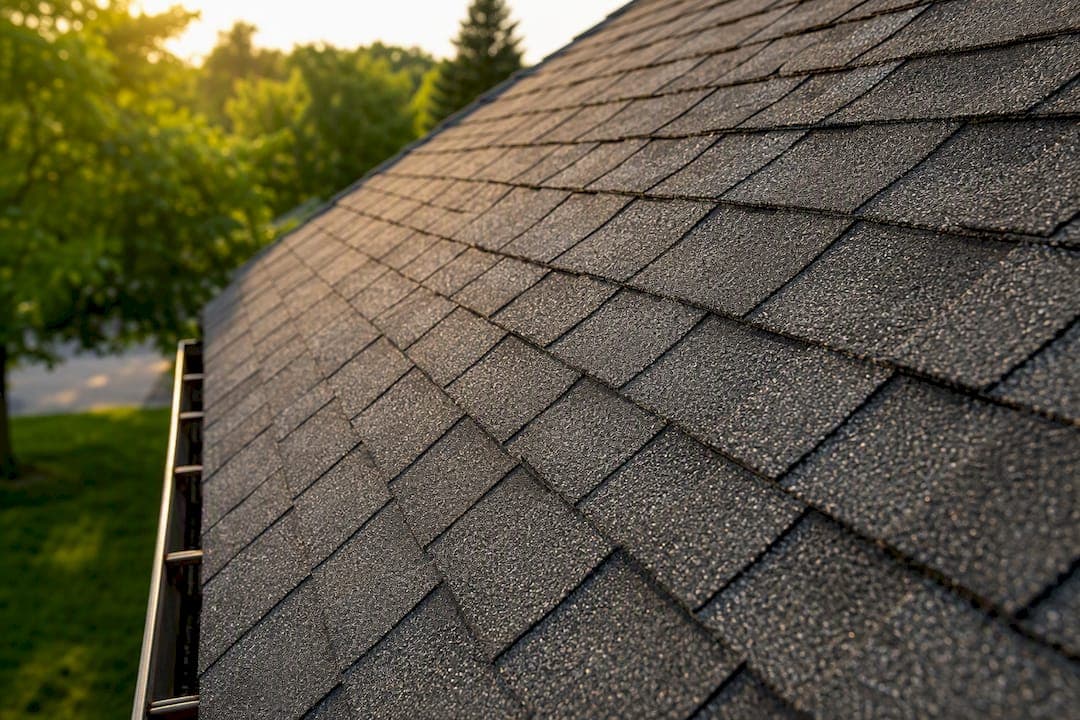
Polymer modified shingles are a smart upgrade for homeowners who face frequent storms and plan to stay in their home for the long haul. These are asphalt shingles rubberized with SBS polymer, which changes how the material bends, seals, and resists damage. Before you sign a contract, confirm three things: the product's UL 2218 Class 4 impact rating, a documented wind warranty in mph, and the contractor's actual installation track record.
Here's what to verify before you buy:
- Impact rating: Ask for the UL 2218 Class 4 certification in writing, not just a sales claim.
- Wind warranty: Get the specific mph number and confirm what installation method it requires.
- Installer proof: Request photos or addresses of completed polymer modified installs in your area.
Key Takeaways
Polymer modified shingles outperform standard asphalt shingles in impact and wind resistance, but that performance only holds up when installation follows manufacturer specifications exactly.
| Point | Details |
|---|---|
| Confirm the Class 4 rating | Ask for UL 2218 Class 4 certification in writing before comparing prices. |
| Check the wind warranty mph | Wind warranties typically range from 130 to 160 mph depending on product and install method. |
| Weigh cost against ownership length | The premium over standard asphalt pays off most for homeowners staying 10+ years. |
| Installation quality decides performance | Correct nailing, underlayment, and cold-weather handling matter more than the shingle brand. |
| Am-exteriors offers inspection and installation | Am-exteriors provides free inspections, estimates, and installer-first installs for polymer modified roofing in Southeast Wisconsin. |
Table of Contents
- What Polymer Modified Shingles Are and How They Work
- Impact Resistance, Wind Ratings, and How Long These Shingles Actually Last
- What You Give Up: Cost, Weight, and Product Availability
- Installation Standards and Warranty Terms Worth Insisting On
- Is Your Home a Good Fit for Polymer Modified Shingles?
- Why Installation Quality Still Decides Everything
- How Polymer Shingles Stack Up Against Metal and Slate
- The Real Question Isn't the Shingle. It's Who's Installing It.
- Sources
What Polymer Modified Shingles Are and How They Work
Polymer modified shingles start as standard asphalt shingles, then get blended with a synthetic rubber polymer, most commonly SBS (styrene butadiene styrene). Manufacturers add this polymer directly into the asphalt core, not as a coating, which is why the change runs deeper than marketing language suggests. Rubberized asphalt shingles behave differently from standard shingles because that polymer creates what's called a cross-linked network inside the material.
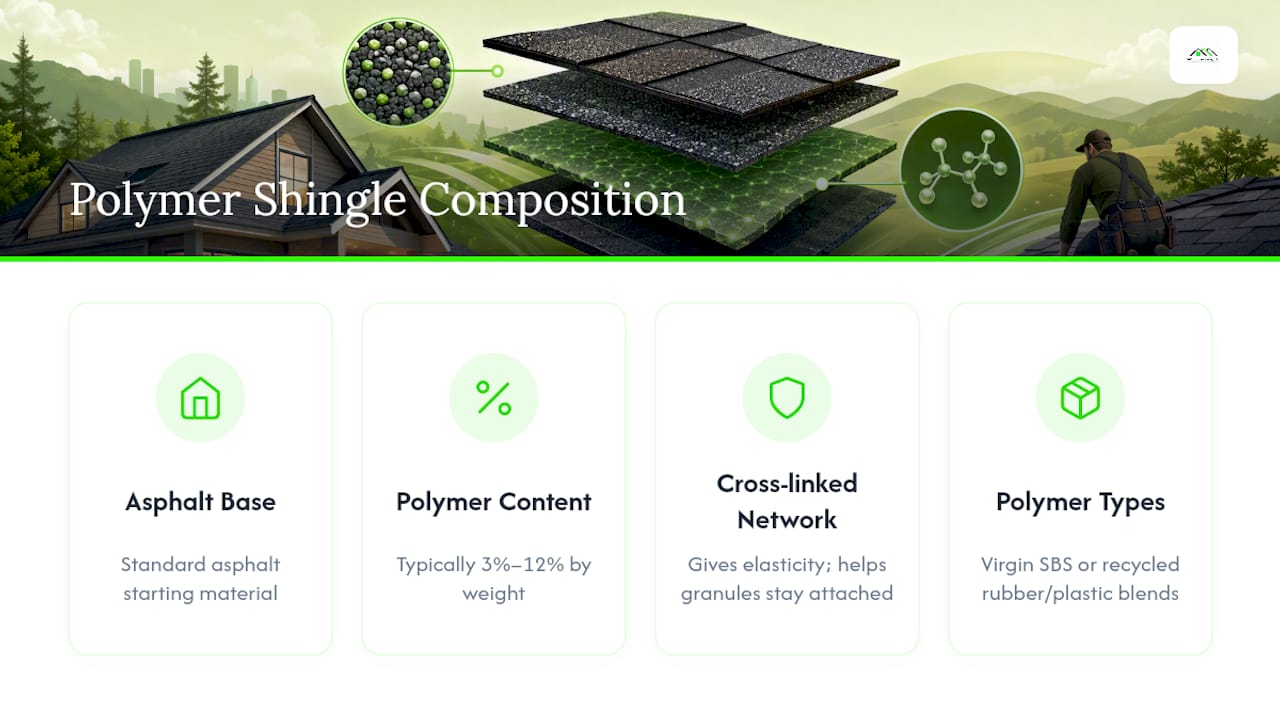
Think of it like the difference between a stale rubber band and a fresh one. Oxidized asphalt gets brittle with age and temperature swings, the way an old rubber band snaps instead of stretching. Polymer content gives the asphalt "memory," letting it expand and contract through hot summers and frozen winters without cracking. That elasticity also helps granules stay locked into the surface instead of washing off in heavy rain.
Not every polymer modified asphalt shingle uses the same recipe. Some manufacturers use virgin SBS polymer for maximum consistency. Others blend in upcycled rubber and plastic, which can divert old tires and plastic bags from landfills while still delivering strong performance. Neither approach is automatically better. What matters is the finished product's test data, not which raw material went in. Polymer content in these formulations typically runs 3% to 12% by weight, enough to shift the asphalt's behavior without sacrificing the cohesion that holds the shingle together.
Impact Resistance, Wind Ratings, and How Long These Shingles Actually Last
The single biggest reason homeowners upgrade to polymer roofing shingles is hail. Traditional asphalt shingles crack or bruise under hail impact, and that damage often isn't visible until a leak shows up months later. Premium polymer modified products are built to pass UL 2218 Class 4 impact testing, the toughest rating in that standard, which involves dropping a two-inch steel ball onto the shingle without it cracking.
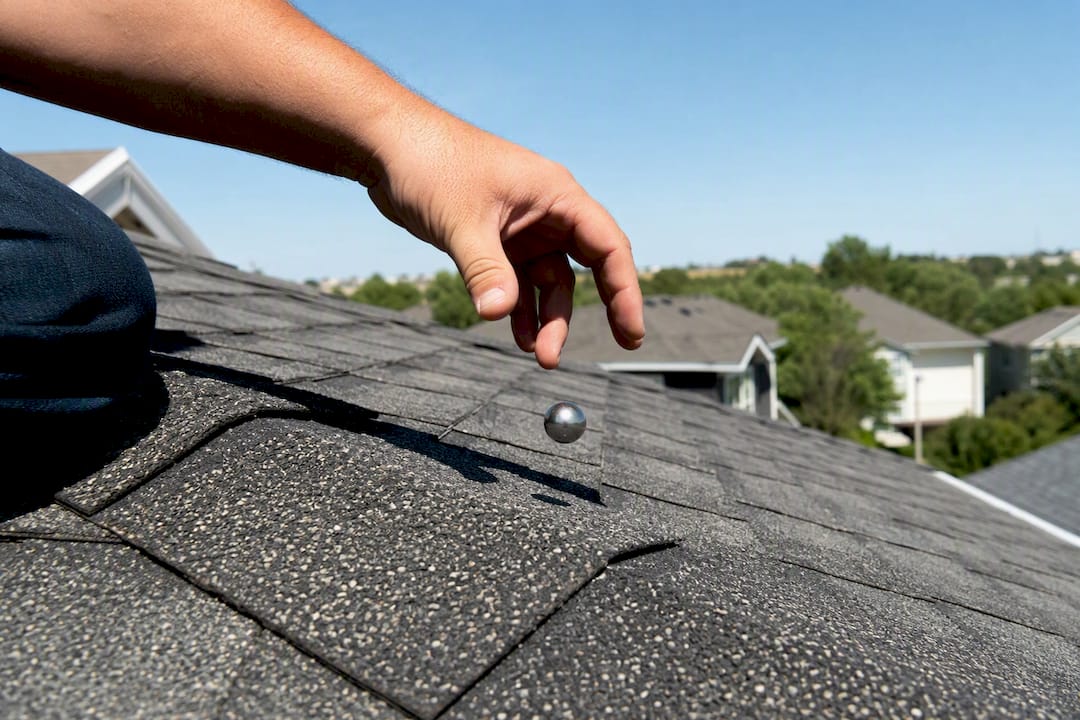
Class 4 matters most in one specific scenario: repeat hail exposure. A shingle that survives one hailstorm without granule loss or bruising is far less likely to need premature replacement after the next one.
Wind performance tells a similar story. Polymer modified asphalt shingles commonly carry wind warranties in the 130 to 160 mph range, depending on the product line and how it's installed. That range matters because wind damage rarely looks like a missing shingle. More often, it's a shingle that's lifted, resealed poorly, and starts leaking a year later.
Here's what the polymer actually buys you over time:
- Better granule adhesion, which shields the asphalt core from UV degradation longer.
- Improved flexibility through repeated freeze-thaw cycles instead of gradual embrittlement.
- Documented performance gains over oxidized shingles in hail and wind resistance, based on long-term field reporting.
Some manufacturers also point to recycled content and lower-emission production methods as a secondary benefit. That's a reasonable bonus to weigh, but it shouldn't be the deciding factor. The test ratings and warranty terms should.
What You Give Up: Cost, Weight, and Product Availability
Polymer modified shingles cost more than standard three-tab or mid-grade architectural asphalt. The exact premium varies by manufacturer and region, but you're generally paying for the polymer blend and the testing behind it, not just a thicker shingle. The right way to think about that premium is payback through avoided repairs, not just sticker price.
A few practical caveats before you commit:
- Some rubberized asphalt shingle lines run heavier than standard shingles, so older roof decks may need a structural check first.
- Not every color or style in a manufacturer's catalog is polymer modified. Confirm the exact product spec sheet, not just the brand name.
- Availability can vary by region and supplier, so ask your contractor which polymer lines they actually stock and install regularly.
- None of these performance numbers apply if the shingle is installed wrong. A Class 4 shingle nailed incorrectly can still fail.
Installation Standards and Warranty Terms Worth Insisting On
Even the best polymer modified asphalt shingles depend entirely on correct installation. Here's what a qualified contractor should be doing on your roof:
- Follow the manufacturer's nailing pattern exactly. Polymer shingles are engineered for specific nail placement and count, and skipping this voids warranty coverage.
- Pair the shingle with a compatible underlayment. Self-adhered underlayments matched to the manufacturer's specifications protect the seal points where polymer modification concentrates.
- Respect cold-weather handling guidelines. Polymer modified shingles stay flexible at lower temperatures than standard asphalt, which widens your installation window, but manufacturers still set minimum handling temperatures.
- Document every step with photos. A contractor who won't show you nailing patterns or underlayment installation is one you should question.
When you review warranty paperwork, look for three separate things: the manufacturer's product warranty, any wind or impact endorsement tied to specific installation methods, and a workmanship guarantee from the contractor. These aren't the same document.
Pro Tip: Ask your contractor for two or three addresses of homes where they've installed the same polymer modified product you're considering, and drive by if you can. A contractor confident in their work will hand this over without hesitation.
Is Your Home a Good Fit for Polymer Modified Shingles?
Run through this before you request quotes:
- High-value fit: You live in a hail-prone or high-wind region, you've had storm damage before, or you plan to stay in the home more than 10 years.
- Lower-value fit: You're planning to sell within a couple of years, working with a tight budget, or your roof deck has structural limits that rule out heavier products.
- Ask every contractor: What's the UL 2218 rating? What's the wind warranty mph, and does it require a specific installation method? Can you show documented local installs?
| Situation | Likely fit |
|---|---|
| Frequent hail or severe storms | Strong candidate for polymer modified shingles |
| Long-term homeownership plans | Cost premium pays off over time |
| Selling within 1-2 years | Standard architectural shingles may make more sense |
| Older roof deck, weight concerns | Confirm structural capacity before choosing a heavier product |
Why Installation Quality Still Decides Everything
Most long-term roof failures Am-exteriors sees trace back to workmanship, not the shingle itself. A polymer modified shingle installed with the wrong nailing pattern or mismatched underlayment can fail just as fast as a cheap oxidized shingle installed correctly, sometimes faster, because homeowners assume the premium product makes installation errors forgiving. It doesn't.
Correct installation timing matters more than most homeowners realize, which is why knowing when to hire a professional can help avoid costly mistakes as explained in Avoiding Common Pitfalls: The Challenges of DIY Door Replacement. Cold-weather handling windows, proper flashing around penetrations, and underlayment compatibility all determine whether a polymer modified shingle performs the way its lab testing suggests it will.
When Am-exteriors handles hail damage claims, the roofs holding up best are almost always ones where the original installer followed manufacturer specs to the letter, not just ones with the priciest shingle brand on the invoice. That's also why insurance carriers and industry bodies are paying closer attention to how these products get installed, not just what they're made of.
How Polymer Shingles Stack Up Against Metal and Slate
Polymer vs traditional shingles is one comparison. Polymer modified shingles versus metal roofing or synthetic slate is another, and it's worth understanding both before you decide.
Standing seam metal roofing generally outperforms any asphalt product, including polymer modified versions, on raw longevity and wind resistance. Metal roofs commonly last 40 to 70 years and handle wind uplift better because of continuous panel seams. The tradeoff is upfront cost, which typically runs well above even premium polymer modified shingles, and a different aesthetic that not every homeowner wants.
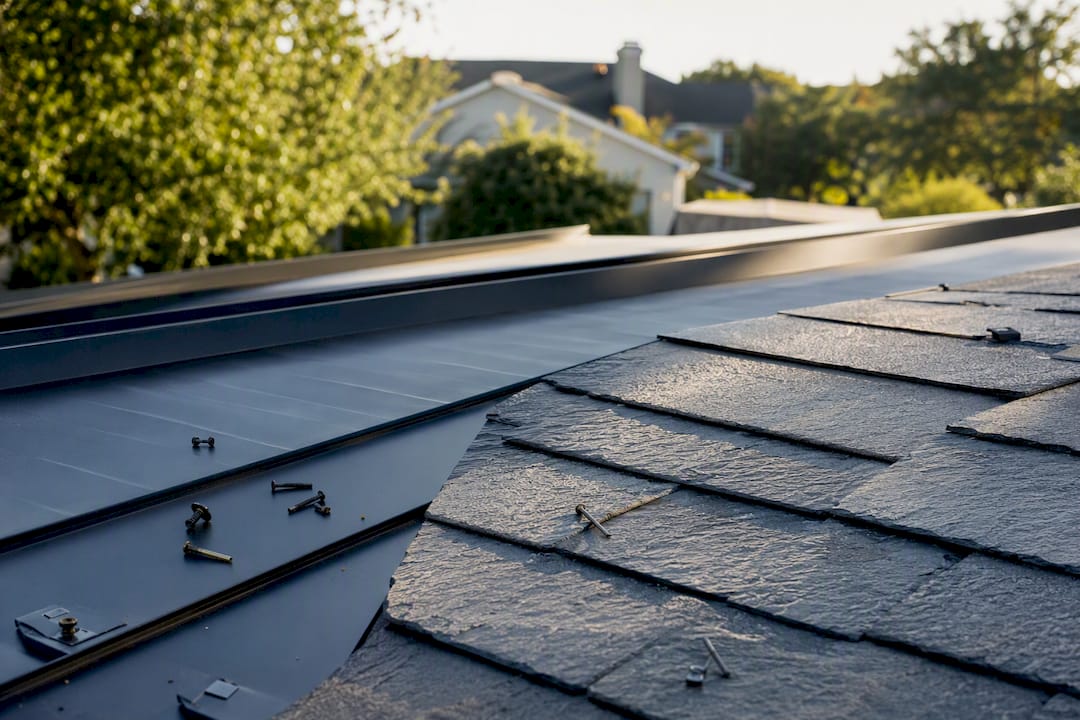
Synthetic slate splits the difference in some ways. It mimics the look of natural slate at a lower weight and cost, with impact resistance that can rival polymer modified asphalt. But synthetic slate products vary widely in quality between manufacturers, and long-term field data isn't as extensive as it is for polymer modified shingles, which have been tested and refined over multiple decades.
For most homeowners weighing durability against cost, polymer modified shingles land in a practical middle ground: meaningfully tougher than standard asphalt, priced well below metal or natural slate, and backed by test standards like UL 2218 that let you compare products on hard data instead of sales pitches. If your roof deck, budget, and aesthetic preferences point toward asphalt in the first place, the polymer modified category is where that decision should start.
The Real Question Isn't the Shingle. It's Who's Installing It.
The polymer modified shingle market has done a good job marketing chemistry: SBS polymers, cross-linked networks, Class 4 impact ratings. All of that is real and worth paying for. But the conventional advice on this topic stops short of the part that actually determines whether your roof performs for the next 20 years.
A shingle rated for 150 mph winds does nothing for you if it's nailed with the wrong pattern or paired with incompatible underlayment. That's not a minor caveat, it's the actual variable homeowners should spend the most time investigating. Ask about the polymer chemistry, sure, but ask harder about nailing patterns, cold-weather handling, and whether your contractor documents their work.
If you take one thing from this article, prioritize contractor vetting over shingle brand comparisons. Read reviews, ask for local install addresses, and get the workmanship warranty in writing separate from the manufacturer's product warranty. The shingle can only perform as well as the hands that install it.
— Heather
Get a Free Roof Inspection and See If Polymer Modified Shingles Fit Your Home
Am-exteriors gives homeowners in Southeast Wisconsin a straightforward path to a Class 4 impact-rated roof, without the guesswork of comparing manufacturer spec sheets alone.
Because most roof failures trace back to installation, not material choice, Am-exteriors builds its process around documented workmanship: correct nailing patterns, compatible underlayment, and photo records at every stage. That installer-first approach is what protects the warranty coverage you're paying for when you choose a premium product. Am-exteriors also handles the insurance claim process directly for hail and wind damage, so you're not navigating adjuster calls alone after a storm.
If your roof has taken hail or wind damage, or you're simply due for a replacement and want to compare polymer modified options against your budget and roof structure, request a free roofing inspection and estimate and get a straight answer on what fits your home.
Sources
Review manufacturer specs at Malarkey's NEX polymer page and Am-exteriors' roofing services for local installation details.
- NEX® Polymer Modified Asphalt - Malarkey Roofing Products
- Timberline ArmorShield II shingles designed to protect in severe weather - GAF blog
- Modified asphalt strengthens roofing shingles - Asphalt magazine