
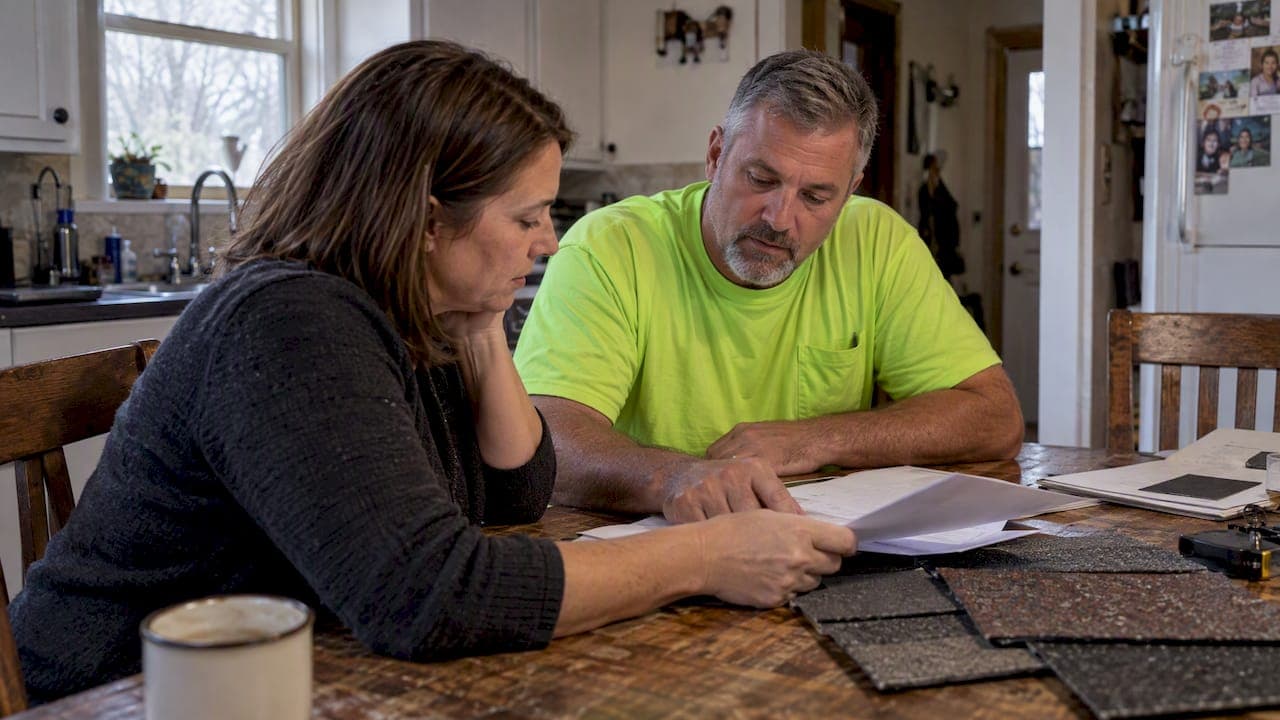
Roofs come with three warranty types: manufacturer (material), contractor (workmanship), and enhanced or system warranties. The single most important step is not comparing headline lengths. Check who pays for labor and tear-off, whether the benefit is prorated or non-prorated, and the registration and transfer rules. Those terms decide what you actually get when something fails.
TL;DR:
- Manufacturer warranties cover material defects for 20 years to lifetime, but often exclude labor, tear-off, and maintenance-related issues.
- Workmanship warranties usually last between 1 and 10 years and only cover installation errors, not materials or weather damage.
- Enhanced warranties combine both, often including labor and tear-off costs, but require strict adherence to accessory lists, certified installers, and timely registration.
- Prorated coverage decreases as the roof ages, so understanding proration and the definition of lifetime is essential for accurate expectations.
- Proper registration, documentation, and routine maintenance are critical for warranty validity and successful claim filing.
Table of Contents
- The three roofing warranty categories and how they differ
- What roofing warranty coverage includes, and what it leaves out
- Prorated vs non-prorated coverage and what 'lifetime' really means
- Enhanced and system warranties: added protection with added requirements
- How to register, transfer, and file a roofing warranty claim
- Comparing roofing warranty options: 15 questions to ask your contractor
- AM Exteriors' approach: documentation and warranty support for homeowners
- Why coverage terms matter more than warranty length
- Get warranty-eligible roofing work done right the first time
- Where to read the exact warranty language yourself
- Sources
- FAQ
The three roofing warranty categories and how they differ
Each warranty type protects against a different failure point. A manufacturer warranty covers defects in the shingles or materials themselves. A contractor workmanship warranty covers installation mistakes, things the manufacturer cannot control. An enhanced or system warranty combines both, but only when specific conditions are met.
The NRCA identifies these as the two basic roofing warranties: manufacturer coverage for material defects and contractor coverage for installation problems. Manufacturer terms can run from 20 years to lifetime. Workmanship terms vary widely because there is no industry standard length.
To figure out which warranty applies to a given problem, read the contract language closely:
- A leak from a cracked shingle points to a manufacturer defect claim.
- A leak around a flashing detail points to a workmanship claim against the installer.
- Missing eligibility for an enhanced warranty (wrong accessories, uncertified installer) can void the extended protection even if the base material warranty still holds.
Enhanced or system warranties typically require qualifying accessories, like matched starter strips, underlayment, and ventilation products, installed by a certified contractor. Skip one requirement and the enhanced tier can disappear, leaving only the base manufacturer terms.
What roofing warranty coverage includes, and what it leaves out
Manufacturer warranties generally cover material replacement for defects, sometimes repair for minor issues. Workmanship warranties cover redoing faulty installation work, not material defects.
Common exclusions show up across almost every policy:
- Storm and weather damage (wind, hail) is often excluded or handled separately through insurance.
- Maintenance failures, like clogged gutters causing water backup, are rarely covered.
- Non-qualifying accessories or mismatched components can void enhanced coverage.
- Normal wear and aging are excluded from workmanship terms.
Warranties are not all-risk insurance. Manufacturers and industry guidance note that maintenance quality, installation quality, and component compatibility all affect what gets paid. Confirm separately whether labor, tear-off, and disposal costs are included: base manufacturer warranties often exclude them, while enhanced programs may include labor and tear-off for a defined period.
Prorated vs non-prorated coverage and what 'lifetime' really means
A prorated warranty gives full coverage for an initial period, then the benefit shrinks as the roof ages. The FTC's warranty guidance explains that prorated terms reduce the credit over time, while non-prorated coverage holds steady for its stated period.

Say a shingle is rated for a 30-year prorated warranty and fails in year 20. The manufacturer credit toward replacement shrinks compared to a failure in year 2, even though the material is still "under warranty."
A few points worth remembering:
- Non-prorated windows usually apply early in a warranty's life, sometimes extended further under enhanced programs.
- Workmanship promises commonly range from 1 to 10 years unless upgraded through a contractor's own extended offer.
- "Lifetime" is defined by the manufacturer, often tied to how long the original owner occupies the home, not a fixed number of years.
- Transfer to a new owner frequently shortens or converts a lifetime term into a fixed number of years.
Enhanced and system warranties: added protection with added requirements
Enhanced warranties bundle manufacturer and workmanship coverage into one package. They typically add labor coverage, tear-off and disposal costs, longer non-prorated replacement windows, and extended workmanship terms beyond what a standalone contractor warranty offers.
Manufacturer system warranty examples show that eligibility depends on details easy to miss during a quote:
- Installing manufacturer-approved accessories across the whole roofing system.
- Using a certified or authorized installer recognized by the manufacturer.
- Registering the warranty within a required window after installation.
The trade-off is cost and flexibility. Enhanced programs usually cost more upfront and can restrict which products or contractors qualify. Transfer rules also tend to be stricter, sometimes limiting coverage to a single transfer or reducing terms after a sale.
Pro Tip: Ask your contractor for the manufacturer's exact accessory list before signing, since even one substituted component can disqualify enhanced coverage.
How to register, transfer, and file a roofing warranty claim
Registration and transfer deadlines often decide whether a warranty pays out. Manufacturer registration guidance explains that enhanced warranties frequently must be registered by the contractor, not the homeowner, shortly after installation.
Follow this sequence to protect your coverage:
- Confirm your contractor registers the enhanced warranty on your behalf within the manufacturer's required window.
- Keep the signed proposal, invoice, and any permit documents in one file.
- Photograph the finished roof, including flashing, ventilation, and accessory details.
- Review transfer requirements before selling the home, since notice windows and ownership proof are often required.
- When filing a claim, contact the manufacturer or contractor with your registration confirmation, photos, and proof of purchase ready.
Common pitfalls that void coverage include skipping registration, using unapproved repair contractors later, and ignoring routine maintenance. If a claim gets denied, documentation is usually what determines whether an appeal succeeds.
Comparing roofing warranty options: 15 questions to ask your contractor
Line up quotes using the same fields: covered components, labor and tear-off inclusion, the prorated formula, the non-prorated window length, registration steps, transfer conditions, listed exclusions, and any maintenance duties you're responsible for.
Bring these questions to your next estimate:
- What exactly does the material warranty cover, and for how long?
- Is the workmanship warranty separate, and what's its term?
- Does the enhanced tier include labor and tear-off costs?
- Is coverage prorated, and when does proration start?
- What voids the enhanced warranty specifically?
- Who registers the warranty, and by what deadline?
- Can this warranty transfer to a future homeowner, and how many times?
- What maintenance is required to keep coverage valid?
Pro Tip: A contractor who hesitates to put warranty terms in writing before you sign is a red flag worth a second estimate.
AM Exteriors' approach: documentation and warranty support for homeowners
Some exterior contractors use owner-supervised installation and prioritize documented workmanship, since many roof failures trace back to installation quality rather than materials. Homeowners should request the signed proposal, an accessory list matching manufacturer requirements, and a registration certificate once work finishes. AM Exteriors also handles enhanced warranty registration with certified product lines, and provides install photos and a written maintenance schedule so homeowners have a full record if a claim ever comes up.
Why coverage terms matter more than warranty length
Check the remedy, not the headline number. A 50-year warranty that excludes labor and tear-off can cost more out of pocket than a shorter warranty that covers both. Ask for written documentation and proof of registration before the crew leaves your property, not weeks later. I've reviewed enough contracts to know that the homeowners who ask these questions upfront are the ones who get paid when something goes wrong.
— Heather
Get warranty-eligible roofing work done right the first time
A warranty is only as good as the installation behind it. AM Exteriors pairs roof replacement and repair services with owner-supervised work, so enhanced manufacturer warranties stay eligible from day one.
Here's what that means for your project:
- Certified installation practices that keep enhanced warranty eligibility intact.
- Documented accessory lists and registration handled for you.
- Storm damage assessment and insurance claim support when weather is involved.
Request a free inspection through AM Exteriors' roofing services page to get a warranty review alongside your estimate.
Where to read the exact warranty language yourself
- NRCA's homeowner guidance covers proposal checklists and industry norms.
- FTC warranty guidance explains full versus limited terms.
- Manufacturer registration pages detail eligibility and transfer rules.
- A homeowner-focused explainer walks through common warranty categories in plain terms.
Sources
- Resources - National Roofing Contractors Association
- Businessperson's guide to federal warranty law - FTC
- Register your GAF Roofing Warranty
FAQ
What are the different types of roofing warranties?
The three main types are manufacturer warranties covering material defects, contractor or workmanship warranties covering installation errors, and enhanced or system warranties that combine both under stricter eligibility rules. Each has its own scope, duration, and exclusions, so check the specific contract language rather than assuming coverage overlaps.
What is the warranty on roofing products?
Roofing product warranties typically cover manufacturing defects in the shingles or materials themselves, with terms ranging from 20 years to lifetime depending on the product line, according to NRCA guidance. Coverage is often prorated after an initial non-prorated period, meaning the payout shrinks as the roof ages.
What is a workmanship warranty and how long does it usually last?
A workmanship warranty covers installation errors made by the contractor rather than defects in the materials. Terms vary by contractor since there is no industry standard, though many fall in the 1 to 10 year range unless extended through an enhanced manufacturer program.
Do roofing warranties transfer to a new homeowner?
Some warranties transfer to a new owner, but the process usually requires written notice within a set deadline and proof of ownership, as outlined in manufacturer transfer guidance. Some policies limit transfers to a single instance or reduce the remaining term after the transfer happens.
Does routine roof maintenance affect warranty coverage?
Yes, skipping routine maintenance like gutter cleaning or debris removal can void portions of a warranty tied to preventable damage. Manufacturers generally expect homeowners to maintain the roof as a condition of keeping coverage active.