
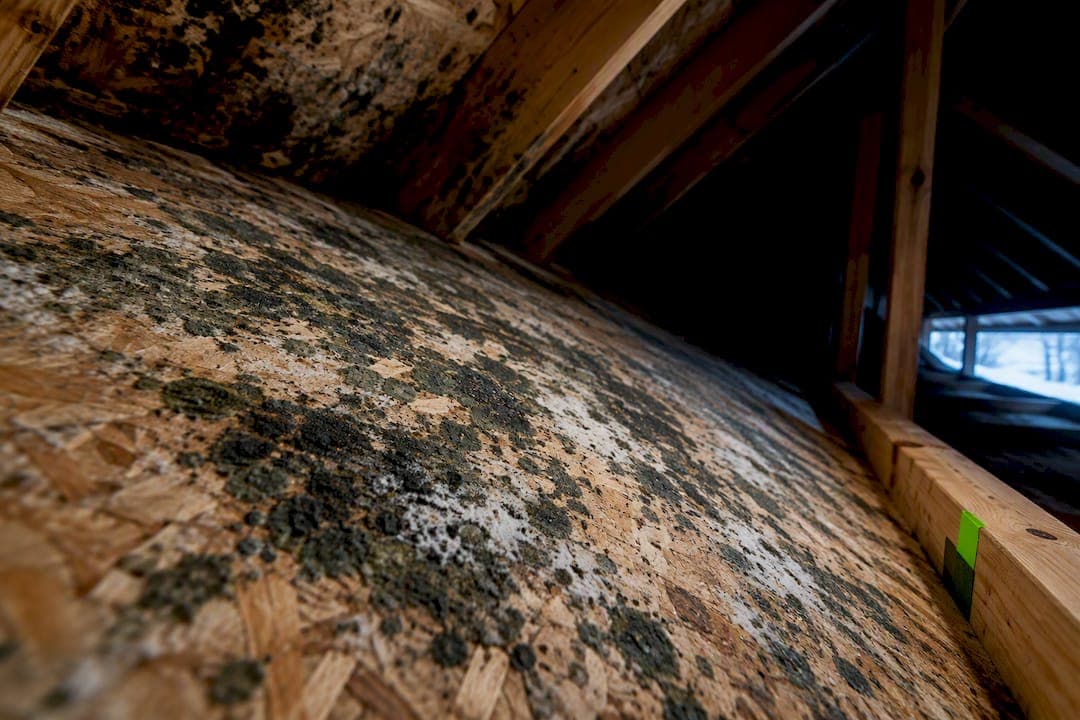
Most attic mold comes down to moisture, not dirt or age. The usual suspects are warm, humid indoor air leaking into a cold attic through gaps and bypasses, exhaust fans that dump moisture into the attic instead of outside, blocked soffit intake that starves the space of airflow, and, less often, an actual roof leak. Before you spend money on remediation, check exhaust terminations, insulation and baffles, and attic bypasses first. Here's what each cause actually looks like.
TL;DR:
- Proper diagnosis is essential, as localized stains indicate roof leaks, while widespread speckled mold suggests condensation caused by ventilation or insulation issues.
- Ventilation problems often stem from blocked soffit vents, unbalanced exhaust, or improperly sealed attic bypasses, which trap moisture and promote mold growth.
- DIY cleaning is suitable only for mold under 10 square feet on non-porous surfaces; larger or porous material contamination requires professional removal.
- Fixing moisture sources, especially air leaks around lights, attic hatches, and top plates, is key to preventing mold recurrence after initial cleanup.
- Balancing attic ventilation with sealed intake and exhaust vents, along with adequate insulation, provides a long-term solution by reducing moisture buildup.
Table of Contents
- Common Causes of Attic Mold
- Is It a Roof Leak or Condensation? Here's How to Tell
- Why Attics Trap Moisture: The Building Science Behind It
- What to Do Right Now (and When to Call a Pro)
- Fixing It for Good: Air Sealing, Venting, and Insulation
- What Installers Actually Find in Wisconsin Attics
- The Real Problem Isn't the Mold. It's What's Feeding It.
- Sources
- FAQ
Common Causes of Attic Mold
Attic mold causes usually fall into a handful of repeat offenders. Knowing which one applies to your house changes everything about the fix.
- Roof leaks: Water sneaks in around cracked flashing, a failed pipe boot, or lifted shingles, creating a localized wet spot that mold colonizes fast.
- Condensation from indoor air: This is the most common cause in cold climates. Warm household air rises into the attic, hits cold roof sheathing, and condenses into water droplets that soak wood and insulation over an entire section of roof.
- Misrouted exhaust fans: Bathroom, kitchen, and dryer vents that terminate in the attic (instead of through the roof or wall) pump pints of warm, moist air into the space every single day.
- Blocked or unbalanced ventilation: Soffit vents packed with insulation or debris, missing baffles, or a lopsided intake to exhaust ratio all trap moisture that would otherwise escape.
- Missing or compressed insulation: Thin spots let heat escape upward into the attic, warming the underside of the roof deck and creating more condensation surface.
- Air leaks and attic bypasses: Recessed lights, the attic access hatch, gaps along top plates, plumbing chases, and loose duct boots all act as chimneys for humid indoor air, according to guidance from Mold Removal Hub.
Poor ventilation, inadequate insulation, and improperly vented fans consistently top the list of common attic mold triggers identified by This Old House, and that lines up with what shows up in real attics across Wisconsin winters.
Is It a Roof Leak or Condensation? Here's How to Tell
The visual pattern is your best clue. A roof leak leaves a hard-edged, localized stain, often with a water trail running down a rafter or truss chord toward the lowest point. Condensation looks different: fine speckled mold spread across a wide area, usually concentrated in the coldest bays near the eaves or on north-facing slopes.
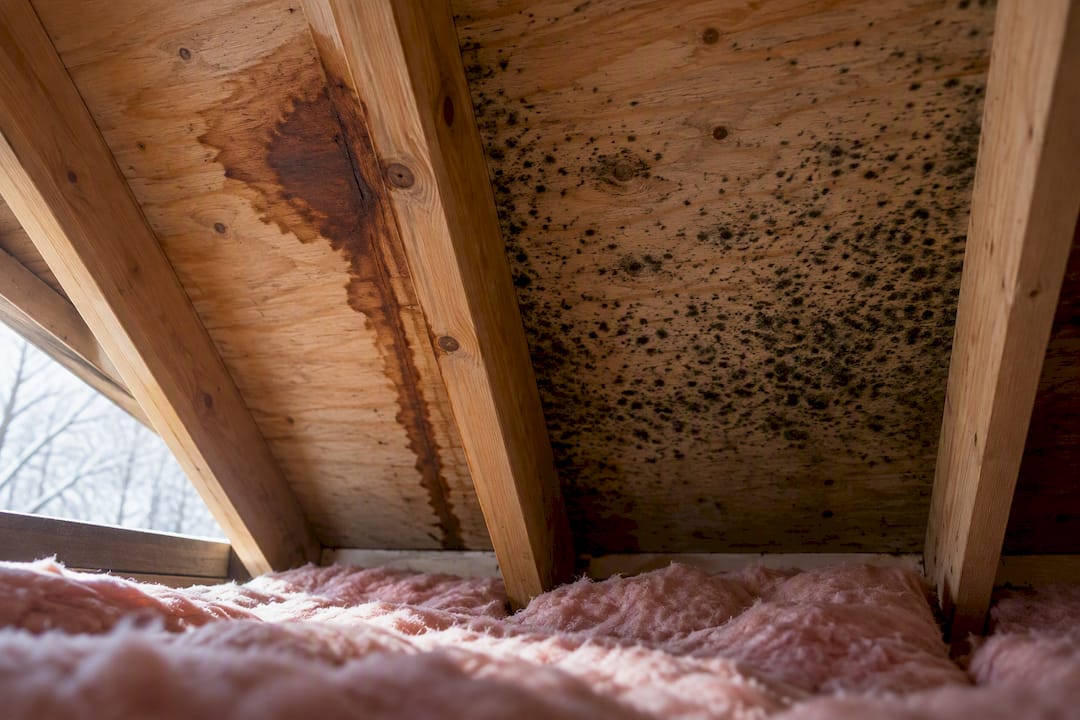
Timing matters too. Leak-driven mold shows up right after a rainstorm or during spring snowmelt, tracking closely with weather events. Condensation follows the calendar instead. It builds quietly through cold months and often isn't discovered until a warm-weather attic inspection turns up mold that's been growing for weeks, according to seasonal attic inspection findings.
A few simple checks help narrow it down:
- Hold a tissue near any duct or fan termination in the attic. If it flutters or feels damp, that vent is likely dumping moist air where it shouldn't.
- Look for daylight or debris in the eave rafter bays. Blocked soffits mean blocked airflow.
- Check the attic hatch and recessed light fixtures for gaps you can feel a draft through.
- Use a moisture meter on suspect wood if you have one; readings above 20% suggest an active moisture problem.
Call a professional if you find structurally soft or crumbling wood, mold covering more than 10 square feet, or insulation that's visibly wet.
Why Attics Trap Moisture: The Building Science Behind It
Warm air holds more water vapor than cold air, and in a heated home that warm, humid air constantly rises. It doesn't just diffuse slowly through drywall and paint. It rushes through every gap, crack, and penetration in the ceiling, carrying moisture into the attic in volumes far greater than simple vapor diffusion ever could, according to building science research on attic bypasses.
Once that humid air reaches the attic, physics takes over. On cold winter nights, roof sheathing temperature can drop well below the dew point of the air sitting against it. When humid attic air touches that cold surface, water condenses directly onto the wood, wetting sheathing and insulation the same way a cold glass of water sweats on a summer porch.
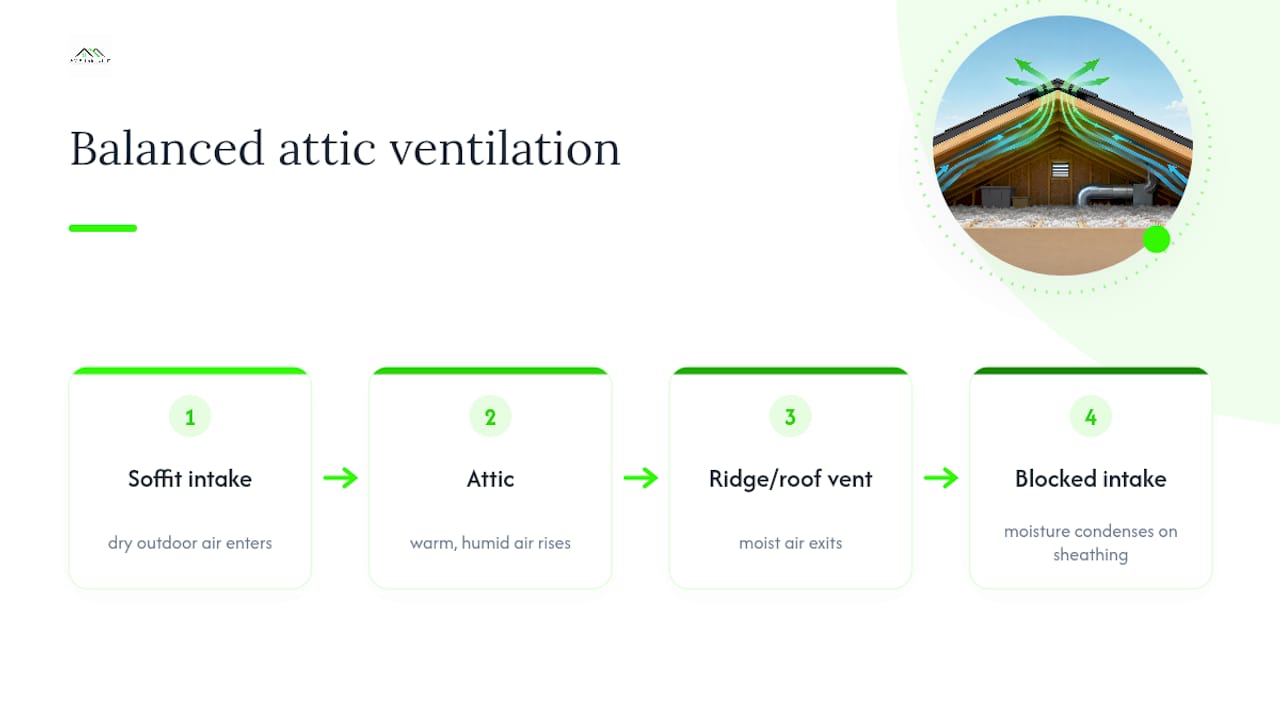
Ventilation only solves this problem when it's balanced. Soffit vents pull in dry outdoor air at the eaves; ridge or roof vents let warm, moist air escape at the top. If soffit intake is blocked, or if there's far more exhaust venting than intake, the whole system stalls and moisture accumulates instead of exiting. That's why sealing air leaks and restoring proper airflow paths usually delivers a bigger improvement than simply adding more roof vents.
What to Do Right Now (and When to Call a Pro)
Stop the moisture source first. If a fan is venting into the attic, shut it off until it's rerouted. If you can safely see an active roof leak, a temporary tarp buys time. Ventilate the attic space if it's accessible, and avoid sweeping or disturbing visible mold, since that scatters spores into the air you breathe.
The EPA's cleanup guidance sets a practical line: DIY cleanup is appropriate for mold covering less than 10 square feet on non-porous surfaces. Porous materials like insulation, cardboard, or drywall usually need to be removed and replaced rather than scrubbed. This threshold is reinforced by remediation guidance following roof leaks.
Call a professional when the affected area exceeds 10 square feet, when wood feels soft or crumbles under light pressure, when mold has spread across multiple rafter bays instead of staying localized, or when anyone in the household has asthma or another respiratory condition. Mold can begin colonizing damp materials within 24 to 48 hours of exposure, so speed matters more than perfection.
Match the problem to the right specialist. A roofer handles leaks, an insulation or HVAC contractor handles air sealing and duct rerouting, and a mold remediation company handles large-scale contamination that follows IICRC S520 protocols for containment and drying.
Fixing It for Good: Air Sealing, Venting, and Insulation
Surface cleaning without fixing the moisture source is a temporary patch. Mold comes back within a season if the underlying airflow and insulation problems stay in place. Here's the order that gets the most durable result for the least wasted effort.
- Seal attic bypasses first. The hatch, top plate gaps, plumbing chases, and recessed light housings leak the most moisture-carrying air of anything in the ceiling. This single step often produces the biggest drop in attic humidity.
- Reroute every exhaust fan outdoors. Bathroom, kitchen, and dryer vents must terminate through the roof or an exterior wall, never in the attic or a soffit cavity.
- Rebalance ventilation. Clear soffit intake vents, install or repair baffles to keep insulation from choking airflow, and confirm the ridge-to-soffit vent ratio meets code for your attic's square footage.
- Check insulation coverage and placement. Add insulation where it's thin, but never bury a soffit vent. Baffles should maintain a clear air channel between the insulation and the roof sheathing.
- Handle roof repairs alongside the rest. Failed flashing, cracked pipe boots, or worn shingles need fixing whether or not condensation is also a factor, since a leak on top of poor ventilation compounds the damage fast.
Pro Tip: Cutting indoor humidity below 40% in winter reduces the moisture load your attic has to deal with, even before you touch a single vent. Simple changes like running bathroom fans longer and managing indoor humidity pay off in both your windows and your attic.
What Installers Actually Find in Wisconsin Attics
After 25 years working attics across Southeast Wisconsin, the same handful of installation mistakes keep showing up: flex ducts that popped loose from their fan connection, baffles crushed flat by blown insulation, an unsealed attic hatch letting warm air pour through year round, and bathroom exhausts that were never actually connected to anything outside.
A homeowner can check most of this safely from the attic access point:
- Look at every exhaust duct where it terminates. Confirm it exits the roof or wall, not just ends in the attic.
- Check for daylight or airflow at the soffits, and note any spot where insulation blocks the vent channel.
- Photograph any staining or mold pattern you find, and note the date and recent weather.
- If you're filing an insurance claim, collect photos of flashing, pipe boots, and any moisture meter readings before repairs begin.
Contributed by Heather.
The Real Problem Isn't the Mold. It's What's Feeding It.
Homeowners tend to treat attic mold like a cleaning problem. Scrub it, bleach it, move on. That misses the point entirely. Mold is a symptom, and if you don't fix the moisture source, it comes back, often worse, because the wood and insulation stayed damp longer the second time.
The conventional advice to "improve ventilation" also oversimplifies things. Adding roof vents without fixing blocked soffits or air leaks can actually make condensation worse in some attics, because exhaust vents pull harder without matching intake to feed them. Balance matters more than volume.
If you take one thing from this, prioritize air sealing before anything else. Recessed lights, the attic hatch, and top plate gaps leak far more moisture into your attic than most homeowners assume, and sealing them costs a fraction of what remediation runs. Fix the airflow, and the mold problem usually stops rebuilding itself every winter.
— Heather
Sources
- CDC Mold
- This Old House How To Get Rid of Attic Mold
- Mold Removal Hub What Causes Attic Mold (and How to Stop It)
- RestoreAdvisor Mold From a Roof Leak: What to Do and Who to Call
FAQ
What Are the First Signs of Mold Sickness?
Early symptoms typically include a stuffy nose, coughing, throat irritation, and eye or skin irritation, and people with asthma may notice more frequent flare ups. The CDC notes that sensitivity varies widely, and some people react to mold exposure much more strongly than others, particularly with prolonged exposure to damp buildings.
How Fast Does Mold Grow After a Roof Leak?
Mold can begin colonizing damp materials within 24 to 48 hours of water exposure, with visible colonies often appearing within 3 to 7 days. That's why stopping the leak and drying the area quickly matters more than any cleaning product.
Can Attic Mold Make You Sick if You Never Go Up There?
Yes. Air moves between the attic and living space through the same bypasses that let moisture in, including light fixtures, the attic hatch, and duct chases, so spores can circulate into rooms you use daily. Mayo Clinic notes that certain mold exposures are linked to respiratory illness in sensitive individuals, which is part of why sealing those bypasses matters for air quality, not just structural health.
Do I Need a Professional for Attic Mold, or Can I Clean It Myself?
The EPA's guidance sets the line at 10 square feet: smaller areas on non-porous surfaces are often manageable as a DIY project, while larger areas or contaminated porous materials like insulation usually call for professional remediation following IICRC S520 protocols. If you're unsure, treat it as a job for a pro, especially if anyone in the house has respiratory issues.
Will Fixing the Roof Alone Stop Attic Mold?
Only if a roof leak was the actual cause. If condensation from indoor air is driving the problem, a new roof won't change anything since the moisture is coming from inside the house, not above it. That's why diagnosing the pattern first, and checking exhaust vents, insulation, and air sealing, matters before booking any repair, whether it's a roofing project or an insulation upgrade.