
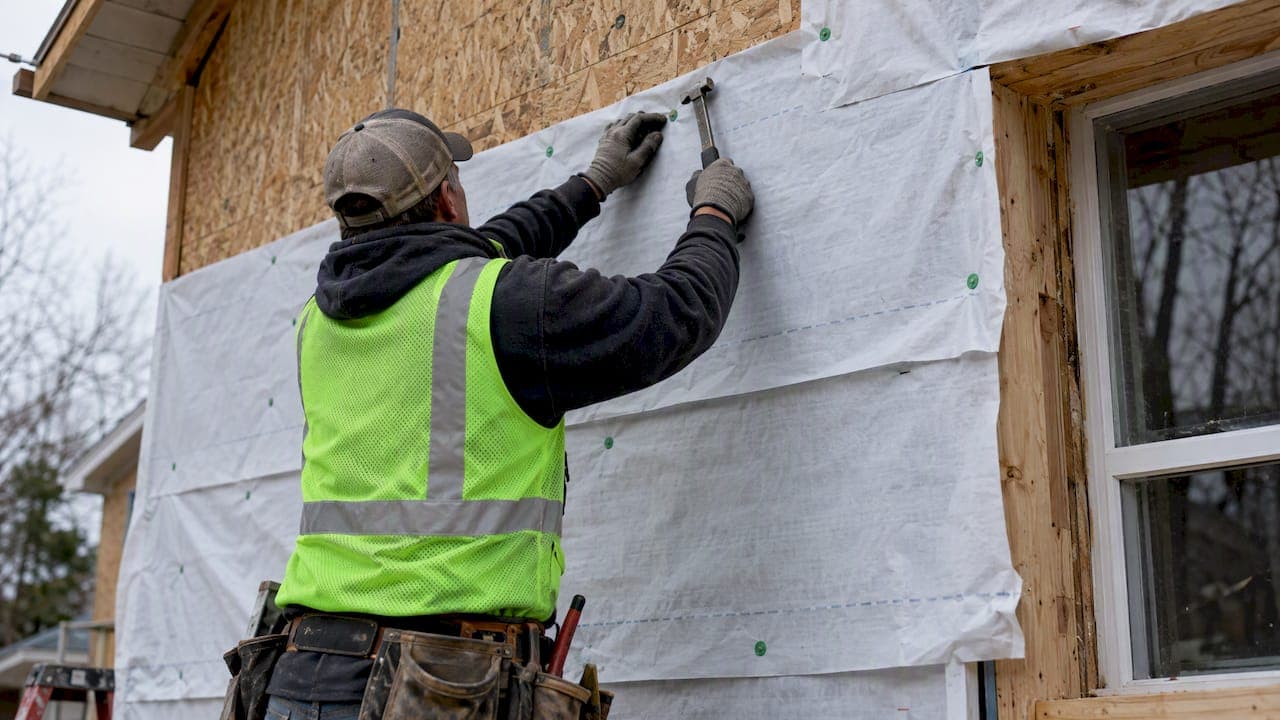
Yes, a water-resistive barrier belongs under nearly every type of siding. It stops water that gets past the cladding from reaching the sheathing and framing, and building codes require it on wood- and steel-frame walls. We walk through what a house wrap actually does, how to install it correctly, and the few cases where an alternate barrier takes its place.
TL;DR:
- Proper installation of shingle laps and window flashing is more critical than the choice of material in preventing leaks and water damage.
- Water-trapped behind siding causes rot, mold, and insulation failure, with most issues stemming from poor sequencing or damaged flashing details.
- In some cases, taped rigid foam or fluid-applied membranes can replace traditional WRB when installed according to manufacturer and code guidelines.
- External signs of WRB failure include staining, discoloration, spongy drywall, and musty odors near windows, indicating ineffective drainage.
- Local building codes typically require a WRB behind almost all siding types, with specific assembly conditions that influence whether a separate wrap can be omitted.
Table of Contents
- What a house wrap is and how it protects your wall
- Why house wrap matters: risks it prevents and the code
- Choosing a house wrap that fits your siding
- Installation rules that actually determine performance
- Common mistakes and how to spot them
- When house wrap can be skipped or replaced
- What we see in the field
- Our take on getting this right
- How we handle house wrap and siding installation
- FAQ
- Sources
What a house wrap is and how it protects your wall
A house wrap, also called a water-resistive barrier (WRB), is a sheet material installed over wall sheathing before siding goes on. It works as a drainage plane: siding keeps out most rain, but wind-driven water that sneaks behind it needs somewhere to go. The wrap directs that water back down and out, away from the wood sheathing underneath.
Several material types do this job:
- Plastic housewrap, the spun or woven sheets most builders use today.
- Asphalt felt (tar paper), an older but still code-accepted option.
- Taped rigid foam sheathing, which combines insulation and drainage in one layer.
- Fluid-applied membranes, sprayed or rolled on and fully adhered.
Gravity drives drainage in every case. That's why each layer must shingle-lap over the one below it, upper courses over lower ones, so water always flows down and over seams instead of behind them.
Why house wrap matters: risks it prevents and the code
Water that gets trapped behind siding without a path out causes rot, mold, and a steady loss of insulation performance, since wet insulation stops working the way it should. These aren't rare problems. They're the predictable result of a wall with no drainage plane or one with gaps in it.
Building codes treat this as a baseline requirement, not an upgrade. IRC R703.2 requires a water-resistive barrier behind exterior wall coverings on wood- and steel-frame construction, installed with shingle-style laps and meeting ASTM standards.
Building Science Corporation's guidance backs this up from a performance angle: drainage planes exist to shed the water that inevitably gets past cladding, and they only work when they stay continuous and tie into flashing at every opening. A wrap with a gap at a window or a torn seam isn't a partial barrier. It's a funnel.

Choosing a house wrap that fits your siding
Not every wall needs the same approach. The right WRB depends partly on what siding goes over it.
- Vinyl siding usually works fine with a direct-applied housewrap, but installers need to allow for thermal movement and avoid nailing panels too tightly.
- Wood siding and stucco benefit from an added drainage gap, created with furring strips or a drainage mat, since these claddings can hold moisture against the wrap and cause surfactant staining if there's no gap to let it drain and dry.
- Taped rigid foam or fluid-applied membranes can replace a separate wrap, but drainage has to happen on top of the foam layer, not behind it, or trapped moisture against the sheathing has no way out.
Inspectapedia's housewrap guidance makes a point worth repeating: differences between plastic housewrap and asphalt felt matter less than whether the laps and flashing integration are done right. Material choice is a smaller factor than workmanship.
Installation rules that actually determine performance
Most wrap failures trace back to sequencing, not the product itself. Follow these in order:
- Start at the bottom and work up, keeping every horizontal seam shingle-lapped so upper courses overlap lower ones by at least a few inches.
- Tape vertical seams where the manufacturer calls for it, especially on taped foam systems where seam tape is doing structural drainage work.
- Build pan flashings at every window and door before the window goes in, sloping them outward so any water that gets behind the unit drains forward, not into the wall.
- Integrate the WRB with the flashing in the correct order: wrap laps over the head flashing, never under it. A reverse lap at a window is one of the most common defects we see, and it sends water straight into the wall cavity.
- Fasten siding to allow movement. Vinyl panels expand and contract with temperature, so nails need to sit in the center of the slot, not driven tight.
- Use peel-and-stick flashing membranes at sills and heads for extra protection at the highest-risk points in the wall.
Pro Tip: Photograph every flashing detail before the siding covers it. If a leak shows up later, that documentation tells you and your contractor exactly what's behind the wall.
Common mistakes and how to spot them
Most WRB failures are visible if you know where to look.
- Reverse laps, where wrap or flashing is installed so water flows behind the seam instead of over it.
- Siding installed flush against the wrap on claddings like stucco or wood lap that need a drainage gap to stay dry.
- Torn housewrap, unsealed seams, or nail patterns so dense they've perforated the barrier beyond its design tolerance.
- Window laps built in the wrong order, letting water track down behind the flashing instead of over it.
From outside, watch for staining near the foundation line or discoloration around window corners. Inside, soft or spongy drywall near window openings and musty odors in exterior walls both point to a drainage plane that isn't doing its job.
When house wrap can be skipped or replaced
A handful of assemblies are built without a standalone WRB and still meet code.
- Some manufacturer-specific cladding systems are tested and approved as a complete water-managed assembly without a separate wrap layer.
- Taped rigid foam sheathing, when installed to the specifications in its evaluation reports and Building Science guidance, can function as the drainage plane on its own.
- Fully adhered fluid-applied membranes are also accepted as a WRB in many jurisdictions when installed correctly.
Before skipping a separate wrap, confirm the approach with your local building inspector or the product manufacturer, and get that confirmation in writing.
What we see in the field
Most of the siding failures we get called to fix didn't start with a bad material. They started with a flashing detail installed out of order or a window pan that was never built at all. Material choice matters far less than sequence and attention at the details.
Complex flashing work, insurance-related storm repairs, and high-wind or hail-prone sites are where hiring a professional pays off. A contractor worth hiring documents the work with photos at each stage and gives you a written scope before anything gets covered up. Our crews treat that documentation as standard practice, not an add-on.

Our take on getting this right
A water-resistive barrier belongs under your siding, full stop, and the code requirement reflects real building science, not caution for its own sake. If you're inspecting an older wall or planning new siding, start with the flashing at windows and doors since that's where failures concentrate. Document what you find, and get a written scope before any contractor starts work.
— Heather
How we handle house wrap and siding installation
We install siding with the drainage details above built into every job: correct shingle laps, integrated pan flashings, and fastening that respects how vinyl and fiber cement move with temperature. Our siding options include LP SmartSide, James Hardie, and premium vinyl, each paired with a WRB installation suited to that cladding.

A free inspection gets you photo documentation of your current wall assembly and a written scope before we touch anything. If you're comparing siding replacement costs, that's the place to start.
FAQ
Do you need house wrap under siding?
Yes, in almost every case. IRC R703.2 requires a water-resistive barrier behind exterior cladding on wood- and steel-frame walls, with limited exceptions for specific tested assemblies.
What is the wrap that goes under siding called?
It's called a house wrap or a water-resistive barrier, often shortened to WRB. The term describes its function as a drainage plane that moves incidental water back out of the wall.
What plastic wrap goes under siding?
Plastic housewrap is a spun or woven synthetic sheet installed directly over wall sheathing before siding. It's one of several accepted WRB types alongside asphalt felt and taped foam sheathing, and Inspectapedia's guidance notes that correct lap and flashing installation matters more than which material you choose.
What is the best waterproofing under siding?
There's no single best material since asphalt felt, plastic housewrap, and taped foam sheathing all meet code when installed correctly. Building Science Corporation points to continuous coverage and properly integrated flashing as the factors that actually determine whether a wall stays dry, far more than brand differences. Trapped water behind siding can also weaken the wood sheathing itself over time, as Foundation ResQ explains in its overview of moisture-driven wood decay.
Sources
- IRC R703.2 (International Residential Code) — water-resistive barrier requirements
- Understanding drainage planes (Building Science Corporation)
- How to choose & install housewrap — Inspectapedia