
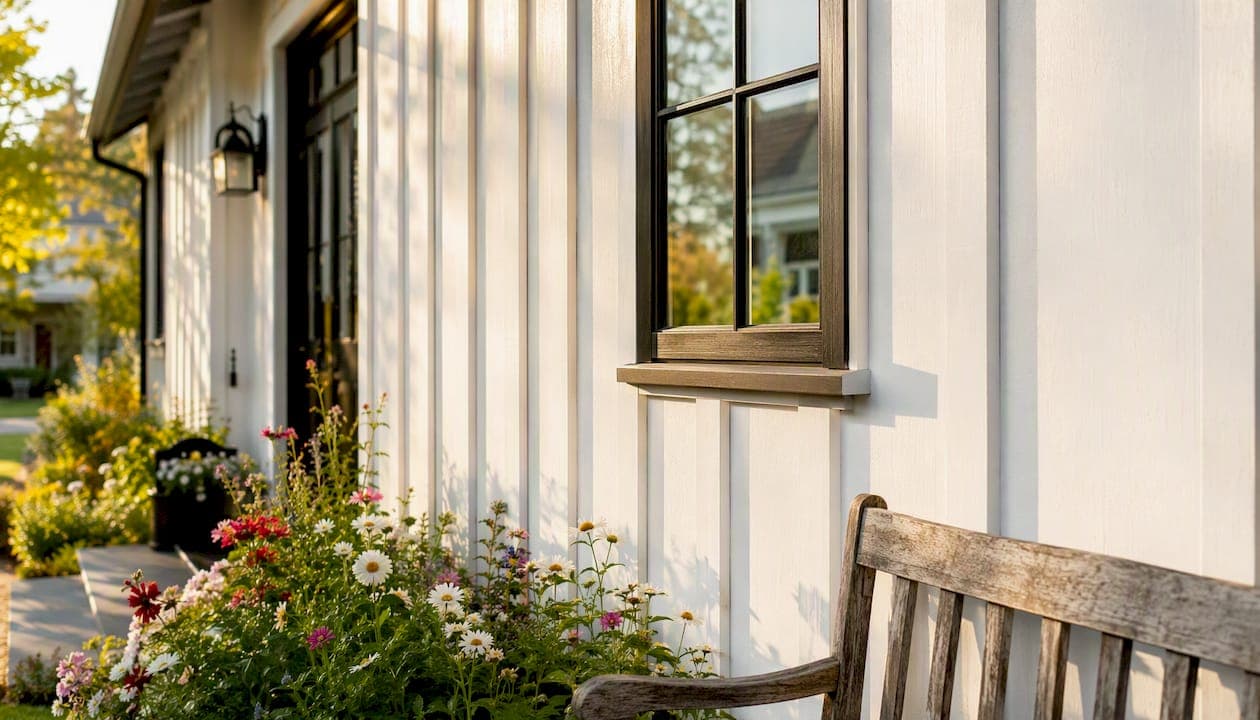
Board and batten siding is a strong choice for homeowners who want strong vertical lines, a distinctive shadow profile, and a style that works equally well on a modern farmhouse or a contemporary new build — but it costs more to install than lap siding, takes longer, and punishes poor workmanship faster. Installed cost typically runs higher than comparable lap projects, installation takes 5–10 days versus 3–7 days for lap siding, and the vertical seam orientation means moisture management is non-negotiable from day one.
Three factors decide whether board and batten siding is right for your home:
- Material choice: Cedar, fiber cement, engineered wood, vinyl, metal, and composite each carry different cost, maintenance, and climate trade-offs.
- Climate and maintenance tolerance: Wet, coastal, or high-humidity climates demand either factory-finished products or a strict maintenance schedule.
- Contractor skill: Board and batten is less forgiving than lap siding. Skipped flashing or a misaligned batten layout creates problems that show up fast.
Board and batten typically adds 20–30% to labor cost versus a comparable lap siding project because the two-piece assembly requires separate layout, cutting, and fastening steps for every batten run.
Key Takeaways
Board and batten siding delivers lasting curb appeal when the right material is matched to climate and installed with proper WRB, Z-flashing, and a documented fastener schedule.
| Point | Details |
|---|---|
| Material drives maintenance, not just cost | Match material to your climate first: factory-finished fiber cement or engineered wood for wet climates, cedar only in dry zones with a firm repaint schedule. |
| Installation takes longer than lap siding | Budget 5–10 days for board and batten versus 3–7 days for a comparable lap project, and expect a labor premium of 20–30%. |
| Three detailing items are non-negotiable | Require a continuous WRB, Z-flashing at all horizontal breaks, and a written fastener schedule before signing any contract. |
| Accent applications control cost | A gable or entryway application in fiber cement or LP SmartSide delivers most of the visual impact at a fraction of full-facade cost. |
| Am-exteriors for Southeast Wisconsin | Am-exteriors installs LP SmartSide and James Hardie board and batten with staged photo documentation and manufacturer-compliant detailing across Southeast Wisconsin. |
Table of Contents
- What is board and batten siding, and where did it come from?
- Material options for board and batten siding: what each one actually delivers
- How board and batten is installed: three approaches and the detailing that matters
- Proportions, spacing, and design choices that change the whole look
- What does board and batten siding cost, and how long does it take?
- How long does board and batten siding last, and what maintenance does it need?
- How to choose the right material and contractor for board and batten siding
- Common installation mistakes and how to prevent them
- Design ideas for board and batten: what actually works on a real house
- Why installation quality matters more than the material you choose
- Get a professional board and batten estimate from Am-exteriors
- Sources
What is board and batten siding, and where did it come from?
Board and batten is a two-piece cladding assembly. Wide vertical boards go up first, covering the wall field. Narrower strips called battens then fasten over the seams between boards. The battens do two things: they seal the joint against water infiltration, and they cast a vertical shadow line that gives the facade its signature texture.
The profile originated on agricultural buildings. Barns and outbuildings in 19th-century America used it because it was cheap to mill, fast to install, and forgiving of rough lumber. The wide boards could be cut from lower-grade stock; the battens covered any gaps left by shrinkage or imprecise milling. That practical origin is worth knowing because it explains why the profile works structurally: the batten is not decorative trim bolted on top of a finished panel. It is a functional part of the water-management assembly.
Residential architects picked up the profile in the mid-20th century, drawn to the vertical emphasis it gives a facade. A horizontal house reads as wide and low; vertical lines push the eye upward and make a modest structure read taller. That optical effect is why board and batten works so well on gable ends, entryways, and two-story fields where you want height to register.
Key reasons the profile reads well on a modern elevation:
- Vertical shadow lines change character through the day as sun angle shifts.
- Batten width and spacing can be tuned to shift the style from agrarian to contemporary.
- The profile mixes cleanly with lap, masonry, or metal panel at architectural seams.
Material options for board and batten siding: what each one actually delivers
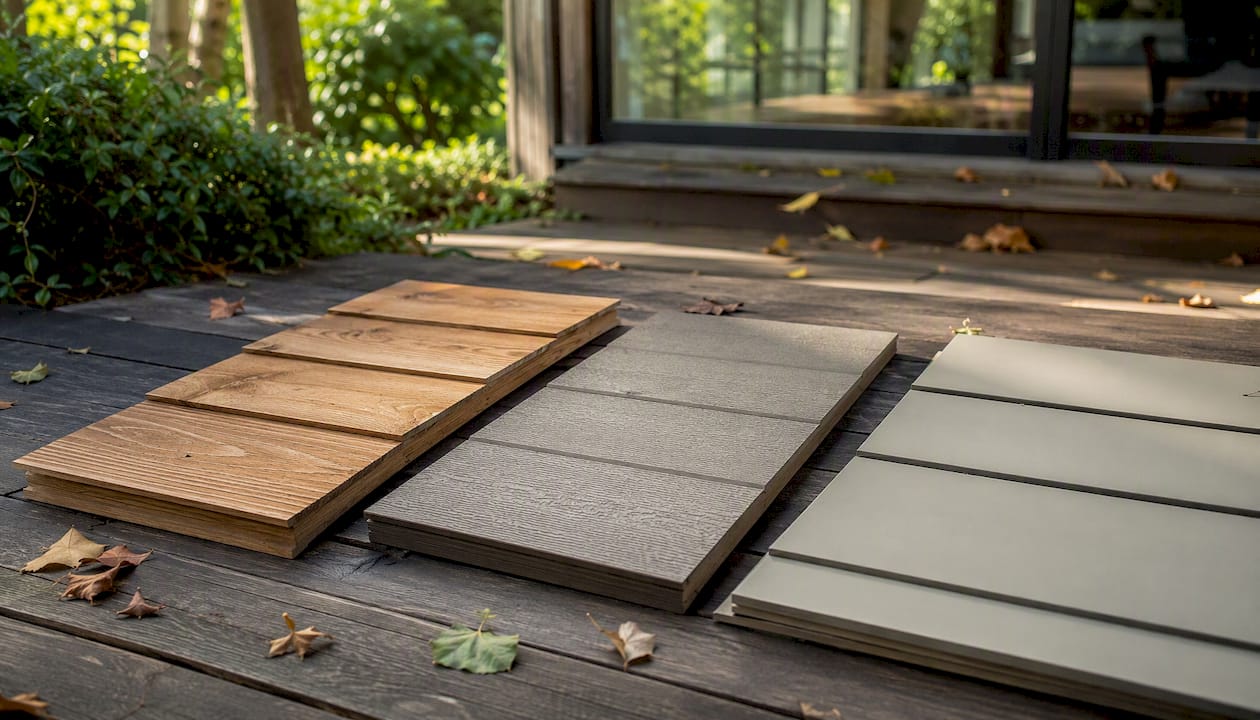
No single material is universally best for this profile. The right pick depends on your climate, maintenance tolerance, and budget. Cedar, composite, and factory-finished products each occupy a distinct performance band — and the gap between them widens in wet or coastal climates.
| Cedar (wood) | Fiber cement (James Hardie) | Engineered wood (LP SmartSide) | Vinyl | Metal | Composite (ACRE) | |
|---|---|---|---|---|---|---|
| Installed cost per sq ft | $4–$9 | $6–$13 | $5–$10 | $3–$7 | $8–$16 | $7–$14 |
| Maintenance frequency | High (2–5 yr repaint/restain) | Moderate (7–10 yr repaint) | Moderate (5–8 yr repaint) | Low (wash only) | Very low | Very low |
| Expected lifespan | 20–40 yr | 30–50 yr | 20–30 yr | 20–40 yr | 40 yr | 30–50 yr |
| Best climates | Dry, low-humidity | All climates | All climates | Mild to moderate | All, incl. coastal | All, incl. coastal |
| Finish options | Paint or stain | Paintable, ColorPlus factory | Paintable, factory-primed | Factory color only | Factory or field paint | Factory-finished |
| Installation complexity | Moderate | Moderate-high | Moderate | Low-moderate | High | Moderate |
| Warranty | None standard | 30 yr limited | 5/50 yr SmartSide | 20–40 yr | 25–40 yr | 25–50 yr |
Who should pick each material:
- Cedar: Best for homeowners in dry climates who want an authentic wood look and are willing to repaint or restain every few years. Budget for ongoing upkeep.
- James Hardie fiber cement: The go-to for homeowners who want fire resistance, dimensional stability, and a long warranty across all climates. Higher installed cost, but the ColorPlus factory finish reduces field-finishing variability.
- LP SmartSide engineered wood: A strong middle-ground option. It handles Wisconsin winters well, costs less than fiber cement, and LP's panel and vertical siding products give contractors flexibility on seam count and batten spacing.
- Vinyl: The lowest installed cost, but vinyl board and batten can look thin and flex visibly in temperature swings. Best for mild climates and tight budgets.
- Metal: Longest lifespan, highest upfront cost, and the most demanding installation. Worth it in coastal or wildfire-risk zones.
- Composite (ACRE): Factory-finished, dimensionally stable, and low-maintenance. A good fit for homeowners who want the look of wood without the upkeep.
Pro Tip: Factory-finished products remove weather-dependent field finishing from the project schedule. When a crew paints boards on-site, rain delays and temperature swings affect adhesion and color consistency. A factory finish is applied under controlled conditions and produces a more uniform result — worth the premium if your project window is tight or your climate is unpredictable.
How board and batten is installed: three approaches and the detailing that matters
There are three ways a contractor can build the board and batten look, and the choice affects seam count, install time, and how battens land on the wall.
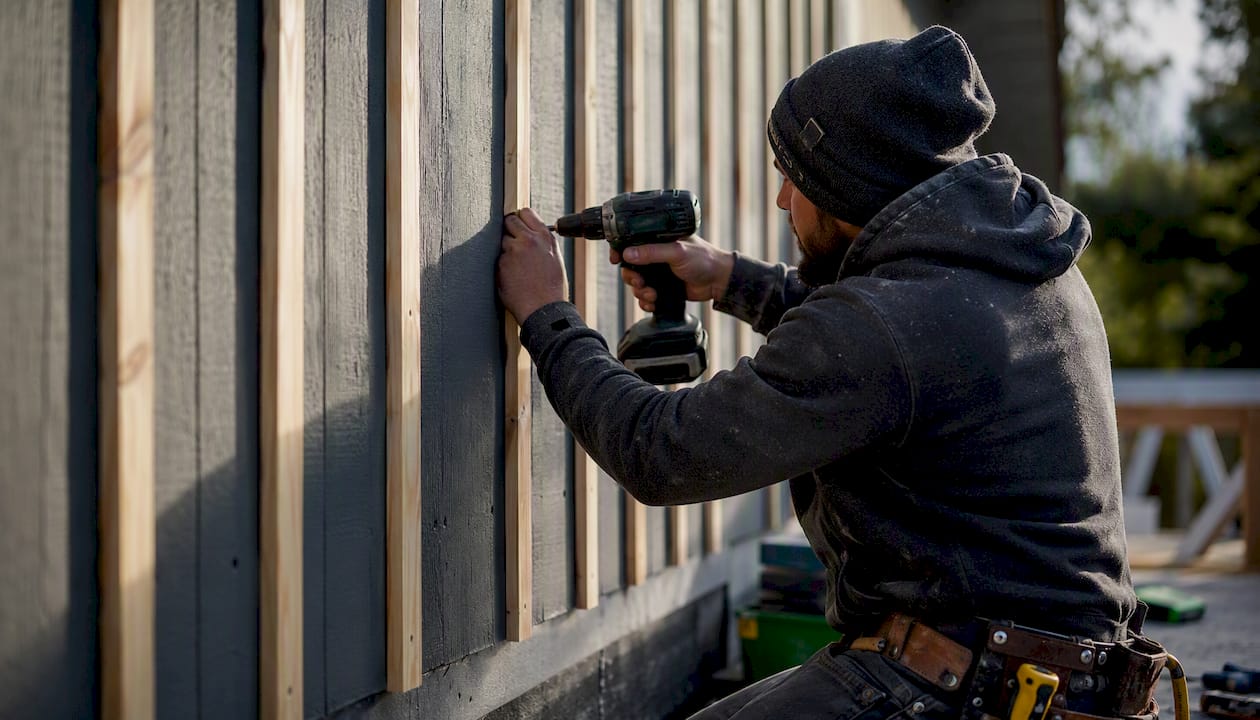
Panel siding approach
Large-format panels (typically 4x8 or 4x9) go up vertically. Battens then cover the panel seams. This method covers more wall area per piece, which speeds the substrate phase. Panel siding reduces seam count on broad wall fields and supports varied batten spacing because the contractor is not locked into the panel's own edge as the only batten location. The trade-off: panels are heavy and require two people to handle safely.
Vertical siding boards
Individual boards run floor to ceiling. This approach works well on tall walls because long boards reduce horizontal joints. It is closer to the original barn-style assembly and gives the most authentic look. The downside is more pieces to handle and more fastening steps per square foot.
Verticalized lap siding
Some contractors install standard lap siding vertically to approximate the board and batten profile. This is the lowest-cost route but produces a thinner shadow line and a less convincing result. It is worth knowing the difference before you accept a bid.
Critical detailing every homeowner should require:
- A continuous weather-resistive barrier (WRB) behind all panels before any siding goes up.
- Z-flashing at every horizontal break (where a band board, window head, or floor transition interrupts the vertical run).
- Minimum clearance to grade per manufacturer specs — LP SmartSide, for example, specifies minimum clearances, gap sizes, and do-not-span batten-over-horizontal-seam guidance that contractors must follow to maintain the warranty.
- Correct fastener type and placement: corrosion-resistant fasteners driven at the right depth, not overdriven.
- Batten layout planned on the elevation drawing before any cuts are made.
Installation typically runs 5–10 days for board and batten versus 3–7 days for a comparable lap project — the extra time comes from the two-pass fastening sequence and the precision required to land battens cleanly at corners and openings.
Pro Tip: Before your contractor cuts a single board, ask them to mock up the batten rhythm on the wall using chalk lines or temporary strips. This one step catches awkward slivers at corners and windows before they become expensive rework.
Proportions, spacing, and design choices that change the whole look
Proportion drives everything in board and batten design. A common starting point is a 1x3 or 1x4 batten over a 1x8 or 1x10 board, but the "right" ratio depends on what you want the facade to say.
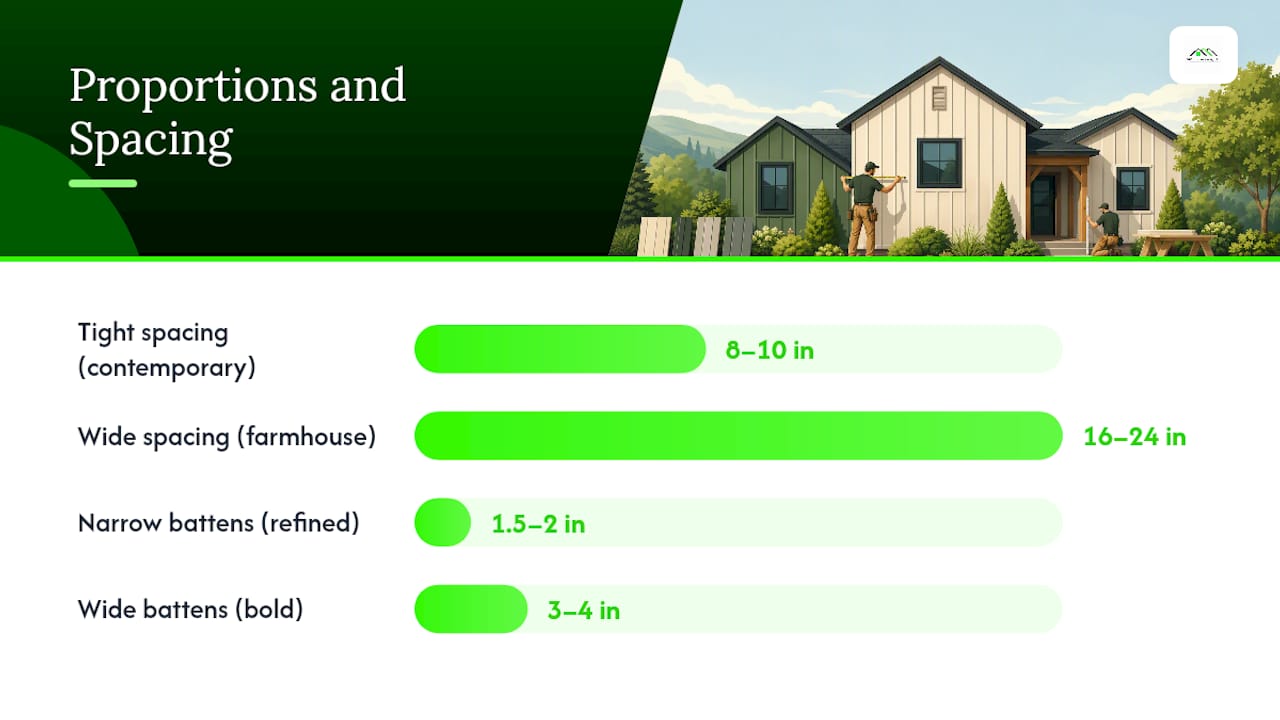
Tighter batten spacing — say, every 8–10 inches — creates a dense, textured surface that reads contemporary, especially paired with a dark color. Wider spacing at 16–24 inches keeps the agrarian, farmhouse character. Designers use batten spacing and color as deliberate levers to move the profile across a wide style range without changing the underlying assembly.
Wider battens (3–4 inches) read bold and graphic. Narrower battens (1.5–2 inches) read refined and almost Craftsman-adjacent. Neither is wrong; both need to be decided before the contractor orders material.
Mixing board and batten with other cladding materials works best when the transition lands on an architectural seam: a floor line, a band board, a corner board, or a roofline. Placing the change mid-wall with no structural reason looks accidental. Common pairings that work:
- Board and batten on the upper story, lap or shingle on the lower.
- Board and batten on gable ends, lap on the main body.
- Board and batten as an entryway feature flanked by brick or stone.
Visual decisions to make before you request a quote:
- Full facade or accent application (gable, entryway, second story only)?
- Batten spacing and width — do you want modern texture or traditional rhythm?
- Painted battens matching the field, or contrasting battens for a graphic effect?
- Stained or painted finish — stain shows wood grain, paint gives a cleaner, more contemporary result.
What does board and batten siding cost, and how long does it take?
Board and batten generally costs more than lap siding because the two-piece assembly adds layout, cutting, and fastening steps that lap siding does not require.
Typical installed cost ranges by material:
- Vinyl: $3–$7 per sq ft installed
- LP SmartSide engineered wood: $5–$10 per sq ft installed
- Cedar: $4–$9 per sq ft installed
- James Hardie fiber cement: $6–$13 per sq ft installed
- Composite (ACRE): $7–$14 per sq ft installed
- Metal: $8–$16 per sq ft installed
For a 1,500 sq ft siding project, that puts total installed cost roughly in the $7,500–$24,000 range depending on material and regional labor rates. Wisconsin homeowners can get a localized estimate from the siding replacement cost guide for a more accurate number.
Board and batten installs run 5–10 days versus 3–7 days for lap siding on a comparable house. The extra time reflects the two-pass fastening sequence and the precision detailing at corners, windows, and rooflines.
Cost items to watch for in any bid:
- Are panels and battens priced separately, or as a combined line item?
- Does the bid include teardown and disposal of existing siding?
- Is the WRB (house wrap) included, or is it a separate allowance?
- Is the finish factory-applied, or is field painting a separate cost?
- Are corner boards, J-channel, and trim included in the square-footage price?
How long does board and batten siding last, and what maintenance does it need?
Lifespan varies more by material and climate than by any other factor. Cedar can reach roughly 40 years in dry climates with proper maintenance but may fail in 10–15 years in harsh coastal or humid conditions without consistent upkeep. Fiber cement and composite hold up across a wider range of climates with less owner intervention.
Maintenance cadence by material:
- Cedar: Inspect caulk and paint annually; repaint or restain every 2–5 years depending on sun exposure and humidity.
- LP SmartSide: Inspect caulk and fasteners annually; repaint every 5–8 years; check clearances after settling.
- James Hardie: Repaint every 7–10 years (or longer with ColorPlus factory finish); inspect caulk at windows and trim annually.
- Vinyl: Wash annually; inspect for impact damage or warping; no painting required.
- Metal: Inspect fasteners and sealants every 3–5 years; touch up scratches promptly to prevent rust on non-galvanized panels.
- Composite (ACRE): Wash annually; inspect sealants; factory finish typically carries a 25–50 year warranty.
Climate-driven maintenance traps to plan for:
- Coastal salt air accelerates paint failure and fastener corrosion — use stainless or hot-dipped galvanized fasteners and plan shorter repaint cycles.
- High humidity and freeze-thaw cycles (common in Wisconsin) stress wood and engineered wood products at joints and end cuts — seal all end cuts before installation.
- Large seasonal temperature swings cause vinyl to expand and contract visibly — use products rated for the local temperature range.
Pro Tip: Factory-finished engineered wood and composite products remove weather-dependent field finishing from the critical path. A crew painting boards on-site in October in Wisconsin is fighting the clock. A factory finish arrives ready to install and produces consistent color across the entire run.
How to choose the right material and contractor for board and batten siding
Start with climate, then budget, then aesthetics. A beautiful cedar facade that needs repainting every three years in a humid climate is a maintenance burden most homeowners underestimate at the quoting stage. Match the material to your actual tolerance for upkeep, not your ideal tolerance.
Decision criteria in order:
- Climate: Wet, coastal, or high-humidity zones favor fiber cement, composite, or factory-finished engineered wood. Dry climates open up cedar and standard engineered wood.
- Maintenance tolerance: Honest answer only. If you will not repaint on schedule, choose a factory-finished product.
- Budget: Full-facade board and batten in fiber cement is a significant investment. Accent applications (gable, entryway) in the same material cost a fraction and deliver most of the visual impact.
- Resale and neighborhood fit: Board and batten reads well on farmhouse, craftsman, and contemporary styles. It can look out of place on a traditional colonial or a heavily brick facade. Walk the neighborhood before committing.
Questions to ask every contractor before signing:
- Which installation method will you use — panel, vertical boards, or verticalized lap?
- What WRB product are you specifying, and how will you handle horizontal breaks?
- Where will Z-flashing be installed, and can you show me on the elevation drawing?
- What is your fastener schedule, and are the fasteners corrosion-resistant?
- Will battens span horizontal seams, or will you follow the manufacturer's do-not-span guidance?
- Do you have references for board and batten projects specifically (not just general siding)?
- Are you licensed and insured in this state, and what warranty do you offer on labor?
- Will you provide photo documentation at each stage — substrate, WRB, panel set, battens, final?
Red flags that should stop a conversation:
- A bid that is significantly lower than others with no explanation of what was cut.
- Vague or dismissive answers about flashing and WRB.
- No mention of clearance-to-grade requirements.
- A contractor who cannot explain the difference between panel and vertical siding products.
- No photo documentation offered or available from past projects.
For a broader comparison of material options in Wisconsin's climate, the LP SmartSide vs. James Hardie vs. vinyl comparison breaks down how each performs through freeze-thaw cycles and high-humidity summers.
Common installation mistakes and how to prevent them
Most board and batten failures trace back to the same short list of skipped steps. The profile is not inherently fragile, but it is less forgiving than lap siding because vertical seams run parallel to falling water rather than across it.
The most common installation mistakes:
- Missing or incomplete WRB: No house wrap, or house wrap with unsealed seams and tears. Water gets behind the siding and into the sheathing before anyone notices.
- Skipped Z-flashing at horizontal breaks: Every band board, window head, and floor transition needs Z-flashing to redirect water outward. Without it, water tracks behind the siding at the break.
- Inadequate clearance to grade: Siding that sits too close to the ground wicks moisture and invites rot or pest damage. Manufacturer specs exist for a reason.
- Incorrect fastener type or placement: Overdriven fasteners crack fiber cement; underdriven fasteners leave battens loose. Non-corrosion-resistant fasteners rust and stain the siding within a few years.
- Battens spanning horizontal seams: LP SmartSide installation instructions explicitly prohibit spanning battens over horizontal seams — a batten that bridges a seam traps water instead of directing it out.
- Poor batten layout planning: Battens that land as narrow slivers at corners or windows look wrong and are harder to seal properly.
Installation checklist to require in the written scope:
- WRB product specified by name and brand.
- Z-flashing called out at all horizontal breaks on the elevation drawing.
- Batten layout elevations provided before installation begins.
- Fastener schedule (type, size, spacing, depth) written into the scope.
- Finishing method specified: factory finish or field paint, product name included.
Pro Tip: Require staged photo documentation as a condition of final payment: substrate before WRB, WRB before panels, panels before battens, and final. This protects you if a warranty claim arises later and gives you a record of what is behind the wall.
If you discover a moisture or flashing failure after installation, the remediation sequence is:
- Inspect the affected area and document with photos before touching anything.
- Identify the specific failure point (missing Z-flashing, unsealed seam, inadequate clearance).
- Require the contractor to install corrective flashing or trim to the manufacturer's specification.
- Re-seal all affected joints and inspect adjacent areas for secondary damage.
For siding repair work after installation defects, Am-exteriors handles vinyl, LP SmartSide, and hail damage repairs across Southeast Wisconsin.
Design ideas for board and batten: what actually works on a real house
The profile is more flexible than its farmhouse reputation suggests. Small changes in spacing, batten width, and color shift the style significantly.
High-impact applications:
- Gable accents: Board and batten on the gable end only, with lap or shingle on the main body. This is the most cost-effective way to get the look without a full re-side.
- Second-story field: Board and batten above a first-floor band board, lap below. The transition reads intentional when it lands on the band board.
- Entryway feature: A board and batten surround on the entry wall draws the eye to the front door and adds depth without covering the whole house.
- Full facade: Works best on farmhouse, modern farmhouse, and contemporary styles. Commit to a consistent batten rhythm across all elevations.
- Interior applications: Board and batten on interior accent walls (mudrooms, dining rooms) uses the same profile logic and is a lower-stakes way to test whether you like the look before committing to the exterior.
Mixing materials works when the transition is deliberate. Lap below, board and batten above a band board reads as a designed choice. Board and batten flanking a stone chimney reads as a composition. The same materials placed without a clear seam read as an accident.
For color, darker field colors with lighter battens push the look toward contemporary. Matching field and batten in a warm white or cream reads traditional. A contrasting batten in black or charcoal on a light field is the most graphic option and photographs well for resale.
Why installation quality matters more than the material you choose
Here is the honest version of the board and batten conversation that most guides skip: the material you choose matters less than how carefully it is installed. A $13-per-square-foot James Hardie installation with skipped Z-flashing will fail faster than a $6-per-square-foot LP SmartSide installation done by a crew that follows the manufacturer's detailing spec to the letter.
Board and batten is a system. Material, batten width, board reveal, fastener pattern, and water-management detailing must be specified together — not treated as separate decisions made at different points in the project. When homeowners focus only on material and price, they often end up with a beautiful product installed in a way that voids the warranty within five years.
At Am-exteriors, we recommend board and batten most confidently when a homeowner has a clear style goal, a realistic maintenance plan, and a willingness to require proper documentation from their contractor. We steer homeowners toward accent applications when budget is the primary constraint — a gable or entryway in fiber cement or LP SmartSide delivers most of the visual impact at a fraction of the full-facade cost. For homeowners in Southeast Wisconsin dealing with freeze-thaw cycles and high-humidity summers, factory-finished engineered wood and fiber cement are the materials we reach for first. Both handle the climate well and give homeowners a longer window between maintenance cycles.
The one thing we push back on consistently: choosing a contractor based on the lowest bid without asking about WRB, Z-flashing, and fastener schedules. Those three details determine whether the siding performs for 30 years or starts showing problems in five.
Get a professional board and batten estimate from Am-exteriors
Am-exteriors installs LP SmartSide, James Hardie fiber cement, and premium vinyl siding across Southeast Wisconsin, with over 25 years of owner-operated experience on residential exteriors. For board and batten projects specifically, that means proper WRB specification, Z-flashing at every horizontal break, manufacturer-compliant fastener schedules, and staged photo documentation from substrate to final.
Requesting an on-site estimate is straightforward. Have elevation photos of your current siding ready, know your existing material (or we can identify it on-site), and bring a rough timeline. We will walk the perimeter, document the current condition, and give you a written scope that specifies material, detailing, and finish method — no vague line items.
Services available: siding replacement, LP SmartSide and James Hardie installation, siding repair for existing damage, and insurance claim navigation for storm-related siding loss. For homeowners bundling a siding project with roofing or windows, our full exterior services overview covers every scope we handle.
Request your on-site estimate and get a written scope within a week.
Sources
The following resources were used to build this guide. Each one is worth bookmarking if you want to go deeper on a specific topic.
- Building Science - Stress Relief (board and batten moisture note)
- Modern Mill - Board and batten materials, sizing and cost guide
- James Hardie - Guide to board and batten siding
- Today's Homeowner - Lap siding vs board and batten