
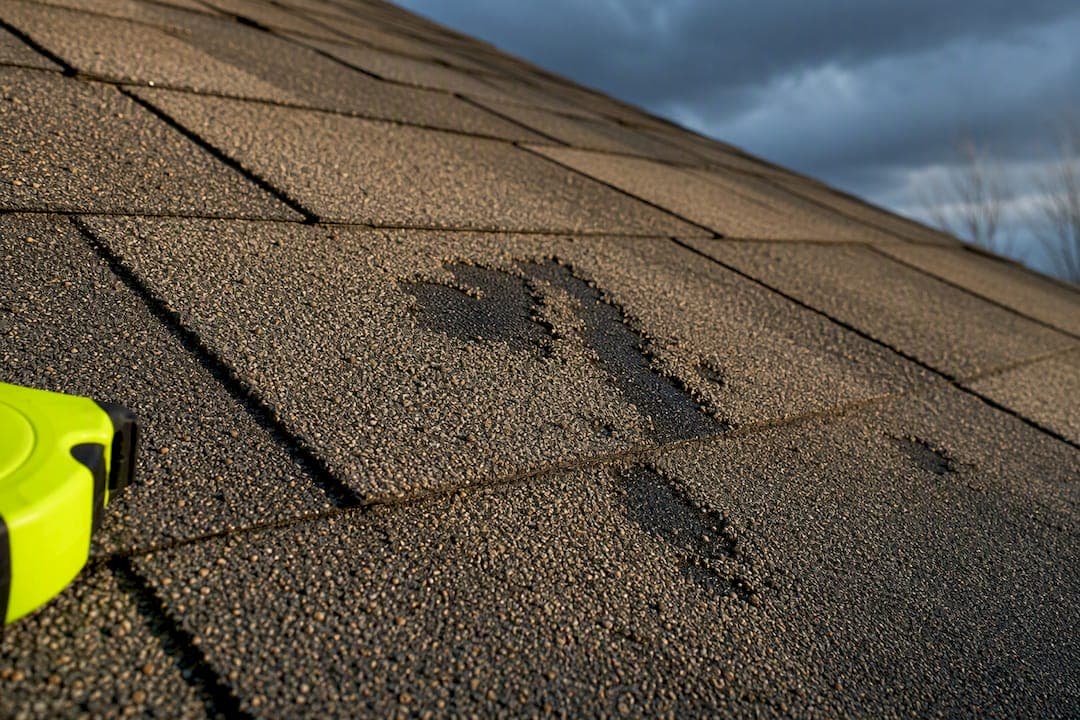
If you spot clustered granule loss, soft circular bruises on your shingles, or round dents on vents and gutters, your roof was likely hit by hail. Stay off the roof itself. Document what you can see from the ground and attic, then schedule a professional inspection before you decide on repairs or file a claim.
TL;DR:
- Ground-level signs such as granule loss in gutters and dents on metal fixtures are reliable indicators of hail impact, but must be documented thoroughly.
- Damage appearances vary by roofing material: bruises and granule loss on asphalt shingles, dents on metal, and cracks on tile or slate, with physical signs confirming impact.
- Collateral damage like dents on gutters and fins, combined with pattern and density across multiple surfaces, strengthen the case for hail damage verification.
- Safer inspection methods include binocular checks, attic examinations, and using standardized test squares to count impact hits, with professional documentation essential.
- Immediate red flags for professional review include visible cracked shingles, sagging decking, or water stains, while pattern and location distinguish hail impact from normal wear or mechanical damage.
Table of Contents
- What Are the Top 5 Hail Damage Roof Signs to Check From the Ground?
- What Do Hail Damage Signs Look Like on Different Roofing Materials?
- What Ground-Level Damage Confirms a Hail Strike on Your Roof?
- How Do You Safely Inspect Your Roof for Hail Damage?
- When Should You Call a Roofing Professional?
- How Can You Tell Hail Damage From Normal Wear or Mechanical Damage?
- Quick Checklist: What to Do Right After a Hailstorm
- Why Documentation Beats a Homeowner's Gut Check
- Where Can You Learn More About Hail Damage and Roof Inspections?
- Sources
What Are the Top 5 Hail Damage Roof Signs to Check From the Ground?
You don't need a ladder to start building a case. Most of the strongest evidence sits at eye level, in your gutters, or in your attic.
Walk your property after any hailstorm and look for these five signs before you even think about getting on the roof:
- Granule loss in your gutters. Dark, sand-like grit collecting in downspouts or gutter troughs means shingle granules are washing off, often the first visible clue of impact.
- Soft bruises on shingle surfaces. These look like slightly darker, circular spots and often feel springy or give slightly when pressed, unlike normal shingle texture.
- Round dents on metal fixtures. Check roof vents, flashing, gutters, and HVAC fins for small, circular indentations. Metal doesn't hide damage the way shingles do.
- Cracked or punctured tile and slate. Broken corners or full fractures on rigid roofing materials are hard to miss once you know what to look for.
- Scattered, random damage nearby. Hail doesn't play favorites. If your fence caps, mailbox, or patio furniture show random dings too, that pattern supports a hail event rather than isolated wear.
None of these signs alone proves a claim-worthy loss. Together, especially when they show up in a random pattern across your property, they build a case worth having a professional examine.
What Do Hail Damage Signs Look Like on Different Roofing Materials?
The material on your roof changes not just what damage looks like, but what it means for repair urgency and insurance outcomes. A dent that's cosmetic on one material can be structurally significant on another.
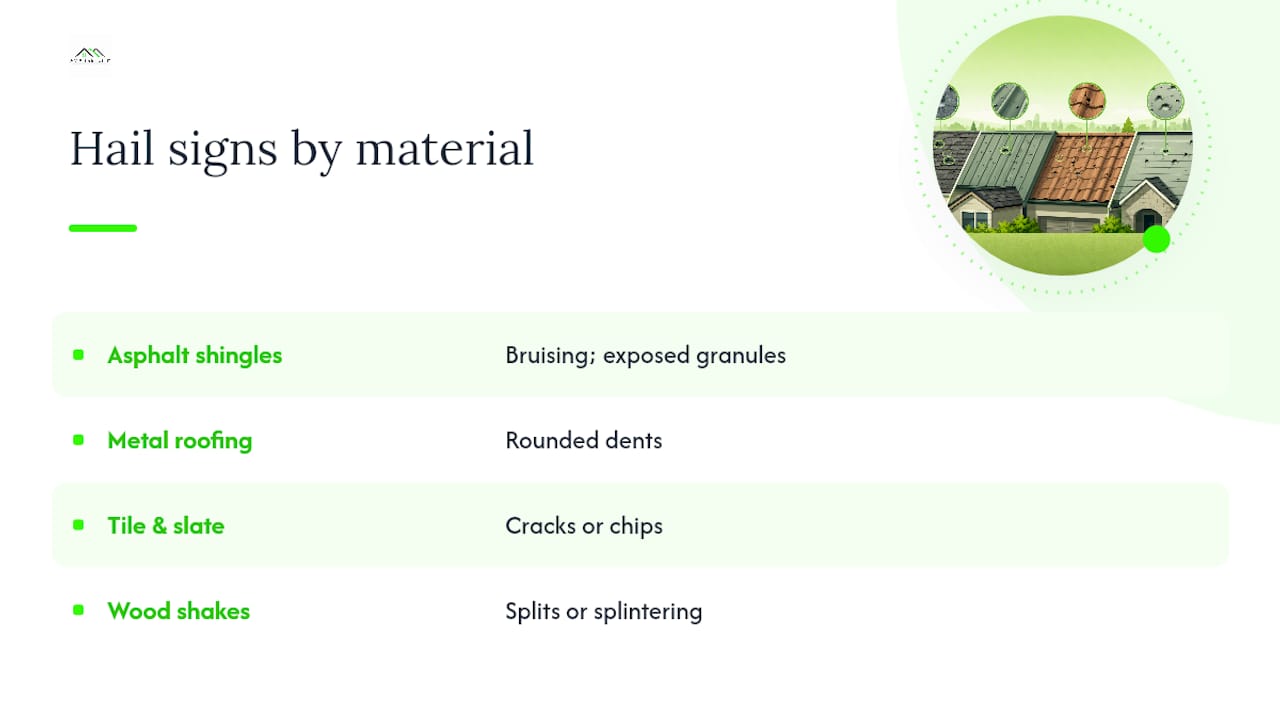
Asphalt Shingles: Bruising and Granule Exposure
Asphalt is the most common residential roofing material, and it shows hail damage in a specific way. A hailstone strike compresses the shingle mat, creating a soft bruise that often isn't visible until you touch it. Press gently on a suspected spot. If it gives slightly compared to the surrounding shingle, that's a bruise.
Granule loss is the more visible cousin of bruising. Hail knocks the protective granule coating loose, exposing the black asphalt mat underneath in irregular, clustered patches. This matters beyond looks: granules are what protect the shingle from UV degradation, and a shingle mat with exposed black spots ages faster and loses its ability to shed water effectively. Common indicators like granule loss, cracks, and dents show up across roof types, but asphalt is where the granule story matters most.
Cracks and tears are the more severe end of asphalt damage. A shingle that's cracked through has lost structural integrity at that point, not just surface coating, and typically needs replacement rather than monitoring.
Metal Roofing: Dents That Hide in Plain Sight
Metal roofing (standing seam, corrugated panels, or metal flashing components) dents rather than bruises. The trouble is that matte or low-gloss finishes can hide a round dent completely under normal lighting.
Inspectors get around this by using raking light, holding a flashlight at a low angle across the surface, or rubbing chalk lightly over suspected areas so shadows and texture changes become visible. If you're checking gutters or vent caps yourself, try the same trick with a flashlight at dusk or early morning when the sun is low.
One useful distinction here: a true hail dent has a rounded, symmetrical shape with no scratching or paint scouring around the edges. Scratches, creases, or gouges point to something other than hail, which matters when you're trying to rule out non-hail causes later.
Tile and Slate: Cracks Mean Replacement, Not Repair
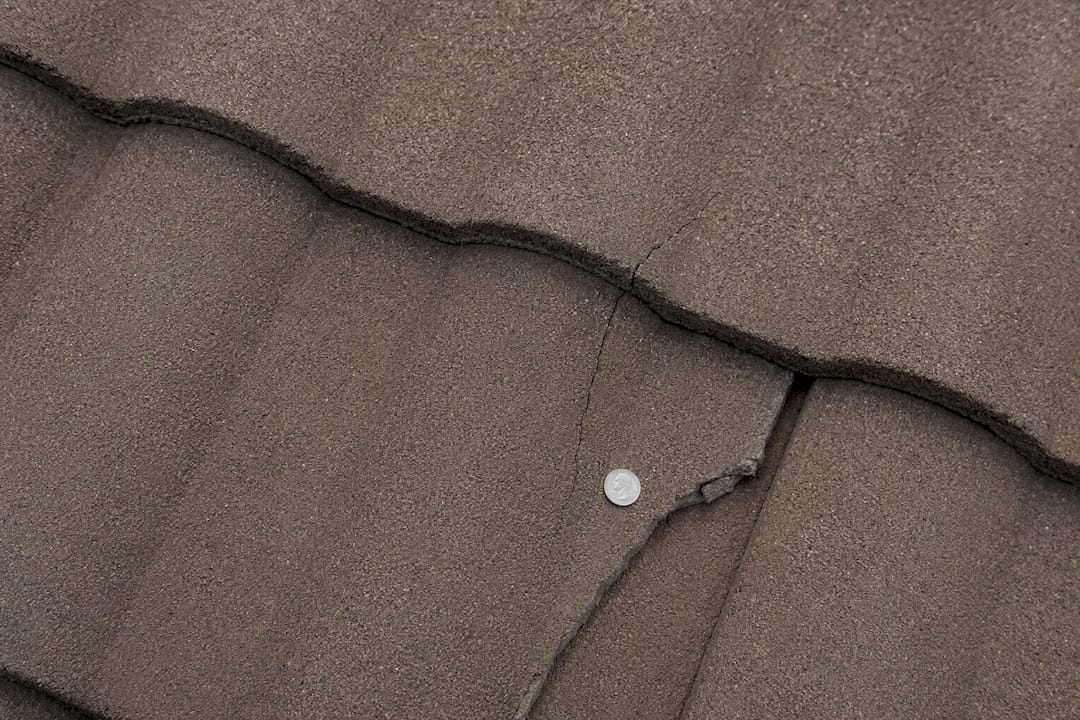
Tile and slate are rigid materials, so they don't bruise or dent. They crack, chip, or break outright. A hairline crack across a tile or a chipped corner might look minor, but rigid materials rarely get "patched." Once cracked, that piece typically needs full replacement.
Photograph broken corners and cracks close up, with something for scale (a coin or a tape measure) in the frame. Adjusters and roofers both rely on close-up shots to confirm the break pattern is consistent with impact rather than age or foot traffic.
Wood Shakes: Splits and Splintering
Wood shake roofs respond to hail with sharp splits rather than the soft bruising you'd see on asphalt. Older or weathered wood shakes are especially vulnerable because sun exposure makes the wood brittle over time, so a hailstone that would leave a minor mark on newer wood can puncture through aged shakes entirely.
Look for jagged, splintered edges rather than clean breaks. A clean cut suggests a tool or mechanical cause; splintering points to blunt-force impact.
Pro Tip: When you photograph any suspected damage, take one wide shot showing the location on the roof or property, then a close-up with a coin or ruler next to the mark. Adjusters and roofers both need scale and context, not just a close-up of the damage itself.
What Ground-Level Damage Confirms a Hail Strike on Your Roof?
Your gutters, downspouts, siding, and even your car can tell you more about a hailstorm than the roof itself, without any risk of climbing up to check.
Dents and scuffs on gutters, downspouts, and air conditioner fins are some of the most reliable, low-risk evidence you can gather. AC fins are especially useful because they're thin, delicate, and dent easily. A bent or crushed section of fins is a strong sign that hail hit with real force in that spot. Collateral marks on fins, fence caps, and mailboxes are often the most accessible confirmation of a hail strike precisely because you don't need roof access to check them.
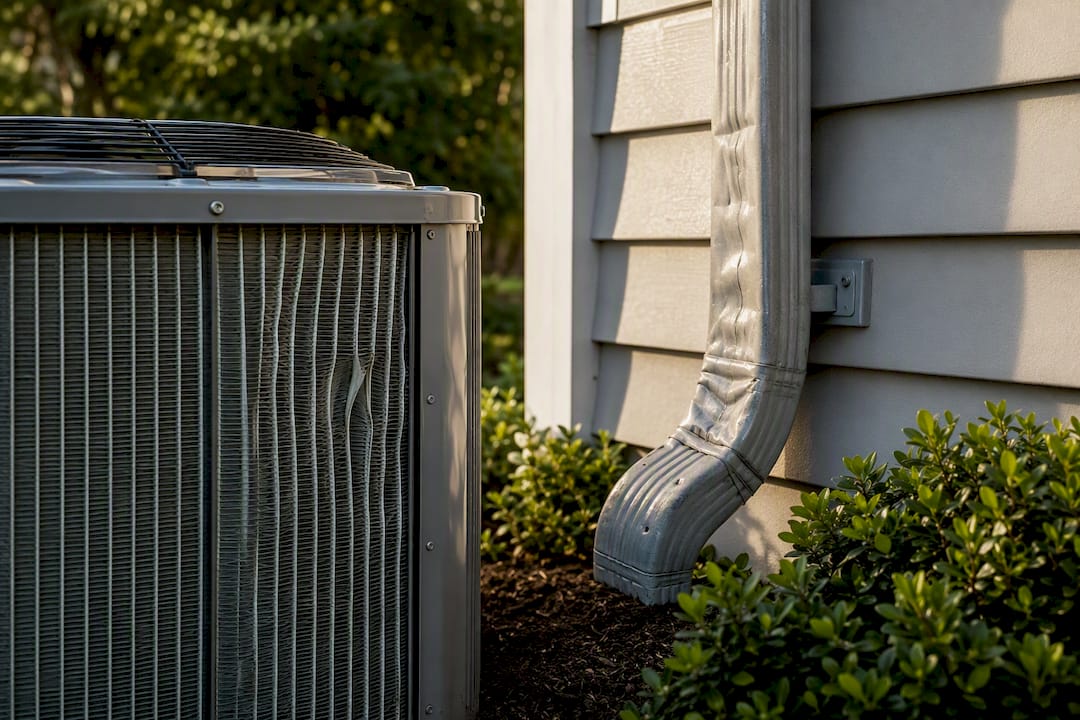
It helps to know the difference between spatter and actual denting. Spatter happens when hail knocks loose dirt or oxidation off a metal surface, leaving a lighter discoloration that will often fade or wash off. A true indentation is permanent and physical. Spatter shape and width can still hint at hail size and the direction hail was falling, but only a true dent confirms real impact energy rather than just surface residue.
Use the pattern across your property to your advantage:
- Check which side of the house shows the most damage. It tells you the direction the storm moved.
- Note density: are dents scattered or concentrated in one area? Concentrated damage on a specific slope often corresponds to roof damage on that same side.
- Photograph your vehicles, patio furniture, and any exposed siding for the same reason. Consistent damage patterns across multiple surfaces make your claim more credible.
Label every photo with the date and a short caption ("north-facing gutter, dented section, 3 inches") before you upload anything to an insurer's portal. If your gutters or siding took a real beating, it's worth having someone look at gutter and fascia repair alongside the roof inspection, since storm damage rarely limits itself to one surface.
How Do You Safely Inspect Your Roof for Hail Damage?
Climbing onto a roof after a hailstorm is one of the more common ways homeowners get hurt trying to help themselves. Wet or granule-loose shingles are slippery, and a roof that's already weakened by impact can hide soft spots you won't see until your foot goes through.
Here's a safer sequence that still gets you real evidence:
- Do the ground and binocular check first. Walk the perimeter and use binoculars to scan the roof from a safe distance, especially the slopes facing the storm's direction.
- Sweep for collateral damage. Photograph gutters, downspouts, vents, siding, and vehicles, each shot timestamped and labeled with location.
- Check the attic. Fresh water stains, damp insulation, or visible daylight around roof penetrations (pipe boots, chimney flashing) are strong signs water is already getting in, even before you see obvious roof damage from outside.
- Understand the test-square method, even if you don't do it yourself. A professional will typically mark a 10 ft by 10 ft test square on a representative roof slope and count qualifying hits within it. This standardizes what would otherwise be a subjective eyeball check, and it's how most adjusters decide whether a slope qualifies for repair or full replacement.
- Organize your files. Name photos by date and location ("2026-05-14_north-slope_gutter.jpg"), and keep a short written log of what you saw and when.
Carrier thresholds vary, but a commonly cited benchmark inspectors use is roughly eight qualifying hits per test square before a slope is considered for replacement rather than spot repair. That number isn't universal across every insurer, but it gives you a rough sense of how inspectors quantify what might otherwise look like scattered, minor damage.
When Should You Call a Roofing Professional?
Some signs are worth a wait-and-watch approach. Others mean you call someone the same day.
Treat these as immediate red flags that warrant a professional visit, not a delayed decision:
- Fresh water stains or damp spots inside your attic or ceiling.
- A test-square count that comes back with numerous qualifying hits on one or more slopes.
- Any cracked, broken, or missing tiles or shingles you can see from the ground.
- Visible soft or sagging decking, which can mean water has already compromised the structure underneath.
A thorough professional inspection should come back with more than a verbal opinion. Look for a documented report that includes per-slope hit counts, a log of soft-metal dents across vents and flashing, and dated photos of collateral damage on your property. That level of detail is what turns a homeowner's suspicion into evidence an adjuster can act on.
Once you have that documentation, contact your insurer to open a claim and ask what your deductible and timeline look like before the adjuster visits. During that visit, the adjuster will typically walk the same slopes your inspector already documented, so having a written report in hand tends to keep both parties working from the same facts rather than competing opinions.
Repair versus full replacement usually comes down to three factors: how many qualifying hits show up per square, how old your roofing material already is, and what that material is. A five-year-old asphalt roof with scattered hits might get spot repairs. A twenty-year-old roof with dense impact across multiple slopes is a much stronger case for replacement. If your shingles are already showing wear, reviewing your options for hail-damaged shingles before you talk to an adjuster can help you go into that conversation informed.
How Can You Tell Hail Damage From Normal Wear or Mechanical Damage?
Not every dent or dark patch on your roof came from a storm. Mistaking normal wear for hail damage wastes time on an unnecessary claim, and mistaking hail damage for normal wear means you might skip a claim you're actually entitled to file.
The tell is almost always pattern and location:
- Ladder scrapes and tool marks show up as localized, often paired scratches or creases in a consistent spot, not scattered randomly across a slope.
- UV weathering and age cause even, uniform granule loss across the whole roof rather than the clustered, impact-shaped patches hail leaves behind.
- Scratches or creases on metal point to mechanical force (a dropped tool, a ladder leaning against flashing) since hail dents but doesn't scratch or crease in a straight line.
- Foot traffic marks from past repairs or maintenance tend to follow a walking path rather than a random scatter.
If a mark doesn't clearly fit either category, get a tactile inspection. A qualified professional who can distinguish forensic patterns of hail from mechanical damage will feel for bruising, not just look for discoloration, which is often the difference between a real finding and a guess.
Quick Checklist: What to Do Right After a Hailstorm
Save or screenshot this the next time severe weather rolls through your area.
- Stay off the roof, even if it looks fine from the ground.
- Photograph gutters, downspouts, siding, AC fins, and vehicles with timestamps.
- Check your attic for fresh stains, damp insulation, or daylight at penetrations.
- Note the storm date and check for any local hail-size reports from that day, since hail size directly affects whether your roof sustained real damage.
- Call your insurer to open a claim file and ask about your deductible and timeline.
- Schedule a professional roof inspection within a few days, before weather changes the evidence.
- Back up all photos to cloud storage or email them to yourself the same day.
A simple timeline: document everything on day zero, call your insurer on day one, and have a professional report in hand by day two or three. Moving that fast matters, since a follow-up storm or even routine rain can wash away granules or obscure evidence you'd otherwise have on record.
Why Documentation Beats a Homeowner's Gut Check
Here's what most homeowners get wrong: they assume a quick look from the driveway is enough to know whether hail did real damage. It almost never is. Bruising on asphalt doesn't show up in a five-second glance, and a dent on a matte vent cap can hide from anyone who isn't using raking light or a chalk rub to find it.
That gap between what's visible and what's actually there is exactly why a documented, slope-by-slope inspection carries more weight with insurers than a homeowner's photo roll. [author_bio]
Storm-damage inspections should be done with per-slope photos, a logged count of qualifying hits per test square, and a written record of soft-metal denting on vents, flashing, and gutters, as insurance adjusters expect. [brand_signal] That kind of paper trail is what keeps a claim from turning into a dispute over whether damage even exists. [internal_data] [case_study]
If you suspect hail hit your roof, the smartest first move isn't guessing. Get practical guidance for inspecting metal roofing components and external damage when you cannot access your roof by following advice from Vanguard Home Watch | What are signs of roof damage explained. It's getting a free hail damage roof inspection from someone who documents every slope the same way an insurance adjuster will want it documented, before you decide anything about repairs.
— Heather
Where Can You Learn More About Hail Damage and Roof Inspections?
A few sources are worth bookmarking if you want to go deeper than this guide. The Institute for Business & Home Safety breaks down how to distinguish spatter from real impact damage. InterNACHI covers the forensic side of ruling out mechanical damage. NOAA's Severe Weather 101 explains how hail forms and how storm data gets recorded, useful if you're trying to confirm a storm's severity for a claim. And Progressive's overview of hail damage signs offers a solid consumer-facing summary of material-specific indicators.
If your home is near Milwaukee, Hartford, Hustisford, or Horicon and you're dealing with storm damage, AM Exteriors serves those areas directly with the same documentation-first approach described above.
Sources
- Hail Damage Roof Inspection: What Inspectors Check
- Is It Hail Damage? — IBHS
- Signs of Hail Damage To Your Roof | Progressive
- NSSL — Hail education