
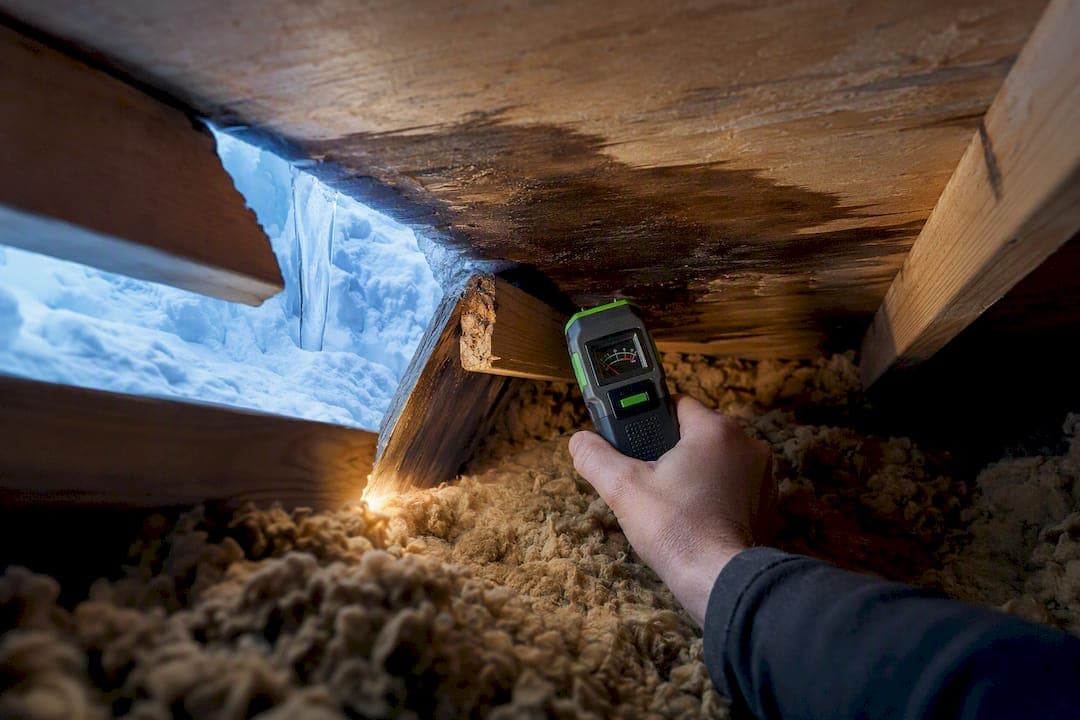
Short answer: your homeowners policy will often cover damage from an ice dam that causes sudden water entry or structural failure, but it usually will not pay to remove the ice dam itself. Coverage hinges on whether the damage is sudden and accidental rather than the result of deferred maintenance, and your deductible still applies. Document everything and call your insurer before you assume either way.
TL;DR:
- Insurance typically covers structural and interior damage caused by sudden water entry due to ice dams, but does not usually pay for preemptive ice dam removal.
- Damage from poor attic insulation or ventilation that contributed to ice dam formation may be denied as gradual or maintenance-related loss.
- Routine ice dam removal is considered maintenance and is generally not covered, though emergency mitigation to address active leaks might be.
- Successfully claiming requires documented evidence of sudden damage, including photos, contractor reports, and maintenance records, with a focus on clear trigger events.
- Filing claims that are below the deductible threshold or for non-urgent repairs can harm future premium costs or coverage, so careful assessment is key.
Table of Contents
- What Homeowners Insurance Typically Covers When an Ice Dam Causes Damage
- When Is Ice Dam Damage Not Covered? Common Exclusions and Denial Reasons
- Is Ice Dam Removal Covered by Insurance?
- How Insurers Decide: Sudden vs. Maintenance, and the Evidence Adjusters Want
- Should You File a Claim? Weighing the Deductible and Your Premium
- What to Do If You Have Damage: Claims Checklist and Emergency Mitigation
- Prevention and Mitigation to Reduce Ice Dam Risk Next Winter
- How Contractors Document and Handle Ice Dam Insurance Repairs
- HO-3 vs. HO-5: Does Your Policy Type Change Ice Dam Coverage?
- How to Appeal a Denied Ice Dam Insurance Claim
- Additional Insurance Options That May Cover Ice Dam Damage
- Are Ice Dams Covered by Insurance? What U.S. Homeowners Should Know
- Sources
What Homeowners Insurance Typically Covers When an Ice Dam Causes Damage
A standard homeowners policy is built around one question: did the water get in suddenly, or did it seep in over time? Dwelling coverage on most policies pays to repair the structure, walls, and ceilings when melting ice backs up under your shingles and forces water through the roof deck, according to Progressive's coverage guidance. That includes drywall repair, roof deck replacement, and repainting damaged rooms.
Personal property coverage kicks in separately if the water ruins furniture, electronics, or flooring. Most policies pay actual cash value unless you've purchased replacement cost coverage, which matters a lot on a five-year-old couch versus a new one. If the damage makes part of the home unlivable, additional living expense coverage can reimburse hotel stays or short-term rentals while repairs happen.
- Dwelling coverage: structural repairs from sudden water intrusion or roof failure
- Personal property: contents damaged by leaks, subject to ACV or replacement cost terms
- Additional living expenses: temporary housing if the home is uninhabitable
- Sublimits: some policies cap payouts for specific items like art or electronics
Pro Tip: Check your policy's "dwelling coverage" limit against current rebuilding costs in your area. Underinsured homes are one of the most common reasons claim payouts fall short of actual repair costs.
When Is Ice Dam Damage Not Covered? Common Exclusions and Denial Reasons
Insurers draw a hard line between damage that happens suddenly and damage that builds up because a home wasn't maintained. If an adjuster decides your roof had years of poor ventilation, missing insulation, or a leak nobody addressed, they can classify the loss as gradual damage or a maintenance failure. That classification is the single most common reason ice dam claims get denied, according to Policygenius.
Several categories of damage sit outside typical coverage entirely, regardless of cause:
- Frozen ground movement affecting foundations, patios, or walkways
- Damage to pools, detached structures excluded from your policy
- Wear-and-tear on aging roofing materials, even if ice dams sped up the failure
- Losses in states where contributory-cause clauses let insurers deny a claim if any excluded cause played a role
Contributory-cause language lets an insurer deny an entire claim if wear-and-tear contributed alongside the sudden event, and how courts treat that language varies by state, per LegalClarity's analysis.
Pro Tip: Ask your agent directly whether your policy contains a contributory-cause or concurrent-causation clause. It's rarely explained upfront, and it can decide the entire outcome of a claim.
Is Ice Dam Removal Covered by Insurance?
Generally, no. Preventive removal, the kind you'd schedule before a storm to protect your roof, is a maintenance cost you pay out of pocket. Most policies won't reimburse routine or full ice dam removal, according to Lemonade's coverage breakdown.
Where coverage sometimes kicks in is narrower: insurers may pay to remove the specific section of ice or snow blocking water that's actively causing covered damage right now, treating it as part of emergency mitigation rather than prevention.
- Professional ice dam removal (steam methods, not chipping) commonly runs several hundred dollars depending on roof size and access
- Emergency removal tied to an active leak may appear on your claim as a mitigation line item
- Routine seasonal removal is almost always billed separately, outside any claim
How Insurers Decide: Sudden vs. Maintenance, and the Evidence Adjusters Want
Adjusters look for a clear trigger event: a specific storm, a specific freeze-thaw cycle, a specific moment water entered where it hadn't before. "Sudden and accidental" typically means the damage traces to an identifiable event rather than months of slow deterioration.
Here's what actually moves a claim forward or backward during review:
- Dated photos showing the ice dam, the leak point, and interior damage as it appeared right after discovery
- Attic inspection notes documenting insulation depth and ventilation condition, since poor attic conditions suggest a maintenance issue rather than a freak event
- Contractor reports describing the roof's condition and likely cause of water entry
- Maintenance records proving you've had the roof and gutters serviced regularly
Attic insulation and ventilation carry more weight than most homeowners expect. NOAA notes that ice dams form when heat escaping through an under-insulated attic melts snow, which refreezes at the colder eaves, and adjusters know this mechanism well, so a poorly insulated attic can work against you even when the immediate trigger was a storm, per the National Weather Service's explanation.
Pro Tip: Take dated photos of your attic insulation and roof condition every fall, before ice season starts. That baseline record is often the difference between a quick approval and a drawn-out dispute.
Should You File a Claim? Weighing the Deductible and Your Premium
Run the math before you call your insurer. If your deductible is $1,500 and the repair estimate comes in at $1,200, filing accomplishes nothing except adding a claim to your history. Many ice-dam-related repairs land right around common deductible thresholds, which is why comparing repair cost to deductible before filing matters more here than with larger losses, according to Policygenius.
- Get a written repair estimate first if the damage looks moderate and isn't actively worsening
- Notify your carrier immediately if water is actively entering the home or the roof structure looks compromised
- Understand that filing a claim, even one that's approved, can appear on your loss history and may factor into future premium increases or non-renewal decisions
- Ask your agent how a specific claim amount would affect your renewal before committing
If the damage clearly exceeds your deductible and involves structural risk, notify your insurer right away rather than waiting for a full estimate. Delayed reporting can itself become a reason for denial.
What to Do If You Have Damage: Claims Checklist and Emergency Mitigation
Move fast, but move safely. Water damage gets worse by the hour, and insurers expect you to limit further loss once you know there's a problem.
- Stay off the roof unless you're a trained professional. Ice-covered roofs cause serious falls every winter.
- Photograph and video every damaged area with visible date and time stamps.
- Contact your insurer the same day you discover active damage.
- Get a written repair estimate from a licensed contractor before major work begins.
- Keep every receipt tied to emergency mitigation, from tarps to a wet-vac rental.
- Save all written and email correspondence with your insurer in one folder
- Note the adjuster's name, claim number, and every call date
- Don't authorize permanent repairs until the adjuster has documented the damage, unless delay would cause more harm
A local emergency roof repair service can stop active leaks and document the damage at the same time, which supports both your safety and your claim file.
Prevention and Mitigation to Reduce Ice Dam Risk Next Winter
The fix for ice dams isn't better ice removal. It's stopping the freeze-thaw cycle before it starts, which comes down to attic temperature control. NOAA's guidance is blunt about this: keep the attic cold and dry through proper insulation and continuous ventilation, and the melt-refreeze pattern that builds ice dams mostly goes away, per the National Weather Service.
- Add or upgrade attic insulation and confirm soffit-to-ridge ventilation is unobstructed
- Clean gutters and downspouts every fall so melting snow has somewhere to drain
- Keep soffit vents clear of insulation, debris, and nesting material
- Use a roof rake from the ground for fresh snow; hire a professional for ice removal or steep roofs
Routine seasonal upkeep, the kind NAHB recommends for roofs and attics generally, catches small ventilation problems before they become claim-worthy ones. For homeowners weatherizing the rest of the exterior at the same time, winterizing doors and entryways and clearing outdoor debris before winter both reduce the moisture and drainage problems that compound ice dam damage. If your roof or gutters need more than a cleaning, a prevention-focused roof assessment can flag risk areas before the next freeze.
How Contractors Document and Handle Ice Dam Insurance Repairs
A credible contractor approaches an insurance-backed ice dam repair with paperwork that holds up to adjuster scrutiny. That means before-and-after photos of the roof deck, written tear-out notes explaining what was removed and why, and itemized material lists that match the estimate line by line.
The typical sequence starts with temporary mitigation to stop active water intrusion, followed by interior dry-out, then roof access and tear-out once the adjuster has reviewed the damage. Repairs and warranty paperwork come last. Homeowners working with an insurance-claims-focused roofing contractor should expect clear communication at each stage and a paper trail that supports the claim rather than complicates it.
HO-3 vs. HO-5: Does Your Policy Type Change Ice Dam Coverage?
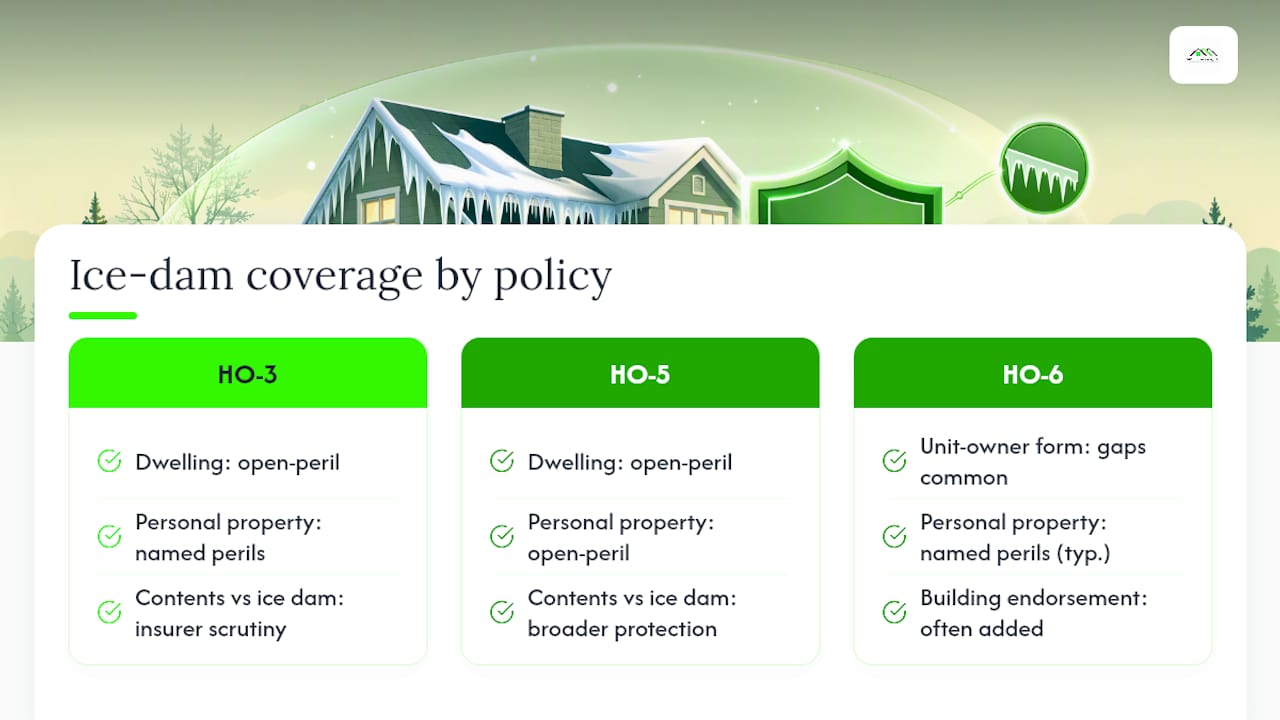
Most single-family homeowners carry an HO-3 policy, which covers the dwelling on an "open peril" basis, meaning it covers any cause of loss except what's specifically excluded. Personal property under HO-3 is typically covered on a "named peril" basis instead, meaning only causes explicitly listed apply. Since sudden water damage from an ice dam usually isn't on the standard exclusion list, HO-3 dwelling coverage generally responds to ice dam claims the way described earlier in this guide.
HO-5 policies extend that open-peril protection to personal property as well, not just the dwelling. In practice, this matters when an ice dam leak ruins furniture, electronics, or flooring. Under HO-3, your insurer may scrutinize whether the specific cause of contents damage is a named peril; under HO-5, the burden shifts more toward the insurer proving an exclusion applies. HO-5 policies typically cost more, but for homes in heavy snow regions, that broader contents protection can be worth the premium difference.
Condo owners face a different picture entirely. Standard HO-6 unit-owner policies often leave gaps for structural elements like ceilings and built-in fixtures, which is why many condo associations and unit owners in cold climates add a specific building-property endorsement for broader protection, according to AAA Northeast's insurance notes. If you live in a condo, don't assume your master policy or your unit-owner form covers ice dam damage the same way an HO-3 would. Ask specifically.
How to Appeal a Denied Ice Dam Insurance Claim
A denial isn't always final. Start by requesting the denial in writing if you haven't already received one, specifically citing the policy language the insurer relied on. Read that clause carefully. Denials often hinge on a single word like "gradual" or "maintenance," and you need to know exactly what you're disputing before you respond.
Gather independent evidence that contradicts the insurer's reasoning. A second contractor inspection, dated photos of your attic insulation and roof condition, and repair invoices showing the timeline of damage all help. If the denial cites poor maintenance and you have service records proving otherwise, submit them directly to the adjuster with a written rebuttal.
If the internal appeal doesn't work, most states allow you to file a complaint with your state insurance department, which can investigate whether the denial followed the policy's actual terms. The Insurance Information Institute publishes consumer resources on this process and general homeowner-insurance data worth reviewing before you escalate. For larger disputes, a public adjuster or an attorney who handles property claims can review your policy's specific language, since contributory-cause clauses and state court treatment of them vary enough that a general answer won't cover your exact situation.
Keep every piece of correspondence dated and organized. Insurers reconsider denials more often when a homeowner responds with organized, specific evidence rather than a general complaint that the decision feels unfair.
Additional Insurance Options That May Cover Ice Dam Damage
Standard HO-3 policies handle most ice dam claims involving sudden water entry, but a few add-ons close common gaps. Water backup endorsements, usually aimed at sewer and drain backups, sometimes overlap with ice-dam-related water damage depending on how the policy defines the covered event. Ask your agent whether yours does.
Some carriers in cold-weather states offer specialized endorsements or riders that broaden coverage for ice and snow-related losses beyond the standard policy language, though these typically come with a higher premium, according to LegalClarity. If your home has a history of ice dam issues or an older roof, that added premium can be worth pricing out.
Scheduled personal property riders matter if you're worried about high-value items in an attic or upper floor where ice dam leaks tend to originate. And if you own a condo, a unit-owner's building-property endorsement can extend open-peril protection to structural elements a standard HO-6 form leaves out. None of these options replace good roof maintenance, but they narrow the financial gap when a bad winter still gets through.
Are Ice Dams Covered by Insurance? What U.S. Homeowners Should Know
The honest answer buried under most insurance explainers is this: coverage depends less on the ice dam itself and more on how well your roof was maintained before it formed. That's uncomfortable, because it means the outcome of a claim was partly decided months before the storm, by insulation levels and gutter maintenance nobody was thinking about in July.
Conventional advice tells homeowners to "document everything," which is true but incomplete. The stronger move is documenting your roof's condition every fall, before there's damage to argue about. A pre-season photo of your attic insulation is worth more to an adjuster than a dozen photos of the leak itself, because it answers the question insurers actually ask: was this sudden, or was it coming for a while?
If you take one thing from this guide, prioritize the deductible math before the paperwork. A lot of homeowners file claims that get denied or barely clear their deductible, and end up with a mark on their loss history for a repair they could have paid for directly. Know your numbers first. Everything else follows from there.
— Heather
Sources
- Does Homeowners Insurance Cover Ice Damage? | Progressive
- Roof ice dams - National Weather Service (NOAA)
- Does Insurance Cover Ice Dams and Related Damage? – LegalClarity