
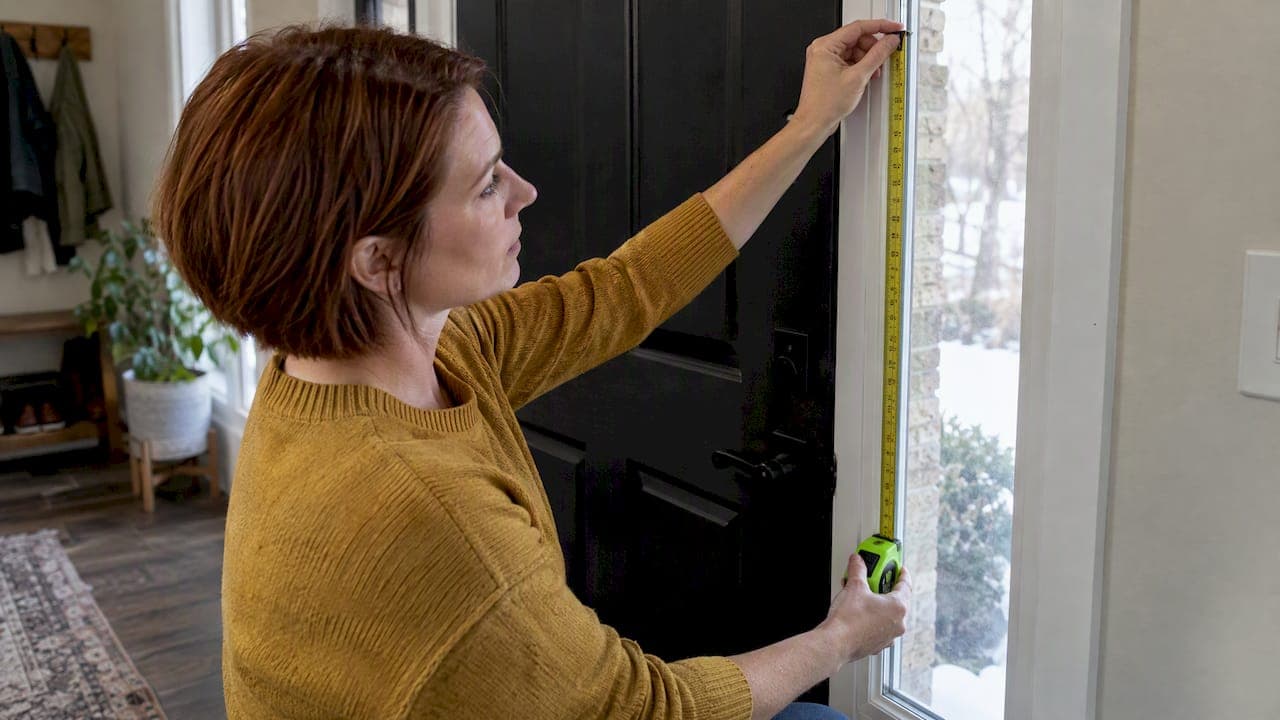
Tempered glass is required in a home window when the window sits in a "hazardous location" defined by the building code. The model code is the International Residential Code (IRC), section R308. Typical hazardous locations are windows near doors, near tubs and showers, near stairs and landings, and large panes close to the floor. Most windows are not in these spots and do not need tempering. Some are, and you need to know which.
This guide covers the rules, the measurements, the exceptions and how to check a replacement window. It also covers what applies in Wisconsin.
TL;DR
- Safety glazing is required only in hazardous locations. Not every window, and not every bathroom window.
- A window away from doors and wet areas needs tempering only if four conditions are all met: pane over 9 square feet, bottom edge under 18 inches from the floor, top edge over 36 inches, and a walking surface within 36 inches.
- Glass within 24 inches of a door, with its bottom edge under 60 inches from the floor, is also a hazardous location.
- Laminated glass can also qualify as safety glazing. Tempered is the common choice.
- Your local building department has the final say. Wisconsin homes follow the state Uniform Dwelling Code.
Table of Contents
- Why the code requires safety glazing
- The four-condition rule for windows
- Windows next to doors
- Windows near tubs, showers and stairs
- Exceptions and other ways to comply
- How the rules differ by place
- How to tell if a window is safety glass
- Replacing windows: what changes
- Our view: measure before you order
- Window replacement in Southeast Wisconsin
- FAQ
- Sources
Why the code requires safety glazing
Regular annealed glass breaks into long, sharp shards. Tempered glass is heat-treated. When it breaks, it crumbles into small pieces. That lowers the risk of deep cuts when someone falls into or walks into a pane.
The code does not ask for this everywhere. It targets places where people are most likely to hit glass. Officials in Boulder County, Colorado say the purpose of the rules is to reduce the risk of severe injury from broken glass in busy or high-hazard spots in a home.
The IRC lists these hazardous locations: doors, windows near walking surfaces, glass next to showers and bathtubs, and glass near stairs and landings, per a 2021 IRC safety glazing summary from the City of Aberdeen, WA.
The four-condition rule for windows
This is the rule most homeowners ask about. A window that is not near a door or wet area needs safety glazing only if all four of these are true:
- The exposed area of a single pane is larger than 9 square feet.
- The bottom edge of the glass is less than 18 inches above the floor.
- The top edge is more than 36 inches above the floor.
- A walking surface is within 36 inches horizontally of the glass.
These four conditions are stated in the 2021 IRC safety glazing summary. Miss one and the window is generally not required to be tempered. The North Carolina Office of State Fire Marshal gives the same reading of the 2018 code.
A worked example
Take a picture window with one pane 5 feet wide and 4 feet tall. That is 20 square feet, so condition 1 is met. Now look at the height.
- Sill 12 inches off the floor: bottom edge under 18 inches, top edge at 60 inches. Conditions 1, 2 and 3 are met. If a floor or deck is within 36 inches of the glass, it needs safety glazing.
- Sill 30 inches off the floor: bottom edge is over 18 inches. Condition 2 fails. This window does not need tempering under this rule.
Now take a small window, 2 feet by 3 feet, set low. That is 6 square feet. Condition 1 fails, so this rule does not apply. Another rule might, such as a nearby door.
Measure the pane, not the window
The 9 square foot test applies to one pane. A large window made of several smaller panes, each under 9 square feet, does not trip this condition. A single large pane does. Measure the exposed glass, not the frame.
Check the code language
The rule is worded in terms of the glazing and the floor or walking surface. The window opening shear design guide helps frame why opening sizes and locations matter in a wall. For safety glazing, your own measurements and your local code official settle the question.
Windows next to doors
Glass beside a door is the second major trigger. Under the 2021 IRC, glazing next to a door is hazardous when both of these are true:
- The bottom exposed edge is less than 60 inches above the floor or walking surface.
- The glass is within 24 inches of either side of the door in its closed position.
There is a second case. Glass within 24 inches of the hinge side of an in-swinging door is hazardous when it is on a wall less than 180 degrees from the plane of the door. Both rules are in the 2021 IRC summary.
In plain terms: a narrow sidelight next to your front door is almost always safety glass. So is a window beside a back door that starts low on the wall.
The door itself is covered too. Glass in doors, including storm doors and patio doors, is safety glass under federal rules, per a note in the Wisconsin Uniform Dwelling Code.
Windows near tubs, showers and stairs
Bathrooms get a lot of questions. The rule is not "every bathroom window." Safety glazing is required when the window meets the wet-area conditions in R308.4. The IRC treats glass next to a tub or shower as hazardous when it is close to the water and low to the floor of the tub or shower. Check the exact measurements in the code edition your city uses, or ask the building department.
A bathroom window high on a wall over a tub, well out of reach, is often fine. A window right at tub height, or inside a shower, is not.

Stairs and landings work the same way. Glass beside a stairway or at a landing is a hazardous location when it is close enough to the walking surface to be hit in a fall. Local codes can change the details. For example, Cedar Falls, Iowa has ordinance sections that modify its glazing requirements for stairways, ramps and bottom stair landings.
Quick reference table
| Location | What triggers safety glazing |
|---|---|
| Window in open wall area | Pane over 9 sq ft, bottom edge under 18 in., top edge over 36 in., walking surface within 36 in. (all four) |
| Glass beside a door | Bottom edge under 60 in. and within 24 in. of the door in its closed position |
| Glass at the hinge side of an in-swinging door | Within 24 in. of the hinge side, on a wall less than 180 degrees from the door plane |
| Tub or shower area | Glass in or near the enclosure that meets the R308.4 wet-area conditions |
| Stairs and landings | Glass near stairs or landings that meets the R308.4 conditions |
Use this table as a checklist. Confirm the measurements against your local code.
Exceptions and other ways to comply
The code has exceptions. From the IRC summary:
- Decorative glazing.
- Glazing protected by specified horizontal rails.
- Certain outboard panes at least 25 feet above grade or another specified surface.
Tempered glass is also not the only compliant product. Laminated glass can qualify if it meets safety-glazing standards. Laminated glass has a plastic layer between two sheets of glass, so it holds together when it breaks.
Fall protection is a different rule
A low window may also need a way to stop a child from falling out. That is a separate code section, R312.2.1. Building officials stress that window fall protection is separate from tempering. A window can need one, both or neither.
How the rules differ by place
The IRC is a model code. States and cities adopt it, often with changes. Three examples:
- Wisconsin: One- and two-family homes follow the state Uniform Dwelling Code, chapters SPS 320 to 325. Its safety glass section sits in SPS 321.05(3).
- Colorado: Boulder County publishes its own safety glazing handout based on the 2021 IRC.
- California: Wildfire areas add a different layer. Under the 2025 California Residential Code, windows in wildland-urban interface zones need at least one tempered pane or a 20-minute-rated pane when the existing home's permit was submitted on or after July 1, 2008, per Mono County's window change-out guide.
The lesson: the model rule is a good guide. The rule on your permit is the one that counts.
How to tell if a window is safety glass
Look for the label. Safety glazing carries a visible manufacturer's designation, usually etched or sandblasted into a corner of the glass. It often reads "tempered" or shows a safety standard mark. The IRC summary describes this designation.
Steps to check:
- Find the lower corner of each pane. Look at it from the side, in good light.
- Look for the etched stamp.
- For non-tempered glazing, ask the maker for a certificate or affidavit. A building official may accept that evidence instead of a label.
- Keep a photo of the stamp with your project records.
If a pane has no mark and sits in a hazardous location, do not assume it is safe. Ask a contractor or the building department.
Replacing windows: what changes
Code questions come up most at replacement time. A few points:
- A replacement window in a hazardous location should be ordered with safety glazing. Tell the installer the sill height, the pane size and what is nearby.
- Changing the window size or sill height can move a window into or out of a hazardous location.
- Whether a permit is needed depends on your town or county. Ask before work starts.
- Tempered glass cannot be cut or drilled after it is made. It must be ordered to size. Plan for lead time.
Price matters too. Our published ranges are $700 to $1,100 per window for insert or pocket replacements, $1,000 to $1,600 for full-frame, and $3,500 to $7,000 for bay or bow windows. Safety glazing can affect the final number on a given window. See our window replacement cost guide for what drives the price.
For energy performance, tempered glass can be part of an insulated glass unit. See our guides on cold climate windows and energy efficient windows in Wisconsin.

Our view: measure before you order
We have replaced windows in Southeast Wisconsin for over 25 years. Most code mistakes we see are not about glass quality. They are about nobody measuring.
Here is how we handle it:
- We measure the pane, the sill height and the distance to every door and walking surface before we write the order.
- We flag tub, shower, stair and door locations on the job notes.
- We document the labels and photos so you have a record.
- We give an honest repair or replace recommendation. If your existing window is fine, we say so.
Poor installation causes more failures than materials do. The same goes for glazing: the right glass in the wrong spot, or the wrong glass in the right spot, is a workmanship error. A clear measurement sheet prevents it.
— Heather
Window replacement in Southeast Wisconsin
We install replacement windows for homeowners in Dodge, Washington, Fond du Lac and Ozaukee counties. We check hazardous locations during the estimate, so safety glazing is in the quote, not a surprise later.

See our replacement windows page, review window pricing by type, or start from AM Exteriors.
FAQ
How high off the floor do windows need to be tempered?
A window in an open wall needs tempering only if its bottom edge is under 18 inches above the floor and three other conditions are also met: pane over 9 square feet, top edge over 36 inches, and a walking surface within 36 inches. Next to a door, the height limit is 60 inches. A window with a sill above 18 inches, away from doors and wet areas, generally does not need it.
Does every bathroom window need tempered glass?
No. Safety glazing is required when the hazardous-location conditions in R308.4 are met. A small window high on the wall, away from the tub or shower, usually does not need it. A window close to the tub or inside the shower area often does.
Does tempered glass meet CPSC 16 CFR 1201?
Tempered glass is the usual product made to meet that federal safety standard. Federal rules apply to glass in doors, storm doors, patio doors and tub or shower enclosures, in addition to state rules. Check the etched label on the glass.
Can I use something other than tempered glass?
Yes. Laminated glass can qualify if it meets safety-glazing standards. For non-tempered glazing, a building official may approve a certificate, affidavit or other evidence of compliance. Ask your building department what it accepts.
Which code applies to my home in Wisconsin?
Wisconsin one- and two-family homes follow the state Uniform Dwelling Code, which includes its own safety glass rule. Your municipality handles permits and inspections. Call your building inspector before you order windows.
Sources
- SAFETY GLAZING, 2021 IRC summary, City of Aberdeen, WA
- Safety Glazing B30, Boulder County, CO
- 0308.4.3 Tempered Glass for Windows 9 Square Feet or More, North Carolina OSFM
- Window Requirements, City of Cedar Falls, IA
- Residential Window Change-Outs 2025, Mono County, CA
- Wisconsin Uniform Dwelling Code, SPS 321.05, Wisconsin Legislature