
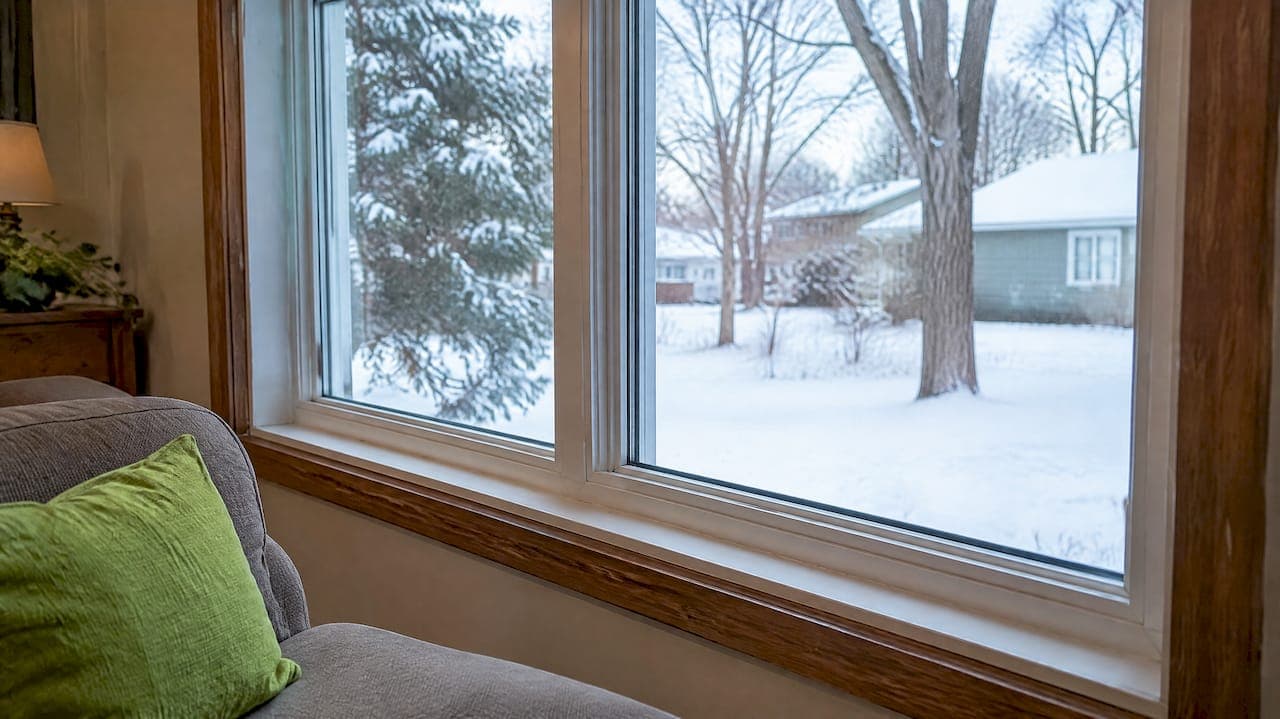
For most Wisconsin homes, replacing old single-pane windows with double-pane, low-E glass filled with argon gives the best balance of comfort, savings, and cost. Storm inserts or triple-pane units fit specific cases. Expect meaningful annual savings when installation and air sealing are done right. We assist homeowners in Wisconsin with window choices regularly.
TL;DR:
- Prioritize a low U factor for Wisconsin winters, with higher SHGC on south facing windows and lower SHGC on north facing or shaded windows.
- Low E storm windows or interior inserts reduced heating loads by 10% to 21% in tests, with cold climate paybacks of 4 to 7 years.
- ENERGY STAR estimates certified upgrades cut heating and cooling costs by 12% to 25%, with savings depending on the starting windows and climate.
- Double pane low E argon windows cost $350 to $700 installed; triple pane units cost $600 to $1,200 and suit cold exposures or insulation priorities.
- Replace units when frames rot or panes fog from failed seals; require written details on flashing, full frame insulation, sealant, and workmanship coverage.
Table of Contents
- What Performance Numbers to Demand From a Window Spec Sheet
- Features That Actually Deliver Cold-Climate Performance
- Retrofits vs Full Replacement: What Actually Pencils Out
- Savings and Costs: Realistic Ranges for Wisconsin Homes
- Wisconsin Weatherization Programs and Incentives
- Choosing an Installer in Wisconsin: What Separates Good Work From Bad
- Maintenance Tips to Keep Your Windows Efficient Year After Year
- Window Styles and Designs That Suit Wisconsin Homes
- Warranty and Service Considerations for Energy-Efficient Windows
- Contractor Perspective: Prioritizing Upgrades for Wisconsin Homeowners
- How AM Exteriors Helps With Window Replacement in Wisconsin
- FAQ
- Sources
What Performance Numbers to Demand From a Window Spec Sheet
Every window carries a label with four ratings, but one matters more than the rest in our climate.
U-factor measures how much heat escapes through the window. Lower is better, and for Wisconsin's winters, we point homeowners toward a U-factor at or below the recommended climate zone threshold, with lower values considered a strong cold-climate target according to our cold climate windows guide. Focus on Energy confirms that U-factor should take priority over other ratings in northern climates like ours, since heating costs far outweigh cooling costs here.
SHGC (Solar Heat Gain Coefficient) matters less for heat loss but affects comfort and sunlight. South-facing windows can carry a slightly higher SHGC to capture free winter heat, while north-facing or shaded windows do better with a lower number.
Two other ratings round out the label:
- Visible Transmittance (VT) tells you how much natural light passes through, which affects daytime brightness.
- Condensation Resistance Factor (CRF) predicts how well a window resists interior fogging during Wisconsin's humid summers and frigid winters.
ENERGY STAR Version 7.0 sets the current certification benchmark, with climate-zone-specific thresholds for U-factor and SHGC that Wisconsin products must meet to carry the label.
Features That Actually Deliver Cold-Climate Performance
Not every "energy efficient" label means the same thing. A few features separate windows that perform in January from windows that just look good on paper.
Low-E coatings are microscopic metallic layers that reflect heat back into the room during winter and block solar heat in summer. Most quality windows now carry at least one low-E coating, and double or triple coatings improve performance further.
Gas fills between panes slow heat transfer. Argon is standard and affordable. Krypton performs slightly better in narrow gaps, which makes it useful for triple-pane units where space between panes is tight.
Frame material changes durability and insulation:
- Vinyl frames resist moisture and insulate well at a moderate price.
- Fiberglass frames handle temperature swings with less expansion and contraction, a real advantage through Wisconsin's seasonal shifts.
- Wood frames insulate naturally but need more upkeep against moisture.
Warm-edge spacers separate the panes and reduce heat transfer at the edge of the glass, which cuts down on condensation and cold spots near the frame.
Pro Tip: Ask for the full spec sheet, not just the ENERGY STAR sticker. Two windows can both be certified while performing differently in your specific exposure.
Retrofits vs Full Replacement: What Actually Pencils Out
Full replacement isn't always the first move, and for some homes it isn't the right one at all.
DOE and PNNL field studies found that low-E storm windows and interior inserts reduced heating loads by roughly 10% to 21% in testing, often approaching the performance of new double-pane low-E units at a fraction of the installed cost. Paybacks on these retrofits commonly land in the 4 to 7 year range in cold climates.
Retrofit fits best when:
- The existing frames are historic or architecturally significant and full replacement isn't desired.
- Budget constraints call for a lower-cost interim step.
Full replacement makes more sense when:
- Frames show rot, or seals have failed and fogged between panes.
- You want modern operation, like easier tilt-in cleaning or better locking hardware.
Savings and Costs: Realistic Ranges for Wisconsin Homes
ENERGY STAR estimates that upgrading from single-pane windows to certified windows cuts heating and cooling costs by roughly 12% to 25%, depending on your starting point and climate, with some of the most inefficient homes seeing up to $580 in annual savings.
Installed costs in the Wisconsin market generally run:
- Double-pane low-E with argon: around $350 to $700 per standard window installed.
- Triple-pane units: around $600 to $1,200 per window, often reserved for the coldest exposures or homeowners chasing maximum performance.
Your baseline matters as much as the new product. A home with single-pane windows and poor air sealing sees a faster payback than a home with aging double-pane units in decent shape, since the starting leakage is so much higher.
Worked example: say a home has 15 single-pane windows and the owner replaces all of them with double-pane low-E argon units at $500 installed per window, for a total project cost of $7,500.
Wisconsin Weatherization Programs and Incentives
Wisconsin homeowners don't have to cover every dollar of a window upgrade out of pocket.
The Wisconsin Department of Energy and Housing maintains weatherization program resources and manuals, including assistance paths for income-eligible households seeking energy-efficiency upgrades.
Beyond state programs, check these angles before you sign a contract:
- Local utility rebate programs often change year to year, so confirm current offers directly with your provider.
- ENERGY STAR partner incentives sometimes stack with utility rebates on qualifying products.
- Weatherization assistance applications typically require income documentation, so gather recent pay stubs or tax records early.
- Rebate programs usually want a defined project scope, so get your contractor's quote finalized before applying.
Choosing an Installer in Wisconsin: What Separates Good Work From Bad
A high-performance window installed poorly loses most of its advantage. Air gaps around the frame, missing flashing, or rushed sealing let drafts right back in.
Before signing a contract, confirm:
- The installer documents water-management flashing at the sill and jambs.
- Their air-sealing approach includes insulation and sealant around the full frame, not just foam in the gaps.
- They carry manufacturer certification for the window lines they install.
- The warranty covers both product defects and workmanship, with terms you can read in writing.
- They can show local project photos or references from recent jobs in your area.
We document every window replacement with photos and written scope so homeowners see exactly what was done and why. You can review our services overview for the fuller range of exterior work we handle alongside window projects.
Pro Tip: Ask any installer to walk through their flashing and sealing process out loud before you sign. A clear, specific answer is a good sign; a vague one is a warning sign.
Maintenance Tips to Keep Your Windows Efficient Year After Year
New windows still need upkeep to hold their performance through Wisconsin winters.
Clean the weatherstripping and tracks each spring and fall; for additional seasonal weatherization tips, see how to winterize your doors to keep drafts at bay and boost energy efficiency How to Winterize Your Doors?. Dirt and grit wear down seals faster than the climate alone, and a worn seal lets cold air back in no matter how good the glass is.

Check caulking around the exterior frame annually, especially after a hard freeze-thaw cycle. Cracked or missing caulk is an easy fix that prevents a much bigger air-leak problem.
Lubricate hardware like hinges and locks once or twice a year so sashes close fully and latch tight. A window that doesn't latch completely won't seal completely either.
Inspect for condensation between panes. Fogging that won't wipe away on the inside of the glass usually means a failed seal, and it's worth addressing before the insulating gas fill escapes entirely.
Clear snow and ice buildup from sills and tracks promptly rather than letting it sit against the frame for weeks at a time. Repeated freeze-thaw cycling against trapped moisture wears down seals and finishes faster than dry cold air does.
Finally, walk the house once a year and feel for drafts near the frame edges. A small draft caught early is a caulking job. The same draft ignored for a few winters can mean a full reinstall.
Window Styles and Designs That Suit Wisconsin Homes
Wisconsin's architecture ranges from Cream City brick farmhouses to mid-century ranches to newer craftsman-style builds, and window style should match both the house and the climate.
Double-hung windows remain the most common choice across the state. They work well with traditional and farmhouse exteriors, and their two operable sashes make cleaning easier, a practical plus when you're doing it from inside during a Wisconsin winter.
Casement windows seal tighter than double-hung units because the sash presses against the frame rather than sliding past it, which makes them a strong pick for homeowners prioritizing air-leakage control above all else.
Bay and bow windows add light and visual interest to living rooms and dining areas, but they also add more exposed surface area and more seams, so they're worth pairing with a higher-performing glass package. We install these as part of our replacement window services across the region.
Picture or fixed windows, which don't open at all, offer the tightest seal possible since there's no operable sash to leak around. They work well paired with operable windows elsewhere in the same room for ventilation.
Whatever the style, pair it with the home's existing trim and proportions. A window style mismatch stands out on a historic home in a way that undercuts curb appeal even when the performance numbers are solid.

Warranty and Service Considerations for Energy-Efficient Windows
A strong warranty protects the investment long after installation day.
Most quality window manufacturers offer coverage on the glass unit itself, often with separate terms for seal failure, frame defects, and hardware. Read the fine print on what voids coverage, since improper installation can sometimes void manufacturer terms even when the product itself is sound.
Workmanship warranties are separate from manufacturer warranties, and they matter just as much. A product warranty covers defective glass or frames. A workmanship warranty covers whether the installer sealed and flashed the opening correctly, which is often where failures actually start.
Ask what service looks like after the sale. Can you call the same company for a seal failure five years out, or does the warranty route you through a manufacturer claims process with no local support? Window installations are backed by manufacturer warranties and workmanship guarantees, with documentation maintained for service support.
Contractor Perspective: Prioritizing Upgrades for Wisconsin Homeowners
Start with your worst-performing windows first, not the whole house at once. Pair any window upgrade with air sealing around the same openings, since that combination outperforms new glass alone. Get a documented assessment that lays out retrofit versus replacement side by side before you commit to either path.
— Heather
How AM Exteriors Helps With Window Replacement in Wisconsin
Energy-efficient window replacement services include owner-supervised installation to ensure critical details like flashing and air sealing are properly addressed.
When you request an estimate, expect:
- A walk-through of your current windows with honest notes on what needs replacement versus repair.
- Clear documentation of scope, materials, and pricing before work starts.
- Support navigating insurance claims when storm damage is part of the picture.
Our Window Replacement Cost in Wisconsin guide breaks down current pricing by window type. Reach out to schedule an on-site assessment and get a written estimate for your home.
FAQ
What are the best energy-efficient windows on the market?
Double-pane windows with low-E coatings and argon gas fill offer the strongest combination of performance and cost for most climates, including Wisconsin. Triple-pane units push performance further and suit the coldest exposures or homeowners prioritizing maximum insulation over upfront cost.
Is it legal to have a bedroom without a window in Wisconsin?
Building codes generally require a bedroom to have an egress window for emergency exit and light, so a bedroom without one typically doesn't meet code. Specific requirements can vary by municipality, so check with your local building department before finalizing any renovation plans.
What windows are manufactured in Wisconsin?
Several window manufacturers produce replacement windows within Wisconsin, and we work with trusted brands as part of our installation services. Product availability and specific lines depend on your project scope, which we review during an on-site estimate.
How much do Low-E glass windows typically cost?
Installed costs for double-pane low-E windows with argon generally run from $350 to $700 per standard window, while triple-pane low-E units run higher, often $600 to $1,200 per window depending on size and frame material. Our insert and full-frame window pricing reflects current Wisconsin market rates for these options.
Sources
- Low-E storm windows: webinar and field results (DOE/PNNL/Building America)
- Weatherization — Wisconsin Department of Energy and Housing
- Focus on Energy — Windows guidance