
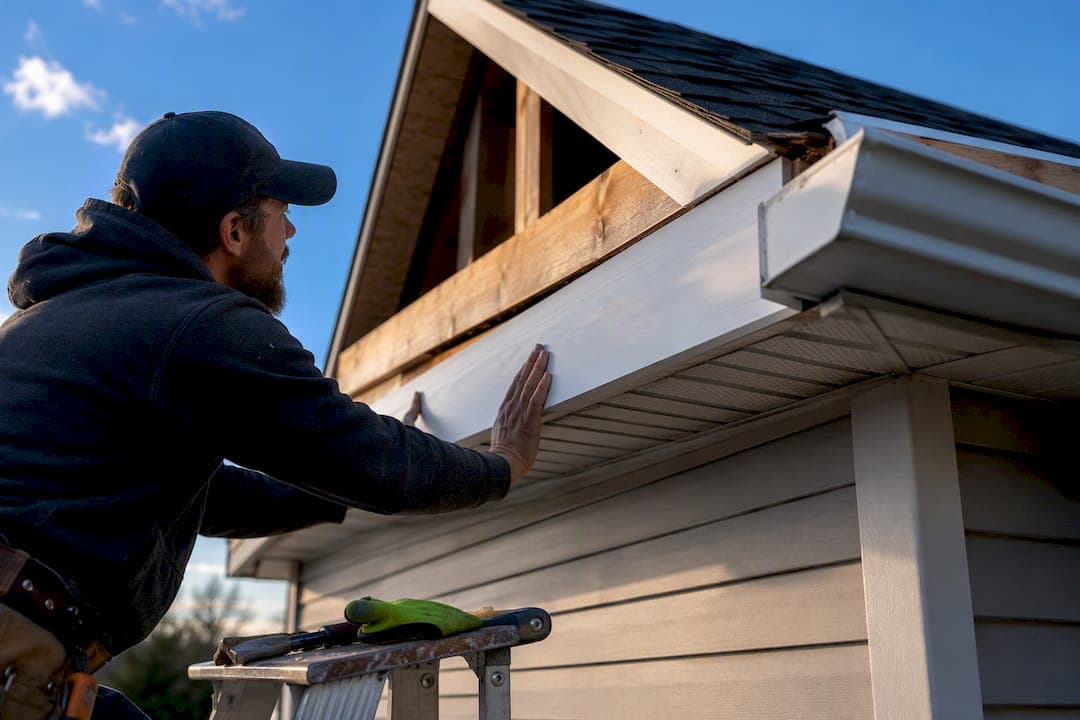
Most soffit and fascia doesn't need replacing until you see soft wood, sagging gutter lines, or gaps that let daylight into the attic. When damage is that visible, replacement usually beats repair, and installed pricing typically runs $6 to $18 per linear foot depending on material. Start with a close inspection of the fascia board and soffit panels, then get an itemized quote before committing to full replacement.
TL;DR:
- Most soffit and fascia only require replacement when significant visible damage, such as soft wood or sagging gutter lines, appears.
- Material costs range from $6 to $18 per linear foot, with fiber cement and wood being the most expensive options, and vinyl the cheapest.
- Damage involving more than 40% of the run or repair costs nearing 60% of replacement costs warrants full replacement over patching.
- Choosing the right material depends on house style and climate, with different maintenance and lifespan considerations for aluminum, vinyl, wood, and fiber cement.
- Bundling soffit, fascia, and gutter replacement during a roof job can lower overall costs due to shared setup and mobilization expenses.
Table of Contents
- How Much Does Soffit and Fascia Replacement Cost?
- What Are the Signs You Need Soffit or Fascia Repair?
- Which Material Is Best for Soffit and Fascia Replacement?
- How Does the Soffit and Fascia Replacement Process Work?
- Should You DIY or Hire a Pro for Soffit and Fascia Work?
- Does Bundling With Gutters or a Roof Save Money?
- Why AM Exteriors' Approach to Soffit and Fascia Work Matters
- What Homeowners Get Wrong About This Job
- Ready for a Soffit and Fascia Estimate?
- Sources
- FAQ
How Much Does Soffit and Fascia Replacement Cost?
Pricing depends almost entirely on material and how much rot the crew finds once the gutters come down. Aluminum runs about $6 to $12 per linear foot installed, vinyl comes in cheaper at $4 to $8, wood lands at $8 to $15, and fiber cement (the Hardie-style boards) tops the list at $10 to $18 per linear foot, according to pricing data from The Roofing Brief. Combined soffit, fascia, and gutter packages commonly run $15 to $30 per linear foot.
For a typical single-story home with 150 to 200 linear feet of eaves, that translates to a full-home range most homeowners can budget around:
- Vinyl: roughly $600 to $1,600 for materials plus labor on a straightforward single-story run
- Aluminum: roughly $900 to $2,400, the most common mid-range choice
- Wood: roughly $1,200 to $3,000, higher if historic profiles are involved
- Fiber cement: roughly $1,500 to $3,600, reflecting premium material cost
A quick number to anchor expectations: HomeAdvisor reports typical fascia and soffit work averaging near $2,500, with most projects landing between $1,050 and $3,300. Two-story homes push costs higher because of scaffolding and extended ladder work, and rot remediation, steep roof pitch, and local labor rates all add to the final number. A combined soffit, fascia, and gutter package for a typical 180 linear foot home commonly runs $2,700 to $4,500 in aluminum, with wood or fiber cement packages landing higher.
What Are the Signs You Need Soffit or Fascia Repair?
Some damage is obvious from the ground. Other problems only show up once a contractor pulls the gutters off and gets a real look at the framing behind them. Here's what to check before you call anyone out for a quote.
- Soft spots or visible sagging in the fascia board, especially where it meets the gutter hangers.
- Water stains or streaking on the soffit panels, which usually point to a gutter overflow problem rather than a roof leak.
- Daylight visible at the soffit line from inside the attic, a sign that panels have pulled loose or rotted through.
- Peeling paint or swelling wood, particularly on older wood fascia that hasn't been repainted in years.
- Pest activity such as wasp nests, bird entry points, or squirrel damage around soffit vents.
When a contractor removes the gutters, they inspect the rafter tails, the roof deck edge, and the fascia board itself for rot before installing anything new, a process This Old House walks through in detail. Most guidance points to full replacement once damage covers more than roughly 40% of a given run, or when repair costs creep close to 60% of what full replacement would cost, according to Soffit Fascia Repair. At that point, patching individual boards just delays a bigger job. You can do a basic visual check yourself with binoculars from the ground, but anything involving a ladder above one story is worth handing to a pro.
Which Material Is Best for Soffit and Fascia Replacement?
Every material trades off differently between upfront cost, maintenance, and lifespan. Here's how the four common choices stack up against each other.
- Aluminum: Lasts 30 to 50 years with almost no maintenance beyond an occasional rinse. It's the most common choice for homeowners who want to install it once and forget about it.
- Vinyl: The lowest installed cost of the four, but it can grow brittle and discolor under years of direct UV exposure, especially on south-facing walls.
- Wood: The right call when matching a historic home's original profile, but it demands a repaint cycle every few years and carries the highest rot risk if gutters ever overflow.
- Fiber cement: A premium option, paintable to match any trim color, with a long service life and strong resistance to moisture and pests.
Material choice should follow the house, not just the budget. A craftsman bungalow with original wood trim usually looks wrong with slick vinyl soffit, while a modern build has no reason to pay a wood-maintenance premium. Climate matters too: homes with heavy snow load and long freeze cycles benefit from materials that won't crack under repeated expansion.
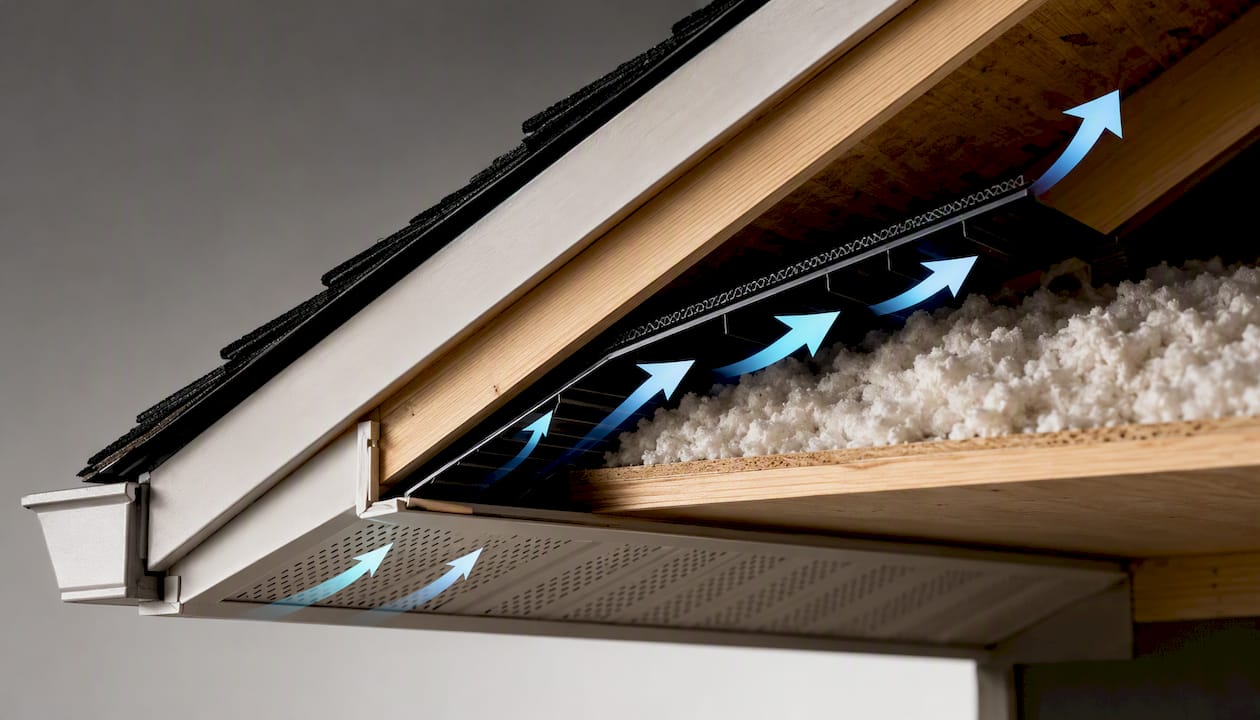
Pro Tip: Ask your contractor whether attic baffles or insulation chutes are in place before new vented soffit goes in. Blown-in insulation that has crept over the eave can block the intake vents completely, which quietly defeats the whole point of installing vented panels.
How Does the Soffit and Fascia Replacement Process Work?
A professional job follows a fairly predictable sequence, and knowing it helps you spot a contractor who's cutting corners.
- Prep and access. Gutters come down first, and the crew sets up ladders or scaffolding depending on roof height and pitch.
- Tear-out and inspection. Old fascia and soffit panels are pried off, exposing the rafter tails and roof deck edge where rot most often hides, unseen until the covering comes off.
- Rot remediation. Any soft or compromised wood framing gets cut out and replaced (often called "spot decking") before new material goes up.
- Installation. New fascia goes on first, set level to establish correct gutter pitch, followed by vented soffit panels, drip edge, and finally the gutters themselves.
- Final check. A good crew verifies the soffit vents are unobstructed and that attic airflow will work as intended, since balanced intake ventilation helps prevent condensation and ice dams in winter.
For a straightforward single-story home with no significant rot, expect the work to wrap in one to three days. Add time, sometimes a week or more, if the crew finds extensive framing damage that requires a roof decking repair before new soffit and fascia can go on.
Should You DIY or Hire a Pro for Soffit and Fascia Work?
DIY makes sense only under narrow conditions: a short run, single-story height, easy ladder access, and no rot beyond surface-level. Anything involving a second story, extensive rot, or working near power lines belongs with a licensed contractor.
When you're comparing bids, a legitimate quote should include:
- An itemized breakdown separating material, labor, rot remediation, and mobilization costs
- A specific materials grade named, not just "aluminum" or "vinyl" with no gauge or brand
- A written warranty covering both materials and installation labor
- Proof of insurance and, ideally, a local track record you can verify
Ask directly: "What happens if you find rot once the gutters are off?" A contractor without a clear rot remediation line item is either guessing at scope or planning to hit you with a change order mid-project. If a bid looks unusually low compared to others, that's usually where the corner gets cut, either in material grade or in skipping proper rafter inspection. For repair questions specifically, a local soffit, fascia, and gutter repair specialist can usually tell you over the phone whether your issue is a patch job or a full-run replacement.
Does Bundling With Gutters or a Roof Save Money?
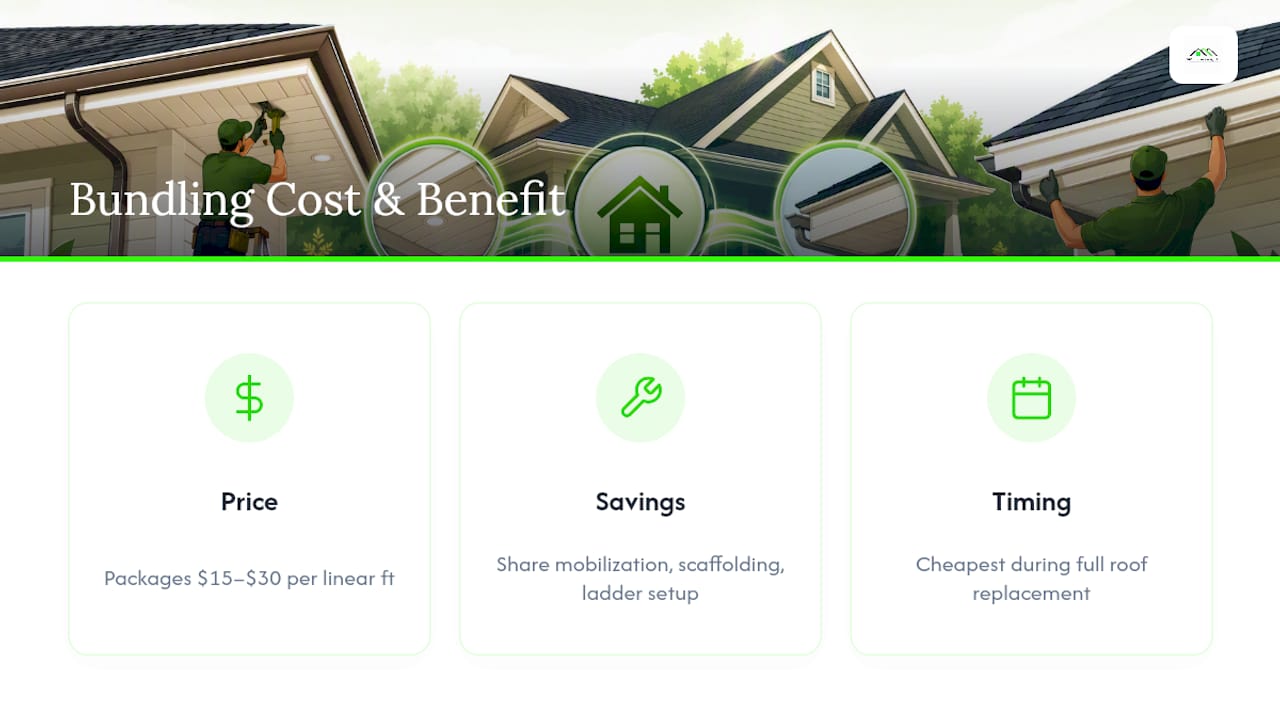
Bundling saves real money because mobilization, scaffolding, and ladder setup get spread across more square footage instead of billed against soffit and fascia alone. A standalone soffit job pays full freight for access equipment that a reroof or gutter project would need anyway.
The numbers back this up: combined soffit, fascia, and gutter packages commonly run $15 to $30 per linear foot, and the cheapest time to replace either component is during a full roof replacement, when scaffolding is already on site. Staged work still makes sense if your fascia is fine but your roof isn't, or vice versa, but if both are due within a year or two, bundling almost always beats paying for two separate mobilizations.
Why AM Exteriors' Approach to Soffit and Fascia Work Matters
This guide was compiled by Heather for Am-exteriors, drawing on more than 25 years of owner-operated experience in Southeast Wisconsin exterior work. Most soffit and fascia failures trace back to poor installation, not bad materials, which is why Am-exteriors prioritizes rafter and framing inspection before any panel goes back up. That inspection-first habit is what keeps a five-year-old replacement from failing the same way the original one did.
What Homeowners Get Wrong About This Job
The biggest mistake I see homeowners make is treating soffit and fascia as a cosmetic fix. It's not. It's the seam where your roof, attic, and gutter system all meet, and a sloppy repair there sets up problems that surface years later as attic moisture, ice damming, or a rotted roof deck nobody expects.
The second mistake is chasing the lowest bid without asking what happens if the crew finds rot. Nearly every job that looks simple from the ground turns up at least some soft framing once the old boards come off. A contractor who quotes a flat number with no rot allowance is either underbidding to win the job or planning to surprise you mid-project with a change order.
If you take one thing from this guide, let it be this: get the itemized quote before the tear-out starts, not after. Ask what's included if damage runs deeper than expected. That single question separates a contractor who inspects before they price from one who's guessing.
— Heather
Ready for a Soffit and Fascia Estimate?
A properly installed soffit and fascia system should involve coordinated work for framing repair, panels, and gutters without separate contractors. Installations that are closely supervised from tear-out through final trim help ensure rot is caught and remediated the first time instead of being covered up and revisited later.
A free inspection includes an on-site check of your fascia, soffit, and rafter tails, followed by an itemized quote that separates material, labor, and any rot remediation needed, no surprise change orders once the old boards come off. If your gutters or roof are also due for attention, ask about bundling: shared scaffolding and mobilization typically bring the per-linear-foot cost down across all three. Explore the Trim, Soffit & Fascia Packages available for your home, or start with a free inspection if storm damage is part of what brought you here.
Sources
For deeper detail beyond this guide, This Old House covers hands-on repair steps, The Roofing Brief breaks down per-linear-foot pricing, and Soffit Fascia Repair outlines replacement decision thresholds. Homeowners weighing broader energy efficiency upgrades alongside ventilation work may also find this piece on airtightness in older homes useful context.
- How to repair a rotted soffit — This Old House
- Soffit & Fascia Replacement Cost 2026 | TRB
- Complete Soffit & Fascia Replacement — Soffit Fascia Repair
- Gutter soffit and fascia replacement guide — DG Floors
FAQ
How Much Does It Cost to Replace Soffit and Fascia?
Installed pricing typically runs $6 to $18 per linear foot depending on material, with combined soffit, fascia, and gutter packages running $15 to $30 per linear foot. HomeAdvisor reports a typical project averaging near $2,500, with most jobs falling between $1,050 and $3,300.
How Much Should a New Soffit and Fascia Job Cost for a Full Home?
For a single-story home with 150 to 200 linear feet of eaves, expect roughly $900 to $2,400 for aluminum, the most common mid-range material choice. Wood and fiber cement run higher, often $1,200 to $3,600, while two-story homes cost more due to scaffolding and access requirements.
Can I Replace My Soffit and Fascia Myself?
DIY works only for short, single-story runs with easy ladder access and no significant rot. Anything involving a second story, extensive rot, or working near power lines is safer and more cost-effective to hand to a licensed contractor who can also inspect the framing while it's exposed.
How Much Do Contractors Charge to Remove and Replace Soffit and Fascia?
Labor and material together typically land in the $6 to $18 per linear foot range depending on material grade, with rot remediation added as a separate line item once old panels come off. An itemized quote after an on-site inspection allows homeowners to see what drives the total before work begins.
How Do I Know if I Need Full Replacement Instead of a Repair?
Full replacement is usually the better call once damage covers more than about 40% of a run, or when repair costs approach 60% of what replacement would cost, according to Soffit Fascia Repair. Replacement also allows a full inspection of the rafter tails and roof deck, which a spot repair can't offer.