
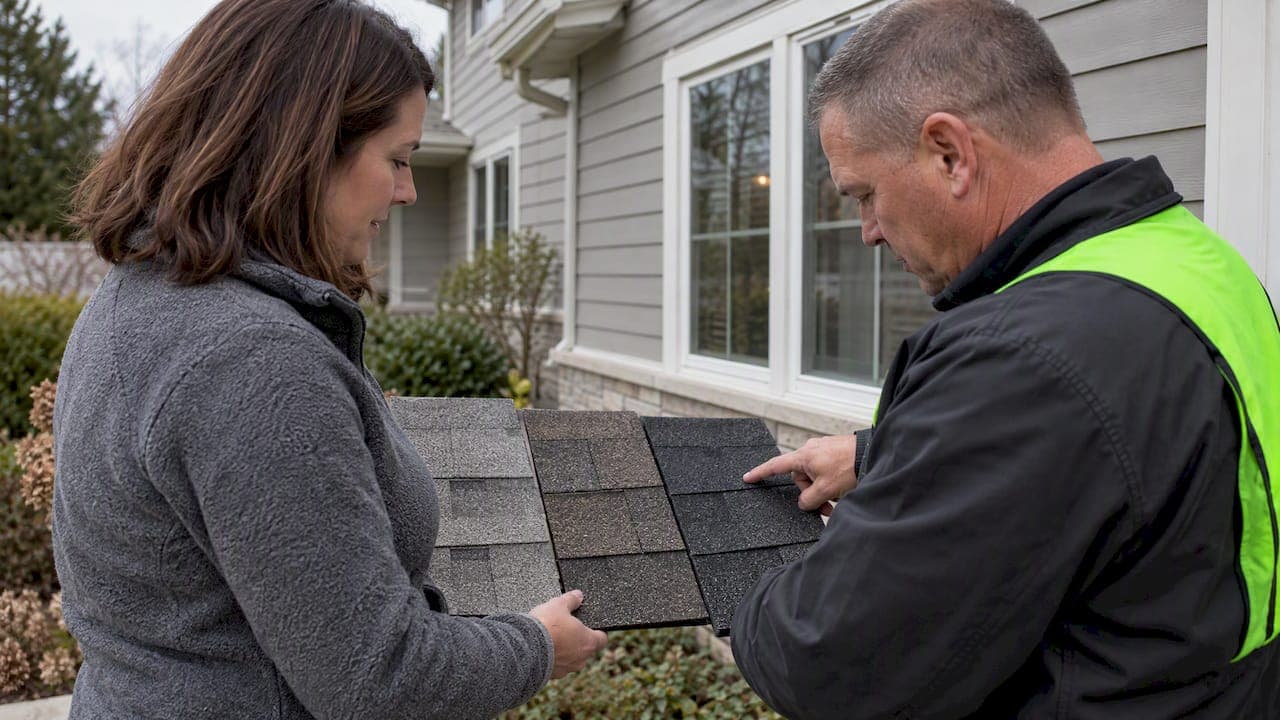
Start with what you cannot change. Look at your siding, trim, brick, and stone first, then match architectural style and roof size, then check climate and any HOA rules. Confirm the finish with full-size samples on the house. Order three sample shingles this week and view them in morning and afternoon light before you sign a contract.
TL;DR:
- Matching roof undertone with siding and brick is crucial, as a mismatched combination can look discordant despite neutral shades.
- Solar reflectance data and CRRC labeling are necessary to verify a shingle's energy performance, not just the color name.
- Viewing full-size samples in various lighting conditions helps prevent surprises caused by color shifts under different sunlight and weather.
- Neighborhood rules and homeowner association guidelines may restrict color choices, so approval should be obtained before ordering.
- Proper documentation of color approval and testing performance data lowers risks of costly reorders or disputes during installation or insurance claims.
Table of Contents
- Popular shingle color families and how they pair with your exterior
- Step-by-step sequence to choose the right shingle color
- Climate, energy, and the limits of color (what to ask about cool shingles)
- How to validate a final choice before you order
- Installer-tested tips: mistakes installers see most often
- [Balancing curb appeal with long-term durability is helped by understanding shingle color fading solutions that maintain your roof's look over time](#balancing-curb-appeal-with-long-term-durability-is-helped-by-understanding-shingle-color-fading-solutionshttpsblogshingleroofrenewalcomblogshingle-color-fading-solutions-that-maintain-your-roofs-look-over-time)
- How AM Exteriors can help with your next roofing project
- FAQ
- Sources
Popular shingle color families and how they pair with your exterior
Shingle colors fall into a handful of families. Each one reads differently against common siding, brick, and stone combinations, so matching the family to your exterior comes before picking a specific shade.
- Weathered wood: a soft, multi-tone blend that works with beige, tan, or natural wood siding.
- Charcoal and gray: pairs with white, gray, or blue siding and most stone accents.
- Black: strong contrast against light siding; reads heavy on brick colonials.
- Brown and tan: complements brick, stucco, and earth-tone siding.
- Green: suits craftsman and farmhouse homes with natural wood or stone details.
- Blue: works on coastal or modern builds with gray or white trim.
Undertones matter as much as the color name. A warm beige house paired with a cool blue-gray roof often looks mismatched, even if both colors seem neutral on their own. Manufacturers and retailers consistently recommend coordinating roof undertone with siding, trim, brick, and stone rather than picking shades in isolation. A stucco home with warm tan walls usually calls for brown or weathered wood. A brick colonial with cool gray mortar often looks sharper with charcoal or black.
Step-by-step sequence to choose the right shingle color
A reliable color decision follows the same order every time, whether the home is a ranch or a two-story colonial.
- Inventory your fixed exterior elements. List the exact colors of your siding, trim, brick, and stone, and note whether each leans warm or cool.
- Factor in architectural style and roof mass. A steep, visible roof on a craftsman home can carry more contrast than a low, sprawling ranch roof, where a blended mid-tone often looks better than a solid dark field.
- Check neighborhood and HOA rules. Some developments restrict color families or require approval before installation, so confirm this before you fall in love with a shade.
- Evaluate climate and solar exposure. Ask any manufacturer or contractor for solar reflectance data rather than assuming a lighter name means a cooler roof.
- Narrow to two or three finalists and validate with physical samples. Place full-size shingles against the house and get written sign-off from your contractor before ordering.
Pro Tip: Photograph your top two samples on the roofline at 9 AM, 3 PM, and on an overcast day, since shingle color can shift noticeably under different light.
This sequence works because each step filters out options the next step would have rejected anyway. Skipping straight to sample cards without checking HOA rules or fixed exterior colors wastes time comparing shades that were never viable.
Climate, energy, and the limits of color (what to ask about cool shingles)
Color name is a poor stand-in for energy performance. What actually controls how much heat a roof absorbs and releases is solar reflectance and thermal emittance, not the hue you see from the curb, according to the U.S. Department of Energy. A shingle marketed as a cool color still needs tested performance numbers behind it.
- Ask for solar reflectance (SR) and thermal emittance (TE) figures, not just a product name.
- Look for Cool Roof Rating Council (CRRC) labeling when energy performance is a priority.
- Remember that insulation, attic ventilation, and roof assembly often affect comfort and energy use more than shingle color alone.
The DOE reports that conventional asphalt shingles typically have a solar reflectance around 0.30 or less, while improved products researched by the department reached closer to 0.40. That gap shows why a dark shingle marketed as energy efficient still needs documentation, not just a lighter-sounding name. Cool Roof Rating Council testing and labeling programs exist specifically so homeowners and contractors can compare real numbers instead of guessing from a color chip, as outlined in DOE's cool roofing technologies report.
How to validate a final choice before you order
A screen is not a roof. Phone and computer displays render color differently depending on brightness, screen type, and even the time of day you're viewing them, which is why manufacturer guidance treats online visualizers as a narrowing tool, not a final decision.
- Use a visualizer to get down to two or three finalists, then stop relying on it.
- Request full-size shingles, not just a small chip, and place them against your actual siding.
- Photograph the samples in morning light, afternoon light, and overcast conditions.
- Ask your contractor to confirm starter strip, ridge cap, and flashing colors match the field shingle.
Pro Tip: Get your color approval in writing before the crew orders material. It takes five minutes and prevents a costly reorder.
A contractor who has no sample policy, can't produce performance data, or won't document your final approval in writing is a red flag worth asking about before you sign anything. This is also where choosing a vetted contractor protects you, since the sign-off step only works if the contractor actually follows it.
Installer-tested tips: mistakes installers see most often
Crews who install shingles for a living see the same mistakes repeat across neighborhoods. Homeowners pick a color from a two-inch chip or a glowing phone screen, skip the undertone check against their siding, and never get a written record of what was approved. The typical professional workflow looks different: order samples, place full-size shingles for mockup photos, check the granule blend for consistency, and get sign-off before the order goes in.

The selected color, the starter and ridge cap match, and the homeowner's written approval are documented as part of every roofing project to help keep paperwork organized if an insurance claim is involved later.
Balancing curb appeal with long-term durability is helped by understanding shingle color fading solutions that maintain your roof's look over time
Installers often steer large roofs toward textured, blended shingles instead of a flat solid tone, since a big roof surface tends to show every shadow and seam under a single flat color. A screen or a tiny chip never tells the whole story. When you're unsure, a short conversation with an installer who has seen the finish on dozens of rooflines is worth more than another hour of browsing visualizer apps.
— Heather
How AM Exteriors can help with your next roofing project
Picking the right shingle color is only half the project. AM Exteriors handles roof replacement, repair, and storm damage work across Southeast Wisconsin, with full-size material mockups, documented color approval, and warranty paperwork handled as part of the process. For homeowners dealing with hail or wind damage, the team also coordinates insurance claims so the color decision and the repair happen under one documented plan.
Request a sample visit or a project quote through the roofing services page and get a second set of eyes on your color shortlist before you order.
FAQ
How do I decide on a shingle color?
Start with your fixed exterior colors (siding, trim, brick, stone), then factor in architectural style and roof size, check neighborhood rules, and consider climate. Confirm your shortlist with full-size physical samples viewed in different light before ordering.
What is the most popular shingle color?
Weathered wood and charcoal/gray tones remain the most widely used color families because they pair with a broad range of siding and brick colors, according to retailer and manufacturer guidance. Popularity varies by region and architectural style, so matching your own exterior still matters more than following a trend.
Should your roof be lighter or darker than your house?
There's no fixed rule that the roof must always be lighter or darker than the house. Matching warm siding with warm roof undertones, or cool siding with cool roof undertones, tends to look most cohesive, while contrast can work well on homes designed to highlight the roofline, per manufacturer and retailer guidance.
What shingle colors are expected to be popular in the near future?
Industry guidance points to continued demand for weathered wood, charcoal, and multi-tone blended shingles because they age well and pair with a wide range of exteriors. Instead of chasing a single trending shade, prioritize undertone matching and texture, since those choices tend to stay visually current longer than any one color.
Sources
- Cool asphalt shingles and energy considerations | U.S. Department of Energy
- GAF roof shingle colors | GAF