
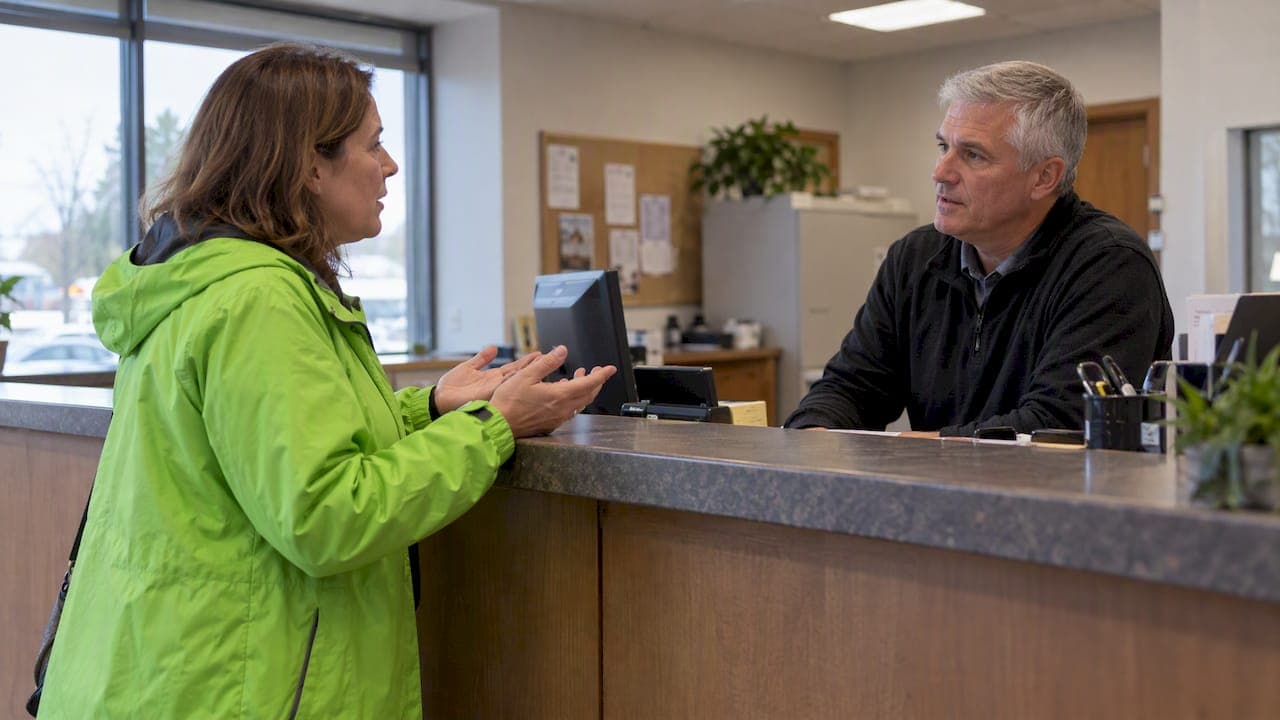
A straight shingle-for-shingle reroof often counts as maintenance in Wisconsin, so many towns skip the permit for that alone. Structural changes, decking replacement, or a switch in roofing material usually need one. The only safe answer for your address comes from your municipality or the Uniform Dwelling Code (UDC) resources at DSPS, so check before work starts.
TL;DR:
- Replacing the same shingles on sound decking often avoids a permit, while changing materials, adding a layer, replacing decking, or altering roof structure usually requires one.
- A full tear off with new underlayment and flashing may be treated differently by each municipality, so call the local inspection office before work begins.
- Applications commonly use Wisconsin form SBD-5823; structural projects may need two plan sets, and municipalities accept submissions through online portals or on paper.
- Municipalities set permit fees locally; Wauwatosa lists $50 for qualifying reroof projects, but homeowners should check their jurisdiction’s current fee schedule before budgeting.
- Unpermitted work can delay a sale or complicate an insurance claim, while permits and passed inspection records help document compliance and support warranty claims.
Table of Contents
- 1. Which roofing jobs usually trigger permits
- 2. Key Wisconsin rules that affect roofing
- 3. How to check local rules for your property
- 4. How to apply for a roofing permit in Wisconsin
- 5. Inspections and permit posting: what to expect
- 6. Working with contractors and insurance claims
- 7. Permit approval, rejection, and how to handle disputes
- 8. How permits affect resale, insurance, and warranties
- 9. A Wisconsin roofer's take on permits
- Get permit-ready roofing done right the first time
- FAQ
- Sources
1. Which roofing jobs usually trigger permits
Like-for-like reroofing means the same shingle type goes back on the same deck, with no structural work. Many Wisconsin municipalities treat this as maintenance and skip the permit requirement. Swap the material, add a layer, repair rotted decking, or touch the roof structure, and the permit requirement usually kicks in.
A few quick examples:
- Replacing worn asphalt shingles with the same type on sound decking: often no permit.
- Switching from asphalt to standing seam metal or synthetic slate: typically requires a permit.
- Repairing or replacing roof decking, trusses, or rafters: requires a permit.
- Adding a skylight, dormer, or new roof penetration: requires a permit.
- Full tear-off with new underlayment and flashing on the same material: frequently falls in a gray zone.
When your project does not fit neatly into one of these categories, call your local inspection office before scheduling work. A five-minute phone call costs nothing and avoids a stop-work order later.
2. Key Wisconsin rules that affect roofing
Wisconsin regulates one- and two-family dwellings through the Uniform Dwelling Code (UDC), which DSPS administers while municipalities handle enforcement, plan review, and inspections.
One state standard, many local enforcers: DSPS sets the technical rules statewide, but each municipality decides how permits get processed and what gets flagged for review, which is why requirements differ town to town.
Roofing specifics live in Wis. Admin. Code SPS 327.36, which covers:
- Required drainage and acceptable underlayment, including No. 15 felt or ASTM D1970 products in certain applications.
- Valley flashing and chimney flashing specifications, including minimum flashing heights.
- Conditions where a new roof covering may not go over an existing one.
These rules shape what your contractor can install and where. A Wisconsin-specific breakdown of ice and water shield requirements covers how eave protection ties into SPS 321.28 for homeowners who want the underlayment details spelled out.
3. How to check local rules for your property
Confirming your jurisdiction and its exact permit rule takes a few concrete steps.
- Identify who enforces code at your address: city, village, town, or county. Rural properties often fall under county jurisdiction rather than a municipal building department.
- Search your municipality's website for a permit checklist. The City of Milwaukee's DNS permit checklist lists shingle tear-off and replacement as "Maybe," which signals that the answer depends on project specifics.
- Compare that to a smaller municipality's posted guidance, such as Wauwatosa's re-roofing page, which treats like-for-like shingle replacement as maintenance and lists a permit fee when one is needed.
- Call the inspection office directly when the checklist says "maybe" or when your project involves any material or structural change. Websites get outdated; the person answering the phone has the current local policy.
- Ask the inspector whether your municipality uses an online portal or requires paper submission, since that determines your next step.
4. How to apply for a roofing permit in Wisconsin
Start by finding out which system your municipality uses. Some accept electronic submissions through the DSPS eSLA portal, others run a local Land Management System (LMS), and smaller towns may still require a paper application dropped off at the village hall.
When a permit is required, most municipalities ask for the Wisconsin Uniform Building Permit Application (SBD-5823). This form covers:
- Owner and contractor contact information, including contractor qualifier numbers where applicable.
- Project scope, roof area, and estimated project valuation.
- Zoning information, including setbacks if the project changes the roofline.
- Two sets of plans when structural changes are involved.
Fees are set locally, so a small town and a larger city can charge different amounts for the same scope of work. Wauwatosa's published re-roofing fee example is $50 when a permit applies, but your municipality may set a different figure, so confirm it against your local fee schedule before budgeting.
Once the permit is issued, your municipality schedules inspections at defined points in the project, often a rough-in check and a final inspection. Skipping a required permit can mean stop-work orders, fines, or a requirement to open up completed work for inspection after the fact.
Pro Tip: Save a PDF copy of every submitted form and the issued permit itself. You will want that paperwork if you ever sell the house or file an insurance claim.
5. Inspections and permit posting: what to expect
Most municipalities require the permit card posted somewhere visible from the street or at the front door, so the inspector can confirm it without tracking down the homeowner.
During inspection, expect checks on:
- Underlayment type and installation, matching SPS 327.36 requirements.
- Flashing at valleys, chimneys, and roof penetrations, including minimum flashing heights.
- Ice and water protection at eaves in climates that require it.
- Whether the new roofing was installed over an existing layer in violation of code.
If an inspector issues a notice of non-compliance, the fix usually involves correcting the flagged item and scheduling a re-inspection. Address it quickly: an open non-compliance notice can complicate a home sale or an insurance claim down the line.
6. Working with contractors and insurance claims
Put permit responsibility in writing before work starts. Your contract should state who pulls the permit, and if your municipality requires a contractor qualifier number, confirm it appears on the application.
A few checks worth doing before you sign anything:
- Ask for proof of insurance and recent references.
- Confirm the written scope references code-compliant materials and ties to UDC or SPS requirements, not just a brand name.
- If an insurance claim is involved, verify permit requirements with your municipality directly. An adjuster's approval of the claim does not substitute for a building department's permit decision.
- Keep copies of the permit application, the issued permit, and inspection reports in one folder.
Installations are supervised to maintain quality, with documentation of each job as it progresses, providing homeowners a paper trail to match against permit and inspection records. Manufacturer partnerships with trusted brands come with extended warranties that depend on correct installation, so matching the work to code matters for warranty validity as much as for the inspection itself.
Pro Tip: Ask your contractor to name the specific SPS sections their installation meets, not just "code compliant." A specific answer tells you they know the requirements.
7. Permit approval, rejection, and how to handle disputes
Plan review checks your application against the UDC and applicable SPS sections before anything gets approved. A reviewer looks at the scope you described, the materials listed, and whether the project triggers structural or zoning review. Most straightforward reroofs clear quickly once the paperwork matches what is actually happening on the roof.
Rejections usually come down to incomplete information, a scope that does not match the submitted plans, or a material or structural change that needs more detail than a basic reroof application provides. If your application gets rejected, ask the reviewer exactly what triggered the denial. Most municipalities will tell you specifically which section of the form or which code reference caused the hold, and resubmitting with that gap filled in is usually enough to move forward.
When you disagree with a decision, most Wisconsin municipalities have a local board of appeals or zoning board that handles disputes over code interpretation. Start with a conversation with the chief building inspector first: many disagreements get resolved at that level without a formal appeal. If the disagreement is about a technical SPS requirement rather than a local zoning call, DSPS can also clarify how the statewide code applies to your situation.

Keep every piece of correspondence from your application, including e-mails and notes from phone calls. If a dispute drags on, that record is what shows you acted in good faith and responded to every request the reviewer made.
8. How permits affect resale, insurance, and warranties
Unpermitted roofing work can surface during a home sale, usually when a buyer's inspector or the municipality's own records show no permit on file for a roof that clearly was not original to the house. That gap can delay closing, trigger a price renegotiation, or in some cases require the seller to pull a retroactive permit and pass a late inspection before the sale closes.
Insurance carries a similar risk. Several policies require code-compliant repairs after a covered loss, and a roof installed without a required permit can complicate a future claim if the insurer questions whether the work was done to code. Keeping your permit and inspection paperwork on file protects you if a claim ever comes down to proving the roof was installed correctly.
Manufacturer warranties also often hinge on proper installation, which permitted work with a passed inspection helps document. A warranty claim is easier to support when you can show the roof passed the inspections your municipality required at the time of installation. For buyers and sellers alike, permit records function as proof that the roof over the house matches what the code required when it went on.

9. A Wisconsin roofer's take on permits
Confirm your jurisdiction first, get permit responsibility spelled out in your contract, and insist on code-compliant materials and installation regardless of whether your project needs a permit at all. These three habits prevent most of the problems homeowners run into after the fact.
If you want a second set of eyes on your roof or your paperwork, our team is glad to walk through it with you.
— Heather
Get permit-ready roofing done right the first time
The company handles the paperwork, inspections, and installation, helping clients navigate local portals for permitting while documenting work to provide a clean record for warranty claims, insurance disputes, or future sales.
Whether you need a straightforward roof replacement or you are dealing with storm damage and an open insurance claim, we manage the permit process alongside the installation across Southeastern Wisconsin. Reach out through our roofing services page to get a project started.
FAQ
How much does a building permit cost in Wisconsin?
Permit fees are set by each municipality rather than by the state, so costs vary by location and project scope. Wauwatosa, for example, lists a $50 permit fee for re-roofing projects that require one, but your town may charge a different amount, so check your local fee schedule before budgeting.
Where do I get a roofing permit in Wisconsin?
You apply through your municipality's building or inspection department, often using the Wisconsin Uniform Building Permit Application (SBD-5823). Some municipalities accept this electronically through the DSPS eSLA portal or a local Land Management System, while others still require an in-person or mailed paper application.
How do I calculate permit fees for my project?
Most municipalities base roofing permit fees on a flat rate, project valuation, or a combination of the two, and the figure is set locally rather than statewide. Check your municipality's published fee schedule or call the inspection office directly, since the City of Milwaukee's permit checklist and similar municipal pages typically list current rates.
Do I need a permit for a 10x12 shed?
Shed permit thresholds vary by municipality and are typically based on square footage or whether the structure is permanent, so a small shed may or may not need one depending on where you live. Contact your local building department directly, since this falls outside roofing-specific rules and depends entirely on local ordinance.
Sources
- Uniform Dwelling Code (UDC) — DSPS
- Wis. Admin. Code SPS 327.36 - Weather protection for roofs
- Do I need a permit? — City of Milwaukee DNS Permit Checklist
- Re-Roofing, Re-Siding, & Window Replacement | Wauwatosa, WI