
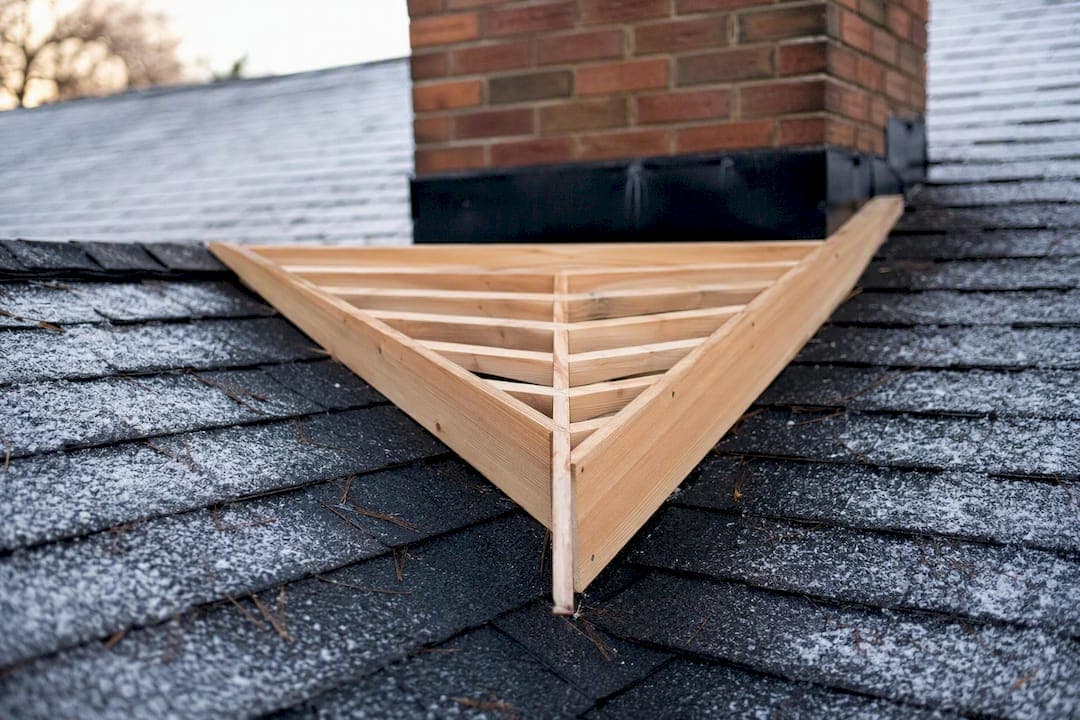
A chimney cricket is required by the International Residential Code whenever the chimney's dimension parallel to the ridgeline measures more than 30 inches and the chimney does not intersect the ridgeline itself. Under 30 inches, the code doesn't force your hand.
IRC R1003.20: chimneys with a width parallel to the ridgeline greater than 30 inches, and that do not intersect the ridge, must have a cricket or saddle on the uphill side.
If your chimney's uphill face measures more than 30 inches, you need a cricket. Under that, you're in gray territory where code compliance and good practice start to diverge.
Pro Tip: Most experienced roofers treat 30 inches as a floor, not a target. Any chimney with an uphill side that collects snowmelt or runoff is a candidate for a cricket, regardless of what the tape measure says.
Key Takeaways
Chimney crickets become mandatory under IRC R1003.20 once a chimney's ridge-parallel width exceeds 30 inches, and correct sizing depends on both that width and your roof's slope.
| Point | Details |
|---|---|
| Code trigger | A cricket is required when the chimney's ridge-parallel dimension exceeds 30 inches and it doesn't intersect the ridge. |
| Sizing formula | Cricket height comes from Table R1003.20's slope fractions, such as 1/3 of chimney width on an 8:12 roof. |
| Flashing sequence matters | Step flashing, ice-and-water shield, and a saw-cut reglet for counterflashing prevent the most common leak points. |
| Build beyond the minimum | Many pros install crickets on chimneys under 30 inches wide since the cost is small compared to future leak repairs. |
| Professional installation | Am-exteriors frames, flashes, and documents chimney crickets to code during roof replacement and repair projects in Southeast Wisconsin. |
Table of Contents
- What Chimney Cricket Requirements Actually Say
- How Big Should a Chimney Cricket Be?
- What Goes Into Building a Cricket Correctly
- How Should a Cricket Be Flashed?
- When Is a Chimney Cricket Not Required?
- How Do You Inspect and Maintain a Chimney Cricket?
- What Should You Ask a Contractor Before Cricket Installation?
- Why Code Minimums Aren't the Whole Answer
- Get a Cricket Built Right During Your Next Reroof
- Frequently Asked Questions
- Sources
What Chimney Cricket Requirements Actually Say
The code language is narrower than most homeowners assume. R1003.20 doesn't care about the chimney's total footprint. It cares about one measurement: the dimension running parallel to the ridge, measured on the uphill side.
Picture standing above the chimney, facing downhill toward the eave. The width you'd measure left to right, across the roof slope, is the one that matters. A chimney could be enormous front to back and still dodge the requirement if that ridge-parallel width stays at or under 30 inches.
There's a second condition buried in the same sentence: the chimney must not intersect the ridgeline. A chimney straddling the ridge sheds water to both sides naturally and doesn't pool the same way a mid-slope chimney does.
Once a cricket is required, the code doesn't treat it as a separate structure. The cricket-to-chimney intersection must be flashed and counterflashed exactly like any other roof-to-chimney joint.
A few things worth confirming before you assume the national rule applies verbatim:
- IBC language mirrors the IRC trigger closely, but commercial and multi-family projects often fall under different inspection paths.
- Local jurisdictions sometimes adopt tighter thresholds or additional flashing specs, so a call to your building department beats guessing.
- The flashing and counterflashing obligation applies even on chimneys that just barely clear 30 inches.
How Big Should a Chimney Cricket Be?
Once you know a cricket is required, sizing comes down to two numbers: chimney width (W) and roof slope. Table R1003.20 ties cricket height (H) to those two variables through a set of slope-based fractions.
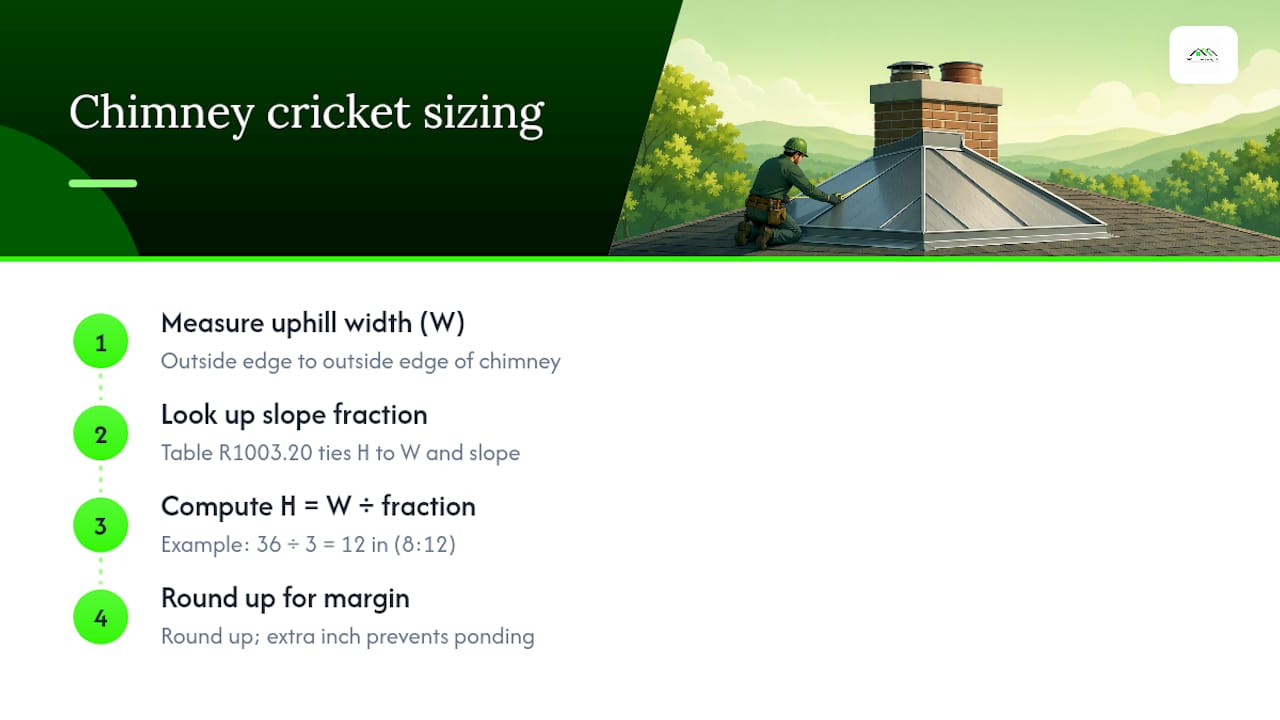
W is the chimney's width measured parallel to the ridge, the same dimension you used to trigger the requirement in the first place. H is the height of the cricket's ridge at the point closest to the chimney, tapering down to nothing at the outer edges.
Take a 36 inch wide chimney on an 8:12 roof. Divide 36 by 3 and you get a 12 inch cricket ridge height. That's the math the table is built around, no calculator required beyond basic division.
Pro Tip: Measure the uphill width from outside edge to outside edge of the chimney, not from the centerline of any flue tiles inside it. When your number lands close to a round figure, round up. An extra inch of cricket height costs almost nothing and buys real margin against ponding.
What Goes Into Building a Cricket Correctly
A cricket is a small roof, and it needs to be built like one. The structural components are straightforward:
- Sleepers or short rafters set at the correct angle to create the ridge and slopes.
- A ridge board or beam running the width of the cricket.
- Plywood or OSB sheathing over the framing.
- Ice-and-water shield covering the entire cricket surface, not just the edges.
- Metal flashing tying the cricket into the chimney and the main roof deck.
Slope matters more than most DIY guides admit. GAF's trade guidance recommends matching or exceeding the main roof's pitch, and The Roofing Brief puts a practical floor on that at 4:12. Anything flatter starts inviting standing water.
Pro Tip: The single most common build mistake is undersizing the ridge height to save framing lumber. A cricket that's a few inches short on H looks fine on installation day and fails during the first heavy snow melt of the season.
How Should a Cricket Be Flashed?
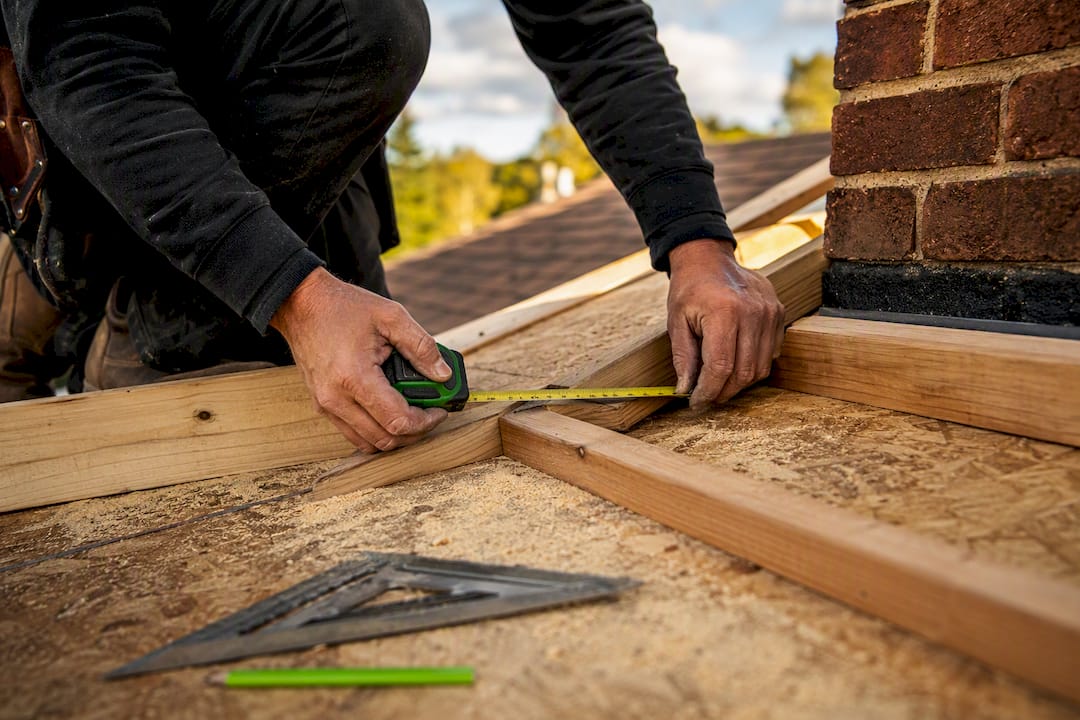
Flashing sequence determines whether a cricket lasts twenty years or leaks within two. Fine Homebuilding's walkthrough lays out the order that holds up in the field:
- Remove shingles around the chimney back and expose the deck.
- Install an apron flashing and underlayment ahead of any framing work.
- Set step flashing along the chimney sides before the cricket goes in.
- Frame the cricket, sheathe it with plywood, and wrap it in ice-and-water shield.
- Weave shingles into the cricket valleys rather than butting them.
- Finish with counterflashing set into a saw-cut reglet in the chimney masonry.
The reglet cut is what separates a professional job from a caulked-over shortcut. Counterflashing tucked into a groove sheds water regardless of thermal movement; counterflashing surface-mounted with sealant depends entirely on that sealant holding.
- Skipped ice-and-water shield under the cricket deck is a leading cause of early failures.
- Step flashing that isn't woven into each shingle course, one piece per course, tends to funnel water sideways instead of down.
- Counterflashing overlap under 4 inches leaves a gap wind-driven rain can find.
When Is a Chimney Cricket Not Required?
Chimneys with an uphill width of 30 inches or less generally clear the IRC threshold without a cricket. That's the baseline most residential inspections work from, and InterNACHI's inspection guidance uses the same 30 inch marker when flagging roof penetrations that need a closer look.
Local amendments can shift that number, so builders working outside their usual jurisdiction should confirm the adopted code cycle before assuming the standard threshold applies.
- Chimneys that intersect the ridgeline are exempt even above 30 inches wide.
- Some municipalities layer additional flashing or slope requirements onto the base IRC language.
- Masons and roofers frequently install crickets on narrower chimneys anyway, since a small uphill face still collects snowmelt and debris.
Pro Tip: A cricket added during a full reroof costs a fraction of what a retrofit costs later, and it's a rounding error next to the price of repairing rotted decking from years of slow leaks.
How Do You Inspect and Maintain a Chimney Cricket?
Crickets fail quietly, which is exactly why they need a yearly look. Walk the roofline after major storms and check for these signs:
- Standing water pooling in the cricket valley instead of draining off.
- Corroded or lifted metal flashing along the cricket edges.
- Cracked or gapped counterflashing at the reglet line.
- Leaves, needles, or granule debris packed into the valley.
- Step flashing pieces that have worked loose or shifted.
An annual inspection plus a post-storm check catches most problems before they become ceiling stains. If you spot mortar crumbling near the reglet, rust bleeding from the saddle flashing, or actual water marks inside the house, that's past the point of a DIY fix and into call-a-professional territory.
What Should You Ask a Contractor Before Cricket Installation?
A qualified contractor should be able to walk you through their measurement and flashing plan before a single shingle comes off. Ask them to show, not just tell:
- How they measured the chimney's ridge-parallel width and whether it clears 30 inches.
- What slope they're building the cricket to, and whether it matches or beats your main roof pitch.
- Whether they're saw-cutting a reglet for counterflashing or relying on surface-mounted flashing and sealant.
- How ice-and-water shield coverage extends under the cricket deck, not just around its perimeter.
Pro Tip: Request photos before, during, and after the flashing work, plus a written scope that names the flashing materials by type. A contractor confident in their work will hand this over without being asked twice.
A written workmanship warranty tied to that documentation is what separates a cricket that gets forgotten about from one that gets fixed under warranty if something goes wrong.
Why Code Minimums Aren't the Whole Answer
The 30 inch threshold tells you when the code forces a cricket, not when one makes sense. I've seen enough water damage behind chimneys just under that line to know the number is a legal floor, not an engineering recommendation. Balancing the modest cost of a cricket against the roof deck rot it prevents almost always favors building one anyway.
Get a Cricket Built Right During Your Next Reroof
Am-exteriors builds chimney crickets the way the code and the flashing details above both demand, not the shortcut version some crews rush through on a Friday afternoon. Whether your chimney clears the 30 inch threshold or sits right at the edge of it, our crews measure it correctly, frame to the right slope, and saw-cut reglets for counterflashing instead of relying on sealant to hold.

If you're planning a roof replacement in Southeast Wisconsin, cricket framing and flashing gets bundled into the project scope with photos and a written plan before work starts. Already seeing water stains or a sagging cricket valley on an existing roof? Our roof repair team can diagnose the flashing and fix it without a full tear off. Request a free inspection and get a written estimate that spells out exactly what's happening at your chimney.
Frequently Asked Questions
Does every chimney need a cricket? No. IRC R1003.20 only requires one when the chimney's ridge-parallel width exceeds 30 inches and it doesn't intersect the ridge.
How tall does a chimney cricket need to be? It depends on roof slope and chimney width. On an 8:12 roof, height equals one-third of the chimney's width, per Table R1003.20.
Can I skip a cricket on a small chimney? Code allows it under 30 inches, but many roofers still recommend one on any uphill-facing chimney to prevent water pooling and debris buildup.
What's the minimum slope for a chimney cricket? Trade guidance generally recommends matching your main roof's pitch, with 4:12 treated as a practical minimum for proper drainage.
How do I know if my cricket's flashing is failing? Watch for standing water in the valley, corroded metal, cracked counterflashing, or water stains appearing on ceilings near the chimney.
Sources
- Chimney crickets | UpCodes
- 2015 International Residential Code (IRC) - Chapter 10, Chimneys and Fireplaces
- Make a watertight chimney cricket — Fine Homebuilding
- How chimney crickets support a healthy roof | GAF
- Chimney cricket: code, build detail & install cost | The Roofing Brief
- Mastering roof inspections: roof penetrations, part 2 | InterNACHI